Tulle looks airy, but its fine netting can snag, crease and distort quickly in a normal wash. The safest way to wash tulle skirts is to use cool water, minimal agitation and careful support so the layers move as little as possible. This matters for ballet skirts, occasionwear, bridesmaid outfits, fancy-dress pieces and layered everyday skirts alike.
The gentle method in brief
- Check the care label first, especially if the skirt has a lining, glitter, beads, sequins, embroidery or a structured waistband.
- Use cool water and a small amount of mild liquid detergent; avoid strong stain removers unless the label allows them.
- Hand wash where possible, pressing water through the netting rather than rubbing or twisting it.
- If machine washing is allowed, use a mesh laundry bag, a delicate cycle and the lowest practical spin.
- Dry by supporting the weight of the skirt, keeping it away from tumble dryers, radiators and direct heat.
First, identify what you are dealing with
Tulle is a net fabric, but not every tulle skirt behaves the same. Many high-street tulle skirts are made from synthetic netting such as polyester or nylon, often with a separate lining. Dancewear, bridal layers and vintage pieces may be more fragile, and some skirts include stiffening, flocking, metallic threads or glued decorations that change how safely they can be cleaned.
Before adding water, look at three areas: the netting, the lining and the waistband. The net may be washable while the waistband contains interfacing, elastic or decorative trim that reacts badly to soaking. A satin or viscose lining may also shrink, crease or bleed dye differently from the tulle overlay.
If there is no care label, treat the skirt as highly delicate. Test a hidden area with a damp white cloth before washing the full garment. If colour transfers, glitter loosens, glue softens or the fabric becomes misshapen, stop and use spot cleaning only. Once you understand the safest way to wash tulle skirts, the main aim is to clean the fabric without making the net carry its own wet weight for too long.
Prepare the skirt before it touches water
Most damage happens before the actual wash: a snagged zip, a loose bead, a rough laundry basket or a heavy wet layer can pull tiny holes into bigger tears. Preparation takes only a few minutes and makes the wash much safer.
- Fasten hooks, buttons and zips so they cannot catch in the netting.
- Remove detachable belts, brooches, pins, corsage details or costume accessories.
- Shake the skirt gently outdoors or over the bath to release dust, crumbs and loose debris.
- Check seams and hem edges for weak points. Do not wash aggressively if the stitching is already pulling away.
- Separate the layers with your fingers rather than tugging them apart.
If the skirt has several layers, support it from underneath when moving it. Holding a wet tulle skirt by one edge can stretch the netting and strain the seams, particularly around the waist.
Hand washing is usually safest
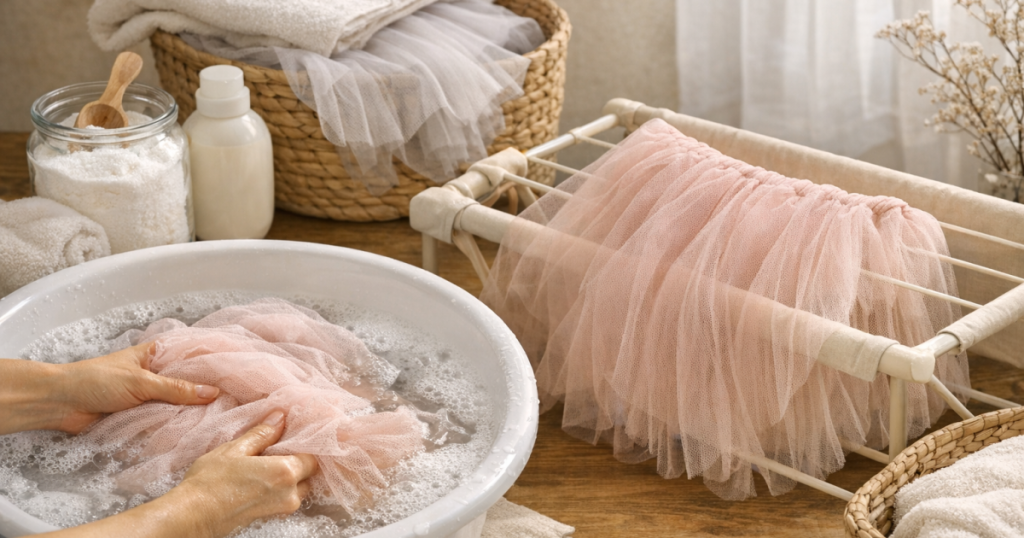
For most tulle skirts, hand washing gives you better control than a washing machine. Use a clean bath, basin or large plastic tub so the skirt has space to move without being compressed. A cramped sink can force the netting into sharp folds, which is not ideal for stiff or layered tulle.
Step-by-step hand wash
- Fill the basin with cool water. Lukewarm is usually acceptable for many synthetics, but keep it below 30°C unless the care label says otherwise.
- Add a very small amount of mild liquid detergent and disperse it fully before adding the skirt. Too much detergent is hard to rinse from fine netting.
- Lower the skirt into the water while supporting the waistband and the bulk of the layers.
- Press the water gently through the fabric with flat hands. Do not scrub, wring, rub two layers together or drag the skirt around the basin.
- Leave it to soak briefly if needed, usually just long enough to loosen light soil. Avoid long soaking for embellished, dyed or stiffened skirts.
- Drain the water and refill with clean cool water. Press gently to rinse, repeating until the water no longer feels soapy.
Liquid detergent is generally easier to dissolve than powder for this job. If you only have powder, dissolve it completely before the skirt goes in, as undissolved grains can lodge in the mesh and create extra rinsing work.
When machine washing is acceptable
A washing machine is not automatically wrong, but it is a bigger risk. Use it only when the care label permits machine washing and the skirt is not heavily embellished, vintage, torn or unusually stiff. Even then, the aim is to reduce movement rather than chase a powerful clean.
- Place the skirt in a large mesh laundry bag. Do not cram it into a small bag, as compressed netting creases more easily.
- Wash it alone or with very light, smooth garments. Avoid towels, denim, hoodies, school jumpers and anything with Velcro.
- Choose a delicate or hand-wash cycle with cool water.
- Use a small amount of mild liquid detergent.
- Select the lowest spin setting or skip the spin if your machine allows it.
- Remove the skirt as soon as the cycle ends so creases do not set while damp.
If your machine has an agitator-style drum or a history of catching delicate items, hand washing is the safer choice. Tulle does not need heavy mechanical action; it needs clean water, gentle detergent and patience.
How to handle stains without tearing the net
Stain treatment on tulle should be precise. The temptation is to rub the mark, but rubbing can break the tiny mesh intersections that give the fabric its shape. Work from the back of the fabric where possible and keep pressure light.
- For mud or dry dirt, let it dry fully first, then lift away loose particles with a soft brush or your fingertips.
- For food marks, dab with cool water and a tiny amount of mild detergent, then rinse by pressing clean water through the area.
- For make-up or oily marks, blot first with a clean white cloth. Avoid spreading the mark across several layers.
- For unknown stains, test any treatment on an inside seam or hidden layer before applying it to a visible area.
Avoid chlorine bleach on tulle unless the care label specifically allows it, which is uncommon for delicate skirts. Strong bleaching can weaken synthetic netting, alter colour and leave patchy results. Also be careful with oxygen-based products on coloured or decorated tulle; check the garment label and test discreetly first.
Rinsing and removing water safely
Never wring a tulle skirt. Twisting may seem harmless because the fabric is light, but it concentrates stress along seams, waist gathers and the net structure. Instead, lift the skirt with both hands, let water drain naturally, then transfer it to a clean towel.
Lay the skirt flat on the towel, arrange the layers loosely and roll the towel around it without pulling. Press the roll gently to absorb water. If the skirt is still very wet, repeat with a dry towel. This method removes moisture without stretching the netting or crushing the layers too severely.
Drying tulle without shrinking, stretching or flattening it
Air drying is the safest approach. Tulle itself often dries quickly, but linings and waistbands can hold moisture for longer. Support the skirt well while it dries so the wet weight does not drag the layers down.
- Lay the skirt flat on a dry towel if it is heavy, embellished or very full.
- For lighter skirts, hang from the waistband on a broad hanger, not from the netting.
- Keep it away from tumble dryers, heated airers set too hot, radiators and direct sunlight.
- Reshape the layers with your hands while damp, separating any clumped sections carefully.
- Do not use pegs directly on the net, as they can leave pressure marks or small tears.
Good airflow matters more than heat. A drying rack in a ventilated room is usually better than placing the skirt close to a radiator. If you use a dehumidifier at home, keep the garment supported and allow space around the layers so moisture can escape evenly.
Creases, volume and finishing touches
Tulle can crease in storage and washing, but direct ironing is risky. A hot soleplate can flatten, shine, melt or distort synthetic netting very quickly. Start with the least aggressive method: hang the skirt in a steamy bathroom for a short period, then tease the layers back into shape by hand.
If you use a garment steamer, keep the head slightly away from the fabric and work gradually. Do not press the steamer plate onto the net. For readers who travel with occasionwear or performance outfits, the same low-contact approach applies when you pick a travel steamer for work trips; gentle steam output and careful handling matter more than speed.
If the waistband or lining needs pressing, protect the outer tulle completely and use a pressing cloth. A stable board surface also helps because snags often come from rough covers, exposed metal mesh or worn padding. If your ironing setup catches fine fabrics, it is worth checking how to choose an ironing board cover that protects fabrics before tackling delicate layers.
Storing the skirt after washing
Make sure the skirt is fully dry before storage. Even slight dampness trapped between layers can leave a stale smell and encourage mildew on linings or waistbands. Once dry, shake the skirt gently and smooth the layers without compressing them.
For short-term storage, hang the skirt from the waistband on a broad hanger with plenty of space around it. For long-term storage, consider a breathable garment bag rather than plastic, and avoid crushing the tulle under heavier clothes. Wardrobes with poor airflow, excess humidity or rough shelving are unkind to delicate netting, so it helps to create a fabric-safe wardrobe environment if you store occasionwear, dancewear or seasonal skirts between uses.
Mistakes that commonly damage tulle
- Washing with heavy garments that pull and twist the netting.
- Using a normal or cotton cycle because the skirt looks lightly soiled.
- Rubbing stains hard instead of blotting and pressing.
- Wringing water out by twisting the waistband and layers together.
- Drying over direct heat, which can distort synthetic fibres and set creases.
- Ironing the net directly, even on a lower setting, without testing and protection.
- Storing the skirt tightly packed, which crushes volume and encourages stubborn creasing.
Common questions
Can I put a tulle skirt in the washing machine?
Only if the care label allows it and the skirt is not heavily embellished or fragile. Use a mesh bag, cool delicate cycle, mild liquid detergent and the lowest spin. Hand washing is safer for structured, vintage, bridal or costume tulle.
Can tulle go in the tumble dryer?
It is best avoided. Heat and tumbling can distort netting, flatten volume, damage trims and stress seams. Air dry the skirt while supporting its weight instead.
How do I stop tulle sticking together after washing?
Rinse thoroughly so detergent residue is not left in the mesh, then separate the layers gently while damp. Dry with good airflow and shake the skirt lightly once fully dry.
What should I do if the tulle has glitter or glued decorations?
Keep washing as brief and cool as possible, and avoid soaking unless the label permits it. Spot cleaning is often safer because water and detergent can loosen glue, glitter coatings or decorative finishes.
Can I make a flattened tulle skirt full again?
Often, yes. Hang it with space around it, use light steam from a distance and gently lift the layers with your fingers. Avoid brushing hard or backcombing the net, as this can snag the fibres.
Main lessons
Tulle skirts need gentle water movement, cool temperatures and careful support rather than intensive washing. Hand washing is usually the safest route, while machine washing should be reserved for clearly washable, unembellished skirts protected inside a mesh bag. Skip wringing, tumble drying and direct ironing, then store the skirt with enough space for the layers to keep their shape.