A faster final spin can shorten drying time, but it can also press creases into shirts, pull delicate knits out of shape and make viscose harder to finish neatly. Choosing the right spin speed before air drying is a balance between removing enough water and protecting the fabric.
The aim is not always to use the highest number on the dial. A good setting leaves the garment damp rather than heavy, with seams, collars and sleeves easy to shake back into shape before it goes on an airer or line.
The useful short answer
Use the highest spin speed the care label and fabric can comfortably tolerate, then reduce it when creasing, stretching or surface damage is the bigger risk than drying time.
- Use a higher spin for sturdy cottons, towels, bedding and everyday basics when the care label allows it.
- Use a medium spin for shirts, polycotton uniforms, synthetics and mixed loads where creasing matters.
- Use a low spin for viscose, wool, fine knits, embellished garments and anything labelled delicate.
- Reduce the spin if you are drying on a crowded indoor airer, because deep spin creases can set while garments dry slowly.
- Remove laundry promptly after the cycle and shake each item out before hanging; this often matters as much as the rpm setting.
Why the final spin affects fabric care
The spin cycle removes water by rotating the drum quickly so moisture is pushed out of the fabric. That is useful for UK homes where clothes often dry indoors, especially during cool or damp weather. Less water in the fabric usually means less time on the airer and less moisture released into the room.
The trade-off is mechanical stress. As speed increases, clothes are pressed more firmly against the drum and against each other. Sturdy cotton towels cope well with this. A viscose blouse, a wool jumper or a structured work shirt may come out twisted, sharply creased or slightly misshapen if the spin is too aggressive.
Spin speed also changes what happens after washing. Heavy, wet garments can stretch on hangers or lines, while over-spun garments can dry with hard creases across sleeves, waistbands and hems. If you regularly need to iron in extra moisture or steam out stubborn wrinkles, it is worth reading how steam, heat and pressure smooth clothes safely, because the problem often begins before the ironing board.
Step 1: Start with the care label, not the machine maximum
Most washing machines make high spin speeds easy to select, but the care label should have the first say. If the label recommends a delicate, wool or hand-wash style cycle, do not treat the garment like bedding just because the drum can spin faster.
Look at both the washing symbol and the fabric content label. A cotton shirt and a viscose shirt can behave very differently after the same cycle. A jumper that contains wool may need a gentle wool programme and a low spin even if it looks like a regular knit. Embroidery, sequins, loose trims, coated finishes and pleats are also reasons to be cautious.
If the garment is new to you, use a lower setting for the first wash and observe the result. It is easier to increase the spin next time than to undo stretched shoulders, distorted ribbing or permanent-looking creases.
Step 2: Match the rpm to the fabric type
Machines vary, but many UK washing machines offer settings around 400, 800, 1000, 1200 and 1400 rpm. Treat these as working ranges rather than strict rules.
Cotton towels, bedding and sturdy basics
For towels, cotton sheets, tea towels and robust cotton T-shirts, a high spin can be useful because these items hold a lot of water. If the care label allows it, 1200 to 1400 rpm can reduce drying time noticeably. Shake items out afterwards so edges and seams are not folded into thick damp ridges.
Work shirts, school shirts and uniforms
For shirts, blouses and uniforms, medium is often better than maximum. Around 800 to 1000 rpm usually removes enough water without crushing collars, cuffs and plackets too harshly. Hang shirts promptly, smooth the button band by hand and open cuffs so air can move through them.
Synthetics and sportswear
Polyester and other synthetics often dry quickly even without a very fast spin. A medium spin is usually enough. Too much speed can encourage static, cling and sharp creasing in some lightweight fabrics, especially when they are trapped in a mixed load with heavier cottons.
Viscose, modal and drapey blends
Viscose can feel surprisingly heavy when wet and may shrink, crease or distort if treated roughly. Use a low to medium-low spin, commonly around 400 to 800 rpm, and reshape while damp. Avoid hanging heavy wet viscose from narrow hanger points; support it well or dry flat if the label indicates that is safer.
Wool, cashmere and delicate knits
Use the wool or delicate programme and the low spin that comes with it, unless the label says otherwise. Many knits are better dried flat on a towel or mesh surface because wet weight can stretch them. The aim is to remove excess water gently, not wring the garment dry by force.
Step 3: Adjust for where the clothes will dry
Your drying setup should influence the spin choice. Air-drying outdoors on a breezy day is different from drying indoors in a small room with limited airflow.
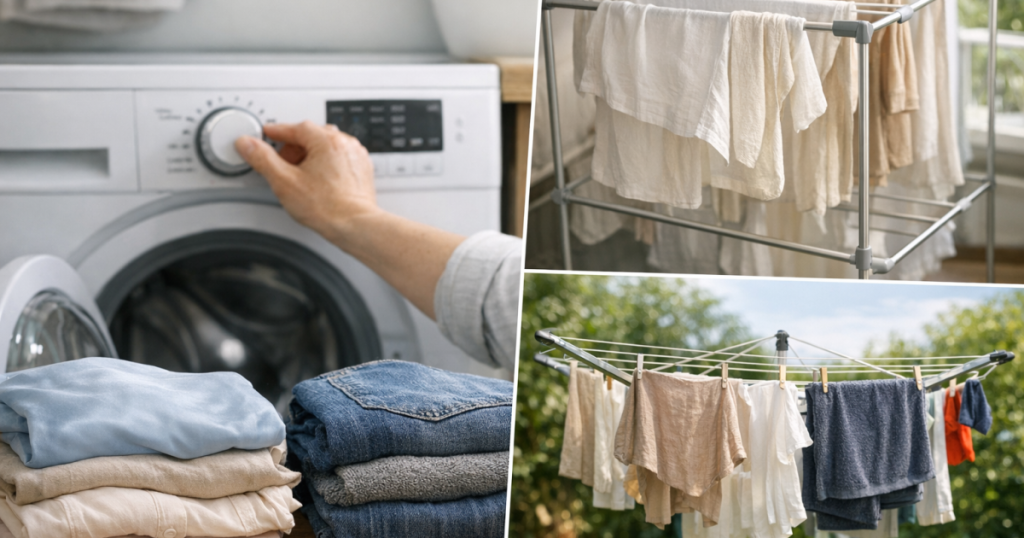
- For outdoor line drying, a medium to high spin can work well for sturdy fabrics, but shirts and trousers still benefit from a slightly gentler setting to reduce creases.
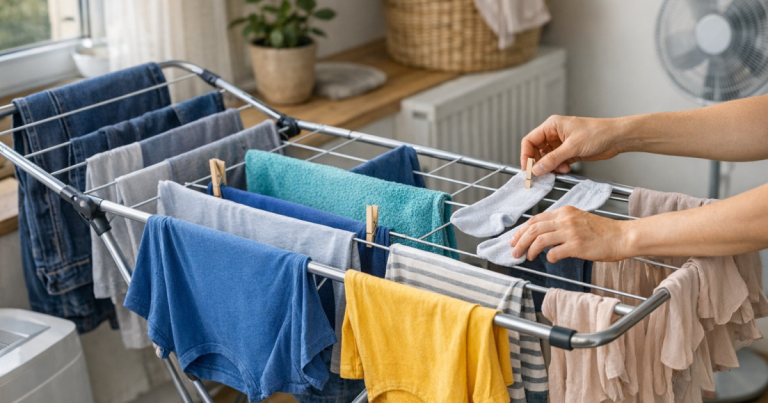
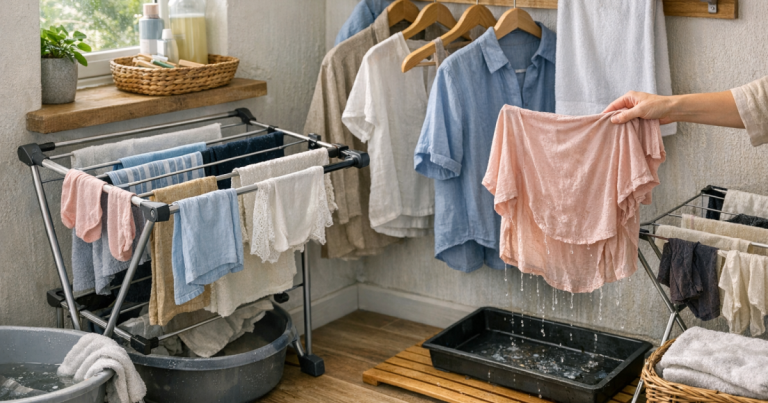
- For indoor airers, remove as much water as the fabric safely allows. Damp laundry packed close together dries slowly and can develop a stale smell.
- For heated airers, do not assume heat fixes everything. Heavy wet seams still dry slowly, and over-spun creases may become more stubborn as the fabric dries.
- For drying flat, use a low spin and press excess water out gently in a towel if the label allows. This is especially useful for wool and delicate knits.
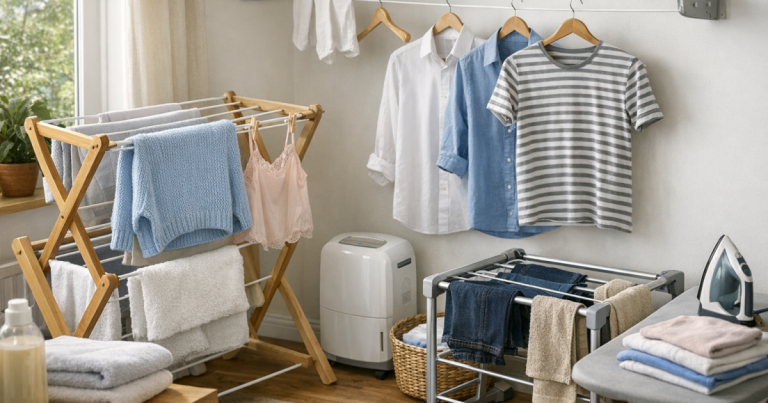
If indoor drying is your normal routine, spacing is just as important as spin. Leave gaps between garments, avoid doubling thick items over narrow bars, and use airflow to your advantage. For a fuller setup method, see our guide on how to space clothes on an airer for faster drying.
Step 4: Think about load size and fabric mix
A sensible spin setting can still give poor results if the load is wrong. Mixing heavy towels with thin viscose tops, for example, increases creasing and can make delicate items twist around bulkier ones. Sort by fabric weight as well as colour when garment care matters.
Overloading is another common cause of creasing. When the drum is too full, clothes cannot move freely during rinsing and spinning. They come out compressed, tangled and unevenly damp. A slightly smaller load at a medium spin often dries and finishes better than a stuffed drum at maximum speed.
For mixed everyday laundry, choose the setting for the most vulnerable items in the load, not the toughest. If one delicate blouse needs 600 rpm, do not wash it with towels that would benefit from 1400 rpm. Separate the loads and each fabric gets a more suitable finish.
Step 5: Check the garment as soon as the cycle ends
The first minute after washing is important. Do not leave clean laundry sitting in the drum while creases settle. Take items out promptly, untwist sleeves and legs, and give each garment a firm shake from the seams.
Run your hands over collars, cuffs, hems and pocket areas before hanging. These small details dry into shape, good or bad. For shirts on a line, placement matters too: pegging in the wrong place can leave marks that are awkward to steam or iron later. The same principle is covered in our guide to hang shirts on a clothesline without peg marks.
If the clothes still feel dripping wet, increase the spin slightly next time for that fabric type. If they feel dry-ish but look crushed, reduce the rpm or shorten the spin where your machine allows it. Keep a mental note for recurring loads: towels, school shirts, gym kit and delicates each tend to have a setting that works best in your home.
Common spin speed mistakes to avoid
- Using maximum spin for every load. It saves time on sturdy laundry but can create more ironing work on shirts, linen and viscose.
- Choosing a low spin for thick towels indoors. They may stay damp for too long, especially in cool rooms without airflow.
- Ignoring wet weight. Heavy damp garments can stretch if hung from narrow shoulders or thin lines.
- Leaving laundry in the drum. Even a well-chosen spin cannot prevent creasing if clothes sit compressed for an hour.
- Assuming the same setting suits all cotton. Fine cotton lawn and thick cotton towels need different treatment.
FAQ
Is 1400 rpm too high before air drying?
Not for sturdy towels, bedding and robust cottons when the care label allows it. It can be too high for shirts, viscose, wool, fine knits and garments that crease or distort easily.
Why do my clothes feel dry but look badly creased?
The spin is probably too aggressive for the fabric, the drum may be overloaded, or clothes are being left in the machine after the cycle. Reduce the rpm and hang garments promptly.
Should I spin clothes twice before putting them on an airer?
Only for sturdy items that still feel very wet, such as towels or bedding. Avoid extra spinning for wool, viscose, delicate knits and structured garments because it can add stress and creasing.
What spin speed is best for shirts?
A medium setting, often around 800 to 1000 rpm, is a good starting point. It removes water without crushing collars and cuffs as much as a maximum spin.
Can a lower spin help reduce ironing?
Yes, particularly for shirts, linen, viscose and lightweight cottons. They may take longer to dry, but the creases are often softer and easier to smooth afterwards.
Main points
The best spin setting is the one that suits the fabric, not simply the fastest option on the machine. Use higher speeds for strong, absorbent laundry; medium speeds for everyday clothes where creasing matters; and low speeds for delicate, drapey or stretch-prone garments.
Air drying works best when spin speed, load size and hanging method all support each other. Remove enough water to avoid slow, stale drying, but leave garments relaxed enough to reshape before they dry.