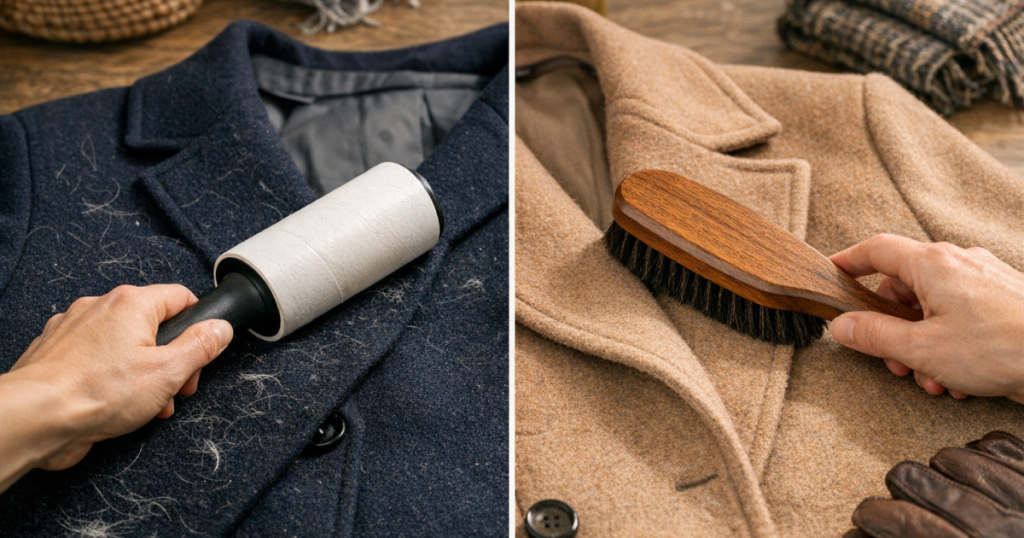
Choosing between a lint roller vs clothes brush for coats is less about which tool is universally better and more about the coat in front of you. A wool overcoat, a black school blazer, a waxed jacket and a quilted puffer all collect surface debris differently, so the safest tool depends on fibre, texture, finish and how much mess you are removing.
Quick Buying Links
Lint Roller
Choosing between a lint roller vs clothes brush for coats is less about which tool is universally better and more about the coat in front of you.
Clothes Brush: Which Is Better for Coats?
Worth considering if its strengths better match your needs.
For most coat care, a good clothes brush is the more fabric-friendly long-term tool. A lint roller is faster for visible fluff and pet hair, but adhesive sheets can be wasteful and may be too aggressive or ineffective on some textured fabrics.
At a glance
- Best for wool coats: a soft or medium clothes brush used with the nap.
- Best for pet hair before leaving the house: a lint roller, especially on smooth dark coats.
- Best for dusty shoulders and collars: a clothes brush, because it lifts dry debris rather than just sticking to the top layer.
- Best for delicate textured fabrics: usually a brush, but only with light pressure and a test on a hidden area.
- Best tool to keep by the door: a lint roller for quick touch-ups, supported by a brush for weekly maintenance.
How a lint roller works on coat fabric
A lint roller uses a tacky adhesive surface to pick up loose fibres, hair, fluff and small particles. On a smooth coat, such as a plain-weave wool blend, polyester uniform coat or dark synthetic overcoat, it can make the surface look cleaner in seconds. This is why many households keep one near the hallway mirror.
The trade-off is that a roller mostly deals with what is already sitting on the surface. It does not groom the pile, lift dust from the base of a woollen weave, restore the lay of fibres or remove embedded grit. On heavily textured cloth, the adhesive may skim over raised yarns without reaching the debris between them.
Adhesive rollers also vary in tack. A very sticky sheet may tug at loose fibres on soft wool, brushed wool, cashmere blends or loosely woven bouclé. It can also leave a faint residue if used on damp fabric or on a coat that has picked up oils from a collar or scarf. A recognisable everyday example is the Scotch-Brite Lint Roller, but the important point is not the brand; it is whether the adhesive feels appropriate for the coat surface.
How a clothes brush works on coat fabric
A clothes brush removes lint in a different way. Rather than sticking to the fibres, it uses bristles to sweep dust, lint, hair and grit out of the surface. On wool coats, this is particularly useful because wool can trap fine particles within its nap. Regular brushing helps the fabric look fresher and reduces the chance of dirt being pressed deeper into the coat during wear or storage.
Brushes are not all the same. A soft clothes brush suits finer wool and cashmere blends; a firmer brush can be useful for sturdy tweed, melton or heavy military-style wool coats. The bristles should flex rather than scrape. If they feel sharp against the back of your hand, they are likely too harsh for delicate outerwear.
A classic example is the Kent CC20 Clothes Brush, a traditional style of garment brush often used for coats and tailoring. There are also double-sided brushes, velvet-faced lint brushes and compact travel brushes. For coat care, prioritise control, bristle feel and the ability to brush in one direction rather than simply choosing the stiffest option.
Lint roller vs clothes brush: which is better by coat type?
Wool overcoats and pea coats
A clothes brush is usually better for wool coats because it follows the fabric structure and helps maintain the nap. Brush from the collar downwards in long, light strokes, then finish the sleeves from shoulder to cuff. Do not scrub in circles, as this can roughen the surface and encourage visible fuzz.
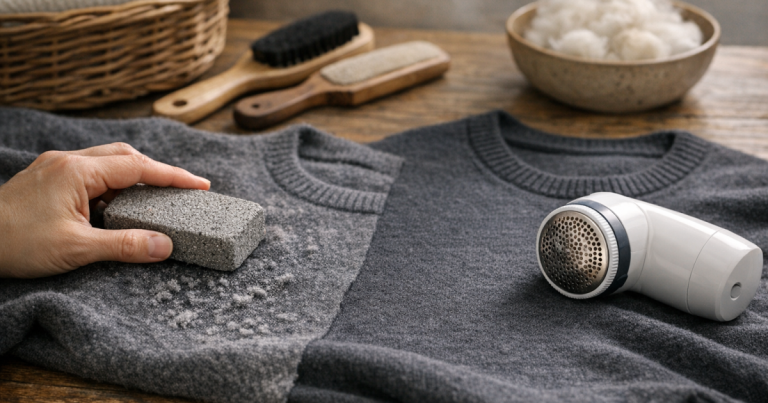
Use a lint roller only for quick removal of obvious pet hair or pale fibres on dark wool. If the coat has a soft brushed finish, press lightly and avoid repeatedly rolling the same area. When the issue is bobbling rather than loose lint, a roller or brush will not solve it; a fabric shaver may be more appropriate on suitable knit or woven surfaces. For a closer look at that tool type, see the Philips Fabric Shaver GC026/30 review.
Tweed, herringbone and textured coats
Textured wool and tweed often hide dust and lint within the weave. A lint roller can help with surface hair, but it may not reach the lint caught between raised yarns. A medium clothes brush is usually more effective, provided you brush in the direction the fabric naturally lies.
For herringbone, start with gentle strokes along the length of the coat rather than trying to follow every zig-zag in the weave. If lint is trapped in seams, pocket edges or under the collar, use short outward strokes with the brush rather than picking at the fabric with your fingers.
Cashmere and very soft wool blends
Soft luxury fibres need the lightest touch. A clothes brush with soft natural or very fine synthetic bristles is generally safer than a high-tack roller, but you should still test under the hem or inside a facing first. Brush slowly, using minimal pressure. If the coat looks fluffy after brushing, stop; the surface may be too delicate for routine mechanical grooming.
A lint roller can still be useful for an emergency touch-up, but choose a less aggressive adhesive sheet and dab rather than roll firmly. For these fabrics, prevention matters: keep scarves clean, avoid rough backpack straps, and store the coat away from shedding knitwear.
Puffer jackets and quilted coats
For smooth synthetic puffers, a lint roller is usually the quickest option. Hair and fluff tend to sit on the outer shell rather than nest deep in the fabric. Roll gently across panels and avoid forcing the adhesive into stitched channels, where it may catch loose threads.
A clothes brush can be used, but choose a soft one and avoid stiff bristles on shiny or coated fabrics. If the jacket has a water-repellent finish, aggressive brushing is not helpful. Surface cleaning, correct drying and following the care label matter more than heavy grooming.
Waxed cotton and waterproof coats
Lint rollers are not ideal for waxed cotton because adhesive can interact poorly with the waxy surface and may pick up coating residue. A soft clothes brush or clean cloth is normally the better first step for dried mud, dust and lint. Brush only when the dirt is dry, then wipe as directed by the garment care label.
For waterproof or shower-resistant coats, avoid anything abrasive. The aim is to remove surface debris without disturbing finishes, seam areas or coatings. A very soft brush can help at cuffs and hems, but do not use stiff scrubbing motions.
Faux fur, shearling-style trims and velvet collars
These surfaces need careful handling because pile direction is highly visible. A standard lint roller may flatten the pile or pull at fibres. A specialist lint brush, velvet brush or very soft garment brush is usually a better starting point. Work slowly in the direction of the pile and stop if the surface begins to mat.
If a trim is removable, check its care label separately from the main coat. A coat body and collar trim may have different care needs, and treating them as one fabric can lead to poor results.
A simple coat-refresh routine
Use this routine when a coat looks tired but does not need washing or dry cleaning. It is especially useful during the UK autumn and winter season, when coats pick up rain marks, dust, scarf fibres and pet hair in daily use.
- Let the coat dry first: never brush or roll a damp wool coat. Hang it on a broad hanger and allow it to air naturally.
- Shake gently: take the coat outside or near an open window and give it a light shake to loosen dust.
- Brush the main panels: use long downward strokes from shoulder to hem. Keep pressure light and consistent.
- Treat collars and cuffs: brush away from seam lines, where lint and skin oils tend to collect.
- Use a roller selectively: finish with a lint roller only where visible hair or fluff remains.
- Air before storage: give the coat time to breathe before returning it to a wardrobe or coat cupboard.
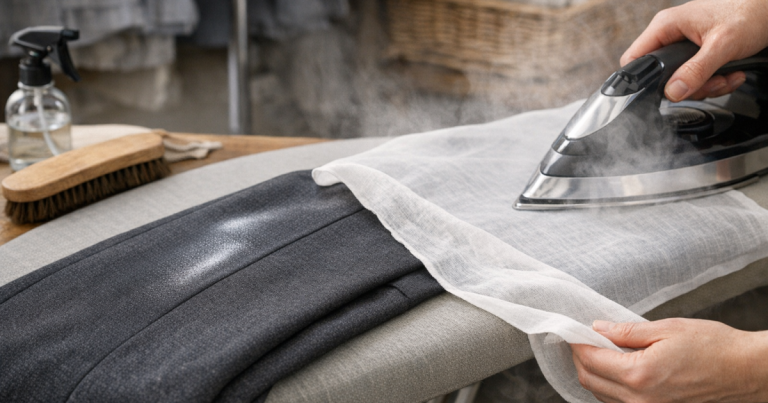
If a coat smells stale rather than simply looking linty, airing and careful steaming may help, depending on the fabric and care label. For temperature and fabric precautions, use the guidance on steamers, irons and safe fabric settings before applying heat or steam to outerwear.
Key checks before using either tool
Check the care label and finish
The care label will not always mention lint tools, but it tells you what the fabric is and whether special finishes are likely. Wool, cashmere, coated cotton, leather trims and water-resistant synthetics all respond differently. If the coat is labelled dry clean only, that does not mean you cannot brush it, but it does mean you should avoid damp cleaning experiments.
Test where it will not show
Try the brush or roller under the hem, inside a front facing or beneath the collar. Look for raised fuzz, colour transfer, adhesive marks or flattened pile. If a quick test changes the look or feel of the fabric, do not continue across visible panels.
Work with the nap, not against it
Many coat fabrics have a directional surface. Brushing against the nap can make the fabric look patchy, even if no damage has occurred. Smooth the coat with your hand first to find the natural direction, then brush that way. On velvet collars or faux fur trims, direction matters even more.
Avoid overworking one area
Repeated rolling or brushing can make a small problem worse. If lint does not lift after a few gentle passes, change method rather than increasing pressure. Embedded marks, oily collar staining and pilling are separate issues and need different treatment.
When to use both tools together
The most effective coat-care setup is not necessarily one tool or the other. For a wool work coat, use a clothes brush once a week to lift dust and refresh the nap, then use a roller for the last few pet hairs before leaving the house. For a synthetic puffer, reverse the emphasis: roller first for visible hair, then a soft brush only for seams or dusty hems.
Households with pets often benefit from keeping a washable lint brush or roller near the door and a proper garment brush in the wardrobe. A reusable example is the Oxo Good Grips Furlifter Garment Brush, which is designed for hair and lint removal without disposable sheets. As with any tool, still test it on more delicate coat fabrics before regular use.
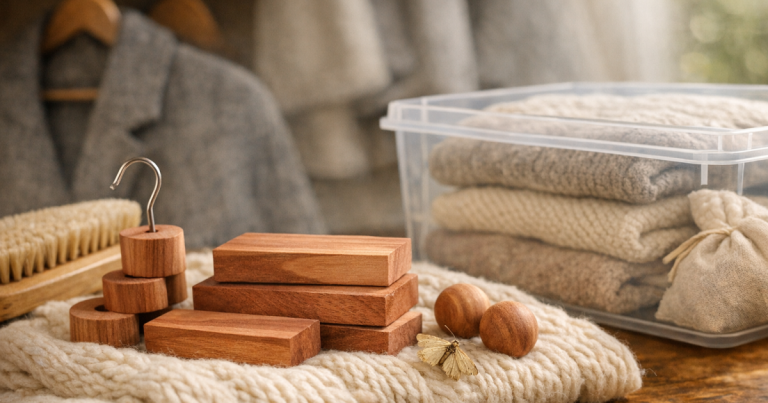
Storage also affects how much lint a coat gathers. If a dark wool coat is pressed against fluffy knitwear, blankets or shedding scarves, it will need far more maintenance. Give outerwear enough room, use breathable garment covers for occasional-use coats and keep freshly brushed coats away from damp or dusty corners. For a fuller seasonal setup, see the wardrobe storage guide.
Main lessons
For coats, a clothes brush is usually the better maintenance tool because it removes dust and lint while respecting the structure of wool, tweed and tailored fabrics. It is slower than a roller, but it does more than tidy the surface.
A lint roller is still useful. It is the quick fix for pet hair, scarf fibres and last-minute fluff on smooth coats. The problem is relying on it for every fabric and every kind of debris. Used too firmly or too often, adhesive sheets can tug at soft fibres, miss embedded lint and create unnecessary waste.
The best answer is fabric-led: brush wool and textured coats, roll smooth synthetics and use both sparingly when needed. If the coat has a delicate pile, coating, trim or expensive fibre content, start with the gentlest method and test before treating visible areas.
Helpful questions
Can a lint roller damage a wool coat?
It can if the adhesive is very strong, the coat is damp, or the wool has a soft brushed surface. Use light pressure and stop if the fabric starts to look fluffy or lifted.
How often should I brush a winter coat?
For regular wear, once a week is sensible. Brush more often after dusty commutes, pet contact or outdoor events, but keep the strokes light rather than frequent and forceful.
Is a clothes brush better than washing a coat?
For routine dust and lint, yes. Brushing refreshes the surface without exposing the coat to water, agitation or heat. Washing should only follow the care label and is not a substitute for everyday grooming.
What should I use on a black coat that shows every speck?
Use a clothes brush for the full coat, then a lint roller for the final visible fibres. Store it away from pale scarves, fluffy jumpers and towels to reduce repeat lint.
Should I brush a coat before putting it away for the season?
Yes. Remove dust and hair before storage, air it fully, then hang it with enough space around it. Clean fabric is less likely to attract odours or pests in storage.
Quick Buying Links
Lint Roller
Choosing between a lint roller vs clothes brush for coats is less about which tool is universally better and more about the coat in front of you.
Clothes Brush: Which Is Better for Coats?
Worth considering if its strengths better match your needs.