Pinholes in a wool jumper, dusty webbing in a drawer or a small beige moth near the wardrobe can all make you wonder whether clothes moth traps are enough to protect your garments. They can be useful, but they are often misunderstood: they mainly show whether adult moths are present, not whether your clothes are safe.
Used well, a trap gives you evidence. It helps you decide where to inspect, whether cleaning has worked and when a wardrobe needs closer attention. Used on its own, it can give a false sense of security while larvae continue feeding out of sight.
The short answer
Moth traps are useful, but they are mostly monitoring tools rather than a complete treatment. The sticky pheromone style sold for wardrobes and drawers is designed to attract and catch adult male moths. That can reduce mating pressure a little, but it does not remove eggs, larvae or adult females from your clothes.
- Useful for: confirming activity, spotting which room or wardrobe is affected, and checking whether numbers are falling after cleaning.
- Not enough for: killing larvae in knitwear, treating infested carpets, cleaning hidden fabric debris or protecting stored wool on their own.
- Best used with: careful inspection, laundering or dry cleaning where suitable, vacuuming, and sealed storage for vulnerable natural fibres.
If you see trapped moths, treat that as a prompt to inspect fabrics rather than as proof the problem is solved.
What clothes moth traps actually do
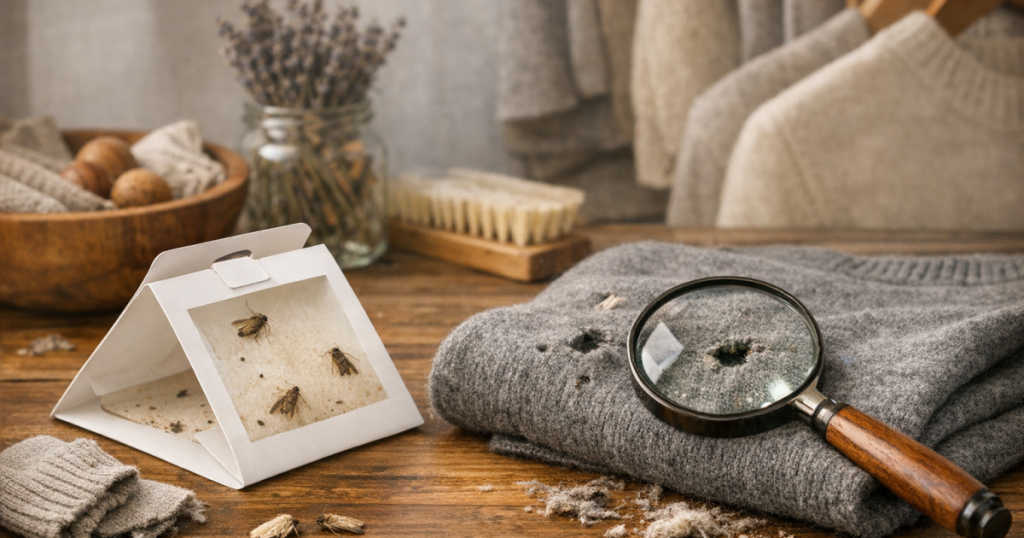
Most wardrobe moth traps use a pheromone lure on or near a sticky board. The lure mimics a scent signal and draws in adult male clothes moths, which then get stuck. This is why the catch tells you something important: adult moths are active nearby.
However, the real fabric damage is caused by larvae. Larvae feed on protein-based fibres such as wool, cashmere, mohair, silk, fur, feathers and some blends containing these fibres. They are especially attracted to garments with perspiration, food marks, skin oils or long periods of undisturbed storage. A clean-looking jumper folded at the back of a drawer can still be vulnerable if it has been worn and stored without cleaning.
A trap therefore works like an early warning system. It does not wash, freeze, heat-treat, dry clean or physically remove the life stages that eat fabric. If there are larvae in a cashmere cardigan, a sticky card elsewhere in the wardrobe will not pull them out.
Why they are still worth using
The main value is visibility. Clothes moths tend to avoid light and disturbance, so you may not see them until damage is already visible. A trap helps you catch a problem earlier, particularly in spare rooms, airing cupboards, under-bed storage and wardrobes containing winter woollens.
They are also helpful for narrowing down the source. If one trap in a bedroom catches several moths while another in the hallway stays clear, you know where to inspect first. That can save time and reduce unnecessary washing of unaffected garments.
After you clean and reorganise a wardrobe, traps can show whether activity is falling. If catches continue, something is being missed: a wool coat stored in a garment bag, a felt hat box, carpet edges, a pet bed, upholstery, a forgotten scarf or fabric lint behind furniture.
Where traps are most useful around the home
Place traps where moths are likely to move, not simply where they are easiest to see. Good locations include the base of wardrobes, dark corners of bedrooms, near drawers containing knitwear, under beds with textile storage, and close to wool coats or suits kept for months at a time.
Avoid putting a trap directly on garments. The adhesive can mark fabric, and the card may attract moths towards the very area you are trying to protect if placed carelessly. Use the holder or folded shape supplied with the trap and keep it on a shelf, floor edge or other stable surface.
Follow the packet instructions on spacing and replacement. Lures lose strength over time, and a dusty trap is harder to read. Write the date on the back when you set it out so you know whether a sudden quiet patch is genuine or simply an expired lure.
How to use traps as part of a proper fabric-care response
1. Confirm what you are dealing with
Not every small moth near clothing is a clothes moth, and not every hole is moth damage. Check for irregular holes, thinning patches, silky tubes, gritty debris or larvae in folds and seams. Look closely at collars, cuffs, underarms, waistbands and folded edges where body oils collect.
2. Inspect the vulnerable fibres first
Prioritise wool jumpers, cashmere scarves, mohair cardigans, silk linings, wool coats, felt hats, heirloom blankets and natural-fibre suits. Synthetic gym tops and cotton T-shirts are usually less attractive unless they are soiled or blended with animal fibres.
Before washing any garment you are unsure about, check the care label. Our guide to reading laundry symbols before washing new clothes is also useful for older items when the label has symbols but little written guidance.
3. Clean what can safely be cleaned
Cleaning removes food residues, perspiration and larvae that are present on washable garments. Use the care label as your limit: some wool and delicate knits tolerate careful hand washing, while structured coats, lined garments and some tailored items may need professional dry cleaning.
If mohair or another fuzzy knit is involved, avoid aggressive rubbing. The goal is to clean and refresh without felting or matting the surface. For fibre-specific handling, see our advice on washing mohair knitwear without matting the fibres.
4. Vacuum the storage area thoroughly
Larvae can live in lint, hair, carpet edges, wardrobe corners and gaps behind furniture. Vacuum the wardrobe floor, skirting boards, drawer runners, shelf corners and the area under storage boxes. Empty the vacuum contents promptly into an outside bin, especially if you have found larvae or webbing.
5. Store clean garments in a way larvae cannot reach
Once garments are clean and fully dry, store high-risk items in sealed boxes or garment bags designed for storage. Breathable cotton covers can help with dust, but they are not always a full barrier if they have open seams, loose closures or gaps around hangers.
Never seal away even slightly damp knitwear. Trapped moisture encourages mustiness and can damage fibres. Lay reshaped knits flat until completely dry; the method in our guide to air-drying knitwear without stretching the shoulders works well after careful washing.
What a trap catch means
One moth on a trap does not automatically mean your wardrobe is ruined. It does mean you should inspect nearby vulnerable textiles. A sudden increase in catches, or repeated catches in the same room, is more concerning and suggests an established source nearby.
Use a simple log if you are trying to solve a persistent issue. Note the room, trap date and rough count each time you check. You do not need a complicated system; a note on your phone or a small label inside a wardrobe door is enough. Patterns matter more than exact numbers.
- No moths caught: reassuring, but not a guarantee. Keep checking vulnerable stored garments.
- Occasional moths caught: inspect woollens and clean anything worn before storage.
- Regular catches: search for a source in clothing, carpets, soft furnishings or stored textiles.
- Catches after cleaning: repeat the inspection and look beyond the wardrobe itself.
Common mistakes that make traps less effective
The biggest mistake is treating traps as a cure. A sticky card cannot remove larvae hidden in a jumper seam or eggs in a folded scarf. It can only tell you that adult male moths are around.
Another common issue is placing too many lures in a small space without following the instructions. More is not always better. Strong overlapping scents can make it harder to interpret where moths are coming from, and poorly placed traps may not reflect the true source.
People also forget to replace old traps. Once the lure has faded or the surface is dusty, it becomes a poor indicator. Date each one and check it as part of your seasonal clothing routine, especially when putting winter knitwear away or bringing it back into use.
Finally, do not ignore non-clothing sources. Wool rugs, carpet edges, old upholstery, stored blankets, feather items and pet hair build-up can all support moth activity. If the traps keep catching moths but clothes look clear, widen the search.
Are cedar, lavender and sachets the same thing?
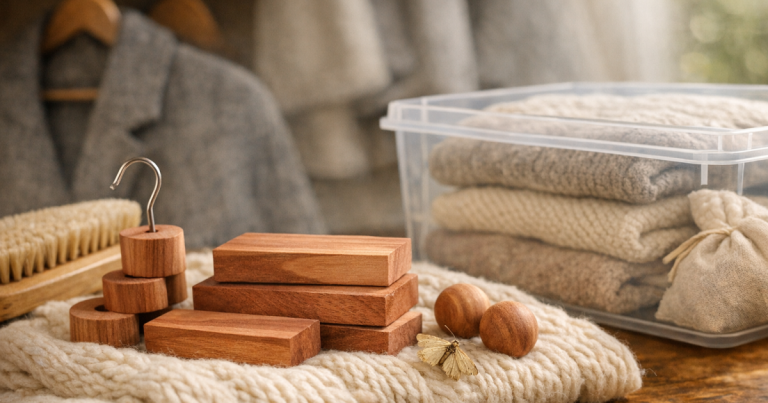
No. Cedar blocks, lavender sachets and similar wardrobe scents are not the same as pheromone monitoring traps. They may make storage areas smell fresher and can be part of a tidy wardrobe routine, but they should not be relied on to prove whether clothes moths are present.
Cedar also needs maintenance to remain aromatic, and scent alone will not clean soiled fibres or remove larvae. Think of scented accessories as supplementary at best. The reliable fabric-care steps are still inspection, cleaning, disturbance, vacuuming and protected storage.
When traps are not enough
If you are repeatedly finding larvae, extensive damage, webbing across several garments or moths in multiple rooms, traps alone are too limited. At that stage, the source may be larger than a single drawer. You may need to empty wardrobes fully, clean storage furniture, check carpets and soft furnishings, and treat or professionally clean valuable items according to their care requirements.
For heirloom textiles, tailored wool coats, delicate silk linings or expensive cashmere, avoid panic-washing. The wrong wash can do more harm than the moths. Check labels, test your approach cautiously and use specialist cleaning where the garment construction or fibre content demands it.
Common questions
Do moth traps stop holes appearing in clothes?
Not by themselves. They can warn you that adult moths are present, but holes are caused by larvae feeding on fibres. You still need to inspect, clean and store vulnerable garments properly.
Can a trap catch female moths?
Most pheromone wardrobe traps are aimed at male moths. That is useful for monitoring activity, but it means females, eggs and larvae can remain present even when the trap is catching moths.
How long should I keep using traps?
Use them during high-risk storage periods and after any suspected infestation. Replace them according to the manufacturer’s instructions, and keep monitoring for a while after cleaning so you can see whether activity returns.
Should I put traps inside sealed storage boxes?
Usually, a sealed box should be protecting clean garments rather than acting as a trapping zone. Place traps in the surrounding wardrobe or room so they monitor activity outside storage. If moths are inside a sealed box, inspect and clean the contents rather than relying on a trap.
In brief
Clothes moth traps are useful, but their main job is to monitor. They help you confirm moth activity, locate the most likely problem area and check whether your cleaning and storage steps are working. They do not replace laundering, dry cleaning, vacuuming or sealed storage for wool, cashmere, mohair and other vulnerable fibres.
The best approach is to treat every trap catch as information. Look nearby, clean what is safe to clean, protect what is worth protecting and keep checking until the pattern is clear. That is how a simple fabric-care tool becomes part of a reliable moth prevention routine rather than a sticky card left forgotten at the back of a wardrobe.