Cashmere is warm, light and expensive to replace, which is why learning how to store cashmere jumpers properly matters before moths find them. The real defence is not one magic sachet; it is clean fibres, sealed storage, calm humidity and regular checks.
Clothes moth larvae feed on keratin in animal fibres, and they are especially drawn to hidden, undisturbed garments with traces of sweat, skin oils or food. A jumper that goes away slightly worn can come out with pinholes months later.
The short version
- Wash or professionally clean cashmere before long storage, even if it looks clean.
- Make sure the jumper is fully dry before folding it away.
- Fold cashmere rather than hanging it, as hangers can stretch the shoulders and distort the knit.
- Use clean, sealed storage such as lidded boxes or zip fabric storage bags, not open shelves.
- Add cedar or lavender only as a supporting measure, not as the main protection.
- Check stored knitwear every few weeks during moth season and act quickly if you see webbing, larvae or new holes.
Why moths target cashmere
Cashmere comes from goat hair, so it contains the animal protein that clothes moth larvae can digest. Adult moths do not eat your jumpers; the damage is done by larvae after eggs have been laid in quiet, dark, fibre-rich areas.
UK homes often give moths exactly what they like: warm cupboards, spare room wardrobes, woollen blankets, under-bed storage and clothes that sit undisturbed between seasons. A cashmere jumper with body oil on the neck, deodorant at the underarm or a small food mark is much more appealing than one that has been properly cleaned.
Moth damage can be hard to spot early. Look for tiny irregular holes, sandy-looking debris, fine webbing, shed larval cases or weakened patches near seams, cuffs, collars and underarms. These signs matter more than seeing one adult moth flying around the room.
Step 1: Inspect every jumper before it goes away
Do not move cashmere straight from a winter drawer into long-term storage. Work through each jumper in good light and check both sides of the knit. Pay particular attention to folded edges, inside seams, ribbed cuffs and underarms, where dirt and movement can hide early damage.
Shake the garment gently over a pale towel or sheet. If you notice gritty debris, webbing or moving larvae, isolate that jumper from the rest of your knitwear. Do not put suspect garments back into a shared drawer, as that can spread the problem to other wool, alpaca, merino and silk items.
This is also the right point to deal with pilling. Bobbles do not cause moths, but they can make a jumper look tired and may hide small holes. For a careful approach to removing pills without shaving too harshly, see our guide to choosing a fabric shaver for bobbly knitwear.
Step 2: Clean cashmere before storage
Clean fibres are the foundation of moth prevention. Sweat, skin cells, hair products, perfume residue and food traces can all make stored knitwear more attractive to pests. Even if a jumper has only been worn once or twice, it should be refreshed before being packed away for a season.
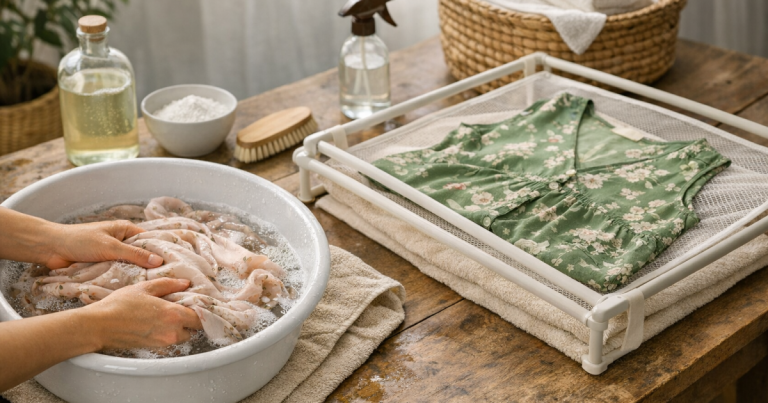
Always follow the care label first. Some cashmere is suitable for gentle hand washing; some can be washed on a wool or hand-wash cycle in a machine if the label allows it; some is dry-clean only. Use cool water, a wool-safe detergent and minimal agitation when hand washing. Avoid twisting or wringing, as wet cashmere can stretch and lose shape.
After washing, press water out gently in a clean towel, reshape the jumper and dry it flat away from direct heat. Do not store cashmere while it is even slightly damp. Moisture encourages mustiness and can make fibres vulnerable during storage.
Step 3: Fold, do not hang
Cashmere should normally be folded for storage. Hangers can pull at the shoulders, lengthen the body and leave raised marks in a soft knit. Heavy or oversized cashmere is especially likely to stretch if it hangs for weeks at a time.
Lay the jumper front-down, fold the sleeves across the back, then fold the body into a neat rectangle. Avoid making the fold too tight. A softly folded jumper keeps its shape better and allows you to stack it without crushing the fibres.
If your wardrobe is crowded, resist the temptation to hang delicate knitwear just to save drawer space. Our guide to which clothes should be hung, folded or boxed gives a useful framework for deciding what belongs on hangers and what needs flatter storage.
Step 4: Choose a sealed but sensible storage container
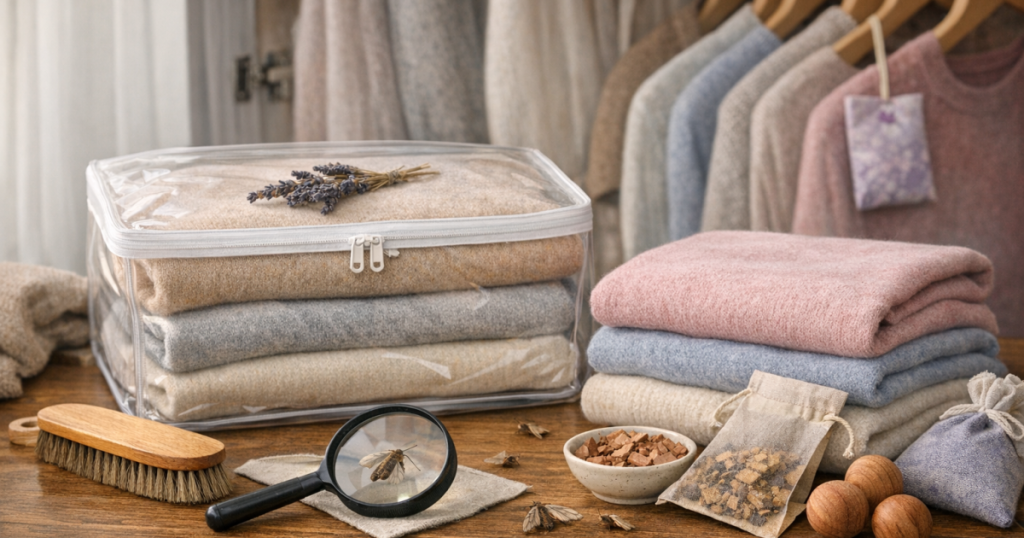
For long-term protection, cashmere needs a barrier. Open drawers and shelves are convenient for everyday use, but they do not stop moths reaching the fibre. For seasonal storage, use a clean lidded plastic box, a zip-up fabric storage bag with a close-fitting fastening, or a sealed drawer organiser inside a wardrobe.
Clear boxes have the advantage of visibility: you can check contents without rummaging through everything. If you use fabric storage bags, choose ones with neat seams and closures rather than loose, gaping edges. Avoid cardboard boxes for long-term cashmere storage, as they are easier for pests to access and can absorb household smells and moisture.
Do not overpack the container. Squashing cashmere can create hard creases, flatten the loft of the yarn and make it more awkward to inspect. Stack folded jumpers in small groups, with the most delicate pieces on top.
Step 5: Use deterrents as a backup, not a cure
Cedar blocks, cedar rings and lavender sachets can help make a storage area less inviting, but they should not be treated as a complete moth-proofing system. Their scent fades, and they will not reliably protect dirty or exposed fibres on their own.
If you use cedar, refresh it periodically according to the product instructions and keep it from pressing directly into pale or very delicate cashmere. Sachets should be clean, dry and contained so that plant material cannot spill into the knit. Avoid placing strong-scented products directly against a jumper, as odour transfer can be difficult to remove from fine fibres.
Pheromone moth traps are useful for monitoring adult moth activity in wardrobes and bedrooms. They do not remove larvae already feeding in garments, so they work best as an early warning sign alongside cleaning, sealing and regular inspections.
Step 6: Put stored cashmere in the right part of the home
The best storage spot is cool, dry, clean and not forgotten. A main bedroom wardrobe, a well-kept chest of drawers or a dry under-bed box can work well if the container is sealed and easy to access.
Be cautious with lofts, garages, damp spare rooms and airing cupboards. Lofts and garages can swing between cold, heat and humidity. Airing cupboards can be too warm, and warmth can encourage pest activity if larvae are already present. Damp corners can leave cashmere smelling stale and may affect the fibre over time.
Vacuum the area before you put knitwear away, including wardrobe corners, skirting boards, drawer runners and the space under furniture. Moths can feed on lint, pet hair and old fibres as well as clothing, so a clean storage zone supports the work you have done on the jumpers themselves.
Step 7: Build in quick checks through the season
Stored cashmere should not be abandoned for months. Every few weeks, open the container, check the top and bottom garments, and look for fresh debris, webbing or holes. This only takes a few minutes but can stop one damaged jumper becoming a drawer-wide problem.
Refold items along different lines from time to time if they are stored for a long period. This helps reduce hard fold marks and gives you another chance to spot issues early. If you find suspect damage, remove the affected garment, inspect the rest of the container and clean the storage area thoroughly before returning anything.
Wider wool care habits matter too. Brushing coats, cleaning lint from wardrobes and not mixing dirty outerwear with clean knitwear all reduce the amount of attractive fibre debris in your storage areas. For heavier wool garments, our piece on whether natural bristle clothes brushes are worth it for wool coats explains where brushing helps and where it has limits.
What to do if you already have moth damage
If you discover holes, do not panic, but do act quickly. Separate the damaged jumper from other animal-fibre garments and inspect nearby clothing. Moth activity often affects groups of woollens stored together rather than one item in isolation.
Wash or dry-clean affected items according to their care labels. Clean the drawer, box or wardrobe thoroughly, paying attention to corners and seams where lint collects. Empty the vacuum cleaner promptly after cleaning textile storage areas, especially if you have found larvae or debris.
Freezing is sometimes used as an additional home measure for suspect garments, but it should only be done with completely dry items sealed in a bag to prevent condensation. It is not a substitute for cleaning, and delicate cashmere should be allowed to return to room temperature before being handled.
Small holes may be repairable by a skilled invisible mender or knitwear repair specialist. If the jumper is valuable or sentimental, avoid trimming loose fibres or enlarging the hole before seeking repair advice.
Questions people ask
Can moths get into plastic storage boxes?
They can if the lid does not fit properly or if eggs or larvae are already on the garment when it goes in. Clean the cashmere first, then use a well-fitting lidded box and check it periodically.
Are vacuum storage bags safe for cashmere?
They can protect against pests, but heavy compression may flatten soft fibres and set creases. For fine cashmere, a rigid box or lightly filled zip storage bag is usually kinder.
Does cedar kill clothes moths?
Cedar is best treated as a deterrent, not a guaranteed moth treatment. It works better in a clean, enclosed space and needs refreshing when the scent fades.
Should cashmere be washed after every wear?
Not usually. Airing between wears is often enough for lightly worn cashmere, but wash or dry-clean it before seasonal storage so residues do not attract pests.
Can I store cashmere with other wool jumpers?
Yes, if everything is clean, dry and inspected first. Do not mix freshly cleaned cashmere with worn woollens, scarves or blankets that could carry moth eggs or fibre debris.
The big picture
Moth prevention is a routine, not a single product. Clean the jumper, dry it fully, fold it gently, seal it in a suitable container and keep the storage area clean. Add deterrents and traps as supporting tools, then check your knitwear often enough that any problem is caught early.
Cashmere lasts longer when it is treated as a delicate animal fibre rather than ordinary wardrobe filler. A few careful habits at the end of the season can prevent holes, stretching, stale odours and expensive repairs later.