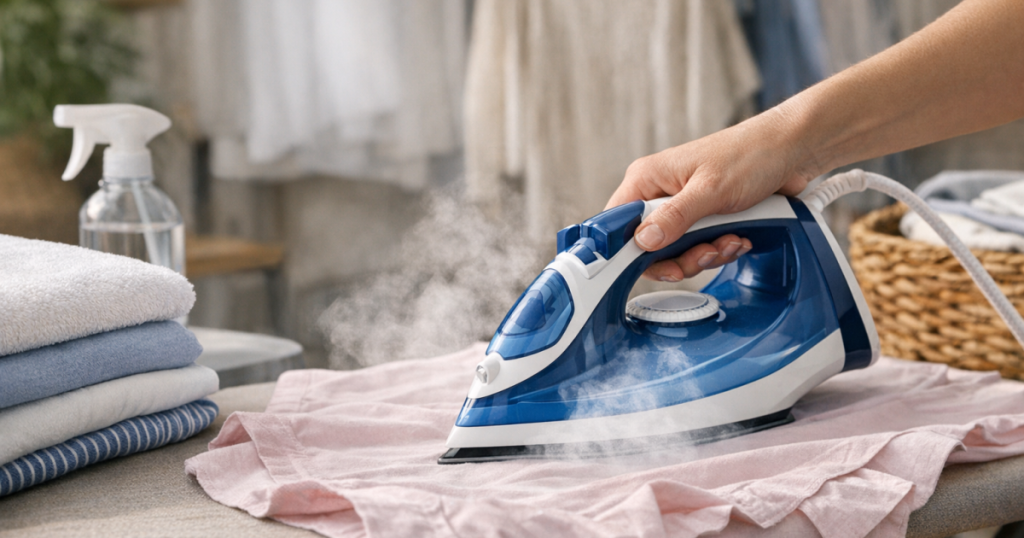
Not every ironing pile needs a premium iron with a long list of extras. For many UK homes, the more useful question is whether a straightforward steam iron can handle shirts, school uniform, cotton basics and the occasional smarter garment without taking up much cupboard space. This Philips EasySpeed GC1740/26 review looks at the iron as an everyday fabric-care tool rather than a gadget: easy to use, sensible to store, and good enough for routine creases when matched with the right heat setting and ironing surface.
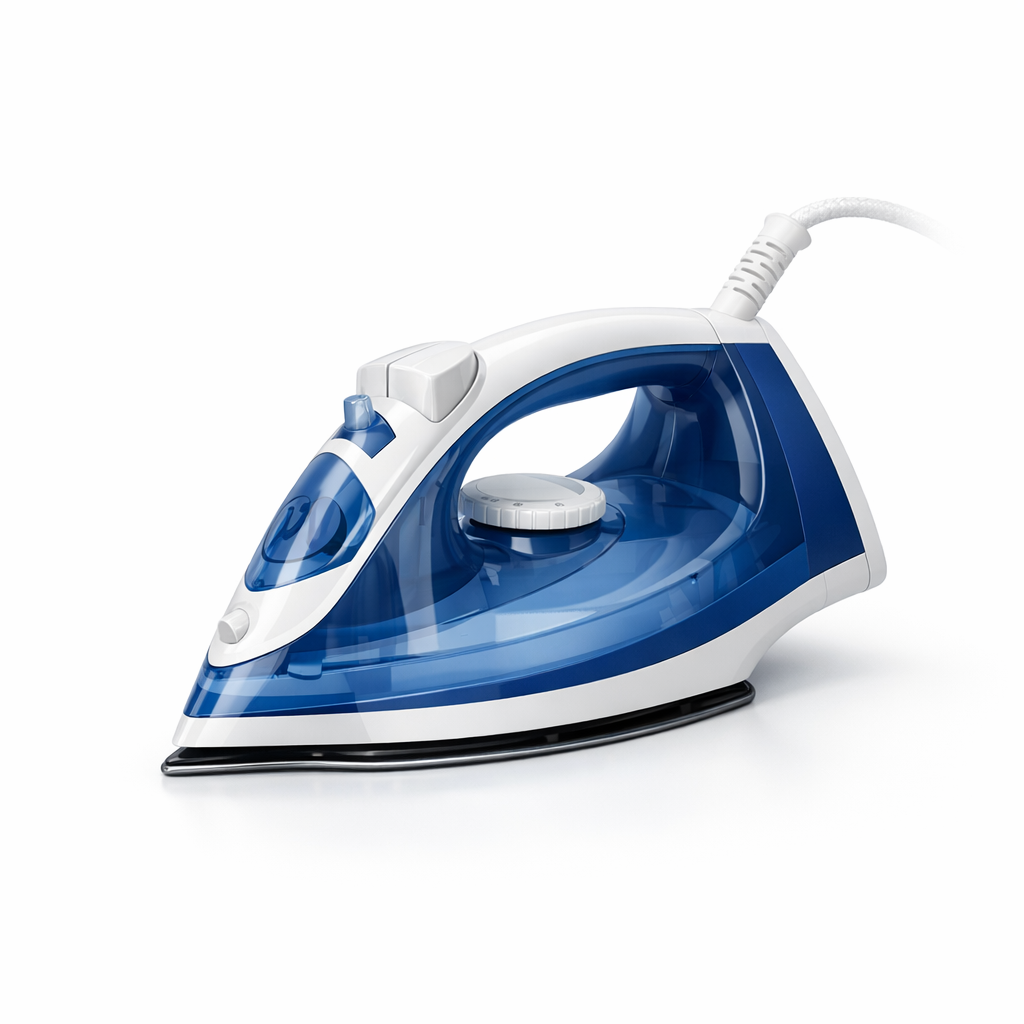
EasySpeed GC1740/26
Tr as.
The quick verdict: the Philips EasySpeed GC1740/26 is best viewed as a practical entry-level steam iron for normal domestic use. It is not the most luxurious option for heavy linen, large family ironing loads or frequent tailoring work, but it makes sense if you want a recognisable brand, simple controls and a compact iron for weekly laundry.
Product overview
The Philips EasySpeed GC1740/26 is a Philips steam iron from the EasySpeed family. Its purpose is familiar: apply controlled heat, steam and pressure to smooth washable garments after laundering. That makes it relevant for cotton shirts, polycotton uniforms, T-shirts, pillowcases and everyday trousers, provided the care label allows ironing.
Its appeal is partly that it does not try to replace every garment-refreshing tool in the home. It is still a traditional iron, so the quality of the result depends on heat selection, steam use, garment preparation and the board underneath. If you regularly switch between wool blends, synthetics and cotton, the practical value is in careful dial control rather than simply turning the iron up and hoping for the best.
For readers deciding between heat-based tools, it is worth comparing the role of an iron against a steamer. A steam iron gives sharper pressing and better edge control, while a steamer is usually gentler for hanging garments and light refreshes. Our guide to whether an iron or clothes steamer is better for each fabric explains that trade-off in more detail.
Use the exact full model name when checking UK retailer listings, because Philips sells several EasySpeed irons and the specifications can look similar at a glance. Small differences in soleplate description, steam output, tank size or accessory inclusion are worth checking before you buy.
Key specs
- Brand: Philips.
- Full product name: Philips EasySpeed GC1740/26.
- Product type: steam iron.
- Product family: Philips EasySpeed steam irons.
- Best use case: everyday home ironing for washable garments where the care label permits heat and steam.
- Controls to check: temperature dial, steam settings and spray function on the current UK product listing.
- Specifications to verify before purchase: soleplate material, continuous steam output, steam boost, water tank capacity, cord length and anti-calc maintenance requirements, as retailer pages can vary in how much detail they provide.
- Running costs: no consumable cartridge should be assumed unless a retailer specifically states one is included or required; always check the current model information.
Pros and cons
Pros
- Simple, recognisable steam-iron format that most households will understand immediately.
- Well suited to routine laundry such as cotton shirts, schoolwear, aprons, tea towels and everyday tops.
- Compact enough for homes where ironing equipment needs to be stored in a cupboard, utility corner or bedroom.
- More fabric control than a garment steamer when you need collars, cuffs, hems and seams to look crisp.
- Likely to suit occasional ironers who do not want to pay for a more advanced steam generator setup.
Cons
- Not the obvious choice for very large ironing piles, heavy linen bedding or frequent pressing of thick fabrics.
- Results will depend heavily on using the correct temperature and steam setting for each fabric.
- Buyers need to check the current UK listing carefully, as small specification differences matter in this category.
- It is still a heat-based tool, so it is unsuitable for garments labelled no-iron, do-not-steam or dry-clean-only without professional advice.
- Anyone wanting premium glide, higher steam capacity or more advanced crease removal may prefer stepping up within Philips’ range.
Performance in real use
For everyday garments, the Philips EasySpeed GC1740/26 makes most sense as a steady, low-fuss iron. The main tasks it needs to perform are not glamorous: flattening shirt fronts, tidying uniform collars, making cotton tops look wearable and taking storage creases out of freshly washed items. In those situations, its traditional steam-iron design is practical because you can combine heat, moisture and pressure in a controlled way.
On cotton and polycotton, performance will depend on letting the iron reach the selected temperature and using steam only when the fabric label allows it. Cotton shirts usually respond well to light moisture and firm passes, but rushing over a dry, tightly creased shirt will always give a poorer finish. For office shirts, school shirts and lightweight workwear, the best results usually come from ironing while the garment is slightly damp or using the spray function sparingly.
Synthetics need more care. Polyester and blended fabrics can become shiny or distorted if ironed too hot, so the lower end of the temperature dial matters. A pressing cloth is a sensible habit on darker synthetic trousers, printed tops and delicate trims. The Philips EasySpeed GC1740/26 is not a licence to treat every fabric the same way; it is a tool that rewards reading care labels and starting cautiously.
Wool, silk and embellished fabrics are where restraint becomes more important than power. Some wool garments can be pressed gently with a cloth and the correct setting, while others are better steamed lightly or left to a specialist cleaner. Silk can water-mark and react badly to heat, so it should not be treated like cotton. If a garment has make-up marks, oil-based stains or residue, remove those before applying heat, because ironing can help set some marks more firmly into the fibres.
The board underneath matters almost as much as the iron. A stable surface improves pressure and reduces the temptation to keep going over the same patch. In smaller UK flats or shared homes, a compact board can be a good match for a modest iron; our Brabantia TableTop Ironing Board S review looks at one space-saving setup for occasional ironing.
Maintenance is another practical consideration. Steam irons need sensible water use and regular care to reduce mineral build-up, particularly in hard-water areas. Before buying, check Philips’ current guidance for this exact model on descaling, water type and cleaning. Do not assume that advice for another EasySpeed model applies automatically.
Who it’s best for / who should skip it
The Philips EasySpeed GC1740/26 is best for people who iron regularly enough to need a proper iron, but not so much that a larger or more expensive setup is justified. It suits households that mainly deal with school shirts, office shirts, cotton basics, aprons, lightweight trousers and household linens in modest quantities.
It is also a sensible fit for students, renters, spare rooms and smaller homes where storage matters. If your ironing is mostly about making a few garments presentable before work, school or a weekend event, this model keeps the decision simple.
You should skip it if you frequently press heavy linen, large bedding loads, thick denim, formal tailoring or large family laundry baskets in one session. A higher-capacity iron or steam generator may be more efficient for that workload. It is also not the right tool if your wardrobe is dominated by delicate silks, structured wool coats, beaded clothing or specialist garments that need professional cleaning or very gentle steaming.
People who hate traditional ironing may also be happier with a garment steamer for quick refreshes, accepting that it will not produce the same crisp lines. The choice is less about brand loyalty and more about the finish you expect from your clothes.
Alternatives
If the Philips EasySpeed GC1740/26 feels a little too basic for your ironing habits, the most logical alternative is not necessarily a completely different product type. You may simply want to compare it with a higher-tier Philips steam iron, such as the Philips Azur Elite Steam Iron, and check whether the added specification on the current UK listing matches your actual laundry load.
The second alternative is a garment steamer rather than another iron. That route makes sense if you mainly refresh hanging garments, dislike setting up an ironing board, or deal with fabrics that need a softer finish rather than sharp creases. The trade-off is that steamers are not as precise for collars, cuffs, pleats and trouser creases.
For most buyers, the best alternative will be decided by three questions: how often you iron, how crisp you want the finish, and how much space you can give to ironing equipment. The Philips EasySpeed GC1740/26 remains a reasonable choice when the answer is “weekly, presentable, and not much”.
FAQ
Is the Philips EasySpeed GC1740/26 suitable for school uniforms?
Yes, it should suit many school shirts, polo shirts and washable uniform items, as long as the garment care label permits ironing. Use lower heat for synthetic blends and avoid ironing over printed logos unless the label says it is safe.
Can I use it on wool jumpers?
Only with care. Many wool jumpers are better reshaped and dried flat rather than ironed directly. If the label allows ironing, use a low setting, a pressing cloth and minimal pressure.
Will it remove deep creases from linen?
It can help with linen, but heavy linen is demanding and may need more steam, moisture and repeated pressing than a basic iron comfortably provides. Check whether a higher-powered iron would suit you better if linen is a regular part of your laundry.
Is it good for small UK homes?
Yes, its traditional compact iron format is a good match for limited storage, provided you have a safe, stable ironing surface. The board choice will affect both comfort and finish.
What should I check before buying?
Check the exact UK listing for soleplate description, steam performance, tank capacity, cord length, descaling instructions and warranty details. Do not rely on specifications from a different Philips EasySpeed model.
Verdict + score
The Philips EasySpeed GC1740/26 is a sensible everyday steam iron for households that want straightforward crease control without moving into premium ironing equipment. Its strengths are simplicity, compactness and suitability for ordinary washable garments; its limits are large loads, heavier fabrics and delicate wardrobe care. Buy it if your ironing pile is mostly shirts, uniforms and cotton basics, and compare upwards if you need stronger performance for linen, tailoring or frequent family laundry. Overall, the Philips EasySpeed GC1740/26 earns 7.6/10.
EasySpeed GC1740/26
Tr as.
You might also like: How to Use a Fabric Shaver Without Thinning Knitwear.