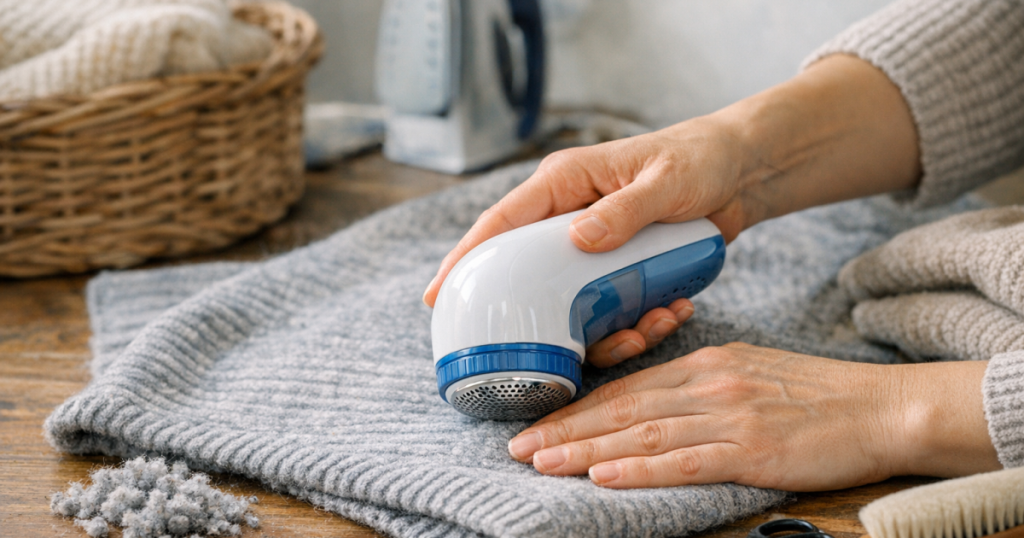
Pilling on jumpers, cardigans and knitted dresses can make good clothes look tired long before the fabric is worn out. Used carefully, a fabric shaver knitwear routine can remove surface bobbles while leaving the yarn structure intact, but pressure, speed and preparation matter.
The aim is not to make knitwear look new at any cost. It is to skim off loose pills only, then stop before you start shaving healthy fibres.
The short version
- Use a fabric shaver only on clean, fully dry knitwear.
- Lay the garment flat and support the fabric so it is smooth, not stretched tight.
- Start on the lowest or gentlest setting if your shaver has one.
- Glide lightly over bobbled areas instead of pressing down.
- Empty the lint chamber often so the blades do not drag.
- Stop once the surface looks neater; repeated passes can thin cuffs, elbows and underarms.
Why fabric shavers can thin knitwear
A fabric shaver cuts protruding fibres. That is useful when those fibres have already formed pills, but it becomes a problem when the blade reaches yarns that are still part of the fabric surface. Knitwear is especially vulnerable because the loops sit proud of the surface and can be caught if the shaver is pressed too hard.
Pills usually form where friction is highest: underarms, side seams, cuffs, hems, the front of a jumper where a seat belt or bag strap rubs, and the inside of sleeves. These areas may already be slightly worn. Heavy shaving can make them look smoother for a moment, then leave them flatter, thinner or patchy after the next few wears.
Different fibres behave differently. Fine merino and cashmere need a very light touch. Lambswool can have a fuzzier surface that looks tempting to shave, but that fuzz is often part of the garment’s natural texture. Cotton and synthetic blends can tolerate a little more firmness, but they can still develop pale, abraded patches if overworked.
Before you switch the shaver on
Check the care label and look closely at the fabric in natural light. If the knit is already sheer, laddered, felted or weak at the elbows, a shaver will not rebuild it. It may be better to remove a few larger pills by hand or leave the worn area alone.
Make sure the garment is clean and completely dry. Damp fibres are more likely to stretch or catch. If you have recently washed a wool jumper, let it dry naturally and fully before de-pilling; this is also where good drying technique matters. For wool garments that distort easily, follow a flat-drying method such as drying wool jumpers flat without stretching them before doing any finishing work.
Inspect the tool as well. The shaving head should be clean, the guard should sit securely, and the lint compartment should have space. A blunt, clogged or badly seated head is more likely to drag. Handheld shavers vary in feel and control; examples such as the Philips GC026 Fabric Shaver and Steamery Pilo 2 Fabric Shaver should still be tested gently on each garment rather than treated as one-setting-fits-all tools.
Step-by-step: shave pills without cutting sound yarns
1. Choose a hidden test patch
Start on an inside hem, side seam area or another discreet part of the garment. Use one or two light passes and check the surface. If the area looks flatter, shiny, fuzzy in a different way, or paler than the surrounding fabric, stop. That garment may be too delicate for a powered shaver.
2. Lay the knitwear on a firm, flat surface
A table is usually easier than your lap because it lets you control pressure. Place a clean towel underneath if the surface is slippery. Smooth the fabric with your hand so the bobbles sit on top, but do not pull the garment tight. Stretching opens the knit loops and makes it easier for the shaver to catch them.
3. Work in small zones
Treat an area roughly the size of your palm, then pause and inspect it. This prevents the common mistake of running the tool repeatedly over the same patch. Move methodically across high-friction zones rather than shaving the entire jumper just because a few areas have pills.
4. Use light contact, not pressure
The shaver should skim the surface. If you need to press hard to remove a pill, the pill may be too firmly attached, the blades may be dull, or the knit may be unsuitable. Pressing harder increases the chance of cutting healthy fibres, particularly on ribbed cuffs, raised patterns and soft brushed finishes.
5. Move slowly with the direction of the knit
Long, rushed strokes can skip and catch. Use short, controlled movements and follow the grain of the fabric where you can see it. On ribbed knitwear, work along the ribs rather than across them. Around seams and buttons, keep the shaver head flat and avoid catching raised edges.
6. Empty lint before it packs tightly
A full lint chamber can reduce cutting efficiency and make the tool drag. Switch the shaver off, empty the collected fibres and brush the head clean according to the maker’s instructions. Never tap the shaving head hard against the table, as this can misalign parts or damage the guard.
7. Stop early
The safest result is a neater garment, not a perfectly smooth one. A few tiny pills left behind are usually less noticeable than a shaved-thin patch. Once the main bobbles are gone, brush the knit lightly with your hand, reassess in daylight and put the shaver away.
Fabric-specific checks
- Cashmere: Use the lightest touch and focus only on obvious pills. Avoid chasing every hint of fluff, as soft bloom is part of the fabric’s feel.
- Merino wool: Test carefully, especially on fine-gauge jumpers. Thin merino can show pressure marks quickly.
- Lambswool: Remove larger bobbles, but do not shave the whole surface flat. A naturally fuzzy finish should not be treated like a fault.
- Cotton knitwear: Usually less lofty than wool, but still vulnerable at cuffs, waistbands and elbows.
- Acrylic and wool blends: Pills can be stubborn and frequent. Shaving may tidy the surface, but repeated friction will bring pills back if the garment is worn under rough coats or bag straps.
- Textured or cable knits: Avoid raised pattern edges. Work around them by hand where needed instead of forcing the shaver into grooves.
What to do after shaving
Once the pills are removed, give the garment a gentle shake and remove any loose fibres by hand or with a soft clothes brush. Avoid immediately ironing a freshly shaved wool or cashmere piece; heat and pressure can flatten the surface. If the garment needs reshaping, steam from a suitable distance may be gentler than direct pressing, but fabric type matters. For a broader fabric-by-fabric view, see our guide to choosing between an iron and a clothes steamer.
Store the jumper folded rather than hung, as hanging can stretch shoulders and seams. Give frequently worn knitwear a rest between wears so fibres can relax. If pilling is worst on one side, look at what is rubbing there: a cross-body bag, coat lining, desk edge or car seat belt may be causing the damage. Better wardrobe storage planning can also reduce abrasion between garments when shelves or drawers are tightly packed.
Mistakes that lead to thin patches
- Shaving while wearing the garment: The fabric is curved, stretched and harder to control.
- Using pressure to speed things up: Pressure cuts deeper than the pills and can nick the knit loops.
- Working over seams and labels carelessly: Raised edges can catch the guard or blade area.
- Trying to remove natural fuzz: Not all surface texture is pilling. Some fibres are meant to look soft or brushed.
- Repeating the process too often: If a jumper needs shaving after every wear, the friction source needs fixing.
- Ignoring weak areas: Elbows, underarms and cuffs are often already worn before you begin.
Helpful questions
Can a fabric shaver ruin a wool jumper?
Yes, if it is pressed hard, used on a weak area or run repeatedly over the same patch. On wool, use light passes, test first and stop as soon as the main pills are removed.
Is a lint roller a safer alternative?
A lint roller removes loose fibres, pet hair and surface dust, but it will not cut away attached pills. It is safer for very delicate knits, though less effective on established bobbles.
How often should I use a fabric shaver on knitwear?
Only when visible pilling makes the garment look untidy. For many jumpers, once or twice a season is enough. Frequent shaving can gradually reduce surface fibres.
Should I shave knitwear before or after washing?
Usually after washing and drying, because clean, dry fibres are easier to assess. If the garment is heavily soiled, wash it first so dirt does not drag through the fabric during shaving.
What should I do if the shaver snags a loop?
Stop immediately. Do not cut the loop off at the surface. Ease it gently to the inside with a blunt needle or small crochet hook, then avoid that area with the shaver.
Main points
A fabric shaver is useful for reviving bobbly knitwear, but it should be treated as a finishing tool rather than a resurfacing machine. Clean, dry fabric, a flat surface, light pressure and short passes are the habits that protect the yarn.
The safest approach is selective: remove obvious pills from high-friction areas, leave natural softness alone, and stop before the fabric looks overworked. That way, your knitwear looks fresher without sacrificing thickness, warmth or wear life.