A well-planned laundry area that protects clothes is not about having a large utility room. It is about giving damp, delicate and everyday garments enough space, airflow and order so they are not stretched, scorched, crushed or left sitting wet for too long.
In many UK homes, the laundry zone is a kitchen corner, bathroom alcove, airing cupboard area or shared hallway space. The right setup can still reduce bobbling, colour transfer, musty smells and avoidable wear.
Safety note: Fixed electrical work, new sockets, hard-wired ventilation and plumbing alterations for washing machines or dryers should be carried out by a qualified professional to meet UK safety requirements, building standards and local regulations.
The short version
- Keep laundry moving in stages: sorting, washing, drying, finishing and storage should each have a defined space.
- Prioritise airflow around damp clothes; cramped drying is one of the quickest routes to odour and fabric stress.
- Store detergents, stain removers and tools where they are easy to use but away from direct heat and damp.
- Use baskets, mesh bags and hangers to protect delicate fabrics before they reach the machine.
- Give clean clothes a landing zone so they are folded, aired or hung before creases and compression set in.
Start with the route your clothes take
A good laundry setup works like a simple route rather than a pile of disconnected products. Dirty clothes arrive, are sorted, treated, washed, dried, finished and returned to the wardrobe. When one stage has no clear place, fabrics usually suffer: wet towels sit on knitwear, school shirts are crammed into a basket, or damp synthetics are hung too closely together.
Begin by watching where bottlenecks happen. If the washing machine door opens onto a narrow walkway, you may need a slim basket that can sit to one side. If clean clothes end up on a radiator, you need a safer drying alternative. If delicates are forgotten at the bottom of the hamper, a separate small basket for wool, silk, lace and sportswear can prevent damage before washing even begins.
Create zones, even in a small space
You do not need a fitted utility room to make the system work. A compact setup can still have zones if each item has a job.
Sorting zone
Use separate baskets or dividers for whites and pale colours, darks, towels and items needing special care. If space is tight, one main basket plus two smaller washable bags can work. The aim is to stop damp gym kit, heavy denim and delicate knitwear rubbing together for days.
Treatment zone
Keep a small tray or lidded box for stain treatment, laundry bags, a soft brush and cloths. Put it close to the machine, not across the room. When stain care is easy, you are less likely to over-wash or use unnecessarily hot cycles later.
Drying zone
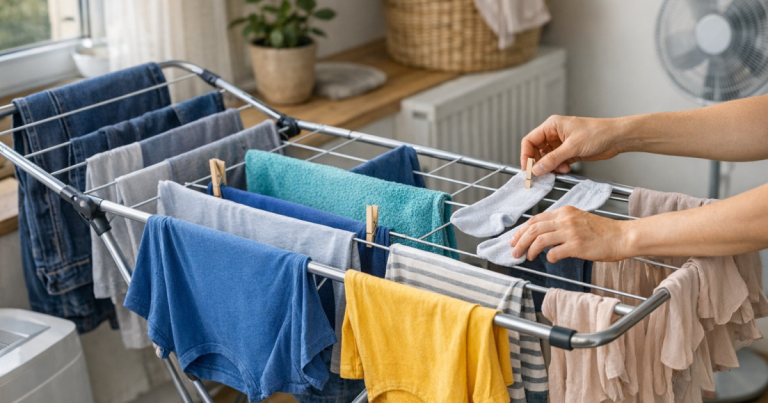
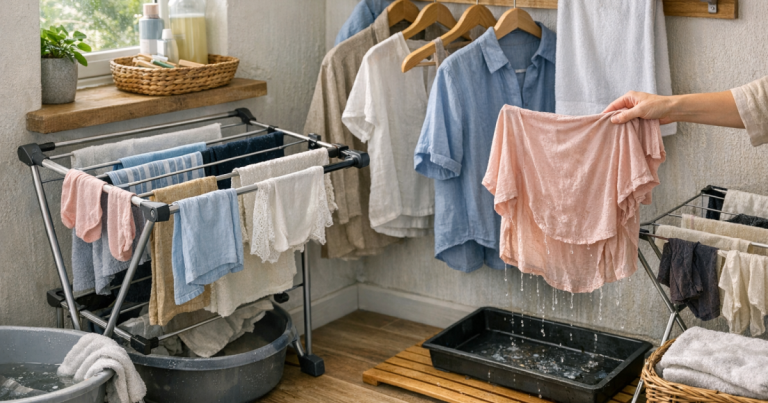
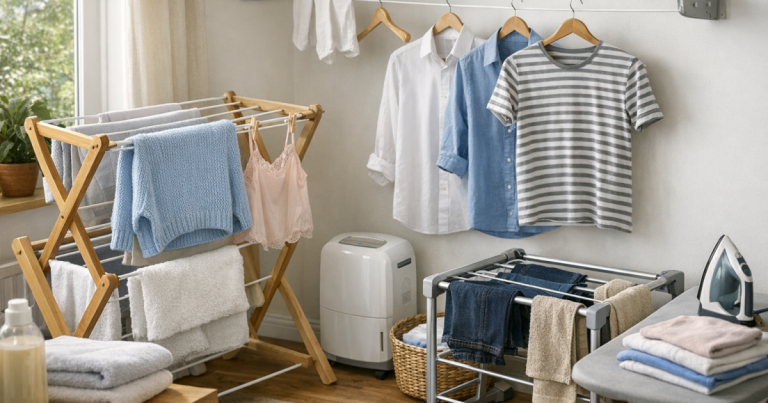
This is the part that most affects fabric condition in UK homes, especially through wet or cold weather. A drying rack should allow gaps between garments, and the room should have ventilation or controlled moisture removal. For more detailed moisture and fabric advice, see our guide on how to dry clothes indoors without damaging fabrics.
Finishing zone
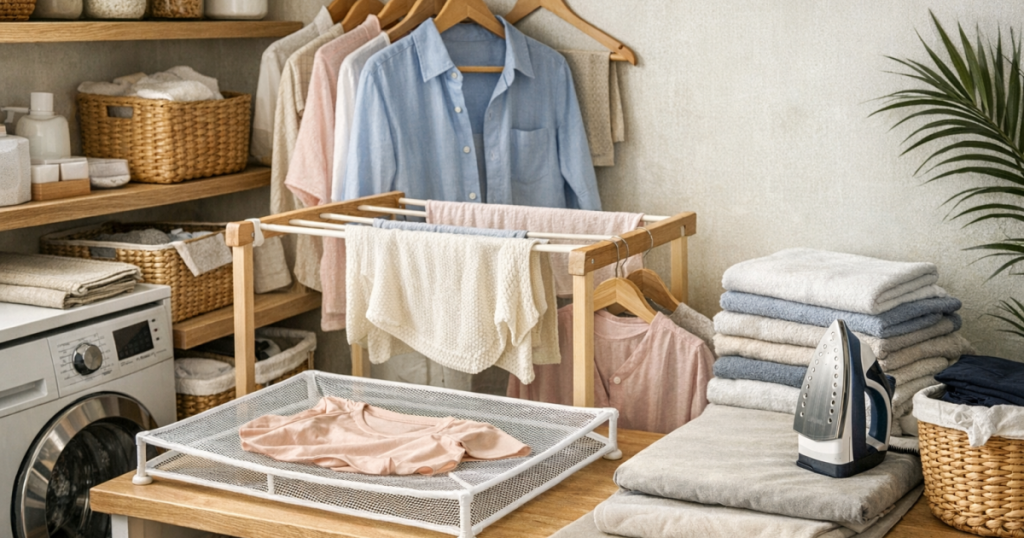
Leave a safe, flat place for folding, checking labels and dealing with creases. This could be a fold-down table, a clean worktop, the top of a closed appliance if suitable, or an ironing board that stores nearby. The finishing zone stops clean clothes being dumped in baskets, where creases deepen and fibres stay compressed.
Protect fabrics before they reach the wash
Many laundry problems begin in the basket rather than the machine. Zips, hooks and rough trims can snag softer fabrics. Damp items can transfer odour. Dark denim can rub against pale cotton. Sorting is not just about colour; it is about friction, weight and moisture.
- Close zips and fasten hooks: This reduces snagging on jersey, lace, tights and lightweight linings.
- Turn dark or printed garments inside out: This helps reduce surface abrasion during handling and washing.
- Separate heavy from delicate: Towels, jeans and sweatshirts can crush lighter fabrics in the drum and in the basket.
- Use mesh bags for vulnerable items: Bras, lace trims, tights and small children’s items are less likely to stretch or tangle.
- Do not leave wet items waiting: Swimwear, gym kit, tea towels and cleaning cloths should be washed or aired promptly.
A small label-check habit also helps. If a garment says dry flat, reshape or cool iron, note that before it is wet and harder to handle. Keeping a few clip labels or a small chalkboard near the machine can help households remember what needs special treatment.
Set up the machine area with fabric care in mind
The washing machine area should make careful choices easier. Keep the detergent you use most within reach, but do not crowd the machine top with loose powders, leaking bottles or damp cloths. Residue on surfaces can transfer to clean clothing.
For families or sensitive skin, a non-bio detergent such as Fairy Non-Bio Laundry Detergent is one example of the type of detergent many households compare with biological formulas. Whatever you use, follow the dosing instructions for load size, soil level and local water hardness rather than guessing. Too much detergent can leave residue; too little can allow odour and soil to remain in fibres.
Keep machine maintenance simple. Wipe the door seal, leave the door open after use when practical, and clean the drawer regularly. This is not only about machine hygiene; musty residue can transfer to towels, uniforms and synthetics that already hold odour more readily.
Design drying around airflow, not speed alone
Fast drying is useful, but fabric-safe drying depends on the method. Direct heat can shrink or distort some fibres, while slow, stagnant drying can encourage musty smells. The best home setup balances airflow, spacing and moisture control.
- Use hangers for shirts and blouses: Smooth seams and cuffs before drying to reduce later ironing.
- Dry knitwear flat: Wet wool, cashmere and some cotton knits can stretch under their own weight if hung.
- Give towels more space: Thick fabrics need extra airflow and should not be folded over several layers.
- Avoid radiators for routine drying: High, uneven heat can stiffen fibres and increase indoor moisture.
- Ventilate the room: Open a window briefly when conditions allow, use an extractor fan, or consider moisture control where drying indoors is frequent.
If you use a tumble dryer, keep it for suitable items and check care labels carefully. Low heat or sensor drying can be kinder than repeatedly over-drying cottons and synthetics, but some garments still need air drying or flat drying. Clean lint filters as directed, because blocked airflow can lengthen drying and increase heat exposure.
Make ironing and steaming a finishing step, not a rescue job
Crease removal is gentler when clothes have been dried and stored properly first. Shake garments out before hanging, smooth hems and collars while damp, and avoid leaving clean laundry compressed in baskets overnight.
A small, stable finishing area helps you decide whether an item needs ironing, steaming or simply hanging to air. Steam can relax some creases quickly, while an iron gives sharper results on shirts, cotton trousers and uniforms. The safest choice depends on the fabric, finish and care label, so use our guide to choose between a garment steamer and a steam iron if your setup needs both freshness and structure.
Keep ironing equipment clean. A marked soleplate, overfilled water reservoir or dusty board cover can undo careful washing. Let finished garments cool and dry fully before they go back into the wardrobe, especially if steam has been used.
Keep the space clean enough for clean clothes
Laundry areas attract lint, detergent dust, pet hair and moisture. If clean garments touch those surfaces, they can come away looking dull before they have been worn. A quick weekly reset is usually enough for most homes.
- Wipe the machine top, basket rims and folding surface.
- Remove lint from corners, racks and skirting boards.
- Rinse detergent drips before they become sticky residue.
- Wash or wipe laundry baskets, especially after towels, sports kit or pet bedding.
- Keep cleaning products separate from fabric-care products to avoid accidental spills on clothes.
A compact cleaning kit such as Vileda 2-in-1 Cleaning Kit is the sort of household tool that can make quick surface resets easier, though any clean cloth and suitable surface cleaner will do. The key is consistency rather than buying extra kit.
Plan storage as part of the laundry system
Laundry does not end when clothes are dry. If wardrobes are packed, damp-prone or poorly organised, freshly cleaned clothes can crease, smell stale or pick up lint. Let garments air fully before storing, and avoid forcing thick jumpers, coats and uniforms into tight spaces.
Use broad hangers for coats and structured items, fold heavy knitwear rather than hanging it, and leave small gaps so air can circulate. Seasonal clothing should be clean and fully dry before storage. For longer-term organising and protection, our wardrobe storage guide explains how to protect clothes once they leave the laundry area.
Common questions
Where is the best place to dry clothes in a small UK home?
Choose the room with the best airflow and moisture control, not necessarily the warmest room. Avoid blocking radiators, crowding garments together or drying in an unventilated bedroom every day.
Should clean laundry be folded straight away?
Yes, once it is fully dry. Folding or hanging promptly reduces deep creases and stops clean clothes being crushed in a basket, but storing items while slightly damp can cause odour.
Is a utility room necessary for good fabric care?
No. A kitchen corner, hallway cupboard or bathroom-adjacent area can work well if sorting, drying and folding have clear spaces and damp laundry is not left piled up.
How do I stop my laundry area smelling musty?
Improve airflow, avoid leaving wet loads in the machine, clean the door seal and detergent drawer, and make sure drying racks are not overloaded. Persistent damp may need better ventilation or moisture control.
What should not be stored next to laundry detergent?
Keep food, pet items, children’s toys and clean folded clothes away from detergent bottles, powders and stain removers. Leaks and residue can mark fabrics or contaminate nearby items.
Main points
The best laundry setup protects clothes by reducing avoidable stress at every stage. Sort by colour, weight and fabric risk; keep damp items moving; dry with airflow rather than harsh heat; and give clean garments a proper finishing and storage routine.
Even a small laundry corner can work well when it has clear zones and fabric-safe habits. The result is fewer musty loads, fewer stretched knits, fewer set-in creases and clothes that stay wearable for longer.