Crisp shirts are unforgiving: collars, cuffs, plackets and button bands show every weak shot of steam. Choosing between a steam iron or generator iron comes down to how many shirts you press, how heavy the cotton is, and how much space you can give to the kit between laundry days.
The short answer for shirt ironing
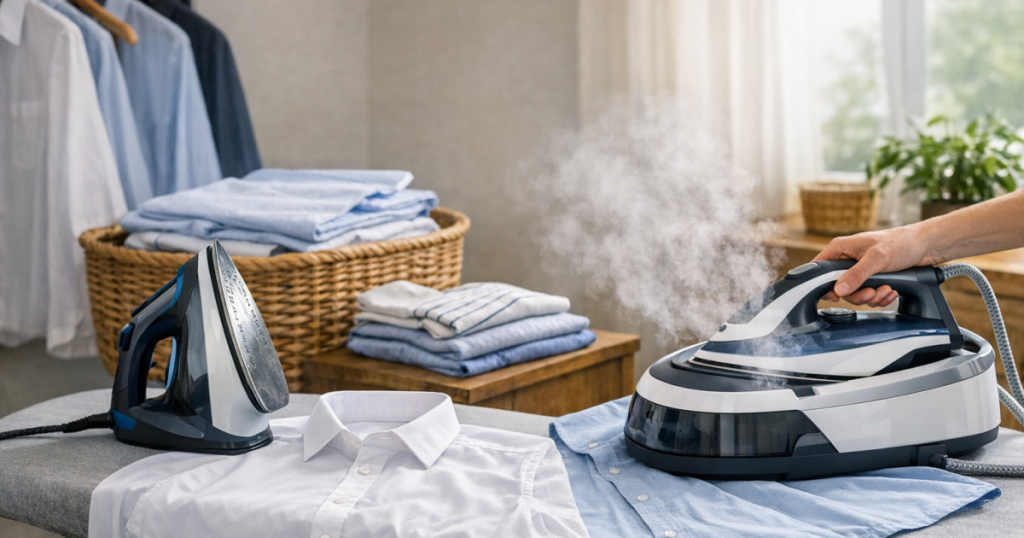
For one or two shirts at a time, a good standard steam iron is usually the simpler choice. It heats quickly, stores easily and gives you enough control for seams, cuffs and collars. It also suits smaller homes where the ironing board only comes out briefly.
For a weekly pile of work shirts, school shirts or heavier cotton Oxford shirts, a generator iron can feel much easier. The separate water tank and higher steam output make it better for repeated pressing, especially when you want to get through several garments without constantly refilling.
The trade-off is bulk. Generator irons need more storage, a stable ironing board and more time to set up. If you iron shirts only occasionally, that extra size can become annoying rather than helpful.
How the two types work on shirt fabric
A standard steam iron holds water in the iron itself. It is compact, direct and easy to manoeuvre around buttons and seams. The soleplate is the full working tool, so balance and glide matter a lot when you are shaping a collar or pressing a cuff edge.
A generator iron has a separate base unit and water tank, with steam sent through a hose to the iron. The hand unit can feel lighter, and the steam supply is usually more sustained. That helps when moisture needs to penetrate densely woven cotton, linen-blend shirts or shirts that have dried a little too crisp on an airer.
When deciding between a steam iron or generator iron, think less about the headline steam claims and more about your real shirt routine. Five thin poplin shirts behave very differently from a mixed pile of cotton twill, school uniform shirts and formal dress shirts with stiff collars.
When a standard steam iron is the better fit
A steam iron is the more practical choice if your shirt care is light, mixed with quick touch-ups, or done in short bursts. It is also easier to live with if you have limited storage or a smaller ironing board.
- You iron small batches: one to four shirts can usually be handled comfortably without needing a separate tank.
- You value precision: the compact shape helps around button plackets, pocket edges and collar points.
- You store laundry kit in a cupboard: a standard iron takes up far less room than a generator base.
- You press varied garments: if you switch between shirts, tea towels, light trousers and pillowcases, a steam iron is flexible and quick to put away.
- You prefer a lower-fuss routine: less setup means you are more likely to tackle a shirt before work or an evening out.
For a familiar high-street style example, the Philips Azur Elite Steam Iron is the sort of full-size steam iron readers often compare when they want a conventional iron with strong steam performance. As with any model, check the current soleplate design, weight, cord length, water tank capacity and descaling instructions before buying.
When a generator iron earns its cupboard space
A generator iron starts to make sense when shirt ironing is a regular batch task rather than an occasional chore. If you iron for several people, maintain a workwear wardrobe or like shirts to look freshly pressed rather than simply acceptable, the extra steam can save effort.
- Large weekly shirt piles: the separate tank means fewer stops to refill, which matters when you are working through a full family load.
- Heavier cottons: Oxford, twill and some formal shirts often respond better to a steadier flow of steam.
- Repeated creasing: shirts that sit in a laundry basket after drying may need more moisture and heat to relax fibres properly.
- Longer sessions: a lighter hand unit can feel less tiring, provided the hose does not get in your way.
- Consistent finish: sustained steam helps you work methodically across backs, sleeves and fronts without losing momentum.
Examples to compare include models such as the Tefal Pro Express Ultimate Steam Generator Iron or the Morphy Richards Power Steam Elite Steam Generator Iron. Do not rely on the name alone: check the filled weight, tank access, hose storage, descale system, auto shut-off details and whether your ironing board can safely support the base unit.
Fabric checks before you choose
Shirts are not all the same, even when they look similar on a hanger. A buying decision should start with fabric labels and the finish you expect.
Cotton business shirts
Most cotton shirts benefit from firm steam and a smooth, even soleplate. A standard iron can cope well if the shirts are slightly damp or freshly dried. A generator model is useful if you iron many cotton shirts together or regularly deal with stubborn sleeve and back creases.
Oxford and twill shirts
These heavier weaves can hold creases more stubbornly. If your wardrobe leans towards thicker cotton, a generator iron is more persuasive. The extra steam helps relax fibres before you press, rather than forcing you to go over the same panel repeatedly.
Linen and linen blends
Linen shirts often need moisture, patience and careful shaping. Either type can work, but a generator iron may reduce effort on larger sections. Always test heat on an inside area if the shirt has a special finish, darker dye or blend you have not pressed before.
Easy-iron and treated shirts
These are designed to need less work, so a standard steam iron is often enough. Use moderate heat according to the care label and avoid over-pressing, which can make seams shiny or flatten the fabric character.
The ironing board matters more than many buyers expect
A generator iron is heavier as a complete setup, so a flimsy board can make the whole experience awkward. Look for a stable board with enough end space for the base unit, or a heat-resistant rest designed for generator use. If the board flexes, wobbles or feels cramped, the advantage of extra steam is quickly lost.
For a standard iron, board shape and padding still matter. A narrow end helps with shoulders and yokes, while a smooth cover reduces drag. If you are upgrading your iron but keeping an old, compressed board cover, you may not see the improvement you expected.
Drying habits affect which iron feels best
Shirts are easiest to press when they are not bone dry and crumpled. Shake them out after washing, hang them promptly, smooth collars and cuffs by hand, and avoid leaving them crushed in the basket. If you dry indoors, good airflow helps prevent stale-smelling laundry and makes pressing more pleasant; this guide on stopping air-dried clothes smelling damp indoors is a useful next step.
A heated airer can also change your routine. Shirts dried neatly on hangers or laid with space around them usually need less aggressive ironing than shirts dried in a dense heap. If you are weighing up indoor drying options alongside ironing, see the Lakeland DrySoon 3-Tier Heated Airer review for garment-care considerations beyond simple drying speed.
Step-by-step: choosing the right option for your shirts
1. Count your real weekly shirt load
If the honest answer is fewer than five shirts, start with a quality standard steam iron. If you regularly iron a full basket of shirts in one sitting, a generator iron is much more likely to justify its size.
2. Check the fabric mix
Thin cotton poplin, easy-iron shirts and occasional formal shirts rarely demand a generator setup. Heavier cotton, linen blends and uniform shirts make the extra steam more appealing.
3. Measure your storage space
A generator base needs a proper home. If it has to be unpacked from an awkward cupboard every time, you may avoid using it. A compact steam iron kept within easy reach may deliver better real-world results simply because it is used more often.
4. Look at your ironing board
Before buying a generator iron, check that the board is stable, wide enough and rated by the manufacturer for that style of appliance. For either option, replace a worn cover if it is scorched, lumpy or thin.
5. Read the maintenance requirements
Hard water is a common issue in many parts of the UK. Look for clear descaling instructions, anti-calc features and filters or cartridges where relevant. Do not assume every model handles limescale in the same way.
6. Think about speed versus convenience
A generator iron can be faster over a batch, but a steam iron is usually more convenient for a single shirt. The right choice is the one that matches when you actually iron, not the one that sounds most powerful.
Where a steamer fits into the shirt routine
A garment steamer can refresh a lightly worn shirt or ease travel creases, but it is not a full replacement for an iron if you want sharp collars, crisp cuffs and flat button plackets. Steamers are better for hanging garments, delicate surface creases and structured outerwear. For that separate decision, read which steamer to buy for coats and blazers.
Main points
- Choose a standard steam iron for small shirt loads, easy storage and precise work around collars and cuffs.
- Choose a generator iron for larger weekly batches, heavier cottons and sustained steam over longer sessions.
- Do not ignore the ironing board; a poor board can undermine even a very capable iron.
- Drying shirts neatly reduces the amount of heat, steam and effort needed later.
- Check descaling, tank access, weight and storage before committing to any model.
FAQ
Is a generator iron too powerful for shirts?
Not usually, provided you follow the shirt care label and use the right heat setting. The benefit is sustained steam, not simply more aggression. Be more cautious with delicate blends, dark finishes and decorative trims.
Can I get crisp collars with a standard steam iron?
Yes. Use the pointed tip, press from the underside first, then finish the outside edge. A clean soleplate, good board padding and a light misting of water can make a bigger difference than upgrading the iron.
Which is better for school shirts?
For a few school shirts, a standard steam iron is usually enough. For several children’s shirts every week, a generator iron may save time, especially if the shirts are cotton-rich and heavily creased.
Should shirts be ironed damp or dry?
Slightly damp is often easier, especially for cotton. If shirts are fully dry, use steam or a fine water spray and let the moisture settle briefly before pressing.
How often should I descale an iron in the UK?
Follow the manufacturer’s instructions and adjust for your local water hardness and usage. If steam weakens, spits or leaves marks, stop and clean the appliance before using it on good shirts.