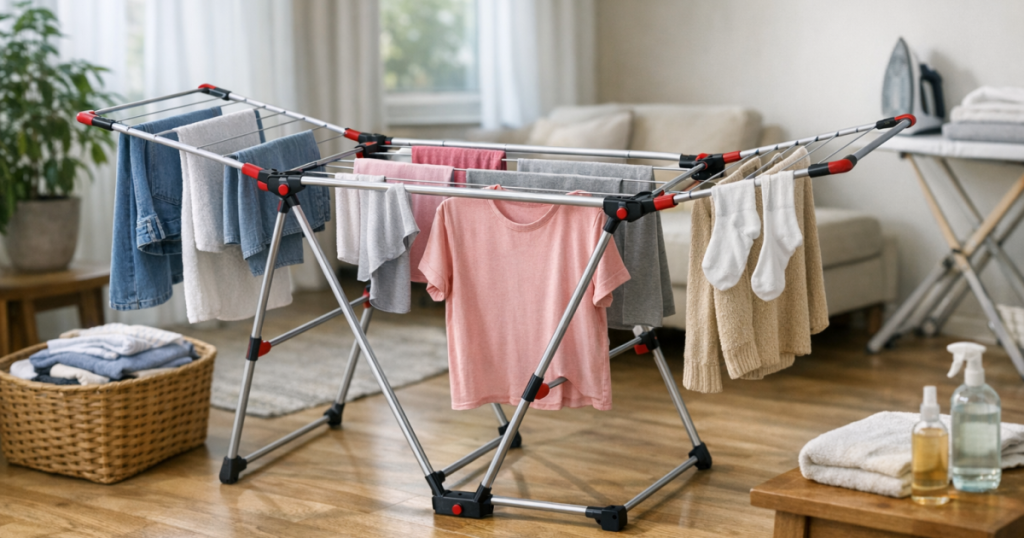
Indoor laundry drying is rarely about one perfect rack. It is about getting shirts, towels and school uniform dry without leaving woollens stretched, hems musty or the spare room permanently blocked. This Vileda 3-Boom Drying Rack review looks at whether Vileda’s freestanding drying rack is a sensible shortlist option for everyday UK homes where line drying is not always possible.
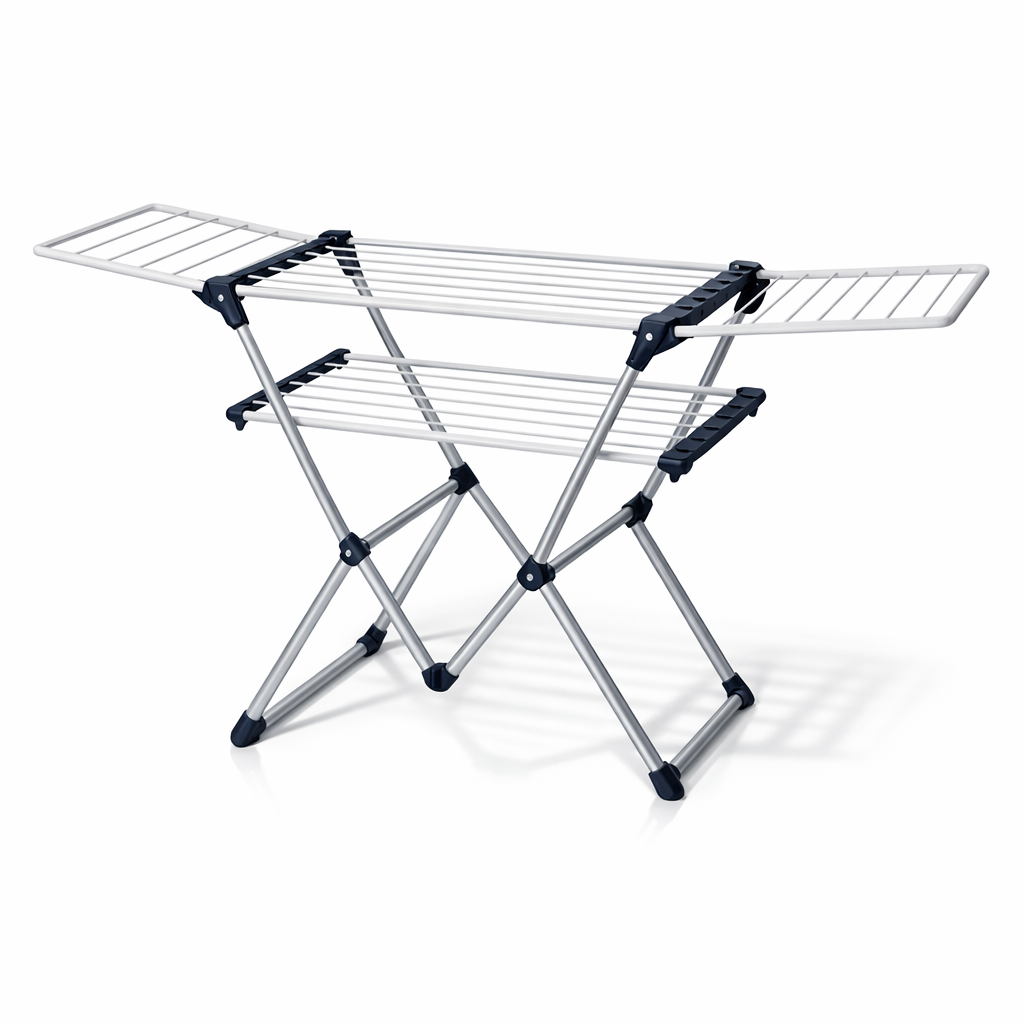
Vileda 3-Boom Drying Rack
Tr etched, hems musty or the spare room permanently blocked.
The quick verdict: the Vileda 3-Boom Drying Rack is worth considering if you want a recognisable-brand indoor airer with a more flexible layout than a basic concertina rack. It is not a magic answer to slow drying, and buyers should verify the folded size, drying length and load guidance before ordering, but the format makes sense for households that regularly dry mixed laundry indoors.
Product overview
The Vileda 3-Boom Drying Rack is a freestanding drying rack from Vileda’s drying solutions range. Its purpose is straightforward: to give damp laundry somewhere to air dry without using a tumble dryer. That sounds simple, but the difference between a useful airer and an annoying one often comes down to spacing, stability, access and how easily it fits into a normal routine.
The name points to a three-boom layout, which should appeal to people who want more separation between garments than a compact radiator airer or very narrow rack can offer. Before buying, check the retailer’s current product photos and measurements carefully, because drying racks can vary by listing, packaging version and market. The most important details are the amount of usable drying space, the open footprint, folded footprint and any stated weight guidance.
For fabric care, this type of rack is most useful when you can spread garments rather than bunch them. Shirts, T-shirts, pyjama tops and lightweight trousers usually benefit from being hung with air around them. Heavier cotton towels, denim and thick hoodies need more space and may dry slowly unless the room is ventilated. For wool, cashmere and delicate knits, a rack is often useful only as part of the process: heavy knitwear is usually better dried flat so the garment does not stretch under its own weight.
As a buying decision, the Vileda 3-Boom Drying Rack sits in the practical middle ground: more flexible than makeshift chair-back drying, less specialist than a heated airer, and likely to suit homes that need repeatable drying space several times a week. If you are shortlist shopping, compare the rack’s real open footprint against the room where you actually dry laundry, not the room you wish you had.
Key specs
- Product name: Vileda 3-Boom Drying Rack.
- Brand: Vileda.
- Product type: freestanding drying rack for laundry air drying.
- Product family: Vileda Drying Solutions.
- Best use case: indoor drying of mixed everyday laundry, subject to room space and airflow.
- Drying capacity: verify the current stated drying length and maximum load on the retailer listing or packaging before purchase.
- Open and folded dimensions: check the latest measurements against your drying area and storage cupboard.
- Material and finish: confirm the listed construction and any coating details if you regularly dry damp towels, denim or heavier loads.
- Outdoor use: verify suitability with the retailer or manufacturer information rather than assuming it is intended for garden use.
Pros and cons
Pros
- Recognisable laundry-care brand, which makes it easier to compare listings and replacement expectations than with anonymous airers.
- Three-boom style layout should help with spacing different garment types, provided the rack is not overloaded.
- Useful for homes that air dry regular mixed loads and want a dedicated rack rather than using radiators or doors.
- Potentially more fabric-friendly than draping clothes tightly together, because garments can be arranged with airflow in mind.
- No running cost once bought, unlike tumble drying or heated drying methods.
Cons
- Drying speed still depends heavily on room ventilation, humidity and garment thickness.
- Buyers need to check exact dimensions; a rack that looks compact online can feel intrusive in a small flat.
- Heavy knitwear should not simply be hung over bars if stretching is a concern.
- Not a replacement for a dehumidifier in persistently damp rooms.
- Capacity claims, if shown by a retailer, may not reflect comfortable spacing for thick winter laundry.
Performance in real use
The main strength of the Vileda 3-Boom Drying Rack is likely to be layout flexibility. With any non-heated airer, drying performance is less about the rack alone and more about how you use the available bars. A full load crammed tightly together will dry slowly on almost any rack. A half load spaced properly can dry more evenly and with fewer musty areas around cuffs, waistbands and seams.
For everyday clothing, the best approach is to group garments by drying behaviour. Put lightweight T-shirts, shirts and underwear where air can move freely. Give thicker cotton trousers, sweatshirts and towels the outermost or most exposed positions. Turn pockets out where possible, and avoid folding heavy items into multiple layers unless you plan to rotate them later.
For delicates, the rack is useful but not always the final answer. Mesh-washed bras, camisoles and fine tops can be shaped gently over a rail, but anything that may stretch should be dried flat on a towel or suitable flat mesh surface. Wet wool and heavy knits are especially vulnerable to distortion, so hanging them from narrow bars is not ideal for long periods.
Stability matters because drying racks are often moved half-full from a utility space to a spare room or hallway. With the Vileda 3-Boom Drying Rack, check that the frame opens cleanly, sits evenly on your floor and does not rock when garments are distributed sensibly. Avoid loading all heavy items on one side. Even a well-made rack will feel less secure if towels and jeans are bunched on one boom while the rest is empty.
Storage is the other everyday test. A rack that is easy to fold away gets used more consistently; one that jams behind a door tends to become permanent furniture. Before ordering, measure the cupboard, gap beside a wardrobe or utility-room slot where it will live. This is particularly important in rented flats, terraced houses and homes where laundry shares space with prams, school bags or ironing boards.
Room conditions are just as important as the rack itself. If laundry regularly takes more than a day to dry, the issue may be humidity rather than capacity. Pairing a drying rack with controlled ventilation or a dehumidifier can make a much bigger difference than buying the largest airer you can fit. For setup advice, see our guide on using a dehumidifier when drying laundry indoors.
Maintenance should be simple: wipe the rails periodically, let the rack dry fully before storing it, and avoid leaving damp items pressed against the same contact points for days. If any coating becomes chipped or rough over time, be cautious with fine fabrics that could snag. As with all laundry racks, gentle handling will help it last longer than repeatedly snapping it open, dragging it loaded or leaning heavy wet items unevenly across the frame.
Who it’s best for / who should skip it
The Vileda 3-Boom Drying Rack is best for households that dry laundry indoors regularly and want a dedicated, foldable rack for mixed clothing. It should suit people who wash several smaller loads through the week rather than one oversized weekend load, because spacing is where an airer earns its keep. It is also a sensible option for anyone trying to reduce tumble dryer use on garments that benefit from gentler drying.
It is a particularly good shortlist candidate for renters and smaller households that need a non-permanent drying solution. You do not need wall fixing, plumbing or installation; the key decision is whether the open footprint fits your real drying spot and whether the folded shape works for storage.
Skip it, or at least compare alternatives carefully, if you mainly dry bulky bedding, large bath towels or multiple pairs of jeans in one go. A bigger rack, outdoor line, heated airer or separate dehumidifier setup may be more useful depending on your home. Also skip it for drying heavy wool jumpers unless you already have a flat-drying method, because rack bars alone can leave shoulder marks or stretched sections.
Alternatives
If the Vileda 3-Boom Drying Rack is almost right but not quite, the alternative depends on what problem you are trying to solve. For more vertical drying in a tight footprint, a tiered tower airer can be easier to fit into a corner, though it may be less convenient for long garments. For bedding and towels, a broad winged airer may offer better drape space, provided you have the floor area.
If your main frustration is damp smell rather than lack of bars, changing the room setup may matter more than changing the rack. Faster airflow, better spacing and moisture control usually help more than piling clothes onto a larger frame. Our advice on stopping clothes smelling damp on an airer is a useful next step before buying another drying solution.
Common questions
Can the Vileda 3-Boom Drying Rack dry a full washing-machine load?
It depends on the load size, fabric thickness and how much spacing you allow. Check the stated drying length and load guidance, then judge it against your typical wash rather than a best-case light load.
Is it suitable for wool jumpers?
Use caution. Wool and heavy knitwear are usually better dried flat to protect shape. The rack can help with airflow nearby, but hanging wet knitwear over narrow bars can cause stretching.
Will it stop condensation when drying indoors?
No drying rack stops condensation by itself. It only holds the laundry. You still need ventilation, spacing and, in damp homes, moisture control to keep drying times reasonable.
Can it be used outside?
Do not assume outdoor suitability. Check the manufacturer or retailer information for the version you are buying, especially if it will be exposed to rain, wind or long periods of sun.
What should I check before buying?
Measure your drying area and storage space, confirm the open and folded dimensions, check the stated drying capacity, and look closely at current retailer images so you understand the rack layout.
Verdict + score
The Vileda 3-Boom Drying Rack is a sensible shortlist option for indoor air drying if you want a recognisable-brand rack with enough flexibility for everyday laundry. Its value depends less on headline capacity and more on whether the footprint suits your home, whether you can space garments properly, and whether your room conditions support drying without damp smells. It is not the best answer for heavy knitwear, constant bedding loads or homes with persistent humidity, but for regular mixed washing it is a practical, fabric-aware choice. Score: 8.1/10.
Vileda 3-Boom Drying Rack
Tr etched, hems musty or the spare room permanently blocked.
You might also like: How to Organise a Wardrobe by Fabric, Wear and Season.