Finding colour run stains after opening the washing machine is frustrating, but the first few minutes matter most. Keep the affected items damp, avoid heat, and sort the load before you reach for stain removers.
The safest approach is to identify which garments have taken on dye, separate delicate fibres from hardier cottons and synthetics, then re-wash or soak using a method that matches the care label. Heat from a tumble dryer, iron or hot radiator can make dye transfer much harder to lift.
The short version
- Do not dry, iron or steam the affected clothes until the dye transfer has been treated.
- Remove the suspected bleeding garment from the load immediately.
- Re-wash washable items while still damp, using the warmest temperature allowed on the care label.
- Use oxygen-based stain treatment or a colour-run remover only where the fabric label allows it.
- Treat wool, silk, viscose, embellished clothing and dry-clean-only garments more cautiously.
Step 1: Stop the dye setting
As soon as you notice dye transfer, leave the affected garments damp. Do not put them in the tumble dryer, hang them over a hot radiator, press them with an iron or use steam to “freshen” them first. Heat can help loose dye bond more firmly with the fibres.
Pull out the item that caused the problem. It is often a new dark denim piece, a red cotton garment, a brightly dyed towel or anything washed for the first time. Put it aside and wash it separately later, ideally with similar dark colours until you are confident it no longer bleeds.
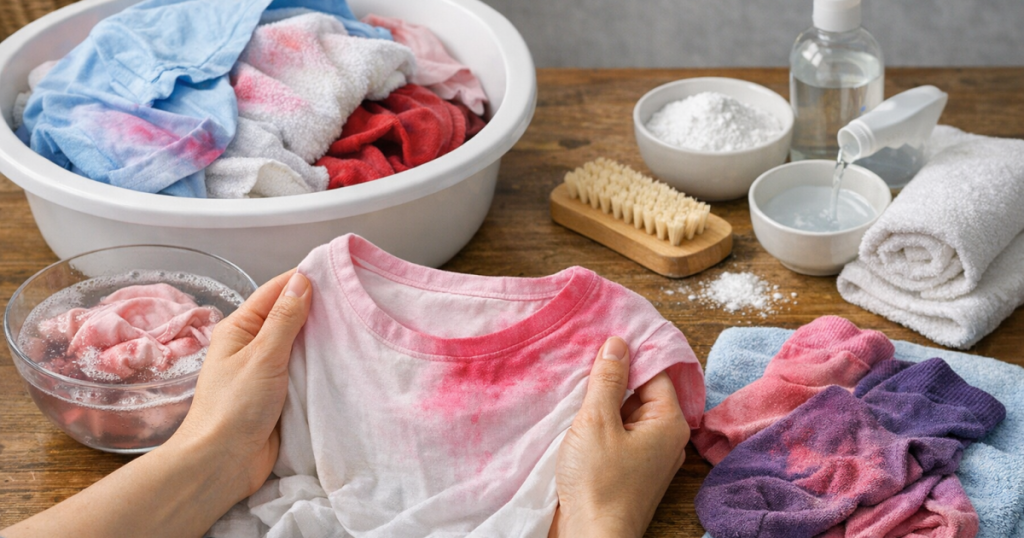
If the whole load has turned grey, pink or blue, keep the items together only long enough to assess them. If just one white shirt has picked up colour from a dark sock, isolate that shirt so the loose dye does not continue transferring onto cleaner fabrics.
Step 2: Sort the mixed load properly
Mixed laundry needs a bit more judgement than an all-white wash. Sort the affected items into three groups before treating them:
- Sturdy whites and pale cottons: T-shirts, sheets, cotton shirts and towels are usually the easiest to rescue if their labels allow a warmer wash.
- Coloured washable items: These need gentler treatment because strong stain removers may strip the original dye as well as the transferred dye.
- Delicates and sensitive fibres: Wool, silk, viscose, acetate, lace, beaded garments and anything marked dry clean should not be thrown into a strong soak.
Check the care label before deciding on temperature or stain treatment. If you are unsure how the symbols relate to heat, wash temperature or finishing, the guide to fabric labels and heat levels is a useful next step before you risk making the stain permanent.
Step 3: Re-wash while the fabric is still damp
For washable clothes that are not delicate, start with the least aggressive fix: a prompt re-wash. Use your normal laundry detergent and select the warmest wash temperature permitted by the care label. For many everyday cottons and synthetics, this may be enough to remove loose dye before it settles.
Do not overload the drum. The affected garments need room to move so water and detergent can flush dye away evenly. A crowded wash may simply redistribute dye around the load.
After the cycle, inspect the items in good light while they are still wet. Wet fabric can make staining look less obvious, so check collars, cuffs, seams, underarms, white trims and printed areas carefully. If the transfer remains, move to a controlled soak rather than drying the clothes.
Step 4: Use a soak only when the fabric can take it
For persistent dye transfer on washable whites or light-coloured items, an oxygen-based laundry soak can help. Follow the product instructions, use the recommended water temperature, and keep coloured garments separate unless the product clearly says it is suitable for them.
Avoid chlorine bleach on mixed laundry. It can weaken fibres, yellow some fabrics, damage elastane, strip colour unevenly and react badly with finishes or residues. It is also unsuitable for many delicate fabrics. If you use any stain treatment, test a hidden seam first and stop if the original colour changes.
After soaking, rinse thoroughly and re-wash. Do not extend soak times beyond the instructions in the hope of a stronger result; prolonged soaking can cause colour loss, fibre swelling or patchiness, particularly on viscose and loosely dyed cottons.
Step 5: Treat delicates separately
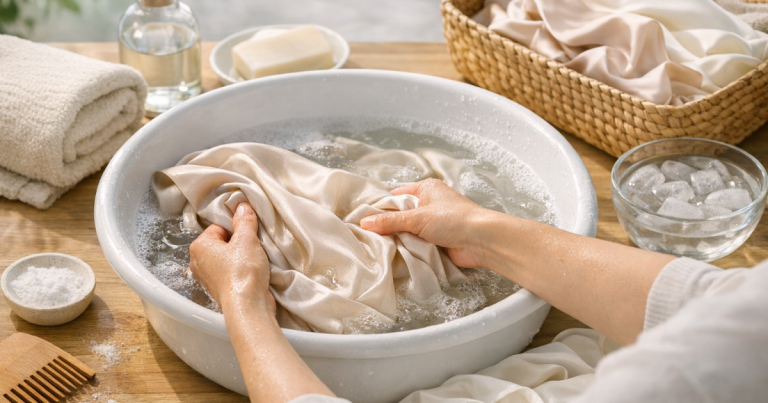
Delicate garments need a slower approach. For washable wool or silk, rinse gently in cool water and use a mild detergent suitable for the fibre. Do not rub the stained area hard, wring the garment, or leave it soaking for long periods. Friction and prolonged wetting can distort the fabric even if the dye improves.
For viscose, modal and rayon blends, be cautious. These fibres can lose strength when wet and may shrink or twist if handled roughly. Support the garment in the water, press gently rather than scrubbing, and dry flat if the label allows washing.
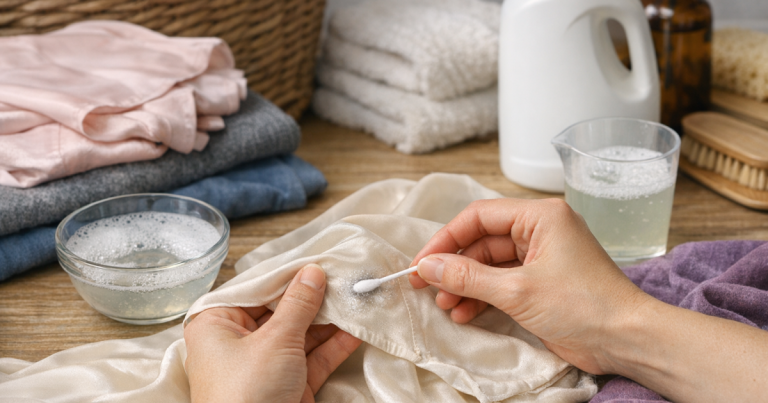
If an item is labelled dry clean only, heavily structured, lined, embroidered or valuable, home dye removal is risky. Blot any wet transfer gently with a clean white cloth, keep the garment away from heat, and take it to a cleaner with the care label and a note explaining what happened in the wash.
What not to do
- Do not use vinegar as a guaranteed fix: It is often suggested online, but it does not reliably remove transferred dye from modern washable fabrics.
- Do not add salt after the accident: Salt may be used in some dyeing processes, but it is not a dependable rescue treatment for a finished garment.
- Do not mix stain removers: Combining laundry chemicals can damage fabrics and create unsafe fumes.
- Do not scrub one patch aggressively: You may lift the surface fibres and leave a pale, fuzzy mark even if the dye fades.
- Do not assume all whites are bleach-safe: White elastane blends, wool, silk and printed white garments can be damaged by harsh products.
When the whole load is affected
If most of the load has changed colour, work in batches. Separate whites, pale colours and darker items, then treat each group differently. Whites may tolerate a stronger oxygen soak, while pale colours may need a gentler re-wash to avoid stripping their original shade.
For a more detailed rescue process, including what to do when whites have turned pink or grey, see the full guide on how to rescue clothes after a colour run.
If colour run stains remain after two careful attempts, further treatment may cause more harm than benefit. At that point, decide whether the garment is still wearable, can be dyed a darker shade, used as loungewear, or repurposed as cleaning cloths if the fabric is suitable.
Drying after treatment
Only dry the garments once you are satisfied the dye transfer has gone or faded as much as it is likely to. Air drying is safest because it avoids setting any remaining mark with heat. Use a drying rack, reshape knitwear flat where needed, and keep stained areas visible so you can reassess them before putting the item away.
In UK homes, indoor drying can add a lot of moisture to the room. If you are drying several rewetted items at once, ventilate well and avoid crowding radiators; the advice on stopping indoor laundry causing window condensation can help you dry clothes without creating a damp room.
Preventing the next dye leak
- Wash new dark, red, navy, green and brightly dyed garments separately for the first few washes.
- Turn dark garments inside out to reduce friction and surface dye loss.
- Sort laundry by colour depth as well as fabric type, not just by wash temperature.
- Use cooler washes for mixed everyday loads where hygiene needs and labels allow.
- Remove wet laundry promptly so loose dye is not left sitting against pale fabrics.
- Be extra careful with denim, towels, sportswear, cotton dresses and imported garments with intense dyes.
Common questions
Can you remove dye transfer after clothes have dried?
Sometimes, but it is harder. Try re-wetting the garment and using a label-safe oxygen soak or colour-run treatment. If it has been tumble dried or ironed, the mark may be partly set.
Are colour catchers enough to prevent every accident?
No. They can help trap loose dye in some washes, but they are not a substitute for sorting laundry properly, especially with new dark denim, red cottons and heavily dyed towels.
Can I treat whites and coloured clothes together?
Usually not. Whites and coloured garments often need different treatment strengths. Separate them first so you do not fade the coloured clothes while trying to brighten the whites.
Why did only one item stain in the wash?
Different fibres absorb loose dye differently. Cotton and viscose often pick up transfer more visibly than polyester, and pale trims or stitching can stain even when the main fabric looks fine.
In brief
Act quickly, keep the laundry away from heat, and treat fabrics according to their labels. Most fresh dye transfer improves with prompt sorting, re-washing and careful soaking, but delicate or dry-clean-only garments need restraint. The aim is not just to remove the stain, but to avoid turning a recoverable laundry mistake into permanent fabric damage.