
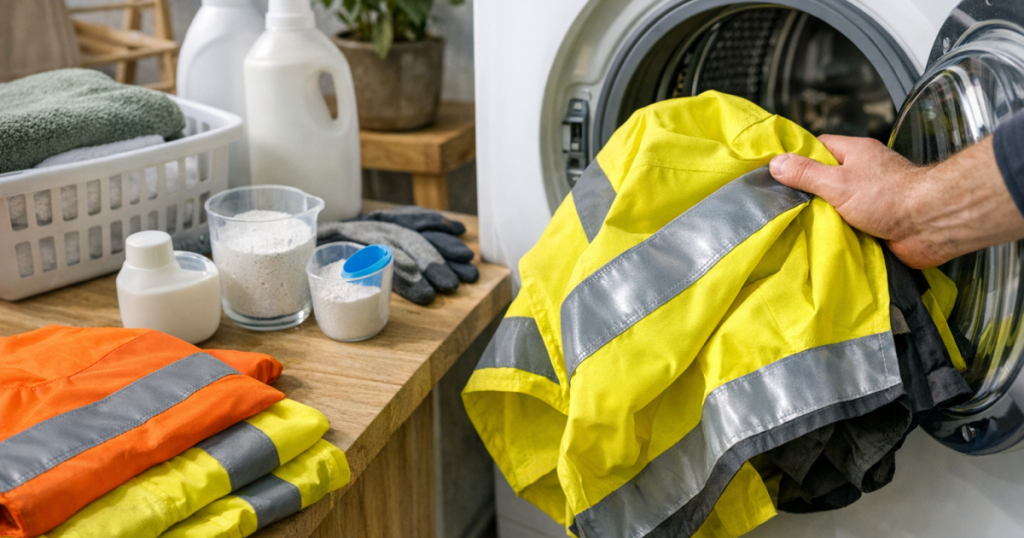
Reflective tape on hi-vis clothing is designed to bounce light back, but it can dull, crack or peel when the garment is washed too hot or treated too aggressively. The safest way to wash hi-vis workwear is to use a cool, gentle cycle, mild detergent and low-friction drying, then check the reflective strips before the item goes back into use.
Because hi-vis clothing is part of workplace PPE, inspection, withdrawal and replacement decisions for safety-critical workwear should be handled by the employer or competent person responsible for PPE, in line with UK workplace safety requirements and the garment manufacturer’s instructions.
The short version
- Check the care label first, including any stated maximum wash count or specialist laundry instruction.
- Fasten zips, press studs and hook-and-loop closures, then turn the garment inside out to reduce abrasion on reflective tape.
- Wash separately from heavy, rough or heavily soiled items that can grind against the strips.
- Use a mild detergent at the recommended dose; avoid chlorine bleach, solvent-based stain treatments and heavy fabric conditioner unless the care label clearly allows them.
- Choose a cool or warm wash only as directed by the label, commonly around 30°C or 40°C for many washable garments.
- Air-dry away from direct heat, and tumble dry only if the care label permits it.
- Inspect the reflective strips after washing. If they are cracked, peeling, greyed, lifting or no longer returning light well, the garment may need replacing.
Why reflective strips need gentler washing
Hi-vis workwear usually combines two different visibility features: fluorescent fabric for daytime visibility and reflective material for low-light visibility. The fluorescent fabric can fade with repeated washing, sunlight and harsh chemicals. The reflective strips are more vulnerable to abrasion, heat and aggressive stain removal because their performance depends on the surface staying intact and clean.
That means the aim is not simply to make the garment look clean. It also has to remain visible. A jacket that looks tidy in the laundry basket can still be unsuitable if the tape has gone dull, cracked or partly detached. For site workers, warehouse staff, delivery drivers, roadside teams and event crews, the post-wash check matters just as much as the wash itself.
Before washing: check the label and sort the load
Start with the care label, not a general workwear habit. Some hi-vis garments are suitable for domestic washing, while others are intended for industrial laundering or have strict temperature and drying limits. Many garments also carry information about standards, wash limits or manufacturer instructions. Do not assume that two yellow vests, two orange jackets or two pairs of reflective trousers can be washed in the same way.
Empty pockets and remove loose items such as screws, coins, cable ties, marker pens and grit. These can scratch reflective strips during the cycle. Close zips, press studs and hook-and-loop fastenings so they do not catch on the tape. If the garment has printed branding or embroidered logos, handle those areas carefully as well; the same low-friction approach used to wash embroidered workwear without loosening logos is useful for branded hi-vis jackets, polo shirts and fleeces.
Wash hi-vis items with similar lightweight workwear where possible. Avoid mixing them with rough denim, heavy canvas, towels, metal-trimmed clothing or muddy overalls. The more the reflective surface is rubbed during the wash, the higher the chance of dulling or edge lifting.
Step-by-step wash routine
1. Shake off dry dirt first
Let dry mud loosen before the garment goes into the machine. A gentle shake outdoors, followed by a soft brush on the fabric areas, reduces the amount of grit moving around the drum. Do not scrape reflective strips with a stiff brush, wire brush or abrasive sponge. If mud is sitting on the tape, soften it with cool water and wipe gently with a clean cloth.
2. Pre-treat stains with care
Oil, food, road grime and warehouse dust often need attention before washing, but reflective strips should not be scrubbed aggressively. Apply a small amount of mild liquid detergent to the stained fabric, leave it briefly, then rinse or wash as directed. Keep strong degreasers, chlorine bleach and solvent-based products away from the reflective tape unless the manufacturer specifically says they are safe for that garment.
For greasy stains on work trousers or jackets, treat the fabric around the strip rather than flooding the strip itself. If the garment has chemical contamination, fuel residue or unknown industrial soiling, follow the workplace laundry procedure rather than putting it through a home machine.
3. Choose a mild detergent and dose it correctly
Use enough detergent to clean the load, but not so much that residue remains on the tape or fluorescent fabric. Overdosing can leave a dull film, while underdosing can allow grime to build up and reduce visibility. A mild detergent is usually the safer choice for frequent washing. If the wearer has sensitive skin or the garments are part of a family uniform load, the principles in our guide to choosing non-bio detergent for uniforms also apply to workwear: check the label, dose for water hardness and avoid assuming that more detergent means a cleaner result.
Avoid chlorine bleach. It can damage colour and may affect reflective materials. Use fabric conditioner cautiously: many workwear care labels advise against it because softeners can leave residues on performance fabrics and reflective surfaces. If the label says not to use it, leave it out.
4. Use a cool, gentle machine cycle
Choose the lowest effective temperature permitted by the care label. For many washable hi-vis garments this will be a cool or warm wash, often around 30°C or 40°C, but the label takes priority. A gentle cycle reduces mechanical action, which helps protect the reflective strips from repeated rubbing. Keep the spin moderate rather than maximum speed if the garment is lightweight or the tape edges already look worn.
Do not overload the machine. Hi-vis jackets and trousers need room to move without being crushed against the drum. A tightly packed load increases friction and can leave detergent trapped in seams, cuffs and strip edges. If you are using a machine with a delicates or easy-care programme, the same principles covered in using a Bosch Serie 4 for delicates are relevant: reduce agitation, avoid overloading and choose settings that protect the surface of the fabric.
5. Rinse well
If the garment feels slippery, stiff or soapy after the cycle, run an extra rinse rather than drying it with detergent still present. Residue can make fluorescent fabric look flat and may settle on reflective strips. This is particularly worth doing in hard-water areas or when washing muddy workwear, where detergent and soil can bind together.
6. Dry without high heat
Air-drying is usually the safest option. Hang the garment on a broad hanger or over a line so the reflective strips are not sharply folded. Keep it away from radiators, open fires and direct high heat. Strong heat can encourage adhesive failure, distortion or cracking on some reflective tapes.
Dry away from prolonged direct sunlight where possible, especially for fluorescent yellow and orange fabrics, because UV exposure can contribute to fading over time. If the care label allows tumble drying, use only the permitted setting and remove the garment promptly. If the label says not to tumble dry, do not use the dryer to speed things up.
How to handle common hi-vis garments
Lightweight vests
Vests are usually the easiest to wash, but they can be damaged by being thrown in with rougher workwear. Turn them inside out, wash with similar lightweight items and avoid high spin speeds that can crease the tape sharply. If a vest is inexpensive and used daily, it may still need replacing once the reflective strips stop performing well; clean does not always mean compliant.
Hi-vis jackets and softshells
Jackets often have more construction details: zips, storm flaps, cuffs, taped seams, padding or water-resistant finishes. Follow the label closely and avoid heavy fabric conditioner. If the jacket is water-resistant, check whether the manufacturer gives separate instructions for maintaining that finish. Do not iron reflective tape unless the label explicitly permits ironing and gives a safe method.
Work trousers with reflective bands
Trousers collect grit around hems and knees, so remove dry dirt before washing. Turn them inside out and fasten any closures. Reflective ankle bands are particularly exposed to abrasion from boots, mud and the drum, so inspect these areas after every wash. If the strips are lifting at the edges, washing will usually make that worse over time.
Orange rail or roadside garments
Orange hi-vis garments used for rail, highways or roadside work may be subject to employer rules beyond ordinary domestic garment care. Check the issue instructions and replacement policy. Do not try to restore visibility with household treatments, dyes or coating sprays; if the colour or reflectivity has deteriorated, replacement is the safer route.
Post-wash checks before wearing again
Once the garment is dry, inspect it under good light. Look at both the fluorescent fabric and the reflective strips. A quick check can prevent a damaged item being returned to a work bag simply because it has been laundered.
- Reflective strip surface: check for cracking, greying, peeling, bubbling, missing sections or a rough texture.
- Strip edges: look for lifting, fraying or places where the tape is separating from the fabric.
- Fluorescent fabric: check for fading, staining, ingrained dirt or discolouration that reduces daytime visibility.
- Fastenings and seams: make sure zips, poppers, cuffs and hems still work properly and do not expose the wearer to snagging.
- Overall visibility: compare with a newer garment if available. If the old one looks dull beside it, flag it for replacement assessment.
A simple torch test in a dim room can help you spot obvious dull patches, but it is not a formal safety test. For PPE decisions, follow the employer’s inspection procedure and the garment maker’s instructions.
Mistakes that shorten the life of reflective strips
- Washing too hot: high temperatures can affect adhesives, coatings and fluorescent colour.
- Using bleach: chlorine bleach is too harsh for most hi-vis fabrics and can reduce colour strength.
- Scrubbing the tape: abrasive brushing may remove dirt quickly but can permanently dull the reflective surface.
- Overloading the drum: packed loads increase rubbing and reduce rinsing.
- Drying on a radiator: direct heat can distort fabric and weaken strip edges.
- Ironing over reflective tape: heat and pressure can mark or melt some strip finishes.
- Ignoring wash limits: if the label states a maximum number of washes, keep a reasonable record for issued PPE.
Main points
To wash hi-vis workwear well, think in terms of visibility, not just cleanliness. Keep the cycle gentle, the temperature label-led and the load free from abrasive items. Use mild detergent, avoid bleach and heavy softeners, and dry without direct heat. The reflective strips should be protected before, during and after washing, then inspected before the garment goes back into service.
If the tape is cracked, peeling, dull or lifting, laundering cannot restore its original performance. At that point, the right next step is not a stronger wash; it is replacement assessment under the relevant workplace PPE process.
Common questions
Can I wash hi-vis workwear with ordinary clothes?
It is better to wash it separately or with similar workwear. Ordinary clothes with rough trims, denim, towels or metal fastenings can rub against reflective strips and shorten their life.
What temperature should I use for hi-vis clothing?
Use the care label as the authority. Many washable hi-vis garments are washed at around 30°C or 40°C, but some items have stricter instructions, especially jackets with coatings or specialist finishes.
Can I use stain remover on reflective strips?
Avoid strong stain removers directly on the strips unless the garment manufacturer allows them. Treat the surrounding fabric gently with mild detergent, rinse well and do not scrub the tape.
Is tumble drying safe for hi-vis workwear?
Only if the care label says it is allowed. If tumble drying is not permitted, air-dry the garment away from radiators and other direct heat sources.
When should a hi-vis garment be replaced?
Replace or escalate it for PPE assessment when the reflective strips are cracked, peeling, dull, missing or lifting, or when the fluorescent fabric is badly faded or stained.