A delicate wash is less about trusting one button and more about controlling heat, friction and spin. A Bosch Serie 4 Washing Machine can handle many washable delicates well when you match the programme to the care label and protect the garment before it goes in.
The aim is simple: reduce abrasion, prevent distortion and avoid detergent or water marks, without leaving items so wet that they take days to dry in a UK home.
The short version
For delicates, use the gentlest suitable programme shown on your machine, usually Delicates, Silk, Wool or Hand Wash if your model includes those options. Keep the load small, use a liquid detergent suited to the fabric, choose a low temperature and reduce the spin where your machine allows it.
- Wash only items whose care labels allow machine washing.
- Use mesh bags for lace, straps, embroidery, hosiery and fine knits.
- Choose 20–30°C for most washable delicates unless the label says otherwise.
- Use a low spin or no final spin for very fragile pieces.
- Remove items promptly and dry them in a shape that supports the fabric.
Step 1: read the care label before choosing the programme
Start with the garment, not the machine. A wash tub symbol means the item can usually be washed, but the details matter: temperature dots, hand-wash instructions and crossed-out symbols all change what is sensible. If the label says dry clean only, do not use a delicate cycle as a workaround; the issue may be lining shrinkage, dye movement, embellishments or fabric finish rather than just water temperature.
For washable delicates, sort by fabric and risk rather than just colour. Silk, satin, viscose, lace, wool blends, fine ribbed knits and embellished tops do not all behave in the same way. A black lace camisole and a navy cotton shirt are both dark, but they should not share a busy, mixed wash.
Be particularly cautious with garments that rely on structure, such as pleats, padding, boning, shoulder shaping or glued trims. If pleats are the problem, use the same low-friction approach and read our guide to washing a pleated skirt without flattening the pleats before putting it in the drum.
Step 2: prepare garments so the drum does less damage
Most delicate damage happens through rubbing, stretching and catching. Before loading the machine, close zips, fasten hooks, tie loose fabric belts and turn decorated garments inside out. Remove detachable brooches, belts or trims. Check pockets thoroughly; a tissue in a delicate wash can leave lint in seams, lace and ribbing that is far harder to remove than from cotton basics.
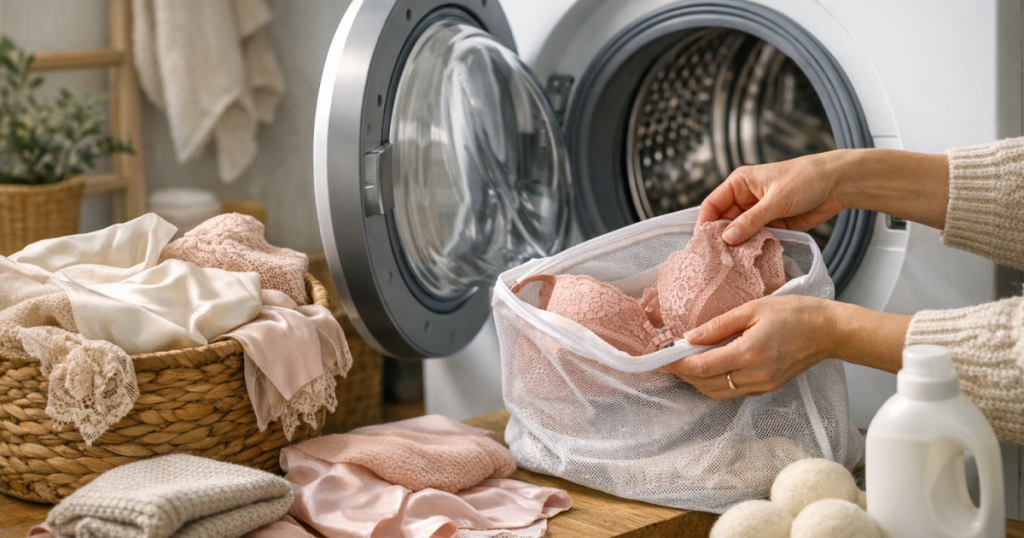
Use a mesh bag for anything with straps, fine lace, loose stitching, beading, embroidery, lightweight viscose or thin knit fabric. The bag should give the garment room to move rather than compact it into a tight ball. Small underwear bags are useful for bras and hosiery, while larger flat bags are better for camisoles, blouses and delicate tops. For more detail on shape, zip quality and fabric density, see our guide to choosing mesh laundry bags for delicates.
Step 3: keep the load small and balanced
A delicate programme is not a licence to fill the drum. A smaller load gives water and detergent space to circulate with less rubbing. As a rule of thumb, aim for the drum to look loosely filled rather than packed. If garments are pressed tightly against the door before the cycle starts, the load is too full for delicate care.
Balance also matters. One heavy jumper with a few fine camisoles can pull, twist and stretch lighter items during the spin. Wash similar weights together: fine tops with fine tops, lightweight nightwear together, and woollens separately from slippery satin or lace.
If you are washing a single delicate item, add one or two similarly gentle items if the care labels allow it. That can help the drum rotate more evenly, but do not add towels, jeans or school sweatshirts just to make up a load.
Step 4: choose the gentlest suitable cycle on the control panel
Bosch Serie 4 models vary by exact model number, so use the programmes printed on your own control panel and check the manual where needed. Many machines in this range include programmes intended for delicate, wool or hand-washable textiles, but the naming can differ. Choose the closest fabric-appropriate programme rather than defaulting to cottons at a low temperature.
If your control panel has Delicates or Silk, use it for washable satin, lace, delicate synthetics and light blouses where the label permits machine washing. If it has Wool or Hand Wash, reserve that for wool, wool blends and garments labelled for hand washing where the manufacturer allows machine use. Easy Care or Synthetics can be useful for sturdier man-made fabrics, but it is not automatically gentle enough for fragile lace or fine knitwear.
A Bosch Serie 4 Washing Machine may also offer extra settings depending on the model. Avoid adding speed-boost or intensive options to delicate loads unless your manual specifically says they are suitable for that programme. Faster washing can mean more movement, which is not always what fragile fabric needs.
Step 5: set temperature and spin with the fabric in mind
For many delicates, 20–30°C is the safer range, provided the garment label allows it and the item is not heavily soiled. Heat can encourage shrinkage, dull some finishes and make certain fibres more prone to creasing. Cold or cool washing is especially helpful for dark viscose, fine synthetics and decorated garments where colour movement is a concern.
Spin speed is just as important as temperature. A high spin extracts more water, but it can also pull seams, crease satin, distort wool and make thin straps twist around other garments. If your machine lets you adjust spin, choose a low spin for most delicates. For very fragile garments, use no final spin and press out water gently in a clean towel after the cycle.
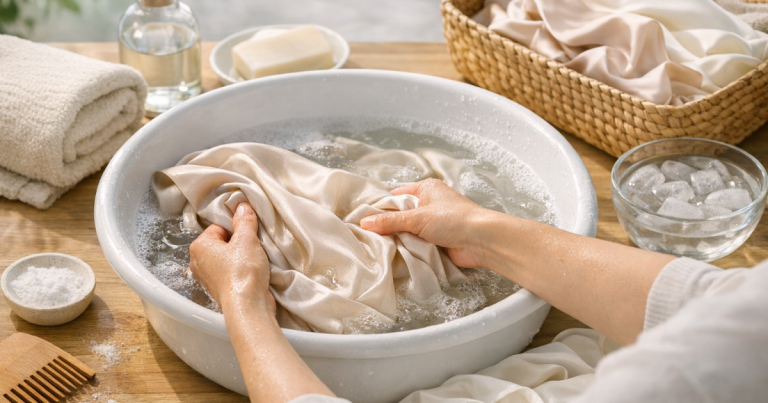
Do not rely on the machine to solve a fabric problem that the care label warns against. If a silk blouse says hand wash only, a delicate machine cycle still carries more movement than a basin wash. If the item is expensive, sentimental or structurally complex, the cautious choice is usually hand washing or specialist cleaning.
Step 6: use the right detergent dose
Delicates do not need a heavy detergent dose. Too much detergent can leave residue, stiffen fine fibres and cause dull patches, especially when the programme uses less mechanical action than a standard cotton wash. Use the detergent drawer markings and the detergent label as your guide, then reduce the dose for a small, lightly soiled load if the detergent instructions allow it.
For wool and silk, use a detergent that states it is suitable for those fibres. Standard biological detergents contain enzymes designed to break down protein-based stains, and they are not the safest default for protein fibres such as wool and silk. For washable synthetics, viscose and many lace items, a mild liquid detergent is often easier to rinse from delicate fabric than powder, but the garment label still takes priority.
Be careful with fabric conditioner. It can make some synthetics feel slick, reduce absorbency in certain fabrics and leave build-up in fine fibres. If you use it, keep the dose modest and avoid it on garments where the label says not to use softener.
Step 7: remove delicates as soon as the cycle ends
Do not leave delicates sitting damp in the drum. Creases set quickly in viscose and satin, while wool can stretch if left in a wet heap. Shake garments gently, reshape seams and lay flat where needed. Avoid wringing, twisting or hanging very wet knitwear from the shoulders.
For fine knits and wool blends, roll the garment in a clean towel and press to remove excess water, then dry flat on an airer or towel away from direct heat. For washable satin and silky synthetics, hang on a smooth hanger if the label allows, keeping clips away from visible areas. If water marks are a concern after drying, our guide to steaming satin dresses without leaving water marks explains how to refresh the finish more safely.
Fabric-by-fabric pointers
Lace and lingerie
Use a mesh bag, fasten hooks and wash with similar lightweight pieces. Avoid washing lace with towels, zip-heavy clothing or textured cottons that can abrade the surface.
Wool and wool blends
Use the Wool or Hand Wash programme if your model has one and the care label permits it. Keep the temperature cool, reduce spin and dry flat. Heat, friction and hanging weight are the main risks.
Satin and silky synthetics
Turn inside out and wash with smooth, lightweight garments. Use cool water and a gentle spin. Dry promptly to reduce creasing and avoid pegging visible areas where marks may show.
Viscose and rayon
Viscose can feel heavy and vulnerable when wet. Use a small load, low spin and careful reshaping. Some viscose garments shrink or distort despite looking robust when dry, so follow the label closely.
Quick checks before pressing start
- Is every garment in the load labelled as machine washable?
- Have hooks, zips, ties and loose trims been secured?
- Are fragile items inside roomy mesh bags?
- Is the drum loosely loaded rather than packed?
- Is the selected programme designed for the fabric type?
- Have you reduced temperature and spin where the garment needs it?
- Are you using a detergent suitable for wool, silk or delicate fibres where relevant?
Common questions
Can I wash dry-clean-only delicates on the Delicates programme?
No. Dry-clean-only labels can relate to linings, dyes, trims, structure or finishing treatments. A gentle cycle still uses water and drum movement, so it is not a safe substitute.
Should I use a quick wash for delicates?
Only use a quick or speed option if your machine manual and garment label support it. Shorter cycles are not always gentler; they may use different movement or rinsing patterns.
What spin speed is safest for delicate clothes?
Use the lowest practical spin your machine allows for the fabric. Fine lace, satin and wool blends usually benefit from low spin or no final spin, followed by towel pressing.
Why do delicates still come out creased?
The load may be too full, the spin too high or the garment may have sat damp in the drum. Use a smaller load, reduce spin and remove items as soon as the cycle finishes.
Can I put bras in the machine?
Some everyday bras can be machine washed if the label allows it. Fasten hooks, use a structured mesh bag and avoid washing them with heavy items. Delicate or wired bras may last longer with hand washing.
The big picture
Using a Serie 4 machine for delicates is mainly about lowering the stress on the garment at every stage: sorting, bagging, loading, programme choice, detergent, spin and drying. The machine provides useful gentle programmes, but the care label and fabric behaviour should make the final decision.
When in doubt, choose the cooler, smaller, slower wash. Delicates usually fail because they are rubbed, overheated, twisted or dried badly, not because they needed a more powerful clean.