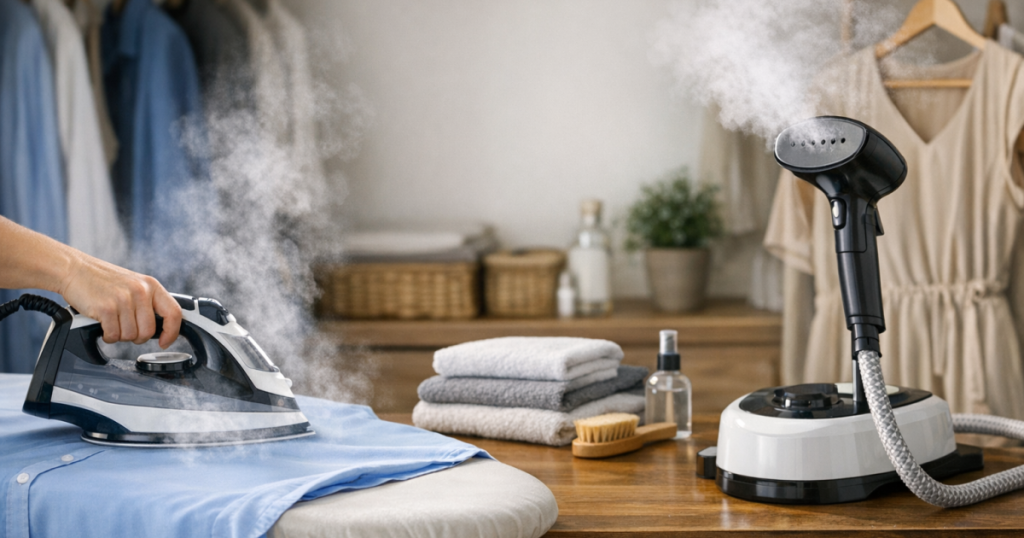
Good pressing is not about flattening every garment into submission. The right ironing and steaming equipment helps you smooth creases, revive fibres and avoid shine, scorching or stretched knitwear. A cotton school shirt, a wool coat and a viscose dress all respond differently to heat, moisture and pressure, so the equipment matters as much as technique.
Most fabric damage linked to pressing is avoidable. It usually comes from too much direct heat, pressing in the wrong direction, lingering on one spot, or using steam on a garment that should be kept dry. A better setup gives you more control, which is especially useful in UK homes where drying space, hard water and mixed laundry loads can all affect garment care.
What to know first
- Irons press; steamers relax. An iron uses heat, weight and pressure to create crispness. A steamer uses vapour to loosen fibres without flattening them as firmly.
- Fabric decides the method. Cotton and linen usually tolerate firmer pressing than wool, viscose, silk blends and textured synthetics.
- Steam is not always gentler. Hot moisture can distort some finishes, loosen shaping or leave marks on delicate surfaces.
- The board matters. A stable, well-padded ironing board protects seams, buttons and fabric texture far better than a towel on a table.
- Maintenance affects results. Scale, residue and a dirty soleplate can mark clothes even when your technique is sound.
Used thoughtfully, ironing and steaming equipment can make clothes look fresher for longer, but it should sit within a broader care routine: correct washing, controlled drying, suitable storage and careful brushing or de-bobbling when needed.
Why equipment choice changes the fabric outcome
A crease is not just a visual nuisance. It is a temporary distortion in the fibre structure, and different fabrics release that distortion in different ways. Cotton responds well to moisture and firm pressure because the fibres can be reshaped with heat. Linen creases deeply but can usually take a hotter, damper press if the care label allows it. Wool often benefits from steam and light pressure because the fibres spring back, but heavy pressing can create shine. Polyester blends may release creases quickly, yet excessive heat can melt, glaze or permanently set marks.
That is why one tool rarely solves every garment problem. A steam iron gives control when you need sharp seams, cuffs, collars and pleats. A garment steamer is better for soft refreshes, lined jackets, gathered dresses, curtains and clothes that only need gentle crease reduction. A steam generator iron can be useful for households that press large loads, but it needs more storage space and careful maintenance. For a more detailed side-by-side explanation, see our guide on choosing between a garment steamer and a steam iron.
The core tools and what each one does well
Steam irons
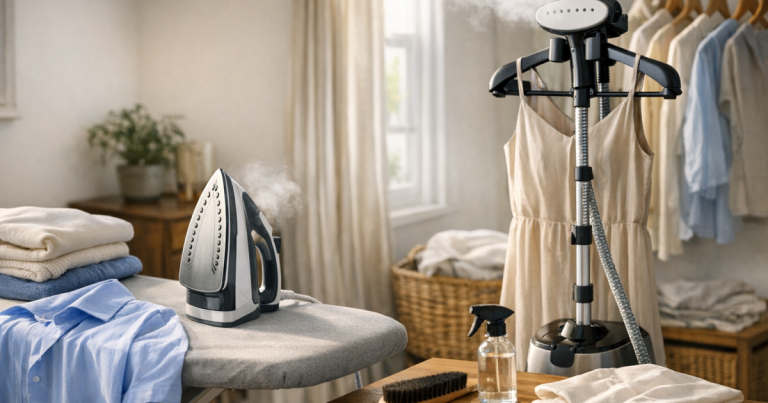
A steam iron is the most versatile pressing tool for everyday garments. It can work dry or with steam, and it gives direct pressure for collars, hems, cuffs, table linen and cotton shirts. The main fabric-care advantage is control: you can reduce the temperature, switch off steam, use a pressing cloth and work in small sections.
The risk is that a steam iron also concentrates heat in one place. Shiny marks on dark wool trousers, scorch marks on cotton, and melted synthetic fibres often come from using too high a setting or pressing for too long. A clean soleplate, a smooth board cover and the correct heat setting matter more than using maximum steam.
Steam generator irons
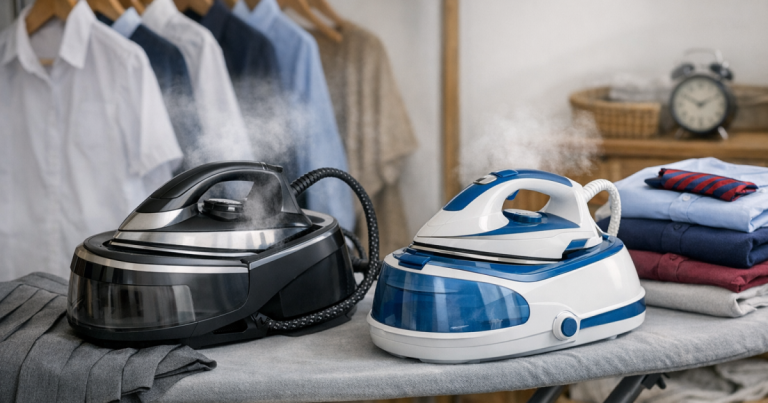
A steam generator iron separates the water tank from the iron head, which can make long ironing sessions feel less interrupted. It is most useful for households handling bedding, uniforms, work shirts or large weekly laundry loads. A model such as Tefal Pro Express Ultimate is an example of the type to assess if you want a separate-base system, but always verify current specifications, water requirements and descaling instructions before choosing any model.
The fabric-care trade-off is storage and discipline. These units can encourage over-steaming because the steam output feels effortless. Use that power carefully on delicate fibres, seams, elastics and embellished areas. More steam does not automatically mean a better finish.
Garment steamers
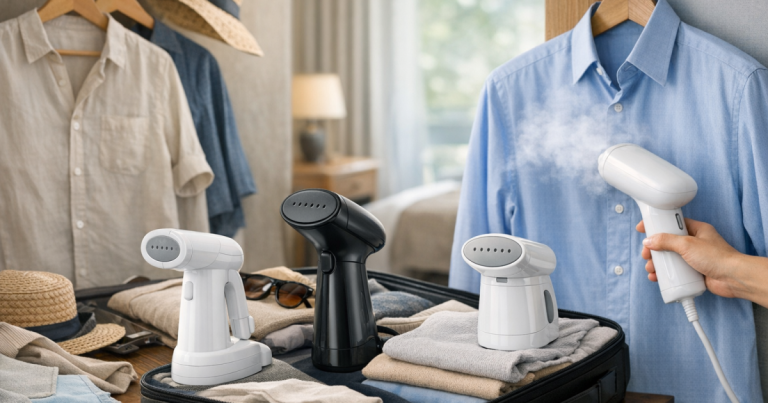
A garment steamer is useful when you want to relax creases without compressing the fabric. It suits soft dresses, blouses, lightweight jackets, pleated garments, some knits and items that are awkward to position on an ironing board. A compact handheld model such as Russell Hobbs Steam Genie Aroma shows the kind of device many readers consider for quick refreshes, though tank size, heat-up behaviour and fabric suitability should be checked on the current product information.
Steamers are not a direct replacement for irons. They will not usually create a crisp trouser crease or a sharp shirt collar in the same way. They also need careful handling around silk, viscose, velvet, coated fabrics and trims. Hold the steamer slightly away from the surface, work with the garment hanging freely, and let the fabric dry fully before wearing or storing.
Pressing cloths and protective layers
A pressing cloth is one of the simplest ways to prevent shine and heat marks. It creates a barrier between the iron and the garment while still allowing heat and moisture through. Use a clean cotton cloth for general pressing, and choose a lighter cloth when you need to see the garment shape beneath. Avoid coloured cloths that may transfer dye.
Pressing cloths are especially useful for wool trousers, dark uniforms, suiting, embroidered areas and delicate blends. They also reduce the risk of soleplate residue transferring onto pale garments.
Ironing boards and sleeve boards
A good ironing board should feel stable, sit at a comfortable working height and have enough padding to prevent hard impressions. A board such as Brabantia Ironing Board B is a recognisable example of a full-size home board, but the right choice depends on your space, height preference and storage needs. Check the cover condition regularly: thin, scorched or wrinkled covers can print marks into clothes.
A sleeve board is useful for shirts, children’s uniforms, narrow trouser legs and shaped sleeves. It helps you press one layer at a time, reducing the accidental creases that happen when fabric wraps around the main board.
Matching method to fabric
Care labels are the starting point, but they do not always tell the whole story. The same garment can include a cotton outer, synthetic lining, fusible interfacing, elastane trims and decorative stitching. Treat the most sensitive part as the limiting factor.
- Cotton shirts: Use steam and pressure if the label permits. Press collars, cuffs and plackets first, then larger panels. Slight dampness can help release deep creases.
- Linen: Press while slightly damp, using a cloth on darker colours to reduce shine. Accept that linen will crease again with wear; over-pressing can make it look unnaturally flat.
- Wool trousers and jackets: Use steam, a pressing cloth and minimal pressure. Lift and place the iron rather than dragging it across the fabric.
- Viscose and rayon blends: Use low heat and test carefully. These fabrics can become weak or distorted when wet, so avoid aggressive steaming.
- Silk and silk blends: Use the care label as your authority. Many pieces need very low heat, a dry cloth or professional cleaning rather than home steaming.
- Polyester and synthetics: Use lower heat and short contact. Once a synthetic fabric is heat-glazed or melted, the mark is usually permanent.
- Knitwear: Avoid heavy pressing. Steam gently from a short distance or reshape flat with your hands, then let the garment dry naturally.
For more detailed heat and steam guidance by fabric type, keep our steamer and iron settings guide nearby when dealing with unfamiliar garments.
Technique: the small habits that prevent damage
Most pressing mistakes happen because the user treats the iron like a scrub brush. Pressing should be controlled and deliberate. Place the iron down, apply only the pressure needed, then lift it away. Sliding back and forth can stretch seams, distort bias-cut fabric and create shine on textured materials.
Work from the least visible area first when handling a delicate or unfamiliar garment. Inside hems, seam allowances and reverse sides are safer places to test. If the fabric changes colour, becomes glossy, puckers or smells hot, stop and lower the temperature.
- Use distilled or deionised water only if your appliance instructions allow it. Some appliances have specific guidance, particularly in hard-water areas.
- Empty tanks after use where the manual recommends it. Stagnant water and scale can contribute to spitting or staining.
- Let garments cool before moving them. Freshly pressed fibres can re-crease if folded, worn or stored immediately.
- Steam vertically with tension, not force. Hold the hem gently, keep fingers away from the steam path and let vapour do the work.
- Protect buttons and trims. Press around them from the reverse or use a towel to cushion raised details.
Setting up a fabric-safe pressing area
A pressing area does not need to be large, but it should be stable, bright and well ventilated. You need enough room to move garments without dragging them on the floor, a safe place for the hot iron, and a rail or hook where steamed items can hang while they dry.
Keep a spray bottle, pressing cloth, lint brush, clean towel and spare hangers within reach. Avoid ironing over laundry detergent residue, deodorant marks or stains; heat can set marks and make them harder to remove. If your laundry workflow often leaves clothes over-dry, creased or musty, improving the wider space may help more than upgrading the appliance. Our guide to setting up a laundry area that protects clothes covers layout and workflow in more detail.
Lighting is often overlooked. Natural light or a bright task light makes it easier to spot shine, damp patches and missed creases. A mirror nearby can also help you check how a garment hangs after steaming, especially with dresses, jackets and trousers.
Maintenance that keeps clothes cleaner
An iron or steamer that looks clean can still leave marks if scale or residue builds inside. UK hard-water areas can be particularly demanding, so follow the appliance manual for descaling frequency and water type. Do not pour vinegar, fragrance, laundry additives or homemade mixtures into the tank unless the manufacturer explicitly allows it.
Wipe the soleplate when the appliance is cool, using a method suitable for that surface. Sticky residue from fusible interfacing, printed designs or synthetic fibres can transfer onto the next garment. If an iron spits brown water, leaves white flakes or produces uneven steam, pause garment use until it has been cleaned according to the instructions.
Board covers need attention too. Replace or wash them according to the care instructions when they become stained, scorched or flattened. A poor cover can undermine an otherwise careful pressing routine.
When steaming is the better answer
Steaming is often the safer first step for garments that need refreshing rather than reshaping. It can reduce light creasing, relax travel wrinkles and improve the look of hanging garments without forcing sharp lines into the fabric. It is especially useful for soft tailoring, floaty dresses and clothes with gathers or drape.
However, steaming should be controlled. Keep the nozzle moving, avoid soaking one area and let the garment air before returning it to the wardrobe. A damp garment pushed into a crowded cupboard can develop odour or mildew, particularly in cooler UK homes. Steaming is a finishing method, not a substitute for proper drying.
When ironing is still worth doing
Ironing remains the better option when structure matters. Shirts, uniforms, formal trousers, table linen and cotton dresses often need the combination of heat, pressure and a flat surface. It is also easier to control edges, plackets and hems with an iron than with a steamer.
The safest approach is not to iron everything harder; it is to use the least aggressive method that gives the finish you need. A crisp cotton shirt can take a firmer press than a wool blazer. A synthetic blouse may only need a low-temperature touch from the reverse. A knitted cardigan may need no iron at all.
Common questions
Can a steamer replace an iron for everyday clothes?
Only partly. A steamer is excellent for soft crease release and quick refreshes, but an iron is still better for crisp collars, cuffs, trouser creases and flat seams.
Why does my iron leave shiny marks?
Shine usually comes from too much heat, too much pressure or direct contact on fibres such as wool, dark cotton or synthetics. Use a lower setting and a pressing cloth.
Should I use tap water in a steamer or iron?
Follow the appliance manual. Some models are designed for tap water, while others need specific water guidance, especially in hard-water areas of the UK.
Is steam safe for all delicate fabrics?
No. Steam can mark, shrink or distort some delicate fabrics and finishes. Test discreetly, use distance, and follow the care label when silk, viscose, velvet or embellished garments are involved.
How long should clothes hang after steaming?
Let them hang until fully dry and cool. Even a few minutes can help, but thicker fabrics and lined garments may need longer before being worn or stored.
Final thoughts
Better fabric care comes from matching the tool to the textile, not from using the hottest setting or the strongest steam. Keep an iron for structure, a steamer for gentle refreshes, and simple accessories such as a pressing cloth and stable board for control. With clean equipment, sensible heat and a little patience, clothes look sharper without being punished in the process.