The short answer
A cable-free iron looks like an obvious upgrade if you regularly fight with a cord around shirt sleeves, duvet edges or a crowded ironing board. In practice, cordless steam irons are worth paying for when you iron in short bursts, value easy movement and mostly deal with everyday garments rather than heavy, crease-prone fabrics. They are less convincing if you iron large piles in one session, expect constant strong steam, or frequently press linen, thick cotton uniforms and bedding.
The key compromise is that the iron has to return to its charging base between passes. Some people settle into that rhythm quickly: iron a section, park the iron, reposition the garment, iron again. Others find it interrupts their flow, especially when pressing several school shirts or work shirts back to back.
How the cordless system changes ironing
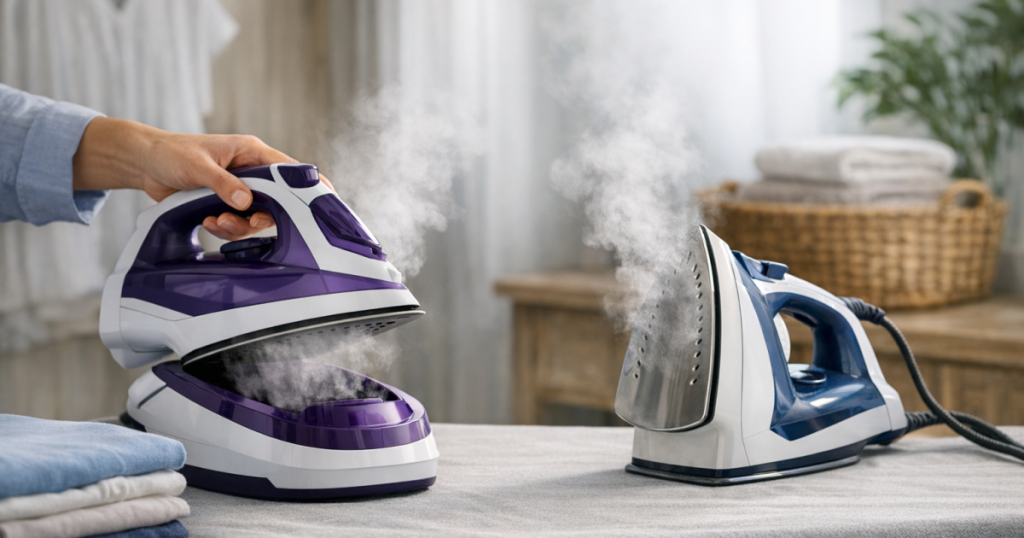
A cordless steam iron is not simply a corded iron with the cable removed. It relies on a powered base to reheat between uses. The iron itself gives you a period of free movement, then goes back onto the base to regain heat. That makes the experience feel different from a traditional steam iron, where heat and steam are supplied continuously while plugged in.
This matters because good ironing is about rhythm as much as heat. For cuffs, collars, children’s uniforms, pleats and curved areas, the lack of cable drag can feel genuinely helpful. You can turn the iron more freely and avoid the cable brushing over already-smoothed fabric. For long, flat work such as duvet covers, table linen or a stack of cotton shirts, the need to dock and reheat can feel slower.
Steam performance also needs realistic expectations. A cordless iron may produce useful steam, but the level and consistency can vary as the soleplate cools away from the base. If you rely on a powerful steam shot to relax stubborn creases, check independent reviews and user feedback for heat recovery and steam consistency rather than assuming every model performs like a high-output corded iron.
When cordless steam irons make sense
They make the strongest case in homes where ironing is occasional, mixed and slightly awkward. If your typical pile is a couple of shirts, a school skirt, a dress, a pair of chinos and a few touch-ups before work, the freedom of movement can be more valuable than maximum continuous output.
- Small ironing sessions: Shorter batches give the iron regular chances to return to the base without feeling disruptive.
- Detailed garment areas: Sleeves, collars, button plackets, waistbands and pleated sections are easier to approach from different angles without cable resistance.
- Shared or tight spaces: In smaller UK homes, where the ironing board may sit in a kitchen corner, bedroom or hallway, fewer trailing-cable frustrations can be welcome.
- People who reposition garments carefully: If you naturally pause to move fabric, smooth seams and check labels, docking the iron can fit into your existing routine.
Models such as the Tefal Freemove Air FV6520 and Russell Hobbs Freedom Cordless Iron are useful reference points for the category, but do not judge by the cordless label alone. Check the current model details, base design, heat settings, water tank arrangement and how easily the iron docks one-handed.
Where a corded iron still has the advantage
A conventional steam iron remains the safer choice for heavy laundry weeks. Continuous power helps maintain soleplate temperature and steam output, which is important when you are tackling cotton shirts, bedding, chef whites, work trousers or multiple school uniforms in a single session.
If you often press thick seams, dense cotton, dry linen or laundry that has become over-dried, you may prefer the steadier feel of a corded model. A cordless iron can still help, but you may need more patience: misting fabric, using the right heat setting, working in smaller sections and returning the iron to the base regularly.
The soleplate also deserves attention. Ceramic, stainless steel and non-stick finishes can all work well, but they feel different on fabric and need different care. If you want a deeper breakdown before choosing any iron, read our guide to steam iron soleplates and how they affect glide, durability and fabric protection.
A fabric-safe way to test whether cordless suits you
Before paying extra for a cordless model, think through your actual ironing routine rather than the ideal version of it. A good fit depends less on novelty and more on how you move, what you iron and how quickly you expect to finish.
Step 1: Audit your normal ironing pile
Look at the garments you iron most often. Light cotton shirts, blouses, children’s tops and synthetic-blend workwear are generally easier to manage than heavy linen or thick cotton. If your pile is mostly quick refreshes, a cordless model has a stronger case. If your laundry basket regularly includes bedding and dense fabrics, continuous heat matters more.
Step 2: Notice how often you rotate the garment
Cordless ironing rewards movement. If you often turn sleeves, lift collars, press around buttons or work from both ends of a garment, cable-free handling can save irritation. If you usually iron large flat panels in long uninterrupted strokes, docking may feel like an interruption.
Step 3: Think about delicate and structured items
Freedom of movement can be helpful on delicate pieces, but heat control is still more important than cordless convenience. Always follow the care label, test on an inconspicuous area where sensible, and use a pressing cloth for fabrics that can shine, mark or snag. For structured garments, avoid dragging the soleplate across seams, trims or raised details.
Step 4: Check your board setup
The base needs a stable place to sit, and the board cover should support smooth pressing without reflecting too much heat into delicate fabrics. A loose, thin or scorched cover can undermine even a good iron. If your setup feels unstable, start with our advice on choosing an ironing board cover that protects fabrics.
Step 5: Factor in water and maintenance
Many UK households deal with hard water, which can affect steam appliances over time. Check the manufacturer’s guidance on water type, anti-scale features, cleaning and emptying the tank after use. Do not assume every iron can be treated the same way. Poor maintenance can lead to spitting, mineral marks and reduced steam, all of which are frustrating on pale shirts and schoolwear.
Key checks before paying more
- Heat recovery: Look for evidence that the iron reheats quickly enough for your pace. Reviews that mention repeated docking are more useful than vague claims about speed.
- Base stability: The charging base should feel secure on your board and easy to use without awkward lining-up.
- Steam control: Check whether steam settings suit the fabrics you press most often, from synthetics to cotton.
- Weight and balance: A lighter iron can be easier to manoeuvre, but it should still feel controlled on seams and collars.
- Water filling and emptying: A neat filling point and clear tank are practical details that matter during busy mornings.
- Corded option: Some cordless-style irons can also be used with the cord attached, but you should verify this for the exact model rather than assuming it is included.
- Storage: Consider whether the base, cord and iron can be stored safely without cluttering a cupboard or utility shelf.
Common fabric scenarios
School uniforms: Cordless can be convenient for quick morning touch-ups, collars and pleated areas. For a full weekly batch of shirts and skirts, a strong corded iron may feel faster.
Work shirts: If shirts are slightly damp or freshly dried, a cordless iron can manage well with a steady rhythm. If they are bone dry and heavily creased, you may spend more time re-steaming and re-docking.
Delicates and occasionwear: Movement is useful, but low heat, a pressing cloth and patience matter more. Avoid using high steam simply because the iron allows it.
Bedding and table linen: These are usually better suited to continuous heat and larger pressing strokes. Cordless convenience rarely outweighs the interruption unless you only touch up visible edges.
What about a premium corded iron instead?
If your frustration is poor crease removal rather than cable drag, a better corded steam iron may be the more effective upgrade. A well-designed corded model can offer steadier heat, predictable steam and fewer pauses during large loads. For readers weighing that route, our review of a serious corded steam iron for busy laundry weeks shows the kind of fabric-care questions worth asking before choosing.
That does not make cordless a gimmick. It simply means the benefit is ergonomic rather than purely performance-led. You are paying for manoeuvrability and tidier handling, not automatically for stronger pressing.
Questions people ask
Do cordless irons stay hot for long enough?
They can stay hot long enough for short passes, but they are designed to return to the base frequently. The real test is whether that rhythm suits your ironing style and fabric mix.
Are they good for cotton shirts?
They can be, especially for one or two shirts at a time. For a large batch of dry cotton shirts, continuous heat and steam from a corded model may be more efficient.
Do they protect fabrics better?
Not automatically. Fabric protection comes from correct temperature, a clean soleplate, suitable steam, a good board cover and careful technique. Cordless movement can reduce cable drag, but it does not replace good ironing habits.
The big picture
Cordless steam irons are worth paying for if your priority is freedom of movement, quick garment touch-ups and easier handling around awkward details. They are less compelling for long, heavy ironing sessions where uninterrupted heat and steam save time. For most UK households, the decision comes down to the laundry pile: small, varied and detail-heavy favours cordless; large, dense and crease-prone favours corded.
If you choose cordless, treat the base as part of the workflow rather than an inconvenience. Dock while you reposition fabric, smooth seams and check the next section. If that sounds natural, the upgrade may genuinely make ironing feel less annoying. If it sounds like a delay, put your money towards a strong corded iron, a better board cover or improving how you dry garments before ironing.