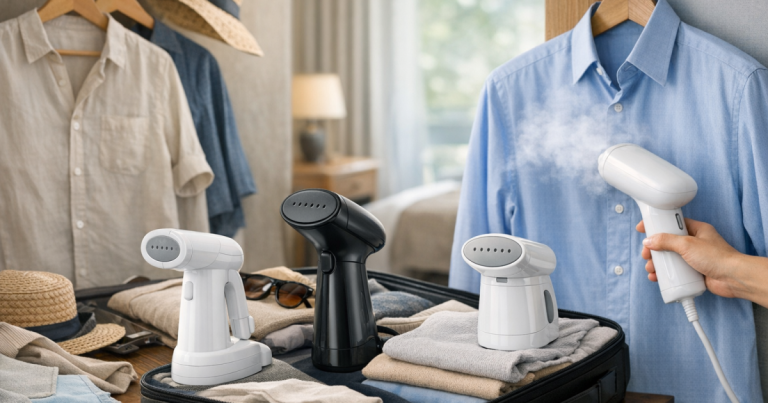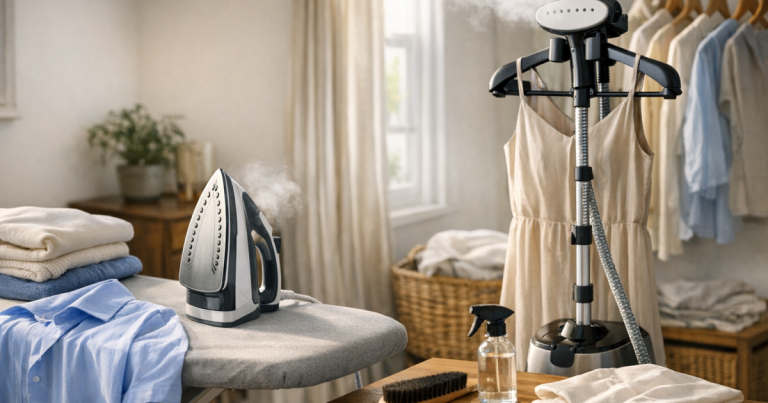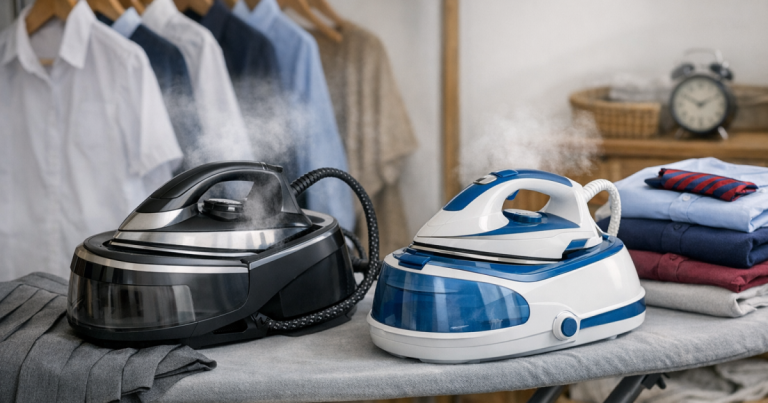
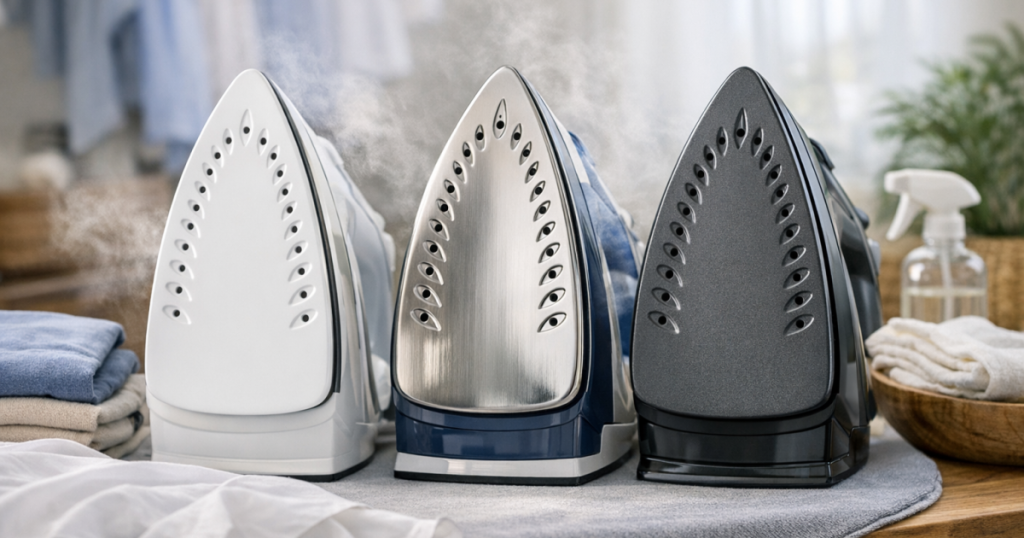
A smooth iron is not only about heat and steam; the plate touching the fabric matters just as much. Steam iron soleplates affect glide, shine marks, snag risk, cleaning effort and how forgiving the iron feels on mixed laundry. Ceramic, stainless steel and non-stick finishes can all work well, but they behave differently on cotton shirts, school uniforms, work polos, synthetics and delicate trims.
The right finish is not simply the one that feels slick in the shop. It depends on how you iron, how careful you are with zips and buttons, whether your area has hard water, and how often you tackle awkward fabrics rather than plain cotton.
At a glance
- Ceramic: often smooth and gentle-feeling, but usually a coating over another metal, so chips and wear matter.
- Stainless steel: durable, responsive and common on serious steam irons, though it still needs care around scorched starch, melted fibres and hard-water residue.
- Non-stick: useful for reducing dragging and sticking on some synthetic fabrics, but the coating can be easier to scratch or wear if treated roughly.
- For fabric safety: the heat setting, garment label and ironing technique matter as much as the soleplate material.
- For easy upkeep: choose a finish you are willing to clean properly, not one you will scrub with abrasive pads.
How steam iron soleplates behave on real laundry
The soleplate has three jobs: it transfers heat, spreads steam and moves over fabric without catching. A poor match between soleplate, temperature and fabric can leave shine on dark trousers, drag on polyester, water marks on delicates or stubborn residue around the steam vents.
Before judging any soleplate finish, check the garment care label. The iron symbol tells you whether the item can be ironed and at what heat level. If you are unsure about the dots, temperature limits or crossed-out symbols, this guide to reading laundry symbols before washing new clothes is a useful starting point because the same label logic helps with ironing decisions.
It is also worth separating soleplate material from overall iron quality. Steam output, thermostat accuracy, weight, water management and handle control all affect results. A good stainless steel plate can feel worse than a well-made ceramic one if the iron leaks or runs too hot; a non-stick plate can still scorch fabric if the setting is wrong.
Ceramic soleplates: smooth glide, with a few cautions
Ceramic soleplates are popular because they can feel very smooth across cotton, polycotton and lighter household fabrics. In many irons, the ceramic surface is a coating rather than a solid ceramic plate. That is not automatically a problem, but it means the condition of the coating matters.
On everyday laundry, ceramic can be pleasant for shirts, blouses, pillowcases and school uniform shirts where you want a smooth movement without too much pressure. It can also feel more forgiving when moving over seams, though technique still matters.
Where ceramic works well
- Regular shirt ironing where glide is more important than heavy downward pressure.
- Mixed family laundry, especially cotton and polycotton items used at moderate heat.
- People who prefer a lighter, smoother-feeling pass rather than a very weighty iron.
- Garments where you are careful to avoid metal trims, exposed zips and rough fastenings.
What to watch with ceramic
- Chips or scratches can make the plate feel rough and may catch fine fibres.
- Burnt-on starch, detergent residue or melted synthetic fibres can reduce glide quickly.
- Abrasive cleaning can damage the surface; follow the iron manufacturer’s cleaning instructions.
- Ceramic coatings vary, so do not assume every ceramic iron will feel identical.
For delicate-looking fabrics, ceramic is not a free pass to use higher heat. Always test on an inside seam where possible, turn dark items inside out, and use a pressing cloth for fabrics prone to shine.
Stainless steel soleplates: durable and precise-feeling
Stainless steel is common on many well-regarded steam irons because it is durable, conducts heat effectively and can give a clean, controlled feel on cotton, linen and heavier garments. It tends to suit people who iron frequently and want a soleplate that tolerates regular use, provided it is kept clean.
On shirts and uniforms, stainless steel can produce crisp results because it often combines well with steam and firm pressure. It can be particularly satisfying on cotton collars, cuffs and flat panels. If you want to see how this kind of iron is assessed in practice, the Philips Azur Elite Steam Iron review looks at a serious home iron through the lens of busy laundry weeks rather than showroom specifications alone.
Where stainless steel works well
- Cotton shirts, bedding, aprons and other items that benefit from steady heat.
- Regular ironing sessions where durability and predictable movement matter.
- Households that press uniforms, workwear and heavier fabrics as part of a weekly routine.
- People who prefer a slightly more direct feel from the iron rather than a coated glide.
What to watch with stainless steel
- It can still develop sticky residue if overheated on synthetics or used over transfers.
- Shine marks are possible on dark wool-mix trousers or black workwear if the heat is too high.
- Mineral deposits around steam holes can affect steam spread, especially in hard-water areas.
- Metal buttons, zips and hooks can mark the surface over time if you run directly over them.
Stainless steel is not difficult to maintain, but it rewards sensible habits: empty the water tank after use if the manufacturer advises it, use the self-clean or anti-calc function as directed, and wipe the plate once cool if residue appears.
Non-stick soleplates: helpful, but not indestructible
Non-stick soleplates are designed to reduce sticking and dragging. They can be useful if you often iron synthetic blends, school sports tops, lightweight linings or garments with a slightly grabby finish. The main trade-off is that non-stick coatings tend to need careful handling.
On lower to medium heat, a non-stick finish can make ironing feel less risky for fabrics that do not like aggressive heat. It may also help if you have had problems with residue clinging to the plate. However, non-stick does not mean scorch-proof. If a fabric label says low heat, the iron still needs to be set low.
Where non-stick works well
- Polyester blends and synthetic linings that can drag under a harsher plate.
- Occasional ironing where ease and forgiveness matter more than heavy pressing power.
- Quick touch-ups on lightly creased garments, provided the fabric label allows ironing.
- Households that avoid starch and heavy pressing but want a simple glide.
What to watch with non-stick
- Coatings can scratch if ironed over zips, hooks, rough buttons or abrasive prints.
- Harsh cleaning pads and gritty residues can reduce the non-stick effect.
- Once the coating is damaged, glide may become uneven.
- Some non-stick plates may not feel as crisp on thick cotton as a heavier stainless steel iron.
If you iron a lot of synthetic schoolwear or workwear, use the lowest effective heat and keep the iron moving. A pressing cloth can add protection, particularly on dark fabrics and printed areas.
Fabric examples: which finish feels most sensible?
No soleplate material is perfect for every garment. The most reliable approach is to match the plate, heat and pressure to the fabric in front of you.
- Cotton shirts: stainless steel and ceramic both tend to work well. Use steam, work from collar to cuffs, and avoid dragging over buttons.
- Polycotton school shirts: ceramic or non-stick can feel smoother, but stainless steel is fine at the correct temperature.
- Dark work trousers: use a pressing cloth and lower heat to reduce shine, whatever the soleplate finish.
- Pleated skirts: the soleplate matters less than careful placement, pinning and pressing. For uniform care, read how to iron pleated school skirts without flattening the pleats.
- Delicate synthetics: non-stick may reduce drag, but label guidance and low heat are more important.
- Linen: stainless steel can feel effective because linen often needs steam and pressure, but ceramic can also work if the iron holds heat well.
- Printed tops: avoid direct contact with prints and transfers. Iron inside out or use a cloth, regardless of soleplate type.
Cleaning and maintenance checks
A good soleplate can perform badly if it is dirty. Brown marks, sticky patches, blocked steam holes and rough deposits can transfer onto clean clothes, so make maintenance part of the ironing routine.
- Let the iron cool before wiping: never scrub a hot plate while rushing between garments.
- Use the recommended cleaning method: manufacturers differ, and the wrong cleaner can damage coatings.
- Avoid abrasive pads: they can scratch ceramic and non-stick finishes and may mark stainless steel.
- Clear residue early: melted fibres and starch are easier to remove before they build into a hard layer.
- Check steam holes: uneven steam can leave damp patches or make creasing harder to remove.
- Mind hard water: in many UK homes, limescale can affect steam performance, so follow the iron’s guidance on water type and descaling.
If your iron starts leaving marks, stop using it on light garments until the plate is clean. Test it on an old cotton cloth before returning to shirts, uniforms or bedding.
Questions people ask
Are ceramic soleplates better than stainless steel?
Not automatically. Ceramic can feel smoother, while stainless steel often feels durable and precise. The better choice depends on your fabrics, ironing frequency and how carefully you maintain the plate.
Can a non-stick soleplate still burn clothes?
Yes. Non-stick reduces sticking; it does not override the heat setting. Synthetic fabrics, prints and dark garments can still scorch, melt or develop shine if ironed too hot.
Which soleplate is easiest to clean?
Stainless steel is often more tolerant of routine cleaning, but all finishes need the method recommended by the manufacturer. Ceramic and non-stick coatings should not be scrubbed with abrasive pads.
Do steam holes matter as much as the soleplate material?
They matter a great deal. Good steam distribution helps relax creases evenly. Blocked or dirty holes can cause spitting, damp patches or uneven results, even on a high-quality soleplate.
What should I use for delicate fabrics?
Use the garment label first, then choose low heat, light pressure and a pressing cloth. A smooth ceramic or non-stick plate can help, but technique is the real protection.
Final thoughts
Steam iron soleplates are worth understanding because they shape how an iron feels on fabric, how easily it cleans up and how forgiving it is during a busy laundry session. Ceramic is attractive for smooth glide, stainless steel is valued for durability and control, and non-stick can help with fabrics that tend to drag or stick.
The safest choice is not only about the material. Read the label, set the correct temperature, avoid rough trims, keep the plate clean and use a pressing cloth when shine or melting is a risk. Do that, and any good-quality soleplate finish has a much better chance of giving crisp results without damaging the clothes you are trying to care for.