Finding tiny holes in a wool jumper is frustrating because the damage is usually done before you spot the insect. Cedar balls for moths can help reduce the chance of adult clothes moths settling in a wardrobe, but they are not a guaranteed cure. Their scent may discourage moths in a small, enclosed space; it will not reliably kill eggs or larvae already feeding on wool, cashmere, alpaca or silk blends.
What to know first
Cedar is best treated as a supporting fabric-care tool, not the main defence. It can make a drawer or storage box less attractive to moths, but only while the cedar still has a noticeable aroma and only when the garments are already clean. If moth larvae are present, the priority is removing or killing the larvae safely, then preventing the moths returning.
- Cedar may repel adult clothes moths: the natural scent is the useful part, so dry, scentless cedar does very little.
- It does not clean or disinfect fabrics: body oils, food marks and perspiration still need removing before storage.
- It is not a cure for an infestation: larvae, webbing, shed skins and frass need direct action.
- It works best in enclosed spaces: a sealed storage box, drawer or garment bag is more effective than an open rail.
- It needs refreshing: cedar loses aroma over time, especially in warm, dry homes.
Why wool attracts clothes moths
The insects that damage wool are not eating your clothes for the smell of a wardrobe. Clothes moth larvae feed on keratin, a protein found in animal fibres such as wool, cashmere, alpaca, mohair and silk. They are also drawn to soiling on fabrics, particularly sweat, skin oils, food residue and drink splashes.
This is why a freshly washed acrylic jumper is much less appealing than a worn merino jumper put away for the season. The risk rises when clothes are stored undisturbed in dark places: spare-room wardrobes, under-bed boxes, airing cupboard corners and loft storage are common problem spots in UK homes.
Adult moths are the warning sign, but the larvae cause the fabric damage. If you see a small beige moth fluttering near a wool coat, that does not automatically mean the coat is being eaten at that moment. It does mean you should inspect nearby natural fibres, seams, cuffs, collars, folded areas and the base of storage boxes.
How cedar helps, and where it falls short
Cedar wood contains aromatic oils. When the wood is fresh enough to smell clearly, those volatile compounds can help deter adult moths from settling and laying eggs nearby. That makes cedar useful around clean woollens that are already being stored correctly.
The limitation is contact and concentration. A few cedar balls in a large, airy wardrobe will not fill the whole space with a strong enough scent to protect every garment. Cedar also does not reliably reach larvae hidden inside folds, seams or dense knitwear. If eggs or larvae are already present, they can continue feeding while the cedar sits nearby.
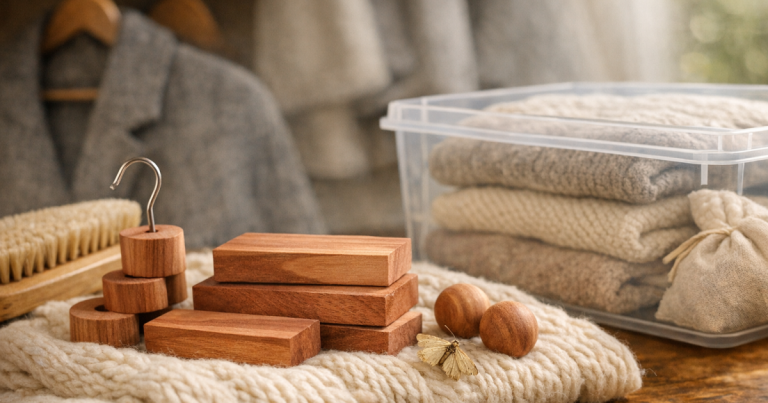
Think of cedar as similar to a polite warning sign rather than a locked door. It can reduce risk, but it should be paired with cleaning, isolation, sealed storage and inspection. If you prefer hanging cedar pieces to loose balls, this cedar rings review explains how wardrobe-friendly cedar accessories fit into everyday clothing storage.
Step 1: check the clothes before adding cedar
Do not add cedar to a wardrobe and assume the problem is solved. Start by inspecting the garments that moths are most likely to target.
- Look at high-risk fibres: wool jumpers, cashmere cardigans, wool coats, scarves, silk-lined garments and wool-blend uniforms.
- Check hidden areas: under collars, inside cuffs, along seams, beneath folded hems and between stacked knitwear.
- Look for more than holes: webbing, grit-like droppings, pale casings and thinning patches can all suggest larvae.
- Separate suspect items: keep them away from clean stored clothing until they have been dealt with.
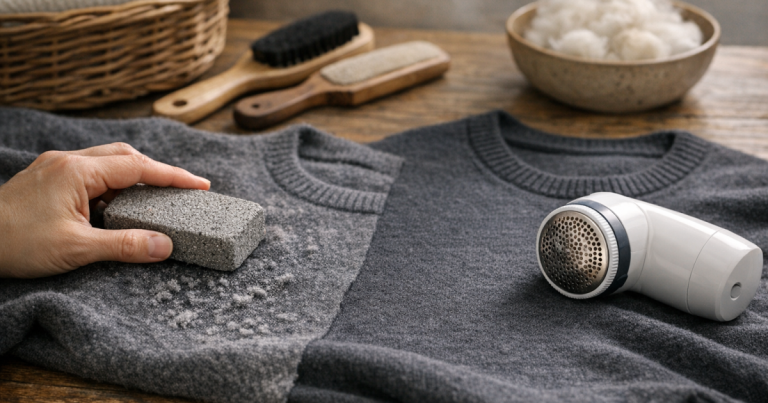
Small, neat holes are often blamed on moths, but snags, belt friction, pet claws and rough laundry loads can also damage knitwear. If the holes appear in clusters on natural-fibre garments that have been stored undisturbed, moth activity becomes more likely.
Step 2: clean wool before it goes into storage
Cedar is far more useful when the fabric is clean. Moths are attracted to traces that may not be visible, so a jumper that looks fine after one wear can still carry perspiration and skin oils. Follow the care label first: some woollens can be hand washed, some suit a wool cycle, and structured coats may need professional cleaning.
Let garments dry fully before storing them. Damp wool in a sealed container can develop musty odours and may encourage mildew, which creates a different fabric-care problem. Do not rush thick knitwear onto a shelf while the centre still feels cool or heavy. Reshape flat-dried wool carefully and store it only once it is completely dry.
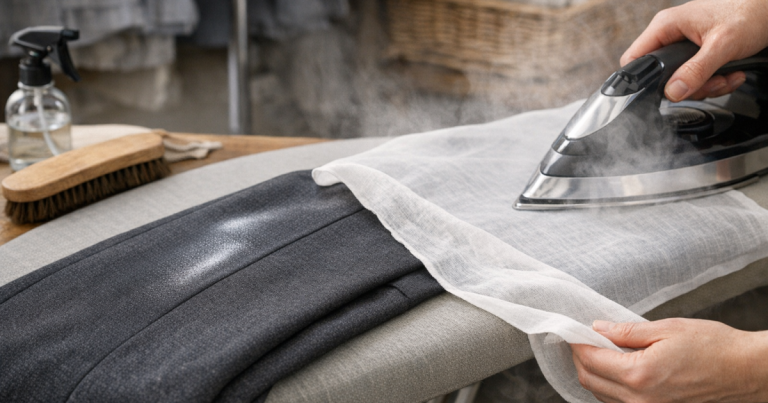
For items that cannot be washed at home, brushing, airing and spot-cleaning may help between professional cleans, but do not store visibly soiled wool for months. Cedar cannot compensate for food marks, deodorant build-up or old perspiration trapped in fibres.
Step 3: use cedar in the right place
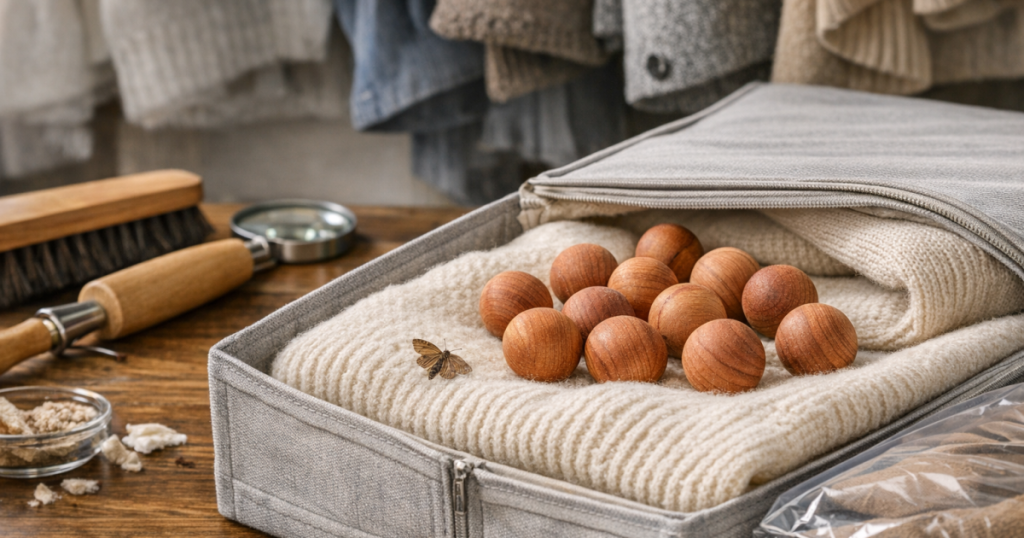
Cedar performs best where the scent can build up around the garment. A drawer, lidded storage box or zipped fabric bag gives it a better chance than an open rail. Place cedar pieces near, rather than directly buried inside, delicate fabrics. Some cedar products can feel slightly dusty or oily, so it is sensible to avoid prolonged direct contact with pale silk, fine cashmere or light-coloured wool.
- For folded jumpers: place cedar around the corners of the drawer or box, not squashed into the knit.
- For hanging coats: use cedar hangers, blocks or rings near the garment and keep the wardrobe clean and uncrowded.
- For storage bags: put cedar inside the storage space if there is room, but avoid trapping rough pieces against delicate fibres.
- For open wardrobes: use cedar as a minor deterrent only; regular cleaning and garment rotation matter more.
If you cannot smell the cedar when you open the drawer, it is unlikely to be doing much. Lightly sanding unfinished cedar can revive the aroma, but do this away from clothes and remove dust before returning it to storage.
Step 4: pair cedar with fabric-safe storage
The strongest everyday system is clean fabric plus physical protection. Airtight or well-sealed boxes help prevent adult moths reaching the fibre in the first place. Breathable garment bags can suit coats and occasionwear, while soft storage bags are useful for folded knitwear when they close properly and do not crush the fabric.
For wool and delicates, avoid storage that creates unnecessary pressure, sharp creases or trapped damp. Vacuum storage can save space, but it can flatten lofty knits and may not suit structured wool garments. If you are organising seasonal knitwear, these storage bags for wool, knitwear and delicates are worth understanding from a fabric-protection point of view before deciding how to pack items away.
Do not rely on cedar to make a poor storage setup safe. A scented cedar ball in a dusty, overfilled wardrobe with worn woollens piled on the floor is not a meaningful moth-prevention plan.
Step 5: refresh, rotate and inspect
Cedar is not a fit-and-forget solution. Wardrobes change through the year, and moth issues can start quietly. Build small checks into your clothing routine rather than waiting until autumn to discover damage.
- Refresh cedar when the scent fades: lightly sand unfinished cedar or replace pieces that no longer smell after refreshing.
- Vacuum storage areas: pay attention to wardrobe corners, skirting boards, drawer bases and carpet edges.
- Shake out stored woollens: movement and light make storage less hospitable to moths.
- Use moth traps for monitoring: pheromone traps can show whether adult male moths are present, but they do not remove larvae from clothes.
- Recheck vulnerable garments: inspect cashmere, merino, wool coats and heirloom textiles more often than everyday cottons.
In homes where wool is stored in several rooms, keep cedar and storage checks consistent. Protecting one drawer will not help if a spare-room blanket box has untreated, soiled woollen items inside it.
When cedar is not enough
If you find active larvae, webbing or repeated new holes, move beyond cedar. Isolate affected items in sealed bags until you can treat them according to the care label. Some garments may be washable; others may need dry cleaning. Freezing can be used for some textiles when carefully bagged and fully dry, but condensation and fibre stress need avoiding, so it is not suitable for every garment.
Clean the storage area as thoroughly as the clothes. Vacuum cracks, drawer runners, carpet edges and shelf corners, then empty the vacuum promptly. If you use any insecticidal moth product, follow the label exactly and keep it away from children, pets and direct contact with garments unless the product instructions clearly state otherwise.
Severe or repeated infestations may be linked to carpets, upholstered furniture, stored blankets or bird nests in roof spaces rather than only the wardrobe. In that situation, cedar balls for moths will not address the source; they can only support prevention once the underlying activity has been dealt with.
Common questions
Are cedar balls better than lavender sachets?
Both are mainly deterrents rather than cures. Cedar is popular because it is tidy, reusable and less perfumed than many sachets. Lavender may make drawers smell pleasant, but it should still be treated as a supporting measure alongside clean clothing and sealed storage.
How many cedar balls should I use in a drawer?
There is no single reliable number because drawer size, airflow and cedar freshness all matter. A small knitwear drawer needs fewer pieces than a large wardrobe. The more useful check is whether the drawer has a gentle cedar scent when opened, without the cedar being pressed directly into delicate fabrics.
Can cedar damage wool?
Clean, smooth cedar used sensibly is unlikely to harm robust wool. The main risks are rough edges snagging fine knits, dust transferring onto light fabrics, or aromatic oils marking delicate textiles if pieces are pressed against them for long periods. Use a small cotton pouch if you want a barrier.
Do cedar balls kill moth eggs?
No, they should not be relied on to kill eggs. If eggs or larvae are already present, the affected garment needs proper treatment, and the surrounding storage area needs cleaning. Cedar is better used after that work, as part of prevention.
Main lessons
Cedar can be a useful fabric-care tool, but it is not strong enough to protect wool clothes by itself. It works best when the garments are clean, dry and stored in an enclosed space where the cedar scent remains noticeable. It is weakest in open wardrobes, overfilled cupboards and situations where moth larvae are already active.
The most reliable routine is simple: clean wool before storing it, use sealed or well-closed storage, add fresh cedar as a deterrent, and inspect vulnerable garments regularly. For a broader system that covers packing, airing and wardrobe rotation, the guide to seasonal clothes storage is a useful next step.