Putting away wool coats, summer dresses or school uniform spares should feel like a reset, not a risk. Good seasonal clothes storage starts before anything goes into a box: garments need to be clean, fully dry, shaped correctly and stored somewhere stable. In many UK homes, the challenge is not lack of intention but damp air, crowded wardrobes and mixed fabrics being treated as if they all behave the same.
The aim is simple: protect fibres between wears so clothes come out fresh, wearable and structurally sound. That means preventing musty smells, moth activity, hard creases, yellowing, colour transfer and stretched shoulders without turning the wardrobe into an overcomplicated system.
At a glance
- Wash or dry-clean garments before storage, even if they look clean, because body oils, perfume and food traces can attract pests and stain over time.
- Make sure every item is completely dry before packing; trapped moisture is one of the fastest routes to mildew and odour.
- Fold heavy knitwear and embellished garments rather than hanging them for months.
- Use breathable covers for coats, suits and delicate pieces; avoid sealing natural fibres in plastic for long periods.
- Choose a cool, dry, dark storage spot rather than a damp garage, humid loft corner or sunlit spare-room rail.
Why off-season clothes suffer in storage
Most storage damage is slow and avoidable. A jumper that looked fine in April may smell stale in October because it was packed slightly damp. A silk blouse may develop stubborn creases because it was crushed beneath heavier items. A wool coat may emerge with shoulder bumps because it spent months on a narrow hanger.
Seasonal clothing is especially vulnerable because it is left undisturbed for long stretches. That gives moisture, pests and pressure marks time to do damage. Natural fibres such as wool, cashmere, silk, linen and cotton can be particularly sensitive to poor storage conditions. Synthetic fibres are often more resilient, but they can still hold odour, crease under weight or develop static and surface dust.
The storage method should follow the fabric, garment structure and length of time out of use. A padded winter coat, a linen shirt and a cashmere jumper should not be stored in the same way just because they belong to the same season.
Start with cleaning, not containers
Storage boxes and garment bags cannot compensate for clothes that were put away dirty. Marks that are almost invisible in normal light can oxidise over time and become harder to remove. Perspiration, deodorant, skin oils and tiny food traces can also attract moths and other fabric pests.
Before packing, check labels and sort items by care method. Wash everyday cottons, washable shirts, T-shirts, pyjamas and many synthetics according to their care labels. Dry-clean structured coats, suits, pleated garments and delicate pieces where the label requires it. If a garment has a stain, deal with it before storage rather than hoping it will wash out months later.
Drying matters just as much as washing. Clothes should feel dry through seams, waistbands, linings and pockets, not just across the main fabric panels. If you often air-dry laundry indoors, use good airflow and avoid overloading the airer. For more detail on moisture-safe drying routines, see how to dry clothes indoors without damaging fabrics.
Sort by fabric, weight and structure
A fabric-safe storage session is easier when clothes are grouped by how they need to be supported. Think in terms of pressure, airflow and shape retention.
Fold these items
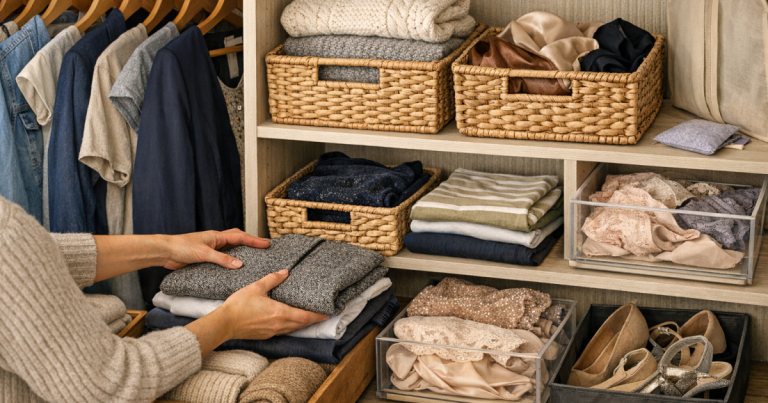
- Wool jumpers, cashmere, chunky cardigans and knitted dresses, because hanging can stretch shoulders and lengthen the garment.
- Heavy jersey, sweatshirts and relaxed loungewear, especially if they are going into longer-term storage.
- Embellished tops or beaded garments, because their own weight can pull at seams when hung.
- Delicate scarves and soft accessories, ideally loosely folded with minimal compression.
Hang these items
- Structured coats and jackets, using broad, supportive hangers that fill the shoulders.
- Suits, blazers and tailored trousers, with enough space around them to prevent crushing.
- Dresses that crease badly when folded, provided the straps and shoulders can support the weight.
- Garments with pleats or shaped construction that would be distorted by tight folding.
If you are deciding between rails, drawers and shelves, the key question is whether the garment’s weight will distort it. A detailed explanation of fabric-safe decisions is covered in this hanging versus folding clothes guide.
Choose containers that suit the fabric
There is no single perfect container for every garment. The right option depends on fibre type, available space and how long the items will be packed away.
Breathable garment bags
Use breathable cotton or non-woven garment covers for coats, tailoring, occasionwear and delicate dresses. They protect from dust while allowing some air movement. Avoid long-term storage in thin dry-cleaning plastic, which can trap moisture and cause yellowing or cling to fabrics.
Storage boxes with lids
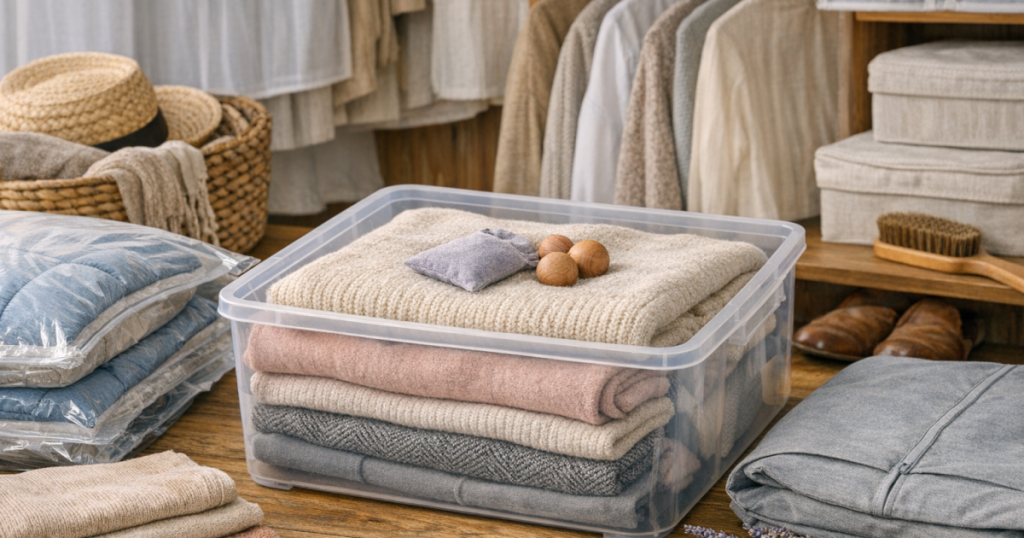
Rigid lidded boxes are useful for folded knitwear, summer clothes, children’s outgrown garments and spare uniforms. They keep dust off and help prevent crushing if stacked sensibly. Line rough containers with clean cotton sheeting or acid-free tissue if the inside surface could snag delicate fabric.
Breathable cotton bags
Cotton storage bags work well for natural fibres that need protection without being sealed. They are particularly useful for wool and cashmere if the storage area is clean, dry and pest-monitored.
Vacuum bags with caution
Vacuum bags can save space, but they are not kind to every fabric. They are better suited to short-term storage of resilient items such as spare bedding, puffier casual layers or bulky synthetics than to delicate tailoring, leather, suede, silk, structured coats or heavily embellished garments. Compression can flatten loft, set creases and distort shaping. If space is the main issue, read this vacuum storage bags review for the fabric-care caveats before relying on them for a whole wardrobe.
Prevent moths without damaging clothes
Clothes moths are drawn to animal fibres such as wool, cashmere, alpaca, mohair, silk and fur, particularly when those fibres carry body oils or food traces. Cleanliness is the first defence. Airtight or well-sealed storage can help, but only when garments are completely dry.
For a practical moth-aware routine:
- Brush or shake out wool coats and knitwear before storage to remove dust and debris.
- Store clean woollens in closed boxes or breathable bags in a regularly checked area.
- Use cedar blocks or lavender sachets as a deterrent, not as a substitute for cleaning.
- Inspect stored items every few weeks during warmer months, especially if your home has had moth activity before.
- Vacuum wardrobe floors, skirting boards and carpet edges where lint and fibres collect.
Mothballs are not a casual wardrobe freshener and are unsuitable for many family homes because of their strong chemical odour and handling concerns. For most households, clean garments, regular inspection and tidy storage are the more practical foundation.
Control damp, heat and light
UK homes often have seasonal humidity swings, particularly in older properties, bedrooms with external walls and homes where laundry is dried indoors. Clothes stored against cold walls, under beds with poor airflow or in unheated lofts can absorb moisture and develop a stale smell.
Choose storage areas that are dry, steady and easy to inspect. A bedroom wardrobe, chest of drawers or under-bed box in a well-ventilated room is usually safer than a garage, shed or damp loft. If you use a spare room, keep boxes away from radiators and direct sunlight. Heat can weaken elastic, encourage yellowing and make some stains set more firmly. Sunlight can fade exposed shoulders, collars and sleeves.
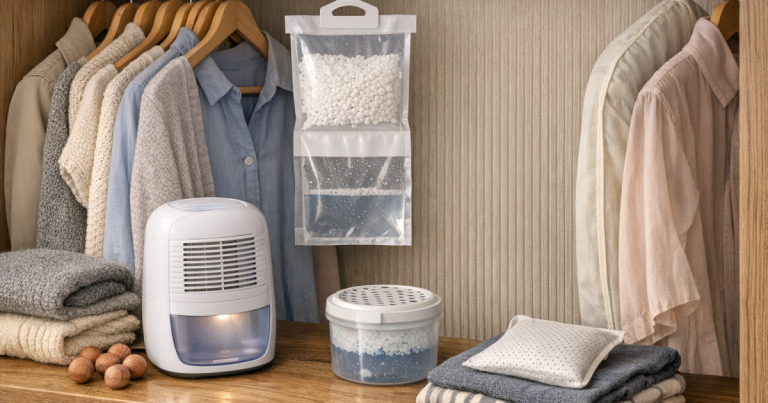
Silica gel sachets can help manage minor moisture inside sealed boxes, but they are not a cure for a damp room. If a space smells musty before clothes go in, it is not a good storage space for fabrics.
Use tissue, spacing and shape support
Small details make a noticeable difference after several months. Acid-free tissue can soften fold lines in silk, linen, viscose and occasionwear. It is also useful between garments with buttons, zips or embellishment that could mark neighbouring fabric.
Do not overfill boxes. Compression creates deep creases and makes it harder for garments to settle naturally. Heavy items should go at the bottom, with lighter or more delicate pieces above. If stacking boxes, choose rigid containers so the weight is carried by the box, not the clothes.
For hanging garments, use hangers that match the garment. Broad hangers support coats and blazers better than narrow wire styles. Clips should be padded or used with tissue to prevent marks on trousers and skirts. Leave a little air gap between garments rather than forcing one more coat onto an already crowded rail.
What to do when taking clothes back out
The unpacking stage matters too. Give stored garments time to air before wearing, especially wool, coats and anything kept in a closed container. Shake items gently, inspect seams and folds, then decide whether they need airing, steaming, brushing or laundering.
Do not immediately iron deep storage creases on a high setting. Heat can fix some marks if the fabric is dusty or slightly stale. Start with airing and gentle reshaping. Steam can relax many creases, but use the right distance and setting for the fibre. Structured garments may only need brushing and a few hours on a supportive hanger.
If anything smells musty, avoid masking it with fragrance. Mustiness usually means moisture or insufficient airflow. Air the garment thoroughly, then wash or clean it according to the care label if the smell remains.
Different fabrics, different priorities
Wool and cashmere need cleanliness, moth awareness and gentle folding. Cotton is generally easier, but white cotton can yellow if stored dirty or exposed to heat. Linen benefits from loose folding and breathable storage because hard creases can become stubborn. Silk needs protection from light, abrasion and sharp folds. Leather and suede should breathe and keep their shape, so avoid sealed plastic and compression.
Sportswear and swimwear need a slightly different approach. Elastic and stretch fibres dislike heat, trapped moisture and chemical residues. Rinse swimwear thoroughly, dry it completely and store it without heavy pressure. Padded bras and structured underwear should not be crushed into overfilled boxes, as cups and elastic can distort.
Helpful questions
Can I store clothes in the loft?
Only if the loft is dry, clean, insulated enough to avoid major temperature swings and easy to inspect. Many lofts are too hot in summer, too cold in winter or too dusty for delicate fabrics.
Should I wash clothes again after storage?
Not always. If items were stored clean and smell fresh, airing, brushing or light steaming may be enough. Wash them if they smell stale, feel dusty or were stored in a questionable space.
Are plastic storage boxes safe for clothes?
Yes, for many everyday garments, provided clothes are completely dry and the box is clean. For long-term natural-fibre storage, add breathable layers such as cotton sheeting or acid-free tissue.
How often should I check stored clothes?
Check once every month or two, and more often in warm weather or if you have had moths before. Look for odour, damp, insect activity, creases and colour transfer.
Can I use scented sachets in storage boxes?
Yes, but keep them from direct contact with fabric. Scented oils can mark delicate materials, and fragrance should never be used to hide damp or dirty clothing.
Key takeaways
Seasonal wardrobe care is less about buying more storage and more about matching the storage method to the fabric. Clean first, dry thoroughly, fold or hang according to structure, and choose a stable place where garments are protected from damp, pests, light and pressure.
The safest routine is also the easiest to maintain: fewer overfilled boxes, clearer fabric groupings and regular checks. When clothes are stored with their fibres in mind, they last longer, need less rescue work and return to the wardrobe ready for the next season.