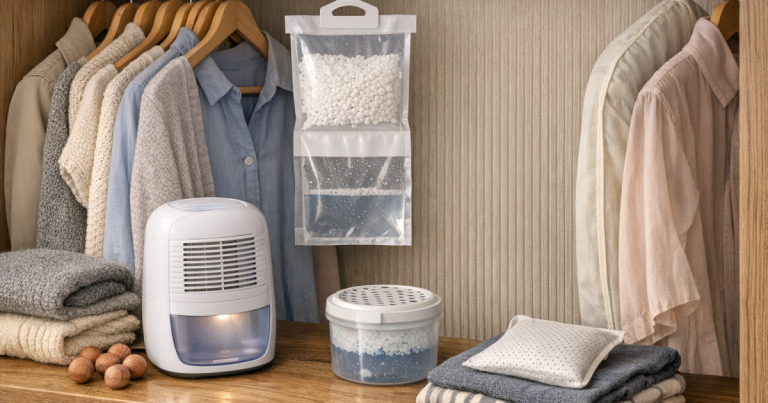
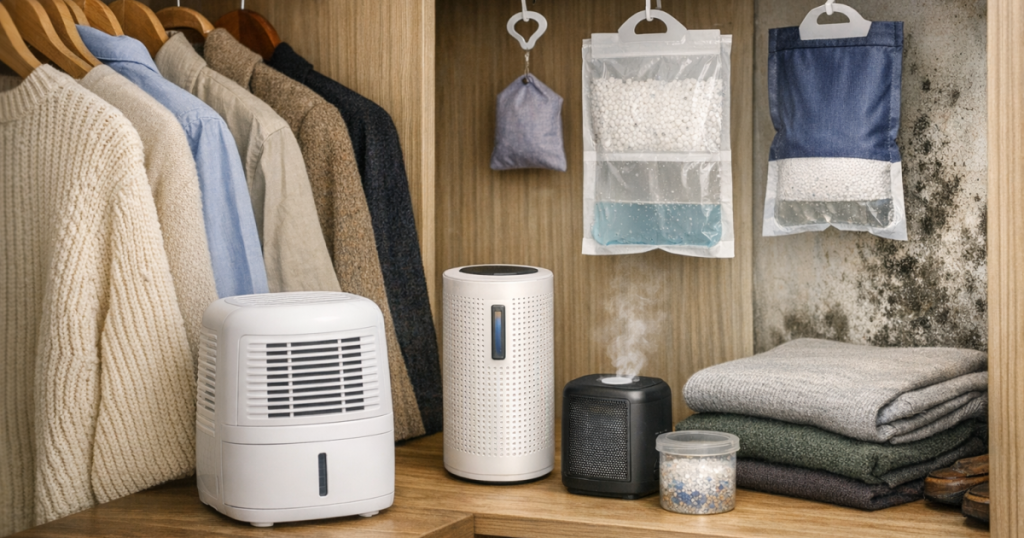
Damp wardrobe air is one of the quiet ways clothes start to smell musty, feel clammy or develop mildew marks. The best wardrobe dehumidifiers are not always the biggest or most expensive; they are the ones that match the space, fabric mix and source of moisture in your home.
Extensive mould growth, recurring damp from leaks or building defects, and any electrical work connected to damp areas should be assessed by a qualified professional to comply with UK housing, building and electrical safety requirements.
At a glance
- For small wardrobes, hanging moisture absorber bags are simple and space-saving, but they need regular replacement.
- For the floor of a fitted wardrobe, a lidded crystal moisture trap can collect more visible moisture, but it must be kept upright.
- For drawers, shoe cupboards and storage boxes, reusable silica gel units are usually neater than liquid-collecting tubs.
- For a whole room with persistent damp, a proper room dehumidifier is usually more effective than cupboard-only products.
- No absorber fixes wet laundry, leaks, poor ventilation or clothes stored before they are fully dry.
First, work out where the damp is coming from
A wardrobe moisture absorber can help with trapped humidity, but it cannot solve the wrong problem. Before adding anything, check whether the clothes are going in slightly damp, whether the wardrobe sits against a cold external wall, or whether the room itself has a humidity issue.
Run your hand over the back wall and corners of the wardrobe. If they feel cold, clammy or show black speckling, the issue is probably condensation rather than just stale air. If only gym kit, school uniform or thick knitwear smells damp, the clothing may be entering storage before it has finished drying. Our guide to stopping clothes smelling damp on an airer is a useful next step if the problem starts before garments reach the wardrobe.
Also look at airflow. A tightly packed rail, plastic garment covers and shoe boxes pushed hard against the wall all slow evaporation. This matters for wool, viscose, cotton sweatshirts and lined coats, which can hold moisture longer than lightweight synthetics.
The best wardrobe dehumidifiers by situation
Hanging absorber bags for narrow wardrobes
Hanging moisture absorber bags are a good fit for rented homes, shared bedrooms and narrow wardrobes where there is no floor space. They usually hang from the rail and collect moisture in a lower pouch, so they are easy to see and replace. They are best used near coats, uniforms and everyday clothes rather than pressed directly against delicate garments.
Ansio Dehumidifier Hanging Bags are a recognisable example of this style. When choosing this type, check the pack format, fragrance, hanging strength and whether the collected liquid is sealed securely enough for your wardrobe layout. Avoid placing any liquid-collecting absorber where it can be squeezed between garments.
Lidded crystal traps for fitted wardrobes and airing cupboards
Crystal moisture traps are usually better for the bottom of a wardrobe, under a shelf or in a cupboard where they can stay upright. They often use calcium chloride crystals that draw moisture from the air and collect liquid in a lower chamber. They can be effective in stale corners, but they are not ideal where pets, children or frequent rummaging could knock them over.
Kontrol Krystals Moisture Trap and UniBond Aero 360 Moisture Absorber are common UK examples of this approach. Check the refill system, lid security, footprint and whether the design suits a wardrobe floor rather than an open room. Do not let the collected liquid touch fabrics, wood veneer, leather shoes or storage bags.
Reusable silica gel units for drawers and storage boxes
Reusable silica gel dehumidifiers suit small enclosed spaces such as drawers, shoe cupboards, under-bed knitwear boxes and seasonal storage bags. They do not usually collect liquid in the same way as crystal tubs, which can make them neater around folded fabrics. The trade-off is that they need to be dried or recharged according to the manufacturer’s instructions.
Pingi Vida 2 Dehumidifier is one example of a reusable moisture-control product. For fabric storage, check the product instructions carefully: some are intended for cars, rooms or cupboards rather than direct contact with textiles. Keep any unit away from beading, trims, leather finishes and delicate knits.
Room dehumidifiers for persistent bedroom damp
If the whole bedroom feels damp, windows stream with condensation, or several wardrobes have the same musty smell, a cupboard absorber is only a small part of the answer. In that situation, a room dehumidifier used correctly can reduce the overall humidity that feeds wardrobe mould.
This is particularly relevant in UK homes where laundry is dried indoors through colder months. If the wardrobe sits in the same room as an airer, read our advice on using a dehumidifier when drying laundry indoors, because the room routine often matters more than the product inside the cupboard.
How to set up a wardrobe moisture routine
Step 1: Empty and inspect the problem area
Remove clothes from the affected section and look for mould spots, tide marks, condensation, peeling backing boards or a musty smell in the timber. If mould is visible on the wall, shelving or skirting, deal with the source before putting clean clothing back. Wash or air affected garments according to their care labels, and do not store wool, silk or lined coats while they are even slightly damp.
Step 2: Create a little breathing space
Leave a gap between clothes and the wardrobe wall, especially on external walls. Avoid packing hangers so tightly that garments press together. Heavy coats, school blazers and wool jumpers need air around them; otherwise moisture becomes trapped in seams, cuffs and underarms.
For folded knitwear, breathable storage can help, particularly between seasons. If you are storing wool, cashmere-style knits or delicates for several months, compare breathable options in our guide to wardrobe storage bags for wool, knitwear and delicates.
Step 3: Choose the right position
Put hanging bags near the dampest end of the rail, but not where they rub against expensive coats or delicate fabrics. Put lidded traps on a stable, flat surface where they cannot be kicked, tipped or hidden under long dresses. Put reusable silica gel units in drawers or boxes with a little clearance around them.
Do not place moisture absorbers directly on leather, suede, unfinished wood or cherished textiles. If a product contains crystals or collected liquid, treat it as a household moisture-control item, not a garment accessory.
Step 4: Check it regularly rather than forgetting it
A wardrobe dehumidifier is not fit-and-forget. Check liquid levels, crystal condition, indicator colours or recharge instructions as directed on the packaging. If a disposable bag fills quickly, that is useful information: it suggests the cupboard has an ongoing moisture load, not just a one-off stale smell.
Use your nose as well as your eyes. A wardrobe can smell damp before mould is visible. If the smell returns within days of cleaning and adding an absorber, look again at the room humidity, drying routine, external wall temperature and ventilation.
What to avoid with clothes and moisture absorbers
- Do not store clothes warm and damp from ironing or steaming. Let them cool and air before closing the wardrobe door.
- Do not seal damp-prone garments in plastic covers. Plastic can trap moisture against fabric and encourage musty odours.
- Do not overfill the rail. Airflow is part of mould prevention, not just tidiness.
- Do not put crystal tubs on high shelves. If they spill, the liquid can damage fabrics and surfaces.
- Do not rely on fragrance. A scented absorber may mask odour without fixing humidity.
- Do not ignore shoes. Damp footwear at the bottom of a wardrobe can raise humidity around hems and stored bags.
Fabric-aware checks before storing clothes
Different fabrics react differently to a damp wardrobe. Wool can smell stale and attract pests if stored dirty or humid. Cotton absorbs moisture readily and may develop mildew marks. Viscose and rayon can feel limp in humid air. Leather and suede are vulnerable to mould and surface changes if stored in stagnant conditions.
Before closing the doors, check that garments are clean, fully dry and not crushed. Brush coats, empty pockets, fasten zips and allow recently worn clothes to air before returning them to the rail. For knitwear, flat storage is usually better than hanging, but only when the garment is completely dry and the storage area is breathable.
Helpful questions
Can a wardrobe dehumidifier remove mould from clothes?
No. It can help reduce moisture that encourages mould, but it will not clean existing mould from fabric. Affected garments need appropriate cleaning based on the care label and fabric type.
Are moisture absorber bags safe near wool and cashmere?
They can be used in the same wardrobe, but keep them from touching garments. Wool and fine knits are better protected by clean, dry, breathable storage with good spacing.
Why does my wardrobe still smell damp after using an absorber?
The room may be too humid, clothes may be stored before fully dry, or the wardrobe may be against a cold external wall. The absorber is only one part of the routine.
Should wardrobe doors be left open?
Occasionally opening doors can help stale air escape, especially after drying laundry indoors. It is most useful when paired with room ventilation or a room dehumidifier.
Can I use a small electric dehumidifier inside a wardrobe?
Only use electrical appliances exactly as the manufacturer instructs. In many ordinary wardrobes, a non-electric absorber is simpler, while a room dehumidifier is better for wider damp problems.
Why it matters
Wardrobe dehumidifiers work best as part of a storage routine: dry clothes properly, create airflow, avoid plastic trapping, and use the right absorber for the space. For a small, enclosed cupboard, hanging bags or reusable silica gel can be enough. For a damp bedroom or recurring mould, focus on the room conditions first, then use cupboard moisture control as a supporting measure.
The aim is not just a drier wardrobe. It is keeping everyday clothes, uniforms, woollens and delicates ready to wear without musty smells, mildew marks or avoidable fabric damage.