
Clothes often come out of the wash in good condition, then suffer quietly in storage: crushed shoulders, musty smells, moth damage, fading and stretched knitwear. A fabric-safe wardrobe environment is simply a storage setup that controls moisture, light, airflow, pressure and pests so garments stay wearable for longer. The aim is not a perfect dressing room; it is a reliable system that works in a British home with central heating, damp winters and limited cupboard space.
The short version
- Store only clean, completely dry garments, as stains, sweat and moisture become harder to deal with over time.
- Keep wardrobes away from persistent damp, condensation and direct sunlight where possible.
- Leave breathing space between garments so air can move and fabrics are not crushed.
- Use the right support: shaped hangers for tailoring, folding for heavy knits, breathable bags for delicate pieces.
- Check dark, undisturbed areas regularly for moth activity, dust and musty smells.
Start with clean, dry clothing
Storage problems often begin before anything reaches the rail. Body oils, deodorant residue, food marks and outdoor dirt can oxidise, attract pests or set into fibres while a garment sits unused. Even a shirt that looks clean can develop yellowing at the collar or underarms if it is put away with residue still in the fabric.
Before storing seasonal clothes, school uniform spares, workwear or occasionwear, check the care label and wash the garment in a way the fabric can tolerate. If a new item is going straight into the wardrobe, it is still worth taking a moment to read the laundry symbols before washing new clothes, especially where linings, trims, wool blends or waterproof finishes are involved.
Dryness matters just as much as cleanliness. Clothes can feel dry on the outside while seams, waistbands, cuffs and thick cotton areas still hold moisture. Give heavier garments extra drying time before they are enclosed in a wardrobe or storage box. If a garment has been steam refreshed or lightly ironed, let it cool and air fully before hanging it between other clothes.
Keep damp and condensation away from fabric
Many UK wardrobe problems are really moisture problems. Fitted wardrobes on external walls, overfilled cupboards, unheated spare rooms and poorly ventilated corners can all create the conditions for musty smells and mildew. Fabric does not need to be visibly wet to suffer; a consistently damp microclimate is enough to make clothes smell stale and encourage mould on nearby surfaces.
Check the back wall, skirting board and floor of the wardrobe before blaming the clothes. If you notice black spotting, flaking paint, a cold wet wall or a persistent earthy smell, deal with the room conditions first rather than masking the odour with fragrance. Leave a small gap between stored items and external walls where you can, and avoid pressing boxes tightly against cold corners.
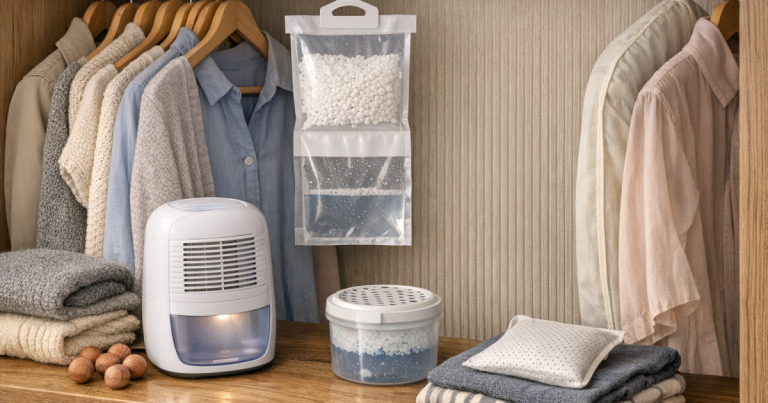
Moisture absorbers and wardrobe dehumidifier tubs can help with mild seasonal damp, but they should be treated as a supporting measure, not a cure for leaks, poor ventilation or condensation. Replace or empty them according to the instructions and keep them positioned where they cannot spill onto fabric, leather or shoes.
Let clothes breathe without leaving them exposed
A wardrobe should protect clothing from dust and light, but it should not be so packed that air cannot move. When garments are crushed together, moisture and odours linger, collars flatten, sleeves crease and pile fabrics can become marked. A useful test is whether you can slide a hand between hangers without forcing the clothes apart.
If space is tight, rotate by season rather than trying to store everything on the main rail. Keep current clothing accessible and move out-of-season garments into breathable cotton storage bags, under-bed boxes with ventilation, or clean lidded containers in a dry room. Avoid long-term storage in thin dry-cleaning plastic, which can trap moisture and cause creasing or discolouration where it touches fabric.
Air the wardrobe periodically by opening the doors for a few hours on a dry day. This is particularly helpful in bedrooms where windows are often closed overnight and condensation forms on colder surfaces. Do not place freshly worn clothes straight back into a crowded rail; hang them separately for a while so body moisture and perfume can disperse.
Use support that suits the garment
The way a garment is supported affects how long it keeps its shape. Jackets, coats and structured blazers need hangers with enough width and shoulder support to prevent dents. Fine blouses and dresses do better on smooth hangers that do not snag straps or seams. Heavy knitwear should usually be folded, because hanging can stretch the shoulders and lengthen the body over time.
For folded items, make stacks shallow enough that you can remove one garment without dragging three others with it. Put heavier pieces at the bottom and lighter items on top. If you are storing wool, cashmere or delicate knits, use clean tissue paper between folds for special pieces and avoid sharp creases in the same place every season.
Do not rely on vacuum storage bags for everything. They can be useful for bulky bedding or short-term space saving, but prolonged compression is not kind to structured garments, down-filled items, pleats, tailoring or fabrics that need loft. If an item depends on shape, padding, pleats or texture, give it room rather than squeezing it flat.
Reduce light, heat and friction
Sunlight is one of the easiest storage hazards to overlook. A wardrobe near a bright window, open shelving in a sunny room, or a garment hung on the back of a door can fade unevenly. Dark colours, silk, wool, viscose and printed fabrics are particularly worth protecting from long exposure. Use doors, curtains or garment covers where light falls directly on stored clothes.
Heat is another quiet problem. Storing clothes close to radiators, hot pipes or an airing cupboard can dry out natural fibres, set creases and make elastic age more quickly. Airing cupboards are useful for drying household linen, but they are not ideal for long-term garment storage if the space gets warm or humid.
Friction also matters. Sequins, zips, Velcro-style fastenings, beaded trims and rough outerwear can abrade neighbouring fabrics. Fasten zips and hooks, turn heavily embellished items inside out where appropriate, and give delicate pieces a cover or a separate section. If a shirt has hardened underarm residue before storage, deal with it first; our guide to removing deodorant build-up from shirt underarms explains how to tackle the problem without jumping straight to bleach.
Make the wardrobe less attractive to moths
Clothes moths prefer dark, quiet areas and natural fibres that contain traces of sweat, skin oils or food. Wool coats, cashmere jumpers, silk scarves, felt hats and wool-blend uniforms are all worth checking if they sit undisturbed. Damage often appears as small irregular holes, webbing, gritty debris or shed larval cases rather than obvious flying moths.
The most useful prevention is boring but effective: clean clothes, regular movement, vacuuming and inspection. Empty the wardrobe occasionally, vacuum edges and corners, wipe shelves, and let the space dry before refilling it. Pay attention to the floor, back corners, storage boxes, spare blankets and rarely worn garments.
Moth traps can help you understand whether there is activity, but they are not a complete treatment on their own. For a realistic view of their role, read why clothes moth traps are monitoring tools rather than a full wardrobe protection system.
Set up zones for real-life use
A fabric-safe setup is easier to maintain when the wardrobe is organised around how clothes are actually worn. Grouping by fabric type, season and frequency of use prevents delicate garments from being buried under everyday pieces and makes problems easier to spot.
Everyday rail
Keep frequently worn shirts, trousers, dresses and workwear where they can move freely. These items need airflow because they are washed, worn and returned often. Avoid overloading this section with coats or occasionwear that pushes lighter garments out of shape.
Delicates and occasionwear
Use breathable garment bags for silk dresses, wool suits, formal coats and embellished clothing. Label bags if the fabric is not visible, so you do not keep opening them unnecessarily. Avoid plastic covers for long-term storage unless the garment needs temporary protection during transport.
Knitwear and seasonal layers
Fold wool, cashmere, chunky cotton knits and heavy sweatshirts. Store them clean, dry and loosely packed. If you use boxes, choose a dry, accessible place so you can inspect them during the season rather than forgetting them until damage appears.
A simple monthly wardrobe check
- Open the doors and smell the space before moving anything. Mustiness usually appears before visible mould.
- Check external walls, shelves and the floor for condensation, staining or dust build-up.
- Shake out wool and silk items that have not been worn recently.
- Look for pressure marks on shoulders, collars and folded knitwear.
- Remove anything that needs washing, stain treatment, airing or repair.
- Vacuum the wardrobe base and corners, then let the space dry before replacing clothes.
This quick routine is more useful than a major clear-out once a year. It keeps small issues visible, stops forgotten garments becoming pest shelters, and helps you notice when storage conditions change with the weather.
Common questions
Should wardrobe doors be left open?
Not all the time, but opening them occasionally on a dry day helps release trapped moisture and stale air. If the room is damp or there is condensation on windows, improve ventilation first rather than leaving clothes exposed to humid air.
Are scented sachets enough to protect clothes?
No. They can make a wardrobe smell fresher, but they do not clean fabric, remove moisture or solve moth activity. Use them only as a finishing touch in a clean, dry, well-managed space.
Is it better to fold or hang cotton T-shirts?
Most cotton T-shirts store well folded, especially if rail space is limited. Hanging is fine for short periods, but thin cotton can stretch at the shoulders if left on narrow hangers for months.
Can shoes be stored in the same wardrobe as clothes?
Yes, if they are clean and dry. Mud, moisture and odour from shoes can transfer to nearby garments, so keep them on a lower shelf, in breathable shoe bags, or in a separate section.
How often should seasonal clothes be checked?
Check them at least once during the season they are stored, and again before wearing. Wool, silk and lightly worn items deserve more frequent attention because pests and stale odours develop quietly.
What to remember
A fabric-safe wardrobe environment is built from small habits: clean garments, complete drying, sensible spacing, proper support, low light, controlled moisture and regular checks. None of these steps is difficult, but together they protect the shape, smell, colour and texture of clothes you already own. If a wardrobe repeatedly smells musty or damages garments despite good storage habits, treat it as a room condition problem rather than a laundry problem.