A hanger can leave two little peaks at the top of a jumper, T-shirt or blouse long before the garment is worn out. The best hangers for shoulder bumps spread the garment’s weight across a soft, rounded shoulder shape instead of pressing the sleeve head onto a sharp point.
The right choice is less about buying the most expensive hanger and more about matching width, shape and surface to the fabric. Heavy knits, light jersey, silk blouses and structured jackets all need slightly different support.
The short version
- Choose hangers with broad, rounded ends for tops that are likely to mark at the shoulder.
- Avoid thin wire hangers and very narrow plastic hangers for anything soft, stretchy or damp.
- Fold heavy jumpers instead of hanging them, even on a good hanger.
- Use wider, contoured hangers for coats, blazers and tailored jackets.
- Use grippy or notched hangers for slippery straps, but check that the edges are smooth.
- Leave enough space in the wardrobe so garments are not pulled sideways against neighbouring hangers.
Why shoulder bumps happen
Shoulder bumps are caused by pressure and gravity. When a garment hangs from two small contact points, the fibres around the shoulder seam stretch or set into that shape. The effect is most obvious on knitwear, jersey and fine woven fabrics because they are softer and more flexible than a structured coat or jacket.
Moisture makes the problem worse. A top that is still slightly damp from washing, steaming or wearing can take the shape of the hanger more easily. This is why a lightweight jumper hung to dry on a sharp hanger often develops more obvious peaks than the same jumper stored dry and folded.
The shoulder seam matters too. If the hanger is too narrow, the end sits inside the shoulder line and pushes into the upper sleeve. If it is too wide, it can stretch the sleeve cap outwards. The aim is to place the end of the hanger close to the natural shoulder point without forcing the fabric.
Match the hanger to the garment
Jumpers, cardigans and soft knits
Most medium to heavy knitwear is better folded on a shelf or in a drawer. Wool, cashmere, lambswool, alpaca blends and chunky cotton knits can grow longer on a hanger because the garment’s own weight pulls down through the shoulder. If you do hang a lightweight cardigan for convenience, choose a broad, rounded hanger and do not leave it hanging while damp.
For delicate knitwear, storage is only one part of the care routine. Washing and drying method matter just as much, so it is worth following careful knitwear handling such as washing cashmere jumpers without shrinking them before deciding whether the item should be hung at all.
T-shirts, jersey tops and sweatshirts
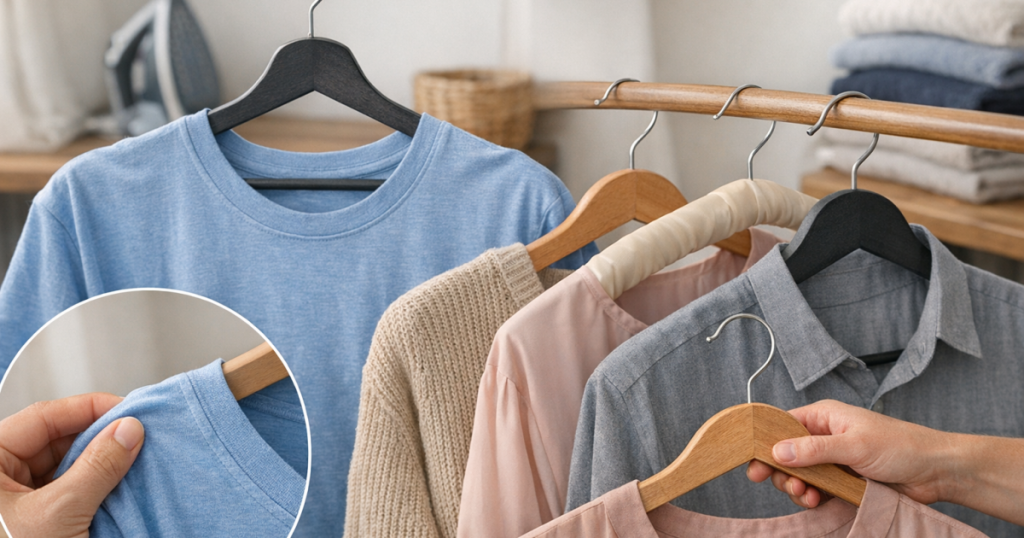
Jersey fabric can stretch over a hanger end, especially around the sleeve head. Look for a hanger with a smooth, rounded profile rather than a thin triangular edge. If a T-shirt is made from a heavier jersey or has already lost shape at the shoulders, folding is usually safer.
For everyday cotton T-shirts, a slim but rounded plastic or velvet-covered hanger can work if the width matches the garment. The test is simple: the hanger ends should stop where your shoulder would naturally end, not halfway down the sleeve and not inside the neckline.
Shirts and blouses
Shirts usually cope better with hanging because woven fabric has more structure than jersey, but thin hangers can still leave points in soft cotton, viscose or silk blends. Choose a smooth hanger with enough width to support the yoke. For blouses that slip off easily, a velvet surface or small notches can help, provided the notches are not sharp.
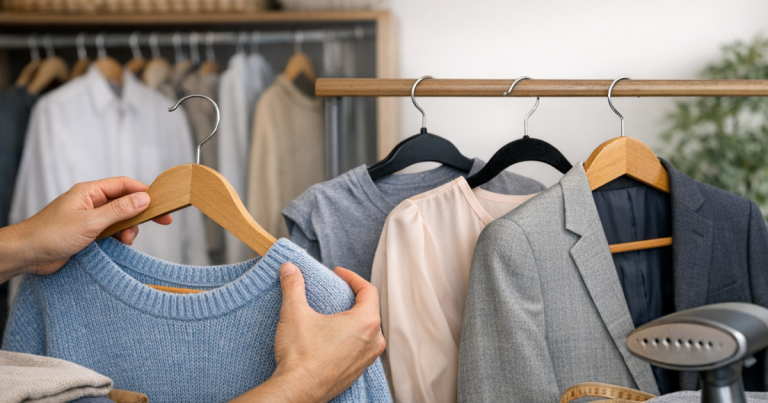
If a shirt has picked up small hanger marks, steam can relax the fibres, but it needs to be done carefully so you do not add water spotting. For a safer method, see how to steam creased clothes without leaving water marks.
Coats, blazers and tailored jackets
Structured garments need a different approach. A suit-style or coat hanger with a wider shoulder area helps keep the jacket’s shape and supports the padding, collar and upper sleeve. A thin hanger can let the shoulder collapse, while an overly wide hanger can push the sleeve head out of line.
For wool coats, blazers, suit jackets and heavier overshirts, look for a contoured hanger that broadly follows the shoulder shape. It should feel substantial enough to hold the garment without bending. Check the shoulder line after a day or two in the wardrobe; if the fabric starts to peak or the sleeve cap looks distorted, change the hanger.
Strappy, silky and delicate tops
Slippery garments often fall from smooth wooden or plastic hangers. A velvet-covered hanger or a hanger with smooth notches can reduce slipping, but the support still needs to sit in the right place. Never rely on one thin strap to carry the whole weight of a heavy dress or embellished top; use hanging loops if the garment has them, or fold the item if the fabric is stretching.
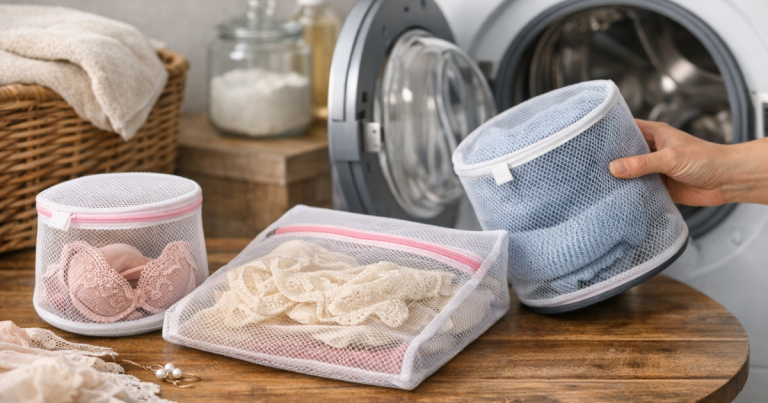
Delicates that stretch in storage often need gentle washing support as well. If bras, camisoles or fine tops are becoming misshapen, it may help to revisit how to use mesh laundry bags without damaging delicates.
Hanger materials: what each type is good for
The material matters because it affects grip, shape and how much pressure is placed on the fabric. There is no single perfect hanger for every wardrobe, so it is normal to use different types for different garments.
- Velvet-covered hangers: Useful for silky blouses, light cardigans, strappy tops and garments that slide off standard hangers. Check that the shoulder ends are rounded rather than sharply cut.
- Wooden hangers: Good for shirts, jackets, coats and heavier pieces when the shape is broad and smooth. Very flat wooden hangers can still mark soft fabrics.
- Rounded plastic hangers: Often practical for everyday tops and school uniform shirts, as long as they are not too narrow or flimsy.
- Padded hangers: Useful for delicate blouses, vintage pieces and light garments that mark easily. They can be too bulky for crowded wardrobes.
- Wire hangers: Best avoided for regular storage. They are too thin for most garments and are a common cause of shoulder peaks.
If you are comparing real options, SONGMICS Velvet Hangers are a common slim velvet style to assess for grip and wardrobe space, while Hangerworld Wooden Hangers are a useful point of comparison for shirts and heavier garments. For delicate tops, padded options such as HANGERWORLD Satin Padded Hangers show the kind of softer shoulder surface to look for. Check the actual width, shoulder curve and finish before buying, as ranges can vary.
Step-by-step checks before you buy
1. Measure the garment shoulder, not just the wardrobe rail
Lay the garment flat and measure from one shoulder point to the other in centimetres. The hanger should sit close to that span without pushing into the sleeve. For many people, the mistake is buying one bulk pack of hangers and using it for every size and fabric in the home.
2. Look at the shoulder end from the side
A good anti-bump hanger has a softened end. Avoid a sharp corner, a sudden hook shape or a very thin edge. If you can imagine the end leaving a dent in your palm when pressed, it may do the same to a soft top over time.
3. Check the surface texture
Smooth wood and plastic allow shirts to slide on easily, but slippery blouses may fall off. Velvet adds grip, but very grabby surfaces can make it harder to remove delicate fabrics without tugging. For fine tops, lift the garment off the hanger rather than pulling it sideways.
4. Consider wardrobe spacing
Even the right hanger can fail in an overcrowded wardrobe. When garments are packed tightly, hanger ends press into neighbouring sleeves and shoulders. Leave enough space for each item to hang naturally, especially for knitwear, blouses and tailored jackets.
5. Avoid hanging clothes while damp
If a garment needs to air after washing, reshape it first and dry it according to the care label. Heavy wet fabric should not be suspended from the shoulders. For knitwear, dry flat on a towel or suitable drying rack, then fold for storage once fully dry.
A simple home test for shoulder bumps
Before replacing every hanger, test the garments that are giving you the most trouble. Start with one jumper, one T-shirt and one blouse so you can see how different fabrics respond.
- Place the garment on the hanger and line up the shoulder seams.
- Check whether the hanger ends sit at the natural shoulder point.
- Leave the garment hanging for a full day while dry.
- Remove it carefully and inspect the shoulder line in daylight.
- If the fabric has peaked, try a broader, softer hanger or fold the garment instead.
This test is especially useful before buying a large multi-pack. A hanger that works well for school shirts may be too narrow for adult knitwear, while a padded hanger that protects a silk blouse may take up too much room for everyday cotton tops.
When folding is the better choice
Some garments simply should not be asked to hang from the shoulders. Heavy jumpers, dense sweatshirts, beaded tops and loose open-weave knits are often better folded. If folding creates creases, use shallow stacks and avoid placing heavy items on top of delicate ones.
For drawer storage, fold along natural seams and avoid hard compression. For shelves, keep piles low so you are not dragging one garment out from under several others. If you use storage boxes, make sure items are fully dry first to reduce musty smells and fibre distortion.
Questions people ask
Do I need special hangers for shoulder bumps?
You do not always need a specialist product, but you do need the right shape. Broad, rounded ends and the correct width matter more than a label promising garment protection.
Can hanger bumps be removed?
Often, yes. Light marks usually relax with gentle steaming or by lightly misting the area and letting it dry flat. Do not pull the bumps by hand, as that can stretch the fabric further.
Are velvet hangers better than wooden hangers?
Velvet hangers are better for grip and slippery garments. Wooden hangers are often better for structured shirts, coats and jackets when the shoulder shape is wide and smooth.
Should cashmere jumpers go on hangers?
Most cashmere jumpers should be folded. Hanging can stretch the shoulder and body, particularly after washing or if the knit is fine and soft.
Are dry-cleaner wire hangers ever suitable?
They are fine for short-term transport, but not for regular storage. Move garments onto better-shaped hangers once you get them home.
Main points
To prevent shoulder bumps, choose hangers by garment type rather than buying one style for everything. Soft knits usually need folding, shirts need smooth support, delicate blouses need gentle grip, and coats or jackets need a broad contoured shoulder.
The most reliable check is the shoulder line: if the hanger end presses into the sleeve head, leaves a point, or pulls the garment wider than its natural shape, it is the wrong match. A small change in hanger shape can make everyday clothes look better for longer and reduce the need for last-minute steaming before you leave the house.