Cashmere rewards gentle handling, but it does not need to be mysterious or permanently dry-clean only. The safest way to wash cashmere jumpers is to keep the water cool, reduce movement, avoid twisting, and dry the garment flat so the fibres are not shocked or stretched.
Shrinking usually happens when heat, agitation and moisture work together. A careful home wash is often kinder than repeated wear without cleaning, especially when sweat, body oils and deodorant build up around cuffs, underarms and necklines.
The short version
- Check the care label first, especially on blends, trims, embroidery and structured designs.
- Use cool water, ideally around 20°C, and a small amount of wool or cashmere-safe detergent.
- Hand wash by pressing the jumper through the water rather than rubbing, scrubbing or wringing.
- Rinse in water of a similar temperature so the fibres are not shocked.
- Remove excess water by rolling the jumper in a clean towel, then dry it flat away from direct heat.
- Never tumble dry cashmere unless the care label specifically says it is suitable.
Why cashmere shrinks so easily
Cashmere is made from fine animal fibres with a naturally soft surface. Those fibres can tighten and felt when they are exposed to warm water, rough movement or sudden temperature changes. Once that felting has happened, the jumper may feel denser, shorter, narrower or slightly stiff.
The biggest mistake is treating cashmere like ordinary cotton knitwear. A vigorous wash cycle, hot radiator drying or heavy-handed wringing can alter the fit even if the garment looked fine when it came out of the water. The aim is not to make the wash complicated; it is to remove soil while keeping the fibres relaxed.
Frequent washing is not always necessary. If the jumper has only been worn lightly over a base layer, airing it flat for a day can be enough. If it smells of perfume, food, smoke or mustiness, washing is more useful than disguising the odour with fabric spray.
Before you put it in water
Read the care label properly
Some cashmere jumpers are washable; others are labelled dry clean because of dyes, embellishments, linings, shoulder structure or mixed materials. If the label says dry clean only, the safest route is to follow that instruction, particularly for expensive, tailored or heavily dyed pieces.
Check for colour release
Dark navy, black, bright red and strongly dyed cashmere can release colour. Dampen a white cloth with cool water and press it on an inside seam for a few seconds. If colour transfers clearly, wash the item separately and keep the process brief, or consider professional cleaning for high-value garments.
Deal with stains gently
Do not scrub a stain on cashmere. Blot fresh marks first, then use a small amount of suitable wool detergent on the affected area and tap it in lightly with your fingers. For protein-based marks, make-up or oily patches, patience is safer than force. If you are unsure whether a stain remover is suitable for wool or cashmere, do not use it on the visible face of the jumper.
Step-by-step hand washing method
1. Prepare a clean basin
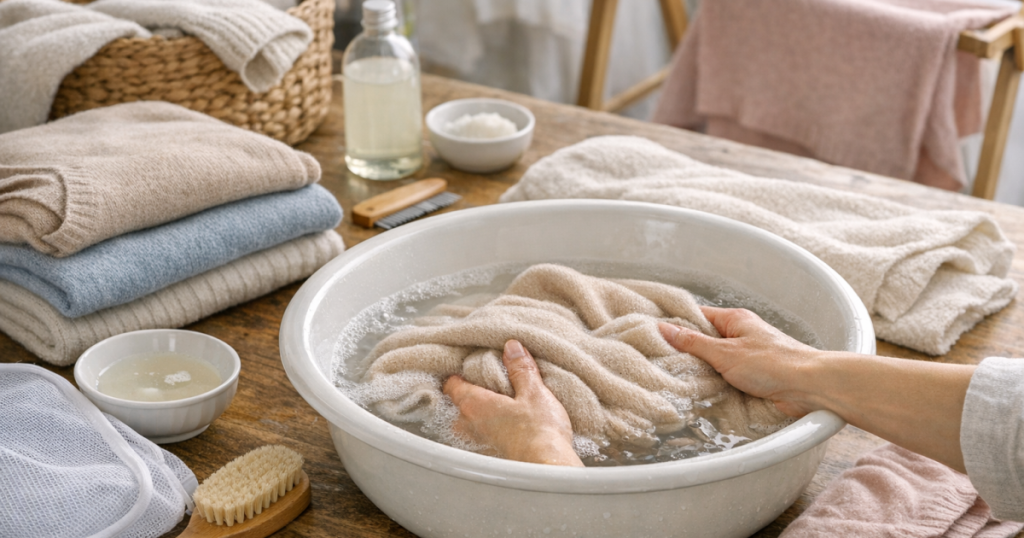
Use a clean sink, bowl or washing-up basin with enough cool water for the jumper to move freely. Around 20°C is a sensible target: cool to the touch, not icy, and not warm. If the water feels comfortably warm on your hands, it may be too warm for cautious cashmere care.
2. Add the right amount of detergent
Use a detergent designed for wool, cashmere or delicates, and use less than you would for a normal laundry load. Too much detergent makes rinsing harder, and repeated rinsing means more handling. Avoid biological detergents, bleach, whitening products and heavy fabric conditioners, as these can be unsuitable for delicate animal fibres or leave a coating that changes the handle.
3. Turn the jumper inside out
Turning it inside out helps reduce visible surface friction. Fasten any buttons and check pockets if the garment has them. If the jumper is already bobbled, wash it gently first and deal with pilling later when it is completely dry. For safer de-pilling technique, read how to remove bobbles from jumpers without thinning the fabric.
4. Submerge and press, don’t rub
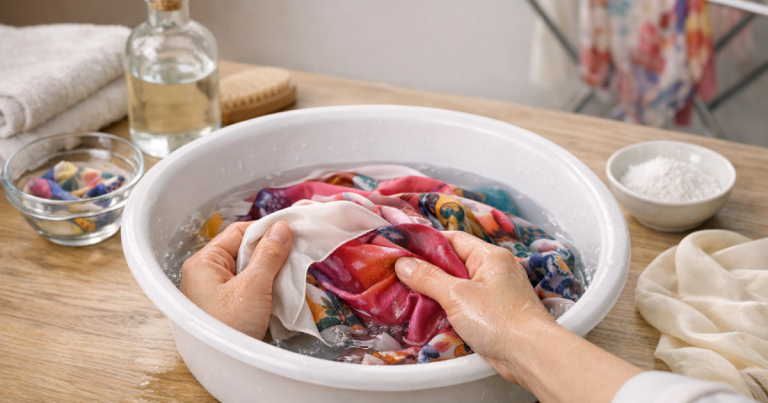
Lower the jumper into the water and press it down with open hands. Let it soak for about 5 to 10 minutes, then gently press the water through the fibres. Do not rub cuff against cuff, scrub the underarms, or twist the body of the jumper. Movement should be slow and minimal.
5. Rinse at the same temperature
Drain the wash water and refill with cool water at a similar temperature. Press the jumper gently to release detergent. You may need one or two rinses, but avoid prolonged soaking. Sudden changes from cool to warm or warm to cold can encourage the fibres to contract.
6. Remove water without wringing
Lift the jumper with both hands so the wet weight is supported. Press it lightly against the side of the basin, then lay it flat on a clean towel. Roll the towel and jumper together, pressing as you roll. This draws out water without stretching the shoulders or twisting the fibres.
Drying cashmere without losing shape
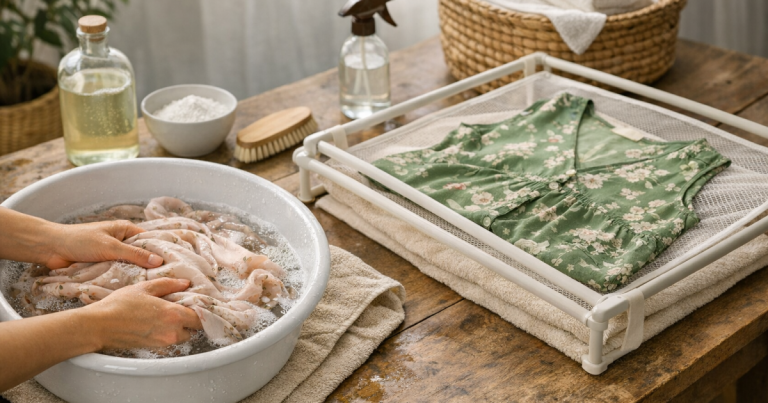
Lay the jumper flat on a dry towel or mesh drying surface. Shape it while damp: align the side seams, smooth the sleeves, flatten the collar and gently ease the cuffs back to their usual width. If you know the jumper’s original measurements, use them as a guide; otherwise, use a similar well-fitting jumper as a visual reference.
Keep cashmere away from radiators, heated rails, strong sunlight and tumble dryers. Direct heat can shrink fibres unevenly and may leave the garment feeling harsher. Good airflow matters more than heat, so a spare room, airing space or well-ventilated area is usually better than placing it beside a heater.
If you use a heated drying setup in winter, keep the jumper on a flat layer rather than draped over hot bars, and check it regularly. Our guide to choosing a heated airer that won’t overdry knitwear explains the fabric risks to watch for with delicate wool and cashmere pieces.
Can you machine wash cashmere?
Machine washing is only worth considering if the care label allows it and your machine has a reliable wool or hand-wash programme. Use a mesh laundry bag, cool water, low spin and wool-safe detergent. Wash one or two similar delicate items at a time rather than adding cashmere to a mixed load with jeans, towels or zippered garments.
Even with a wool cycle, a machine adds more movement than hand washing. That does not mean it will always ruin the jumper, but it raises the risk for loosely knitted, older, embellished or very fine cashmere. If the jumper is precious, newly bought, vintage or difficult to replace, hand washing gives you more control.
What to avoid
- Hot water: heat is one of the main causes of cashmere shrinkage.
- Normal cotton cycles: they usually involve too much agitation and spin for delicate knitwear.
- Wringing: twisting can distort sleeves, hems and shoulder seams.
- Radiator drying: concentrated heat can shrink areas unevenly and create ridges.
- Hanging when wet: wet cashmere is heavy and can stretch from the shoulders.
- Strong stain removers: many are not designed for animal fibres, dyes or delicate knits.
Refreshing between washes
Cashmere often benefits from rest. After wearing, lay the jumper flat over a chair back or drying rack for several hours before folding it away. This allows moisture and odour to disperse and helps the fibres recover.
Use a soft clothes brush only when needed, brushing lightly in one direction. For creases, steam can help, but avoid pressing the iron directly onto the pile. Hold a steamer or steam iron slightly away from the surface and let the fibres relax, then leave the jumper flat until fully dry.
If stored knitwear smells stale after summer or after being boxed away, wash only if airing does not solve it. The safer first steps in removing musty smells from stored clothes can help you avoid over-washing delicate fibres.
Storing cashmere after washing
Only store cashmere when it is completely dry. Even slight dampness can encourage odour and fabric stress in a closed drawer or storage bag. Fold jumpers rather than hanging them, as hangers can leave shoulder bumps and gradually lengthen the garment.
Choose a clean, dry drawer, breathable cotton storage bag or lidded box. If moths are a concern, clean garments before longer storage because moth larvae are attracted to body oils and food marks. Cedar balls or lavender sachets can be useful as part of a tidy storage routine, but they are not a substitute for cleaning and checking garments regularly.
Helpful questions
How often should I wash a cashmere jumper?
Wash it when it is genuinely soiled, smells unpleasant, or has absorbed sweat around the underarms or neckline. For light wear over another layer, airing between wears is often enough.
Can I use baby shampoo on cashmere?
Some people do, but a wool or cashmere detergent is the safer choice because it is made for animal fibres and rinses predictably. Avoid anything strongly fragranced or conditioning-heavy.
What if my cashmere has already shrunk?
Minor tightening may relax slightly with a cool soak and careful reshaping, but felted cashmere cannot usually be restored to its original size. Avoid pulling hard, as this can distort the knit.
Should cashmere be washed inside out?
Yes, inside out washing reduces visible friction on the outer surface. It is a simple step that helps limit pilling and keeps the face of the jumper looking smoother.
Is dry cleaning always better for cashmere?
Not always. Washable cashmere can often be cleaned safely at home, but dry cleaning is sensible for dry-clean-only labels, structured designs, delicate trims and garments with unstable dye.
Key takeaways
The safest cashmere routine is cool, brief and controlled. Use a small amount of suitable detergent, press rather than rub, rinse without temperature shock, and dry flat in natural shape. Most shrinkage problems come from heat, agitation, wringing or drying too aggressively, so removing those risks makes home care much more manageable.
If you want a simple rule, treat wet cashmere as fragile and heavy. Support it fully, handle it slowly, and let time and airflow do the drying work.