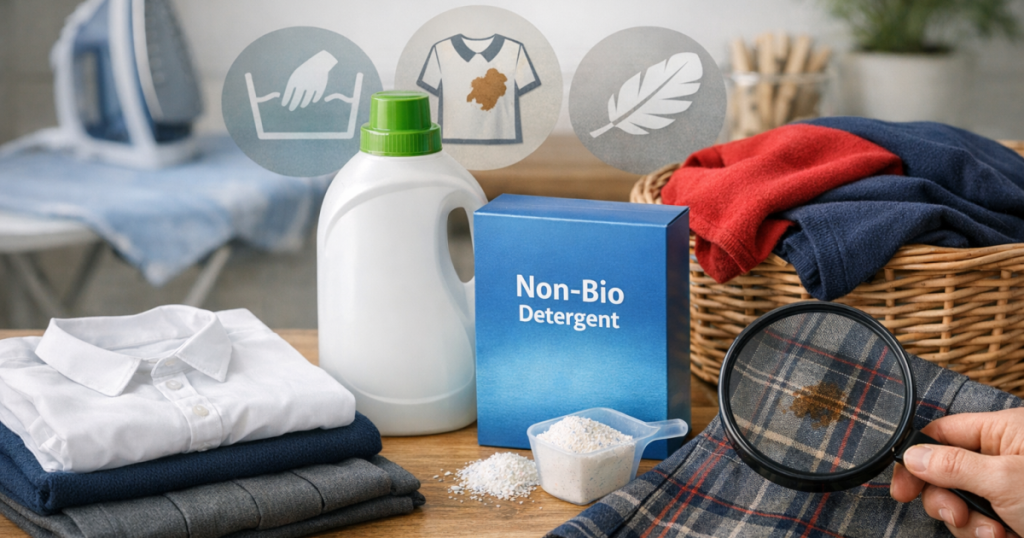
School uniform has to cope with playground mud, lunch spills, felt-tip marks, sweat and repeated washing, so choosing non-bio detergent for school uniforms is really about balance: clean enough, but not harsh on skin or fabric. The right choice depends on what the uniform is made from, how dirty it gets, and whether your child reacts to fragrance or residues.
A good non-bio is not just the one with the softest wording on the bottle. It should suit your washing machine, local water hardness, uniform colours, stain routine and the number of loads you do each week.
What to know first
The short answer: choose an enzyme-free detergent that rinses well, works at the wash temperatures shown on the care label, and does not rely on overdosing to get collars, cuffs and PE kit clean. For many families, that means a liquid or gel for everyday mixed uniform loads, with a separate stain step for food, grass, make-up or ink.
- Non-bio means no enzymes. Enzymes help break down certain stains, so an enzyme-free formula may need more help from soaking, pre-treatment or prompt washing.
- Skin comfort is about more than bio versus non-bio. Fragrance, optical brighteners, residues and too much detergent can all matter.
- Uniform fabric matters. Cotton-rich shirts, polyester sweatshirts, wool-blend jumpers and badged blazers should not all be treated as the same load.
- Dose matters. Too little detergent can leave odour and soil behind; too much can leave residue that feels stiff or itchy.
Step 1: Start with the uniform, not the supermarket shelf
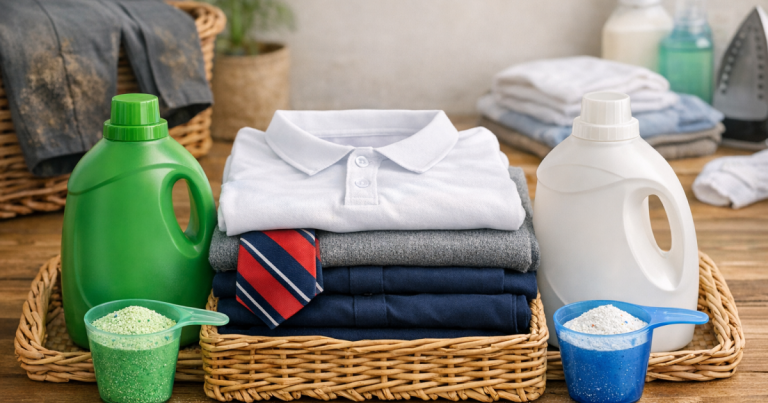
Before choosing a detergent, look at what actually goes into the school wash. A typical UK uniform load may include white polo shirts, cotton-rich shirts, dark trousers, pinafores, sweatshirts, cardigans, sports tops and socks. These fabrics soil differently and do not all respond equally to the same formula.
Cotton-rich shirts and polos often show collar grime, food stains and greying. Polyester sweatshirts and PE tops can hold odour if detergent residue and sweat build up. Dark trousers and skirts need colour protection more than heavy stain treatment. Wool-blend jumpers, embroidered items and ties may need gentler handling or a separate cycle.
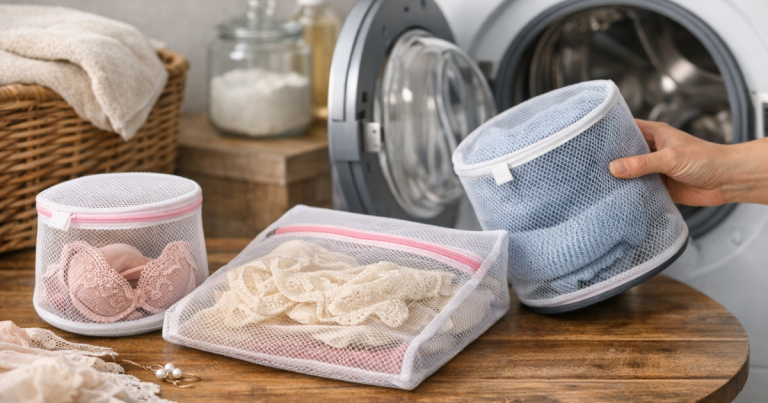
If you regularly wash ties, cardigans with decorative trim, small socks or embroidered pieces, using the right laundry bag can reduce friction and snagging. The advice in how to pick mesh laundry bags for delicates is useful for keeping small or more fragile uniform items from being dragged around a full mixed load.
Step 2: Read the label claims carefully
Once you know what the uniform needs, check the detergent label rather than relying on the front-of-pack wording. Look for confirmation that it is non-bio, then check whether it is fragranced, colour-safe, suitable for cool washes, and appropriate for the fabrics you wash most often.
For children who dislike strong scents or have skin that reacts easily, a fragrance-free or reduced-fragrance option may be a better starting point than a heavily perfumed detergent. Dermatological testing claims can be useful, but they do not guarantee that every child will tolerate the product. The practical test is how the clothes feel and smell after washing, and whether any residue remains around collars, cuffs or waistbands.
For a mainstream comparison point, Fairy Non-Bio Laundry Detergent is a recognisable non-bio option to weigh against fragrance-free alternatives such as Surcare Non-Bio Laundry Liquid. Do not choose on brand familiarity alone: compare dose instructions, scent, format, whether it suits your usual wash temperature, and how well it rinses in your machine.
Step 3: Choose the format that fits your washing routine
Non-bio detergents come as liquids, gels, powders and capsules. None is automatically best for every school uniform household, so choose the format that matches the way you wash.
- Liquid or gel: useful for everyday mixed loads, cool washes and direct application to some washable stains when the product label allows it. Liquids can be convenient for collars and cuffs, but over-pouring is common.
- Powder: can suit households that wash many white shirts or polos, but formulas vary, so check whether it is suitable for colours and the fabrics in the load. Some powders are less ideal if they do not dissolve well in your machine or water conditions.
- Capsules: convenient when the load size is consistent, but less flexible for half-loads or lightly soiled uniforms because the dose is fixed. Laundry capsules should always be stored securely away from children.
If you wash small daily loads, flexible dosing is worth prioritising. If you wash one or two large uniform loads at the weekend, a clearly measured format may be easier to use consistently. In hard water areas, follow the pack’s water-hardness guidance rather than copying a dose from a friend or relative in another part of GB.
Step 4: Plan for stains before they set
Non-bio can clean school uniform well, but it is not a shortcut for every stain. Because it does not use enzymes, it may need more practical stain support, especially on food, grass, sweat, body oils and collar marks.
Start by dealing with stains promptly. Brush off dry mud before washing. Blot wet stains rather than rubbing them across the fabric. Use cool or lukewarm water first on protein-based marks such as milk, egg or some food spills, as hot water can make certain stains harder to remove. For coloured sweatshirts and dark trousers, test any stain remover on an inside seam before treating a visible area.
Older pupils may also bring home make-up marks on shirt collars, cuffs or PE tops. The method in removing foundation stains from shirt collars is a good next step when ordinary detergent is not shifting beige or oily transfer marks.
- For collars and cuffs: apply a suitable detergent or stain product only as directed, leave it for the recommended time, then wash normally.
- For grass marks: avoid scrubbing aggressively, which can roughen cotton and fade colour. Pre-treat, then wash according to the care label.
- For food stains: remove solids first, blot, then pre-treat. Avoid tumble drying until the mark is gone, as heat can set residues.
- For ink or paint: check whether the school product is washable. Some marks need a targeted remover rather than repeated hot washes.
Step 5: Get the dose and wash cycle right
The best non-bio detergent for school uniforms will still disappoint if it is under-dosed, over-dosed or used on the wrong cycle. Check the pack for guidance on load size, soil level and water hardness, then adjust based on the result you get after washing.
Use enough detergent for the load, but do not treat a full cap or scoop as a universal measure. A lightly worn polo shirt and a muddy PE kit do not need the same approach. If washed clothes feel stiff, smell overly perfumed, or show white marks, you may be using too much product, overloading the machine, or choosing a cycle that does not rinse effectively.
Most everyday school uniform can be washed at the temperature shown on the care label, often on a standard cottons or synthetics programme depending on fabric. Cooler washes help reduce colour loss and energy use, but heavily soiled or smelly items may need a more thorough cycle rather than simply more detergent. If school shirts or PE tops keep smelling after washing, the residue and drying checks in stopping work shirts smelling after washing apply well to uniform too.
Step 6: Protect colour, shape and finish
School uniform is expensive to replace, so detergent choice should support fabric life as well as cleanliness. Dark sweatshirts, navy trousers, black skirts and coloured cardigans can fade faster if washed too hot, overloaded, or repeatedly treated with harsh stain products.
- Wash dark and bright uniform inside out to reduce surface friction.
- Fasten zips, hooks and hook-and-loop tabs before washing to protect knits and polo shirt surfaces.
- Separate whites from dark sweatshirts and trousers, especially when items are new.
- Avoid using fabric conditioner automatically on PE kit, as some sports fabrics can lose their intended moisture-handling feel.
- Do not wash blazers unless the care label clearly says they are washable. Many need spot cleaning, airing or professional cleaning instead.
For white polos and shirts, watch for greying. Greying can come from mixed loads, too little detergent, overloaded drums, hard water, or soil redepositing during the wash. Before switching detergent, check whether the machine is too full and whether whites are being washed with dark sweatshirts or socks.
Step 7: Test a new detergent over one school week
Do not judge a detergent from one unusually muddy day. Test it across a normal school week so you can see how it handles shirts, sweatshirts, PE kit and socks under realistic conditions.
- Wash one ordinary mixed load first. Check smell, softness, collar cleanliness and whether dark items show residue.
- Try a stained item separately. Pre-treat as directed, then see whether the detergent supports the stain routine without fading the fabric.
- Look at skin-contact areas. Collars, cuffs, waistbands and sock tops are where residue or fragrance irritation is most likely to be noticed.
- Adjust one thing at a time. Change dose, cycle or pre-treatment before assuming the detergent itself is wrong.
- Keep the care label in charge. If a jumper, blazer or sports top has special washing instructions, follow those over general detergent habits.
Signs you have picked the wrong option
A detergent does not have to be disastrous to be a poor fit. Small signs can tell you that the formula, dose or format is not quite right for your school laundry.
- Clothes smell clean in the machine but stale when dry: the load may be too full, the cycle too short, or the detergent not rinsing soil properly.
- Shirts feel stiff or itchy: check for overdosing, poor rinsing or a fragrance your child dislikes.
- White polos are greying: separate whites, review dose and water hardness, and avoid mixing with very dark items.
- Dark sweatshirts look dull quickly: wash inside out, lower the temperature if the care label allows, and avoid aggressive stain products on the whole garment.
- Stains survive every wash: add a targeted stain step rather than repeatedly increasing detergent.
Helpful questions
Is non-bio always better for sensitive skin?
No. Non-bio removes enzymes from the formula, but fragrance, residues, fabric conditioner and overdosing can still cause discomfort for some children. If skin comfort is the priority, consider a low-fragrance or fragrance-free option and make sure clothes rinse thoroughly.
Can non-bio remove grass and mud from PE kit?
It can help, but grass and mud often need pre-treatment. Let mud dry, brush off what you can, then wash according to the care label. For grass, treat the mark before washing and avoid tumble drying until it has lifted.
Should I choose liquid or powder for white school shirts?
Liquid is convenient for collars and mixed loads, while powder may suit some white washes. The right choice depends on the care label, whether you wash whites separately, how well the product dissolves, and whether it is safe for the fabrics in the load.
Do I need fabric conditioner with non-bio detergent?
Not always. Conditioner can make some items feel softer, but it is not a cleaning product and can be unhelpful on certain sports fabrics. If uniforms feel rough, first check detergent dose, rinse performance and drying method.
Can I use the same detergent for blazers?
Only if the blazer care label says it is washable. Many school blazers are better aired, brushed, spot cleaned or professionally cleaned. Washing a structured blazer at home can affect shape, lining and finish.
Why it matters
Choosing the right non-bio is less about finding the most delicate-sounding bottle and more about building a reliable school laundry routine. Match the formula to the fabric, use the correct dose, treat stains early, and protect colours from unnecessary heat and friction.
For most households, the winning choice is the one that leaves shirts clean, sweatshirts fresh, skin-contact areas comfortable, and colours looking presentable through repeated washing. Once you find that balance, uniform care becomes easier, cheaper and kinder to the clothes your child wears every week.