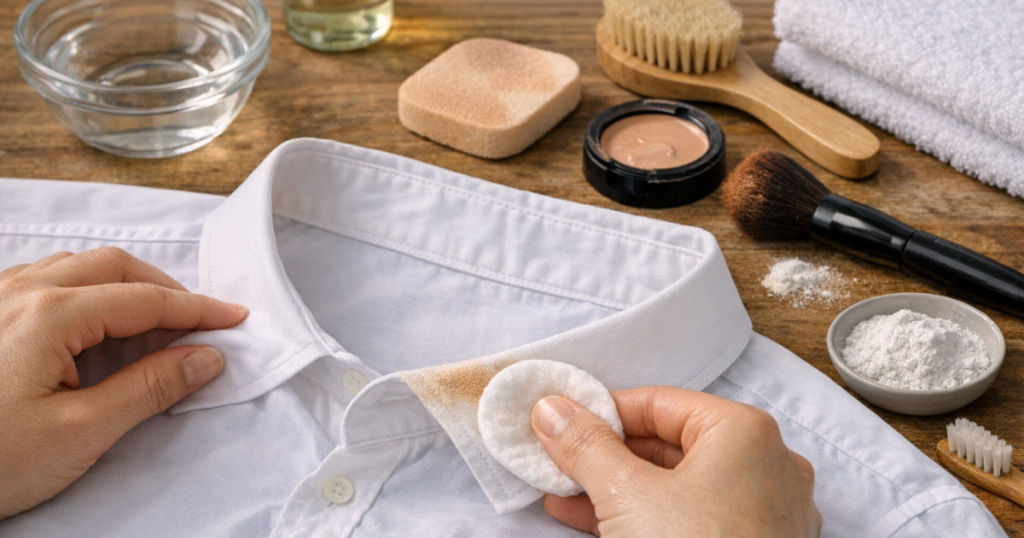
Foundation stains from shirt collars can look stubborn because they usually contain a mix of oils, waxes and pigment. The right approach is to lift the oily part first, then wash out the colour without rubbing the collar edge fluffy or setting the mark with heat.
Act before the shirt goes through a hot wash or tumble dryer. Heat can drive the make-up deeper into cotton, polyester blends and collar interlinings, making the stain harder to shift later.
The short version
- Do not iron, tumble dry or use hot water on the stained collar before treatment.
- Blot away excess make-up with a clean white cloth or tissue; avoid smearing it further round the neckline.
- Work a small amount of laundry liquid or mild washing-up liquid into the stain from the back of the fabric.
- Rinse with cool to lukewarm water, then check whether the mark has lifted before washing.
- Wash at the warmest temperature allowed on the care label, often 30°C or 40°C for everyday shirts.
- Air dry first so you can check the result before applying heat.
Why foundation clings to collars
Foundation is designed to stay on skin, so it often contains ingredients that resist quick removal: oils, silicones, waxes, pigments and long-wear binders. A shirt collar then adds sweat, skin oils, hair products and friction from the neck, so the stain can become a greasy, tinted ring rather than a simple surface mark.
That is why a normal wash does not always clear it. Water-based make-up may respond well to detergent alone, but long-wear liquid foundation, tinted moisturiser, concealer and cream bronzer usually need a pre-treatment stage. Powder foundation can also be troublesome if it becomes mixed with sweat or moisturiser.
The collar fabric matters too. White cotton can usually tolerate firmer treatment than a dark viscose blouse or a delicate silk shirt. Structured collars may also hold residue in the seam, so gentle, repeated treatment is safer than one harsh scrub.
Before you start: check the shirt
Look at the care label and identify the fabric before applying anything stronger than laundry liquid. Cotton, polyester and many cotton-rich blends are usually straightforward. Silk, wool, acetate and embellished shirts need a gentler approach and may be better treated by a specialist cleaner if the stain is large, old or on a valuable garment.
On coloured shirts, check whether the dye can cope with rubbing and detergent. A collar is visible when worn, so fading or a pale patch can be as noticeable as the original make-up. If the shirt is dark, bright or patterned, it is worth taking a minute to test clothes for colourfastness before washing.
Use white cloths or plain kitchen roll for blotting. Coloured cloths can transfer dye, and rough towels can abrade fine collars. Avoid chlorine bleach unless the care label clearly allows it and the shirt is plain white cotton; even then, it can weaken fibres and may not remove oily foundation evenly.
Step-by-step: treating a fresh collar mark
1. Remove loose make-up first
Lay the shirt flat with the collar open. If the foundation is still wet or creamy, gently lift off the excess with the edge of a spoon or a clean tissue. Work from the outside of the mark towards the centre so you do not spread the pigment along the collar band.
Do not rub at this stage. Rubbing pushes the oily base into the weave and can roughen the collar edge, especially on brushed cotton, viscose blends or softer casual shirts.
2. Blot with cool water
Dampen a clean white cloth with cool water and blot the back of the stained area. This encourages the stain to move out of the fabric rather than further into it. If the collar is thick, support it with a folded cloth underneath so moisture does not spread into the rest of the shirt.
Avoid very hot water. Heat can help oily residues spread and may set some pigments before detergent has had a chance to break them down.
3. Apply a small amount of detergent
Put a pea-sized amount of liquid laundry detergent directly on the stain. If you do not have laundry liquid to hand, a tiny amount of clear mild washing-up liquid can help cut through the greasy base, but use it sparingly because excess foam is difficult to rinse from collars.
Work the detergent in gently with your fingertip or a soft toothbrush, using small circular motions. Focus on the stained fibres, not the whole collar. Leave it for around 10 to 15 minutes, but do not let the area dry out completely.
4. Rinse and inspect
Rinse from the reverse side under cool to lukewarm running water. Check the collar in natural light if possible. Bathroom lighting can hide beige or orange residue, especially on white or pale blue shirts.
If the mark has faded but not gone, repeat the detergent treatment once before washing. Repeating a gentle treatment is kinder to fabric than scrubbing harder.
5. Wash normally, but skip fabric conditioner for this load
Wash the shirt according to the care label, ideally with a proper detergent dose for the load size and soil level. Fabric conditioner is not a stain remover, and on collar grime it can leave a softening film over residues if the stain has not been fully lifted. For a clearer breakdown of what each laundry product does, see the guide to whether your wash needs detergent or fabric conditioner.
Do not put the shirt straight in the tumble dryer. Let it air dry on a hanger or drying rack first, then check the collar. Once you are sure the mark has gone, you can iron or dry as usual.
What to do with older, set-in stains
Older foundation marks need patience because the oily part may have oxidised and the pigment may have bonded with collar oils. Start with the same detergent pre-treatment, but allow a longer contact time of around 20 minutes if the care label and fabric type allow it.
For white or light cotton shirts, an oxygen-based stain remover may help after the oily residue has been treated. Follow the product instructions exactly, use the right dilution, and do not use it on fabrics the label excludes. Oxygen-based products are different from chlorine bleach, but they can still affect dyes and delicate fibres.
For dark shirts, avoid aggressive soaking unless you have tested the fabric first. Repeated hot washing can make dark collars look tired, even if it removes the stain. If this is a regular issue with black, navy or charcoal shirts, the advice on how to stop dark clothes fading in the wash will help you balance stain removal with colour care.
Fabric-specific adjustments
White cotton shirts
White cotton is usually the easiest fabric to treat. Use liquid detergent, rinse well, then wash at the highest temperature permitted by the care label. If a shadow remains, repeat the pre-treatment before considering an oxygen-based stain remover.
Coloured cotton and cotton blends
Use cooler water, avoid long soaking until colourfastness is confirmed, and treat only the stained section. A soft toothbrush can help on sturdy cotton, but use fingertip pressure on finer poplin or stretch shirts.
Polyester shirts
Polyester can hold oily marks, so the degreasing stage matters. Use liquid detergent and rinse thoroughly. Avoid high heat until the stain has gone, as polyester can make oily residues look more obvious after drying.
Silk, satin and delicate blouses
Do not scrub or use strong stain removers. Blot, use a very mild detergent only if the care label allows hand washing, and keep water exposure controlled. If the item is dry-clean only, point out the foundation mark to the cleaner rather than attempting repeated home treatments.
Mistakes that make collar stains worse
- Using hot water first: this can set pigment and spread oils before detergent has broken them down.
- Scrubbing the collar edge: it can cause fuzzing, fraying and a worn grey line.
- Adding fabric conditioner too soon: conditioner softens fabric but does not remove oily make-up.
- Drying with heat before checking: tumble drying and ironing can lock in a faint stain.
- Using too much washing-up liquid: heavy foam can be hard to rinse and may leave residue in a stiff collar.
- Bleaching coloured shirts: the stain may fade, but so can the shirt dye.
How to prevent make-up transfer on collars
Prevention is not always realistic, particularly with work shirts, school shirts for older teens, occasionwear or uniforms worn close to the neck. A few small habits can reduce the build-up, though.
- Let foundation and moisturiser settle fully before putting on a collared shirt.
- Use less product on the lower jaw and neck if the collar sits high.
- Wash collars promptly rather than leaving make-up and skin oils to oxidise in the laundry basket.
- Pre-treat the collar lightly before every few washes if make-up transfer is frequent.
- Hang shirts with collars open after wear so moisture does not sit in the neckline.
Main points
The safest way to remove foundation stains from shirt collars is to treat them as oily pigment stains: lift excess make-up, use detergent before washing, rinse from the back, and avoid heat until the collar is clean. Fresh marks often come out with one careful pre-treatment, while older stains may need a second round or a suitable oxygen-based product on washable fabrics.
Fabric judgement matters. A robust white cotton work shirt can take more intervention than a dark viscose blouse or silk shirt, so adjust pressure, temperature and soaking time to the garment rather than using the same method on everything.
Things readers ask
Can micellar water remove foundation from a shirt collar?
It can help lift some fresh make-up, but it may leave residue if not rinsed out. Use it only as a light blotting step, then follow with detergent and a proper wash.
Should I use make-up remover wipes on collars?
They can smear the stain or leave oily residue. If you use one in an emergency, blot gently and wash the shirt as soon as possible.
Will foundation come out in a normal 30°C wash?
Sometimes, but pre-treatment gives a much better result. Foundation contains oils and pigments that often need loosening before the main wash.
Why is there still an orange mark after washing?
The oily base may have gone while pigment remains, or heat may have set the stain. Re-treat with liquid detergent before drying or ironing the shirt.
Can I treat collar stains while wearing the shirt?
It is better not to. Removing the shirt lets you work from the reverse side, control moisture and avoid spreading make-up onto other areas.