A clean shirt should not smell stale as soon as it leaves the machine or warms up on your body during the day. If you keep finding work shirts smelling after washing, the cause is usually trapped body oils, detergent residue, slow drying or a wash routine that is too gentle for the fabric and the job it does.
Safety note: Cleaning or decontaminating flame-resistant, high-visibility or chemically protective workwear is typically handled under employer or manufacturer procedures by a qualified workwear laundry provider or trained workplace safety/laundry personnel to maintain compliance with UK workplace safety requirements and relevant garment standards.
The short version
Most smelly work shirts improve when you remove oily build-up, wash at the warmest temperature allowed on the care label, use the right amount of detergent, leave out fabric conditioner for a few washes, and dry the shirts quickly with good airflow.
- Check the smell source: underarms, collar, cuffs, chest and any synthetic panels.
- Pre-treat high-contact areas before washing, rather than relying on the main wash alone.
- Do not overload the drum; shirts need space for water and detergent to move through the fibres.
- Use the care label as the limit for temperature, spin speed and tumble drying.
- Dry promptly. A damp shirt sitting in a machine or on a crowded airer can develop a musty smell even after a decent wash.
Why clean shirts still smell stale
Work shirts pick up more than visible dirt. Long shifts, commuting layers, deodorant, sunscreen, food smells and workshop dust can all settle into the fabric. The issue is often worse with polyester-rich shirts, stretch blends and easy-iron finishes because odour and oily residue can cling to synthetic fibres more stubbornly than to plain cotton.
Low-temperature washing is useful for saving energy and protecting colour, but it is not always enough for shirts worn close to the skin all day. A 30°C wash may remove light wear, but heavily worn collars and underarms often need targeted pre-treatment or an occasional warmer wash if the care label permits it.
Too much detergent can also backfire. If the machine cannot rinse it away, the residue can hold body oils in the fabric and leave shirts feeling slightly waxy or smelling sour when ironed. Too little detergent, on the other hand, may not shift oily soil at all. The aim is not to add more fragrance; it is to get the shirt genuinely clean.
Step 1: Find where the smell is coming from
Before changing your whole routine, sniff the shirt in a few specific places once it is dry: underarms, collar, cuffs, chest and the inside back neck. If only the collar smells, you are probably dealing with skin oil, hair product, make-up transfer or sunscreen. If the underarms smell, deodorant and perspiration residue are likely. If the whole shirt smells musty, focus on the machine, drying speed and storage.
Collars deserve particular attention on office shirts, hospitality uniforms and customer-facing workwear. They collect skin oils and cosmetic transfer even when the rest of the shirt looks clean. If make-up is part of the problem, this guide to removing foundation stains from shirt collars explains how to treat that area without spreading the mark.
Step 2: Pre-treat collars and underarms
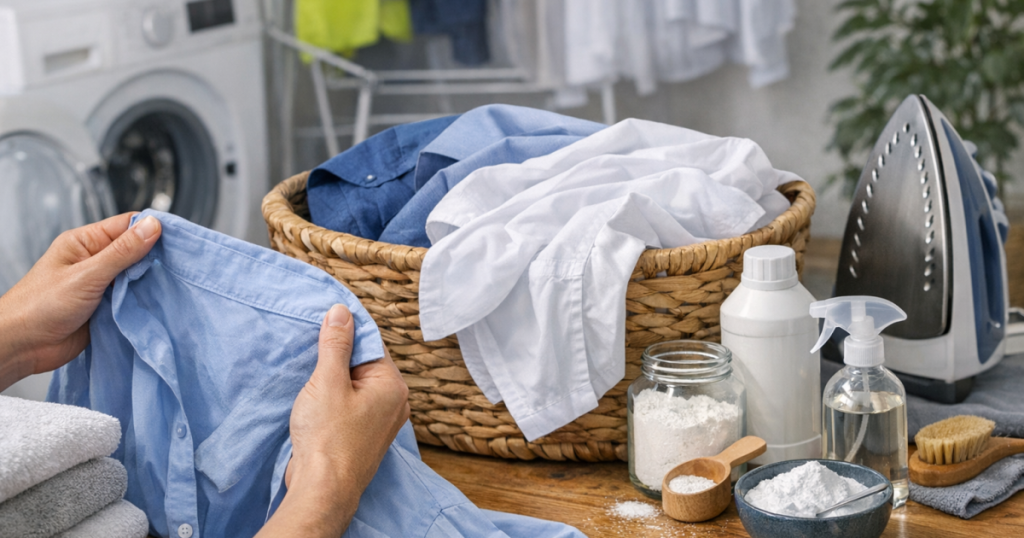
A normal wash cycle has limited time to break down old residue, so pre-treatment makes a noticeable difference. Dampen the problem areas with cool or lukewarm water, apply a small amount of liquid laundry detergent, then gently work it into the fabric with your fingers. Leave it for around 10 to 20 minutes before washing, unless the garment care label says otherwise.
Do not scrub hard with a stiff brush on business shirts, stretch shirts or embroidered uniforms. Abrasion can roughen the fabric, weaken stitching and create pale patches on darker colours. A soft laundry brush can help on sturdy cotton, but pressure should be light.
For white cotton or pale work shirts, an oxygen-based stain remover may help with older yellowing and underarm build-up if the care label allows it. Avoid chlorine bleach on coloured shirts, elastane blends and many uniform logos, as it can weaken fibres and cause uneven fading.
Step 3: Use the right wash temperature
The best temperature is the warmest setting the care label allows, not automatically the hottest cycle on the machine. Many cotton office shirts tolerate 40°C, while some robust white cotton shirts may allow higher temperatures. Plenty of branded, logoed or easy-care shirts are more restricted, especially if they contain elastane, heat-applied prints or special finishes.
If you usually wash all work shirts at 30°C and they have started smelling stale, try a 40°C wash on shirts that permit it. For delicate blends, keep the temperature lower but compensate with pre-treatment, correct detergent dosing and better drying. Heat is only one part of the routine.
Protective garments need separate caution. If your shirt is flame-resistant or forms part of PPE, do not improvise with stain removers, fabric conditioner or high-heat drying. Follow the garment label and employer instructions, and use the detailed guidance on washing flame-resistant workwear without damaging protection for the extra checks that matter.
Step 4: Stop overloading the washing machine
Work shirts need movement. If the drum is packed tight with towels, jeans and heavy work trousers, detergent may not reach the underarms and collar properly, and rinse water may not clear residue from the fibres. A full drum should still allow you to place a hand at the top without forcing it.
Separate shirts from very dirty workwear where possible. Greasy trousers, kitchen whites, dusty site layers and gym kit can transfer soil and odour into shirts during the wash. If shirts are only lightly worn, a separate shirt load with suitable detergent and an appropriate cycle often gives cleaner results than mixing everything together.
Step 5: Be careful with fabric conditioner
Fabric conditioner can make shirts feel softer and smell freshly laundered, but it is not a cleaner. On some polyester and performance-style uniform fabrics, repeated conditioner use can leave a coating that traps odour and reduces absorbency. If your shirts smell clean for an hour and then turn stale when you warm up, residue may be part of the problem.
Try skipping fabric conditioner for three or four washes and see whether the shirts rinse cleaner. Use detergent according to the label and your local water hardness, then run an extra rinse if the fabric still feels slippery or heavily scented. For a clearer distinction between cleaning and softening, read how laundry detergent and fabric conditioner do different jobs.
Step 6: Check the washing machine itself
A stale machine can make freshly washed shirts smell damp, sour or slightly dirty. This is common when a machine is used mostly on cool washes, with the door closed between loads, or with too much detergent. Residue can build up around the door seal, detergent drawer and drum.
Wipe the rubber door seal, remove lint and sludge from folds, and clean the detergent drawer. Run a maintenance wash according to the washing machine manual. Many machines have a drum clean or hot maintenance cycle; follow the manufacturer’s instructions rather than guessing with household mixtures.
After each wash, leave the door and detergent drawer slightly open so moisture can escape. This small habit makes a big difference in flats, utility cupboards and kitchens where ventilation is limited.
Step 7: Dry shirts quickly and fully
Musty smells often develop after washing, not during it. A shirt left in the drum for several hours can start smelling stale before it even reaches the airer. Remove shirts promptly, shake them out, and hang them with space between each garment.
In UK homes, indoor drying can be slow for much of the year. Avoid cramming shirts onto a radiator or packed airer, as thick folds and overlapping sleeves dry slowly and can smell damp. Use a well-ventilated room, open a window when practical, or use a dehumidifier or heated airer setup safely according to the appliance instructions.
Shirts should be completely dry before ironing or storing. If the underarm seams, collar stand or cuffs still feel cool and damp, give them more time. Ironing a slightly damp, stale shirt can set the smell and make it more noticeable when worn.
Different fabrics need slightly different handling
Cotton office shirts
Cotton usually copes well with pre-treatment and a warmer wash if the label allows it. Pay attention to collars and cuffs, which collect oils but may not look visibly dirty. Avoid over-drying if you plan to iron, as very dry cotton can crease harder.
Polyester and polycotton uniform shirts
These are common in retail, hospitality, healthcare and branded workwear. They dry quickly but can hold odour in synthetic fibres. Pre-treat underarms, avoid excess conditioner, and give the shirts space in the drum. A longer wash with good rinsing may work better than a quick cycle.
Stretch shirts
Elastane improves comfort but dislikes harsh heat and aggressive bleaching. Keep to the care label, use gentle pre-treatment and avoid tumble drying unless permitted. If odour persists, repeated lower-risk cleaning is better than one harsh wash that damages stretch recovery.
Logoed and embroidered shirts
Turn shirts inside out to reduce friction on logos and embroidery. Do not soak for long periods unless the label allows it, as some threads and adhesives can be affected. Treat stains around the logo carefully rather than flooding the whole area with stain remover.
A reset routine for stubborn shirt odour
If several shirts in the same rotation smell stale, use a reset rather than tackling them one by one. Start with the machine: clean the seal and drawer, then run the recommended maintenance cycle. Next, sort shirts by colour and fabric type. Pre-treat collars and underarms on each shirt, then wash a smaller load at the warmest safe temperature with the correct detergent dose.
Leave out fabric conditioner during the reset. Choose a cycle with enough time and rinsing for worn workwear, not the shortest quick wash. Once the cycle finishes, remove the shirts immediately and dry them with good spacing. If one or two still smell, they may have old residue that needs another targeted pre-treatment rather than a stronger fragrance.
When the problem is storage, not washing
Work shirts can smell stale if they are stored before they are fully dry or packed tightly in a poorly aired wardrobe. Make sure shirts are dry at seams and collars, not just across the front panels. Give freshly ironed shirts time to cool before hanging them in a closed wardrobe.
Rotate shirts rather than wearing the same two repeatedly. A small rotation gives each shirt more time to air between wears and reduces heavy build-up in the underarms. If you wear an undershirt, wash it after every wear; it can reduce direct sweat transfer into the work shirt but only if it is kept clean itself.
Helpful questions
Should I use more detergent for smelly work shirts?
Not automatically. Too much detergent can leave residue that traps odour. Use the detergent label as your guide, adjust for load size and water hardness, and focus on pre-treating collars and underarms.
Can I wash all work shirts at 60°C?
No. Check the care label first. Some cotton shirts may tolerate higher temperatures, but many uniform shirts, stretch fabrics, logos and easy-care finishes can shrink, fade or distort if washed too hot.
Why do my shirts smell fine when dry but stale when I wear them?
Warmth and moisture from your body can reactivate trapped body oils, deodorant residue or old detergent build-up. Pre-treat underarms, skip conditioner for a few washes and improve rinsing.
Does air drying make shirts smell?
Air drying is fine when it is quick enough. Problems start when shirts sit damp for too long, overlap on the airer, or dry in a room with poor ventilation.
Can I use vinegar on work shirts?
Use caution. Some people use white vinegar for odour, but it is not suitable for every fabric, finish or washing machine routine. Never mix it with bleach, and follow the garment and machine instructions.
Main points
Smelly work shirts usually need cleaner fibres, not stronger scent. Treat the oily areas first, wash with enough space in the drum, choose the warmest safe temperature, avoid conditioner build-up, keep the washing machine clean and dry shirts promptly. For standard office and uniform shirts, those changes are often enough to stop stale odours returning. For protective workwear, follow the garment label and workplace process before changing any wash routine.