Dry-clean-only labels do not mean every wear has to end at the cleaners. The safest way to freshen dry-clean-only clothes is to remove moisture, odour and surface dust gently, without soaking the garment or disturbing its structure.
This matters most for wool coats, tailored jackets, silk blouses, embellished pieces and lined dresses, where repeated cleaning can be costly and unnecessary. A careful between-wear routine can keep clothes pleasant to wear while reducing strain on fibres, linings and trims.
The short version
- Air the garment first, ideally away from direct heat and strong sunlight.
- Brush surface dust, hair and lint before using moisture or steam.
- Use steam lightly for creases and odour, but avoid soaking the fabric.
- Deal with small marks quickly, using minimal water and no aggressive rubbing.
- Let the garment dry fully before it goes back into the wardrobe.
Step 1: Check what the garment is telling you
Before doing anything, look at the care label and the garment construction. “Dry clean only” is not just about the outer fabric. It can also reflect the lining, shoulder pads, interfacing, beading, dyes, buttons or adhesive details that may not tolerate water well.
For a structured blazer, coat or evening dress, the safest aim is refreshment rather than cleaning. You are trying to reduce odour, relax light creases and remove loose debris, not wash out sweat or heavy soil. If the garment smells strongly of perspiration, smoke, damp or perfume after airing, professional cleaning is usually the better route.
Pay particular attention to silk, viscose, velvet, acetate linings, leather trims and anything with sequins or glued embellishment. These are more likely to watermark, distort, crush or lose finish if handled too wet.
Step 2: Air it properly before trying anything else
Airing is the lowest-risk first move. Hang the garment on a shaped hanger, fasten the main buttons or zip to support its shape, then leave it somewhere with gentle airflow. In many UK homes, a spare room with a slightly open window works better than a steamy bathroom or a hallway radiator.
Avoid direct heat. Radiators, heated airers and hot airing cupboards can set odours, dry out fibres unevenly and distort linings. Direct sunlight can also fade darker wool, silk and navy tailoring. A shaded, ventilated room is safer.
If the room is humid, odour can linger rather than lift. The same principles used for ventilating a room while fabrics dry indoors apply here: create airflow, avoid trapping moisture, and let fabric dry before storing it.
For light odour after one wear, a few hours of airing may be enough. For a wool coat or suit jacket worn on public transport or in a warm office, overnight airing is often more effective than adding sprays straight away.
Step 3: Brush away surface debris
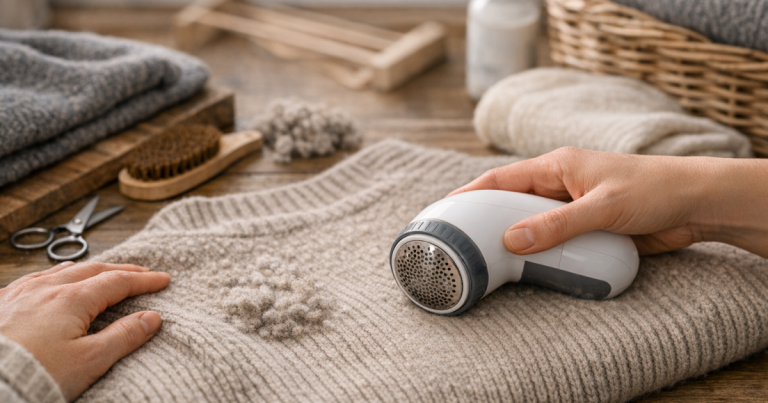
Once the garment has aired, use a soft clothes brush to remove dust, hair, pollen, lint and fine grit. Brush with the grain of the fabric rather than scrubbing across it. This is especially useful for wool coats, flannel trousers, tailored jackets and darker fabrics that show lint easily.
Do not use a stiff laundry brush on delicate wool, silk, velvet or loosely woven cloth. The aim is a light lift, not friction. For velvet or pile fabrics, brush only if you know the correct direction of the nap and use very gentle pressure.
A lint roller can help with pet hair, but use it sparingly on fragile fabrics or textured weaves. Sticky rollers can tug at loose fibres, sequins, beads and embroidery. If the garment is embellished, use clean hands or a very soft brush around decorated areas.
Step 4: Use steam carefully for creases and stale odour
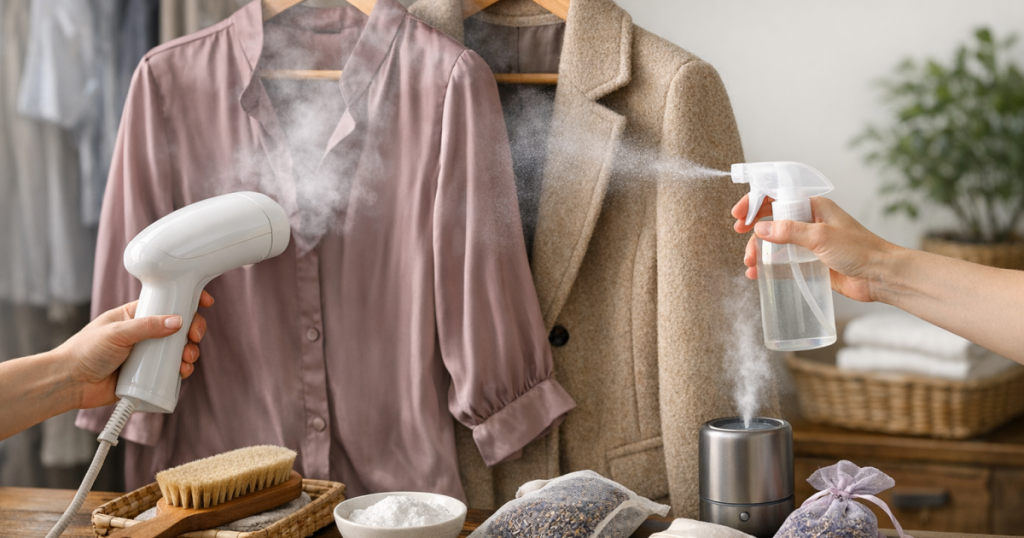
Steam can be helpful, but it is also the stage where people most often overdo it. Hang the garment, hold the steamer or iron’s steam function a short distance away, and allow the vapour to pass through the fabric rather than pressing wet heat into it. Keep the nozzle or soleplate moving and avoid concentrating steam on one spot.
For wool tailoring, light steam can relax creases and release trapped odour. For silk, viscose, velvet, beading and anything with a shiny finish, steam must be much more cautious. Test an inconspicuous area first, such as an inside hem or seam allowance, and stop if the fabric darkens, ripples, spots or loses its finish.
Do not press a hot iron directly onto a dry-clean-only garment unless the care label allows it and you are using the correct setting and a pressing cloth. Steam is for freshening; pressing is a separate task with a higher risk of shine, scorching or seam imprinting.
Step 5: Treat small marks without spreading them
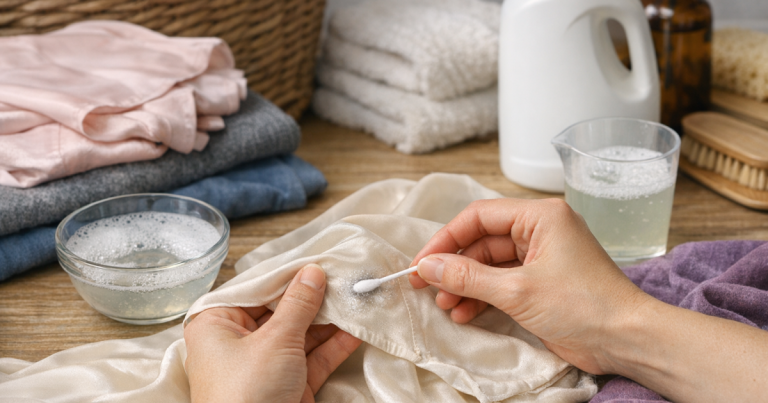
Between-wear freshening is not a full stain removal process. If you see a fresh food splash, makeup mark or water spot, blot first with a clean white cloth. Work from the outside of the mark towards the centre so you do not spread it.
Use as little moisture as possible. A barely damp cloth can lift some surface marks, but many dry-clean-only fabrics will watermark if they are wetted unevenly. Avoid washing-up liquid, bleach, vinegar mixes and stain-removal sprays unless the garment label and fabric type clearly allow them.
Underarms need particular care because deodorant, sweat and fabric finishes can interact over time. If the garment is a washable shirt rather than a dry-clean-only piece, the process for deodorant build-up on shirt underarms is different and can involve more direct cleaning. On dry-clean-only silk, wool or lined tailoring, heavy underarm residue is usually a sign to book a clean rather than keep refreshing.
Step 6: Be selective with fabric sprays
Fabric sprays can mask smells, but they are not always fabric-safe. Fragrance, alcohol and water can leave marks on silk, satin, viscose, velvet and dark tailoring. Sprays can also build up on fibres and make a garment smell perfumed rather than clean.
If you use one, spray into the air around the garment rather than directly onto the fabric, then let the garment hang in moving air. Keep sprays away from beading, leather trim, fur trim, feathers, metallic finishes and delicate linings.
For odours caused by moisture, storage or incomplete drying, sprays will not solve the cause. Airflow and dry storage are more important than fragrance.
Step 7: Dry fully before storing
Never put a freshly steamed or aired garment straight back into a closed wardrobe. Even a small amount of moisture can encourage musty smells, mildew risk and creasing, particularly in a packed wardrobe with limited airflow.
Leave the garment hanging until it feels completely dry and cool to the touch. Check thicker areas such as collars, cuffs, waistbands, shoulder seams and linings. These parts hold moisture longer than the main fabric.
When storing, give structured pieces room to breathe. Use wide hangers for jackets and coats, avoid thin wire hangers that distort shoulders, and do not crush delicate dresses between heavy garments. A breathable garment bag is usually better than plastic for longer storage because it helps reduce trapped moisture.
Fabric-by-fabric notes
Wool coats and tailoring
Wool responds well to airing and light brushing. Steam can help release odour and creases, but keep it gentle and let the garment rest afterwards. Do not over-brush soft wool or cashmere blends, as this can raise fuzz.
Silk blouses and dresses
Silk is prone to watermarks and shine changes. Airing is safest. Use steam only from a distance and stop immediately if the fabric darkens or puckers. Avoid fabric sprays directly on silk.
Velvet and pile fabrics
Velvet can crush easily. Avoid pressing and be very cautious with steam. Hang it in a steamy room only briefly if you know the fabric tolerates moisture, then allow it to dry without touching the pile.
Beaded, sequinned and embellished clothes
Refresh these by airing rather than brushing or spraying over decoration. Moisture can affect threads, adhesive, backing fabrics and metallic finishes. If odour persists, professional cleaning is the safer option.
Lined skirts and dresses
The outer fabric may seem robust, but the lining can shrink, ripple or retain odour. Air inside-out where practical, then return the garment to its correct shape on a hanger while it finishes drying.
What not to do between wears
- Do not use a washing machine “just on a quick cycle” if the label says dry clean only.
- Do not soak collars, cuffs or underarms to freshen them.
- Do not dry damp garments on radiators.
- Do not use strong stain removers on silk, wool, velvet or embellished fabrics.
- Do not seal a recently worn garment in plastic.
- Do not spray perfume directly onto fabric to hide odour.
When freshening is not enough
A garment needs proper cleaning if odour returns immediately after airing, if underarms feel stiff, if there are visible stains, or if the lining smells stale. Smoke, cooking oil, heavy perspiration and damp storage smells tend to cling to fibres and linings, so surface freshening will only do so much.
It is also worth cleaning before long-term storage. Stains and body oils can oxidise over time, becoming harder to remove later. For seasonal coats, occasionwear and suits, cleaning before storage helps prevent odour, moth attraction and hidden marks from developing.
Good storage reduces how often dry-clean-only pieces need attention. For more on humidity, spacing, hangers and garment protection, read the guide to creating a fabric-safe wardrobe environment.
Helpful questions
Can I put dry-clean-only clothes in the tumble dryer on an air setting?
It is usually safer to avoid the tumble dryer. Even a no-heat cycle can create friction, distort trims or affect structured garments. Hanging in moving air is gentler.
Is bathroom steam safe for dry-clean-only clothes?
Brief bathroom steam may help light creases, but it is uncontrolled and can make the garment too damp. Avoid it for silk, velvet, embellished pieces and anything prone to watermarks.
How many times can I wear something before dry cleaning?
It depends on the fabric, weather, how long you wore it and whether it touched skin. Coats and jackets may go several wears between cleans; silk tops and dresses often need cleaning sooner.
Can I freeze clothes to remove odour?
Freezing may reduce some odour temporarily, but it does not remove sweat, oils or stains. It is not a reliable substitute for airing, careful cleaning or professional dry cleaning.
What should I do if a dry-clean-only garment gets wet in the rain?
Hang it on a supportive hanger, reshape it gently and let it dry naturally away from heat. If the fabric marks, ripples, smells damp or the lining distorts, take it to a cleaner.
Main points
Between-wear care should be gentle, dry and patient. Air first, brush lightly, use steam sparingly and avoid direct heat, soaking or heavy sprays. The better you manage moisture and storage, the fresher dry-clean-only clothes will stay between professional cleans.
Freshening is useful for light odour, surface dust and minor creasing. It is not a way to remove sweat build-up, greasy marks, mildew smells or set-in stains. When the garment is valuable, structured or delicate, doing less at home is often the most fabric-safe choice.