A wool jumper can come out of the wash looking fine, then grow longer at the sleeves or sag at the shoulders while it dries. The safest way to dry wool jumpers flat is to remove excess water gently, support the whole garment, and reshape it before the fibres set.
Wool is resilient when cared for well, but wet wool is heavy and more vulnerable to distortion. A small change in drying routine usually makes the biggest difference: no wringing, no hangers, no direct radiator heat, and no unsupported sleeves dangling over the side of an airer.
The short version
- Press water out of the jumper rather than twisting or wringing it.
- Roll it in a clean towel to remove extra moisture before drying.
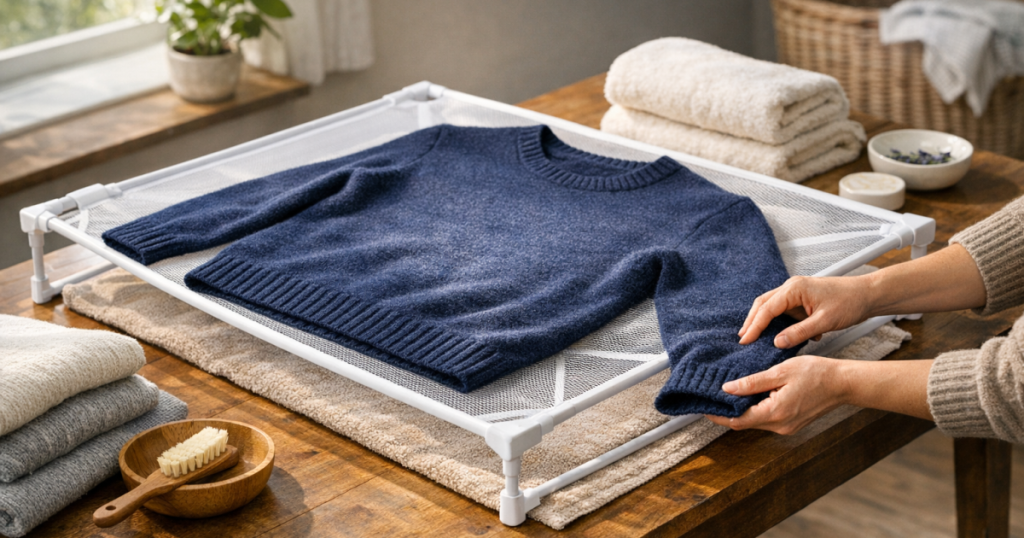
- Lay it on a dry towel or breathable flat drying rack with the full body and sleeves supported.
- Reshape the shoulders, cuffs, hem and side seams while the wool is damp.
- Keep it away from direct heat, strong sunlight and hanger pressure.
- Turn it once the top feels drier, replacing any soaked towel underneath.
Why wool stretches when it dries badly
Wool fibres absorb water, and a wet jumper can feel much heavier than it does when dry. If that weight is concentrated on the shoulders, hem or sleeve ends, gravity pulls the knit out of shape. This is why hanging a damp wool jumper on a clothes hanger often leaves shoulder bumps and extra length through the body.
Knitted fabric behaves differently from woven fabric. The loops in a knit can move, relax and distort when wet, especially in soft merino, cashmere, lambswool and loose chunky knits. Once the jumper dries in that stretched position, it can be difficult to return it to its original shape without washing and reshaping it again.
Direct heat creates another problem. Placing wool straight on a radiator can dry the surface too quickly while the inner fibres remain damp. That can leave the jumper stiff, uneven or misshapen. If you use heat nearby in a small UK home, keep airflow gentle and indirect; the advice in our guide to using a radiator drying rack without stiffening clothes is useful when space is limited.
Step 1: Remove water without pulling the knit
After washing, lift the jumper carefully with both hands rather than grabbing it by the shoulders or cuffs. Wet wool needs support, so hold it like a folded bundle and avoid letting the body hang down.
If the care label allows machine spinning, a short, gentle spin can help remove water before drying. Use the lowest suitable setting and avoid a harsh, high-speed spin for delicate or loosely knitted wool. For hand-washed jumpers, press the garment against the side of the basin to release water, then lift it out with the whole weight supported.
Do not twist the jumper. Wringing forces the knit in opposite directions and can permanently distort cuffs, hems and side seams. It can also make delicate wool feel rougher because the fibres are being stressed while swollen with water.
Step 2: Use the towel-roll method
Lay a clean, dry bath towel on a flat surface. Place the jumper on top and spread it into a rough version of its natural shape, with sleeves straight and the hem level. Roll the towel and jumper together from one end, pressing gently as you go.
The towel should absorb moisture without needing any twisting. After a minute or two, unroll it and check how damp the towel has become. If the jumper still feels very wet, repeat with a second dry towel. For pale wool, use a white or colourfast towel to reduce the risk of dye transfer.
This step matters because a dripping jumper takes longer to dry and puts more weight on the fabric. The drier it is before it reaches the flat drying surface, the less opportunity there is for stretching.
Step 3: Set up a proper flat drying area
The best drying position is flat, breathable and well supported. A dry towel on a table, bed or clean floor can work, provided the room has decent ventilation. If you use the floor, choose a clean area away from pets, shoes and direct foot traffic.
A mesh flat drying rack can improve airflow underneath, which helps reduce drying time without putting stress on the garment. If you only have a standard airer, create a flat platform by spreading the jumper across several bars and placing a towel underneath. Do not let the sleeves or body drop between the bars, as this can leave ridges or stretched panels.
Avoid drying wool in a cramped, unventilated corner. Damp knitwear needs gentle air movement. Opening a window for a short period, using an extractor fan nearby, or drying in a room that is not overloaded with laundry can help the jumper dry more evenly.
Step 4: Reshape the jumper while it is damp
Once the jumper is on its drying surface, take a minute to shape it properly. This is the step many people skip, but it is what keeps the finished garment looking intentional rather than saggy.
Check the shoulders
Smooth the shoulder seams so they sit straight and even. Avoid pulling them wider than their natural shape. If the shoulder line has crept down the sleeve, nudge it back into place with flat hands rather than tugging at one point.
Line up the side seams
Run your hands along the side seams and make sure the front and back layers are aligned. If one side looks longer, gently pat and ease the fabric back into shape. The aim is to guide the knit, not stretch it.
Reset the hem and cuffs
Ribbed hems and cuffs can expand in the wash. Lightly compress them back towards their original width, then square off the hem so it lies level. For sleeves, smooth from the shoulder towards the cuff and support the whole sleeve as you do it.
Use another jumper as a guide
If you are worried about size, lay a similar well-fitting jumper nearby and compare the outline. Do not force the wet jumper to match exactly, but use the reference to spot obvious lengthening at the sleeves, body or neckline.
Step 5: Turn it carefully during drying
When the top of the jumper feels noticeably drier, turn it over so the underside can dry too. Slide both hands underneath the garment, lift it as a whole, and flip it gently. If the towel underneath is damp, replace it with a dry one.
Do not hang the jumper to finish it off while it is still damp. Even when it feels only slightly wet, the remaining moisture can be enough for the shoulders or hem to stretch. Keep it flat until it feels dry throughout, including thicker seams, ribbing and the underarm area.
If the room is cool, expect wool to take longer than cotton or synthetic layers. Rushing the process with direct heat is rarely worth it; steady drying preserves shape better than fast drying.
Common mistakes that stretch wool jumpers
- Hanging from a clothes hanger: this concentrates weight at the shoulders and often creates bumps.
- Pegging from the hem: the body can lengthen and peg marks may remain in ribbed wool.
- Draping over one airer bar: the fold line can become stretched or ridged.
- Putting it straight on a radiator: direct heat can dry wool unevenly and may make it feel harsh.
- Pulling sleeves to make them even: use gentle smoothing instead of stretching.
- Storing before fully dry: trapped moisture can leave a musty smell and encourage creasing.
Adjust the method for different wool jumpers
Not all wool jumpers need exactly the same handling. Fine merino knits often look neat after careful smoothing, but they can show hanger bumps quickly if dried upright. Cashmere benefits from especially gentle pressing and a soft towel, as rough handling can disturb the surface.
Chunky knits need more support because they hold more water and the stitches are more open. Spread the weight across a larger area and check the sleeves are not pulling away from the shoulders. Heavy roll-necks may need extra attention around the collar, which can stay damp long after the main body feels dry.
Wool-blend jumpers vary depending on the other fibres. A blend with nylon or acrylic may dry faster and feel lighter when wet, but it can still stretch if hung. Always follow the care label first, then use flat drying as the safer default when the garment contains a meaningful amount of wool.
What to do once the jumper is dry
When the jumper is fully dry, lift it and check the shape before putting it away. If the hem has curled slightly, smooth it with your hands and fold the jumper rather than hanging it. Folding prevents shoulder marks and keeps the weight evenly distributed in a drawer or on a shelf.
If the jumper has light creasing, avoid pressing wool directly with a hot iron. Use steam cautiously and protect the surface with a cloth. Our guide to choosing the right pressing cloth for silk, wool and delicates explains how a barrier helps prevent shine and scorching on sensitive fabrics.
For a quick refresh between wears, airing is usually better than repeated washing. If you want to remove light creases or relax the fibres after storage, compare the gentler finishing options in our iron versus clothes steamer fabric guide before applying heat to wool.
FAQ
Can I dry a wool jumper on a hanger for just a short time?
It is still risky while the jumper is damp. Wet wool is heavy, so even a short period on a hanger can create shoulder bumps or lengthen the body.
Can I put a wool jumper in the tumble dryer?
Only do this if the care label specifically allows it and your dryer has a suitable wool setting. When in doubt, flat drying is the safer option for shape retention.
How do I fix a jumper that has stretched while drying?
Re-wet the stretched area, press out excess water, then reshape it flat. Do not try to shrink it with high heat, as that can felt the wool or make the fit uneven.
Should I brush or comb wool while it is damp?
No. Wait until the jumper is completely dry before removing pills or tidying the surface. Damp fibres are easier to pull and distort.
How dry should it be before folding away?
It should feel dry through the seams, cuffs, collar and underarms, not just across the front. If any thick areas feel cool or damp, leave it flat for longer.
Final thoughts
Flat drying is less about fuss and more about support. Remove water gently, spread the jumper across a stable surface, shape it while damp, and let air do the work without direct heat. That simple routine helps wool jumpers keep their length, shoulder line and soft handle for far longer.