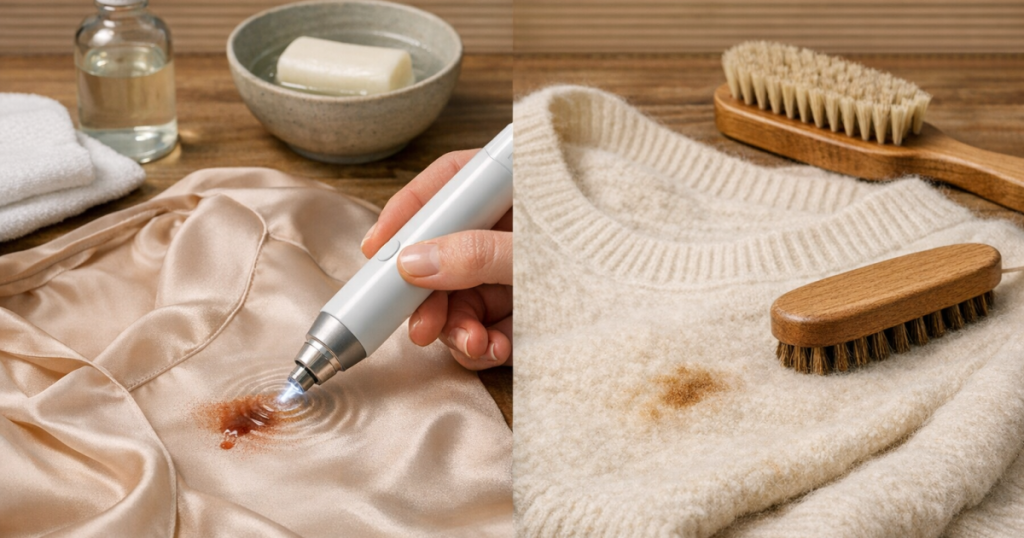
A handheld stain tool can look like an easy rescue when a silk blouse or wool jumper gets marked. The problem is that ultrasonic stain remover pens rely on vibration, moisture and contact, which are exactly the things many delicate fibres dislike. For silk and wool, the safer answer is: treat them as a last resort, not a first-choice stain method.
The short version
For most silk and wool garments, do not use an ultrasonic pen directly on a visible area unless the care label allows washing, the fabric is robust, and you have tested it successfully on a hidden seam first. Even then, use the lightest contact possible and stop immediately if the fabric changes texture, colour or sheen.
These tools are generally less risky on washable cottons, polyester blends and sturdy everyday fabrics than they are on protein fibres such as silk and wool. Silk can water-mark, dull or lose surface smoothness. Wool can felt, fuzz, distort or develop a rubbed patch. If the garment is expensive, sentimental, structured, lined, vintage, embellished or labelled dry clean only, avoid the pen and use a gentler spot-cleaning route.
How the tool affects delicate fibres
Ultrasonic stain remover pens are designed to loosen staining by sending rapid vibration through a small wetted area. The action is usually combined with water or a cleaning solution, then the stain is blotted away. On tougher fabrics, that localised action can help lift residue from the yarns. On delicate fabric, the same localised action can concentrate stress in one small patch.
Silk and wool are protein fibres, but they behave differently. Silk often has a smooth surface and visible lustre, so a small change in finish can be easy to notice. Wool has scales along the fibre, which can interlock when moisture, movement and pressure are combined. That is the same basic reason wool can felt or shrink when mishandled during washing.
The risk is not only the ultrasonic vibration. The surrounding process matters just as much: the cleaning solution, the amount of water, how hard the tip is pressed, how long it stays in one place, and how the area is dried afterwards. A pen used briefly with cool water on a hidden seam is very different from repeated passes with a strong stain solution on the front of a silk dress.
Silk: the main risks to check
Silk is especially vulnerable to water marks, colour movement and changes in sheen. A stain may lift, but the treated patch can still remain visible because the surface finish has changed. This is most noticeable on satin, charmeuse, crepe de Chine and fine silk blouses where light reflects across the fabric.
Be particularly cautious with:
- Dark or saturated silk, where dye transfer may show on the blotting cloth.
- Printed silk, because one colour in the print may be less stable than another.
- Silk satin, where rubbing or pressure can leave a dull patch.
- Vintage silk, which may already be weakened by age, perspiration or previous cleaning.
- Structured silk garments, such as jackets, where moisture can affect linings, interlinings or shaping.
For cosmetics, body oils and foundation marks, a targeted blotting method is usually safer than vibrating the surface. The step-by-step approach in how to remove make-up from silk safely is a better first stop before reaching for any powered stain tool.
Wool: why vibration and moisture can be a problem
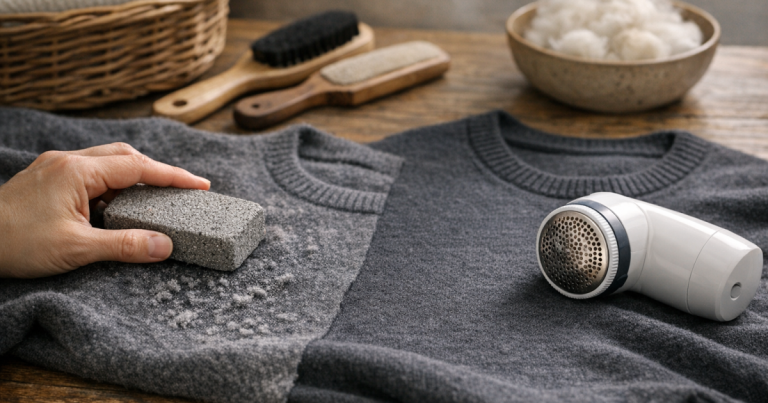
Wool is resilient in daily wear, but it can react badly to the wrong kind of movement when damp. An ultrasonic tip concentrates motion in a small area, so the patch may become fuzzy, flattened or slightly distorted. On fine merino, cashmere blends, lambswool and brushed wool, that change can be more visible than the original stain.
Wool also holds moisture within the fibre. If you wet a stain too heavily, the surrounding area can stretch while damp. This is why a jumper should not be hung up straight after spot treatment. After any local cleaning on knitwear, reshape the area gently and dry the garment flat; the method in how to dry wool jumpers flat is useful after small stain treatments as well as full washes.
Avoid ultrasonic treatment on felted wool, brushed wool coats, boiled wool, cashmere, mohair, alpaca and any wool garment with a delicate nap. The tool may disturb the surface, and once the texture changes, it is rarely possible to restore it fully at home.
A safer decision process before using one
If you are considering ultrasonic stain remover pens for a silk or wool garment, work through these checks first. They are more important than the promise on the tool packaging, because the garment in front of you is what determines the risk.
1. Read the care label properly
If the label says dry clean only, do not use a wet ultrasonic stain tool. The issue is not just shrinkage; it may be the dye, finish, lining, structure or trim. If the label allows hand washing or gentle washing, you still need to test carefully because “washable” does not mean “safe for localised vibration”.
2. Identify the stain type
Water-based marks, such as a small tea splash, may respond to careful blotting with cool water. Oily stains, make-up and ink often need a stain-specific approach. Using a vibrating pen on the wrong stain can spread pigment or drive oily residue further into the fibres. Ink on wool or silk is particularly risky because rubbing, heat and moisture can all set or spread it.
3. Test on a hidden area
Choose an inside seam allowance, hem turn-up or concealed facing. Use the same amount of water and the same contact time you intend to use on the stain. Blot with a plain white cloth and check for dye transfer. Let the test area dry fully before judging it, because silk water marks and wool texture changes often show more clearly once dry.
4. Limit moisture and contact
If the hidden test is successful and the garment is washable, keep the treated area small. Do not press hard. Do not hold the tip in one place for long. Blot rather than rub between very short passes. Avoid hot water and avoid strong stain removers unless the garment label and stain product label both confirm suitability for silk or wool.
5. Dry the area without heat stress
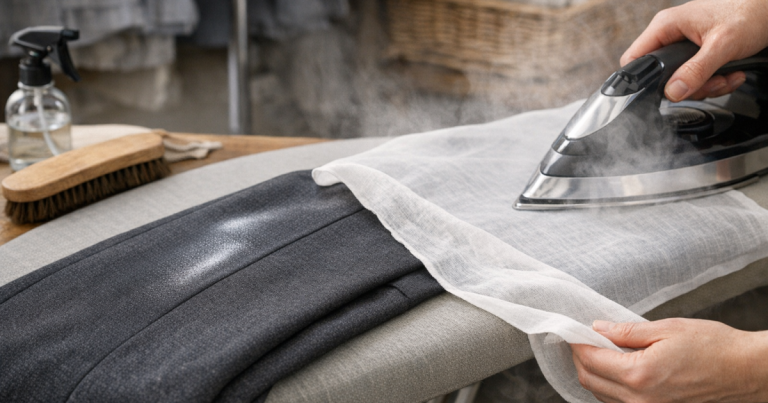
After treatment, blot with a clean towel and support the garment in its natural shape. Do not speed-dry silk or wool with direct radiator heat, a hairdryer or a hot iron. Heat can set remaining stain traces and can also cause shine, shrinkage or distortion. If the aim is simply to refresh a garment rather than remove a true stain, fabric-safe pressing or steaming may be a better option; see the fabric-by-fabric guidance on when to use an iron or clothes steamer.
When not to use the pen at all
Some garments are too risky for powered spot treatment, even if the stain is annoying. Skip the ultrasonic pen when:
- The care label says dry clean only.
- The fabric is silk velvet, silk satin, chiffon, organza, cashmere, mohair or alpaca.
- The garment has beading, sequins, embroidery, pleats, interfacing or glued trims.
- The stain is old, unknown, ink-based, dye-based or already treated with heat.
- The colour bleeds during a hidden damp test.
- The fabric surface changes after a hidden test, even slightly.
With delicate fibres, “nearly safe” is not safe enough on a visible front panel, cuff or collar. A faint stain may be less noticeable than a pale ring, shiny patch or fuzzy spot created by over-treatment.
Gentler alternatives for silk and wool stains
Start with the least aggressive method that matches the stain. For fresh marks, lift solids carefully with a spoon edge or dull knife, then blot moisture with a white cloth. Do not scrub. For washable silk or wool, use cool water and a tiny amount of detergent designed for delicates, then rinse by blotting with a barely damp cloth.
For oily marks, absorb first. Place a small amount of plain absorbent powder, such as cornflour, on the stain, leave it to draw out surface oil, then lift it away gently. This will not solve every grease stain, but it can reduce the mark without soaking the fibre.
For wool knitwear, support the fabric from underneath while blotting so the area does not stretch. For silk, work from the reverse side where possible and keep a dry towel behind the fabric to prevent moisture spreading. Always let the garment dry naturally before deciding whether a second treatment is needed.
How to judge the result
Do not assess silk or wool while it is still damp. Place the garment in natural daylight once dry and look from different angles. Check for:
- A tide mark around the treated area.
- Loss of shine or a dull patch on silk.
- Raised fuzz, flattening or felting on wool.
- Colour lightening or dye bleed.
- Distortion, stretching or rippling around the stain.
If any of these appear after a test patch, do not continue on the visible stain. If the stain improves but remains visible, repeating the same treatment more aggressively is usually where damage happens. Delicates respond better to patience than force.
Key questions answered
Can I use an ultrasonic pen on washable silk?
Only with caution. The silk must be washable, colourfast and successful in a hidden test after drying fully. Avoid using the pen on satin finishes, dark dyes, prints, vintage silk or anything structured. Even washable silk can show water marks or a change in sheen.
Can I use one on a wool jumper?
It is usually better to avoid it on fine knitwear. Wool jumpers can stretch when damp and may fuzz or felt where the tip vibrates. If the jumper is sturdy, washable and low value, test inside a seam first and dry it flat afterwards.
Are ultrasonic pens better than hand blotting?
Not automatically. They can add localised action, but delicate fibres often need less movement, not more. Hand blotting gives you more control over pressure, moisture and spread, which is why it is usually the safer first method for silk and wool.
What should I do if the stain is still there?
Stop before the fabric is damaged. Let the garment dry fully, reassess in daylight, and use a stain-specific delicate method if appropriate. For valuable, tailored or dry-clean-only pieces, professional cleaning is safer than repeated home treatment.
The short version
Ultrasonic stain tools are not automatically unsafe, but silk and wool leave very little room for error. The safest approach is to avoid them on dry-clean-only, textured, luxury, vintage or structured garments. On washable, robust pieces, test first, use minimal moisture and pressure, and stop at the first sign of colour, sheen or texture change. A careful blotting method is slower, but for delicate fibres it is often the difference between removing a mark and creating permanent fabric damage.