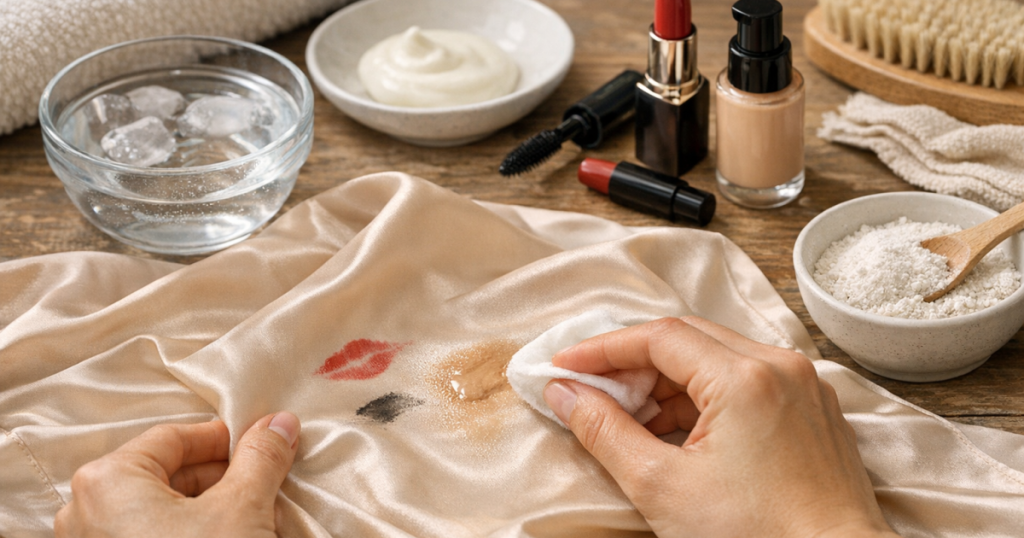
Silk reacts badly to rubbing, heat and strong stain removers, so the safest way to remove make-up from silk is slow blotting, cool water and a detergent suited to protein fibres. The aim is to lift residue without disturbing the weave, flattening the sheen or causing dye to bleed. Act early, work from the edge of the mark, and stop if the colour or texture changes.
Make-up stains are rarely just one thing. Foundation may contain oils and pigments, lipstick adds wax, mascara can include film-forming ingredients, and face powder can grind into the fibres if it is rubbed. Treat the garment as silk first and the stain second.
At a glance
- Blot fresh make-up with a clean white cloth or plain kitchen paper; do not scrub.
- Keep water cool or lukewarm, never hot.
- Test any detergent solution on an inside seam or hidden hem before treating the visible stain.
- Use only a tiny amount of silk-safe or wool-and-silk detergent diluted in water.
- Avoid bleach, biological stain removers, oxygen powders and aggressive spot cleaners unless the care label specifically allows them.
- For dry-clean-only silk, vintage silk, heavily embellished garments or strong colour contrast, take it to a reputable cleaner before trying repeated home treatments.
Check the silk before you touch the stain
Start with the care label. Some silk shirts, scarves and pillowcases can be hand washed carefully; others are labelled dry clean only because of the dye, lining, structure, trim or finish rather than the silk fibre alone. A tailored silk dress, bias-cut blouse or lined silk jacket can lose shape even if the stain itself lifts.
Next, check the type of silk. Satin silk can show water marks and pressure marks more readily than matte crepe. Habotai and lightweight silk can distort if pulled. Printed silk scarves may have dyes that move in water. Raw silk and slubbed silk can trap pigment in the texture. These differences matter because a stain-removal method that looks harmless on a white silk pillowcase may be too risky for a printed scarf or occasion blouse.
Do a colourfastness test before using any cleaning solution. Dampen a white cotton bud or corner of a cloth with cool water and touch an inside seam or hidden area. If colour transfers, do not wet-clean the visible stain at home. If the fabric becomes dull, puckered or marked as it dries, stop and choose professional cleaning instead.
What not to use on silk make-up stains
Silk is a protein fibre, so harsh alkalinity, bleach and enzyme-heavy treatments can weaken or dull it. Many everyday stain removers are designed for cotton, polycotton workwear or robust synthetics rather than delicate silk. Even when a product is excellent for greasy collars or uniforms, it may be too strong for silk unless the label clearly says it is suitable.
Avoid these common mistakes:
- Hot water: it can set some stains and increase the chance of dye movement.
- Rubbing with a towel: this can fuzz the surface, spread pigment and create a pale abraded patch.
- Bleach or whitening products: silk can yellow, weaken or lose its sheen.
- Biological laundry detergent: enzyme action is not ideal for protein fibres such as silk.
- Alcohol-heavy make-up remover: it may shift dye or leave a tide mark, especially on printed silk.
- Direct stain sticks or gels: concentrated product can create a halo or residue mark if it is not thoroughly rinsed.
If you are dealing with grease-heavy stains on tougher clothing, the approach is different; our guide to choosing a stain remover for greasy workwear explains why robust fabrics can tolerate stronger products than silk.
Step-by-step: fresh liquid foundation or concealer
Foundation is often a mix of oil, pigment and film-forming ingredients, so fast blotting helps. The key is to lift excess product before adding water.
1. Lift the surface residue
Place the silk on a clean, dry, white towel. If there is a blob of liquid foundation, use the edge of a spoon or a blunt butter knife to lift it away from the surface. Do not scrape into the cloth. Work slowly so the product does not spread.
2. Blot from the back if possible
Hold a clean white cloth behind the stained area and blot from the reverse side with another cloth dampened with cool water. This encourages residue to move out of the fabric rather than deeper into the front. Change to a clean section of cloth as colour transfers.
3. Apply a diluted silk-safe detergent
Mix a very small amount of wool-and-silk detergent into cool water. Touch the solution onto the stained area with a soft cloth or cotton bud, working from the outside edge towards the centre. Leave it for a few minutes only; do not let a concentrated patch dry on the fabric.
4. Rinse by blotting
Use a separate cloth dampened with plain cool water to remove detergent residue. Keep blotting until the cloth no longer feels slippery. Detergent left in silk can cause dullness or a ring once dry.
5. Dry flat and reassess
Lay the garment on a dry towel away from direct heat and sunlight. Do not hang a wet silk blouse by the shoulders, as water weight can distort the shape. Once dry, check the stain in natural daylight before repeating a gentle treatment. Two light passes are safer than one aggressive one.
Powder make-up: do less at first
Face powder, bronzer, blusher and eyeshadow can look alarming on pale silk, but adding water too soon can turn powder into a paste. Keep the fabric dry at the start.
- Hold the garment so the stained area faces down, then gently tap from the back to loosen surface powder.
- Use a soft, clean make-up brush or very soft clothes brush to lift loose particles without grinding them in.
- If a coloured shadow remains, test a diluted silk-safe detergent solution on a hidden area, then blot the stain lightly.
- Do not use sticky tape on silk. It can pull fine fibres, especially on lightweight scarves and blouses.
This same “support the fabric, avoid pulling, and keep movements light” principle also applies when washing chiffon blouses without pulling threads, because both fabrics can show damage from handling as much as from the stain itself.
Lipstick, lip gloss and balm
Lip products are tricky because they often contain wax, oil and strong pigment. Resist the urge to dissolve them with make-up remover straight away. On silk, the solvent can move the colour into a larger ring.
First, remove any raised product with the edge of a spoon. If the stain feels greasy, place a small amount of cornflour on the mark and leave it for around 20 to 30 minutes to absorb surface oil. Brush it away gently with a soft brush. Do not rub the powder in.
Then use the diluted detergent method: cool water, a tiny amount of silk-safe detergent, gentle edge-to-centre blotting, and a separate cool-water blot to rinse. If the lipstick is dark red, plum or long-wear matte, stop after one careful attempt if the mark remains. Repeated rubbing can leave a permanent pale patch even when some pigment is removed.
Mascara and eyeliner marks
Mascara and eyeliner often contain dark pigment, waxes and sometimes water-resistant ingredients. If a mascara wand touches a silk blouse or scarf, wait a moment for any wet clump to become easier to lift, then remove the raised residue with a spoon edge. Smearing wet mascara across silk is one of the quickest ways to make the stain larger.
For a small dot, work from the reverse with cool water and a white cloth. Follow with diluted silk-safe detergent only if the fabric has passed a colourfastness test. Waterproof mascara and gel eyeliner are usually better treated professionally if the item is valuable, pale or dry-clean-only, because home solvents can be riskier than the original mark.
How to prevent water rings
Water rings happen when moisture pushes soil, dye or detergent residue outwards and dries with a visible edge. Silk satin, pale silk and tightly woven scarves are particularly prone to this.
To reduce the risk, keep the treated area small but blend moisture softly into the surrounding fabric with a barely damp cloth. Rinse out detergent thoroughly by blotting, not soaking. Dry flat on a clean towel and move the garment once or twice as it dries so it is not sitting on a damp patch. Avoid radiators, hairdryers and sunny windowsills; fast heat can set rings and affect the handle of the fabric.
If the whole silk item is washable and the label permits hand washing, it may be better to wash the entire garment after spot treatment so the finish dries evenly. Use cool water, minimal agitation and a detergent made for silk or wool. Roll in a towel to remove excess water, then dry flat.
Aftercare: pressing and restoring shape
Once the stain has been treated and the silk is fully dry, you may see slight creasing or a disturbed patch where you worked. Do not press while the area is still damp with detergent, as heat can fix residue into the fibres.
If the care label allows ironing, press on the reverse using a low silk setting and a clean barrier cloth. A pressing cloth protects shine-prone silk from direct contact with the iron plate, which is particularly important on satin blouses, scarves and occasionwear. For more detail, see our guide to choosing the right pressing cloth for silk, wool and delicates.
Steam can relax creases, but keep the steamer moving and do not saturate one spot. Water droplets from a steamer can leave marks on some silks, so test on an inside area first.
When to stop and use a cleaner
Home treatment is best for small, fresh marks on washable silk that has passed a colourfastness test. Stop and take the garment to a cleaner when:
- the care label says dry clean only;
- the stain is old, dark or already heat-set;
- colour transfers during your hidden-area test;
- the silk has embroidery, beads, pleats, lining or structure;
- the garment is vintage, designer, sentimental or difficult to replace;
- the first gentle attempt makes no visible improvement.
Tell the cleaner exactly what the stain is if you know: liquid foundation, lipstick, mascara, setting spray, tinted moisturiser or oil-based balm. Also mention anything you have already applied. That information helps them choose a safer process and avoid reacting one product with another.
Preventing repeat stains on silk
Silk often picks up make-up around collars, cuffs, scarf edges and the neckline. A few habits reduce the risk without changing how you wear the garment.
- Let foundation, SPF and setting spray dry fully before putting on a silk blouse or scarf.
- Put silk on after applying mascara and lipstick, not before.
- Use a robe or towel over your shoulders while doing hair and make-up.
- Store silk scarves away from cosmetics, perfume and leaky bottles in handbags.
- Air silk after wearing before returning it to the wardrobe.
Long-term storage also affects how stains behave. Cosmetic residue left on silk can oxidise, darken or attract insects over time, so clean marks before packing seasonal garments away. For broader garment protection, fabric spacing and damage prevention, read our advice on wardrobe storage planning.
Questions people ask
Can I use micellar water on silk?
Only after a hidden-area test, and only if the silk is washable. Some micellar waters contain ingredients that can leave residue, shift dye or create a ring, so cool water and diluted silk-safe detergent are usually safer first.
Will washing-up liquid remove foundation from silk?
It can cut grease, but it is not designed for silk garments and may be too strong or difficult to rinse fully. A detergent made for silk or wool is the safer home option.
Can I put stained silk in the washing machine?
Do not machine wash stained silk unless the care label allows it and you have spot-treated carefully first. Agitation can spread make-up, crease the fabric and distort delicate seams.
What if the stain is still there after drying?
Try one more gentle blotting treatment only if the fabric still looks sound and colourfast. If the mark remains, stop; repeated attempts can cause more visible damage than the stain.
Is dry cleaning always safer for make-up on silk?
Not always for every washable silk item, but it is the safer route for dry-clean-only labels, dark lipstick, waterproof mascara, structured garments, vintage pieces and strong colours that may bleed.
Final thoughts
Silk stain removal is a restraint exercise: lift what you can, use cool water, keep detergent mild and avoid friction. Fresh, small foundation or powder marks often respond well to careful blotting, while lipstick, waterproof mascara and older stains deserve a more cautious approach. If the garment is valuable or the silk reacts during testing, stopping early is the best way to protect the fabric.