An underwear drawer can look tidy on day one and still damage fabric over time. Lace catches on rough edges, tights snag on zip pulls, padded bras collapse under heavier items, and silk knickers crease when they are packed too tightly. The best drawer organisers for delicates are the ones that separate fabric types, smooth out daily handling and let you see what you own without rummaging.
What to know first
For delicates, the organiser matters less than the way it handles friction, pressure and visibility. A rigid plastic tray may be easy to wipe clean, but it can be harsh on lace if the edges are sharp. A soft fabric cell insert is gentler, but it needs enough structure to stop the contents slumping into a heap. Adjustable dividers make sense for mixed underwear drawers, while smaller compartments help stop tights and stockings twisting together.
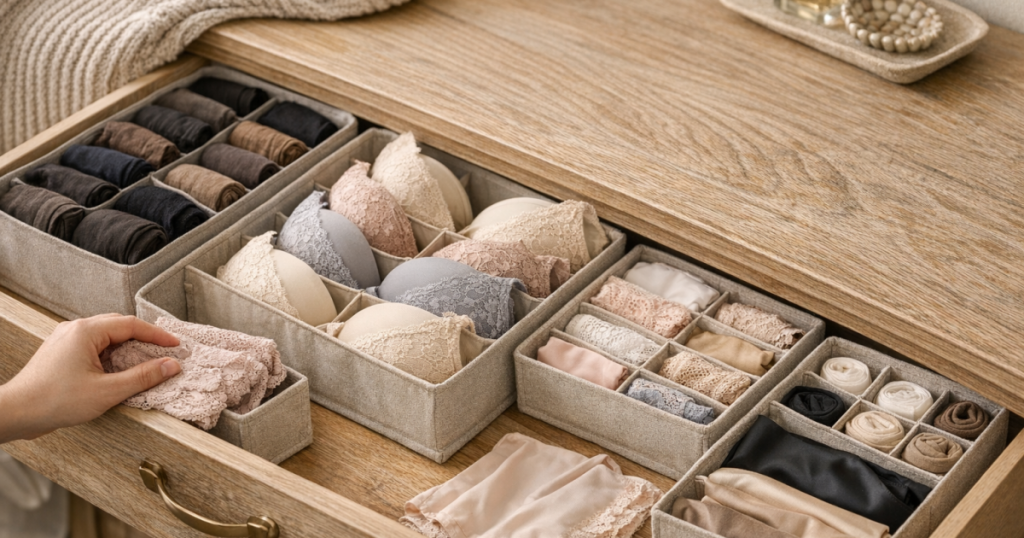
The most reliable setup is usually a mix: wider spaces for bras, narrow cells for rolled knickers, shallow sections for tights, and one separate area for silk, shapewear or rarely worn pieces. If your drawer is deep, avoid stacking delicate items in layers unless the top layer is light and easy to lift out.
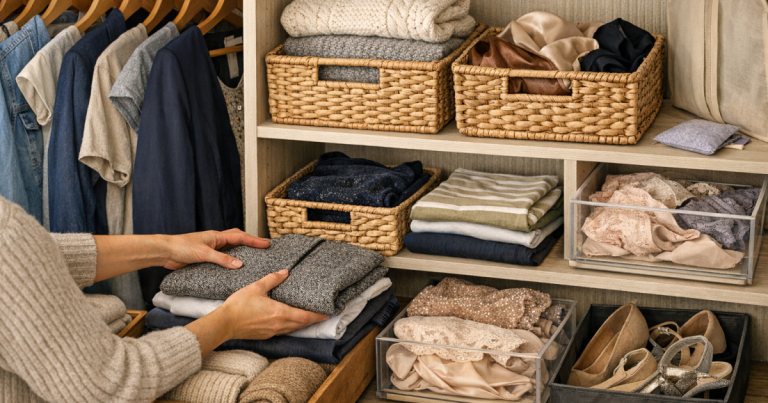
Before choosing anything, measure the inside of the drawer, including height. UK wardrobes and chests vary widely, especially between fitted wardrobes, divan drawers and older wooden furniture. If you are reorganising more than one drawer, it is worth reviewing your wider wardrobe storage planning so underwear, hosiery, knitwear and seasonal pieces are not competing for unsuitable space.
Step 1: Empty the drawer and sort by fabric risk
Start by removing everything rather than trying to tidy around the mess. Delicates need organising by how easily they distort, snag or crease, not simply by colour or occasion.
- High-snag items: lace briefs, patterned tights, hold-ups, embroidered pieces and anything with mesh panels.
- Shape-sensitive items: padded bras, wired bras, moulded cups and structured shapewear.
- Crease-sensitive items: silk knickers, camisoles, slips and very fine synthetic blends.
- Everyday resilient items: cotton briefs, sports bras and thicker socks or opaque tights.
Remove anything with loose hooks, broken elastics or rough labels. A single bra hook can catch several pairs of tights if it is left loose in a shared compartment. Make a small repair pile and keep it out of the drawer until fixed or recycled.
Step 2: Choose organiser types that suit the garment
There is no single perfect insert for every drawer. The right answer depends on garment shape, drawer depth and how often you reach for each item.
Soft fabric cell inserts for knickers and socks
Soft-sided cell organisers are useful for rolled or folded knickers because they reduce rubbing and keep categories visible. They work best when the cells are not overfilled. If every compartment is stretched tight, elastic waistbands are more likely to curl and lace trims are more likely to catch when pulled out.
Recognisable examples to compare include IKEA SKUBB Box set of 6 and SONGMICS Drawer Organiser Set. Check the actual dimensions, compartment layout and fabric finish against your own drawer rather than assuming a set will fit.
Wide, shallow sections for bras
Bras need space rather than tiny compartments. Moulded and padded bras should not be folded cup into cup unless the care label or construction clearly tolerates it. Line them up with cups nested gently behind one another, keeping hooks fastened so they do not catch lace or hosiery nearby.
For non-padded bralettes, a soft divider can work well, but avoid compressing them into narrow cells if they have lace edging, boning or delicate straps. Sports bras can usually sit in a separate, slightly larger section because they take up more room and may transfer lint onto smoother fabrics.
Small smooth compartments for tights
Tights are best stored individually, either rolled loosely or folded into small rectangles. Avoid knotting them; it stretches fibres and makes snags harder to spot. Sheer tights, patterned tights and hold-ups should have smoother, smaller sections than thick opaques.
If you keep tights in their original card sleeves, do not force them into narrow cells where the edges bend and press into the fabric. A shallow tray or fabric-lined compartment usually makes it easier to see denier, colour and condition at a glance.
Separate pouches for silk and special-occasion pieces
Silk, satin and very fine lace benefit from separation. A breathable cotton pouch, a small fabric box or a smooth drawstring bag can prevent rougher everyday items from rubbing against them. Make sure anything stored after washing is fully dry first; trapped moisture in a closed drawer can lead to mustiness. For drying before storage, follow low-heat methods such as those in this guide to dry delicates indoors without heat damage.
Step 3: Match the organiser to your drawer depth
Drawer height is easy to overlook. A tall organiser in a shallow drawer will rub against the drawer above, which can crush bras or drag across lace. A very low insert in a deep drawer may allow items to tumble over the dividers.
- Shallow drawers: use low-profile trays, flat fabric dividers and single-layer layouts.
- Medium drawers: use soft cell inserts for knickers and tights, with a wider undivided space for bras.
- Deep drawers: use lidded or stackable breathable fabric boxes only for items you do not need daily, keeping everyday delicates on the top layer.
For fitted wardrobes, check whether the drawer closes fully once the organiser is filled. It should not scrape the contents or force you to push down on the drawer front.
Step 4: Use a layout that reflects your routine
An organiser only works if it matches how you get dressed. Put daily underwear at the front or on the side you naturally open first. Keep occasional items, spare tights and seasonal hosiery further back. If you get ready in low light, avoid sorting only by subtle colour differences; black, navy and charcoal tights are easy to confuse.
- Front left or front right: everyday knickers and bras.
- Middle section: tights, socks or seamless underwear used during the working week.
- Back section: shapewear, spare nude tights, slips and special-occasion pieces.
- Separate pouch: silk, lace sets or garments with embellishment.
If two people share a chest of drawers, use separate inserts rather than dividing one large tray informally. Shared compartments become untidy quickly and increase the chance of hooks, zips or Velcro from other garments snagging fine fabrics.
Step 5: Check the materials before committing
For delicate fabrics, smoothness matters. Run your fingers along seams, corners and divider tops. If an edge feels scratchy to your skin, it is too rough for sheer tights or lace. Avoid unfinished wicker directly against hosiery unless it is lined, as tiny rough points can catch fine fibres.
Fabric organisers should feel stable enough to hold their shape when partly empty. Very floppy inserts can collapse, letting items mix together. Plastic trays should have rounded edges and enough depth to stop rolls of tights slipping out. Cardboard dividers can be useful for a low-cost reset, but they are less suitable in damp rooms or drawers that are opened several times a day.
For a softer drawer setup, mDesign Soft Fabric Drawer Organisers are one type to compare with supermarket, IKEA and high-street storage inserts. Focus on the surface finish, compartment size and whether the organiser can be cleaned easily if body lotion, powder or make-up transfers onto it.
Step 6: Fold and place items without creating pressure points
For knickers, fold the gusset upward, bring the sides in and place them upright if the compartment supports it. This makes each pair visible without pulling through a pile. For lace-trimmed pieces, do not tuck trims tightly inside the fold; gentle folding reduces creasing and stretching.
For tights, smooth the legs together, fold in half or thirds, then roll loosely from the toe end. Keep each pair in its own space. If you store several pairs in one compartment, arrange them by thickness: sheer tights separate from opaques, and patterned hosiery away from anything with hooks.
For bras, fasten hooks, align straps and nest cups without crushing. Do not overfill the section. If a drawer will not accommodate bras without squashing them, move bras to a wider drawer or a shelf box rather than forcing them into a neat-looking but damaging layout.
Step 7: Keep the drawer clean and fabric-safe
Delicates sit close to the skin, so storage should stay clean and dry. Wipe plastic trays with a barely damp cloth and let them dry fully before refilling. For fabric inserts, vacuum with a low suction setting or shake them outside when lint builds up. Avoid strongly scented sachets directly against silk or elastic, as fragrance oils can mark fabrics or linger in underwear.
Every month or two, check for rough seams, loose bra hooks, pilling and stretched elastic. If knitwear or soft loungewear shares nearby storage, remove bobbles carefully rather than letting rough fibres rub against underwear; this guide explains how to use a fabric shaver without thinning knitwear.
Best setups by drawer problem
- My tights always snag: choose smooth, shallow compartments and store each pair separately. Keep bra hooks and embellished underwear in another section.
- My bras lose shape: use a wide, undivided or lightly divided section. Do not stack heavy items on top or fold moulded cups aggressively.
- My drawer is tiny: prioritise daily underwear and tights only. Move special-occasion pieces to a breathable pouch elsewhere.
- My drawer is deep: keep daily delicates in an upper tray and put spare hosiery or seasonal items underneath in breathable boxes.
- Everything looks tidy but is hard to find: sort by use first, then colour. Visibility is more useful than a perfect colour gradient.
Common questions
Are drawer organisers for delicates worth it in a small wardrobe?
Yes, if they stop rummaging and reduce fabric contact. In a very small drawer, use fewer compartments and give bras enough space rather than dividing every centimetre.
Should tights be rolled or folded?
Either can work, but loose rolling in individual smooth compartments is usually easiest for spotting snags and keeping pairs separate. Avoid tight knots.
Can I store bras and tights together?
Only if they are separated properly. Bra hooks should be fastened and kept away from sheer hosiery, lace tights and hold-ups.
Are plastic organisers bad for silk underwear?
Not automatically. Smooth, rounded plastic can be fine, but rough seams, sharp corners and trapped moisture are the problems to avoid.
How often should I clean underwear drawer inserts?
Check them monthly and clean when you see lint, dust or product residue. Let every insert dry fully before putting delicates back.
Main lessons
The best drawer layout protects fabric before it chases visual perfection. Use soft or smooth compartments, give bras more room than knickers, keep tights away from hooks, and separate silk from everyday cottons and synthetics. A drawer that opens easily, shows every item and avoids compression will keep delicates wearable for longer.