Drying laundry indoors is a balancing act: you want clothes dry before they smell musty, but you do not want scorched elastics, stretched knitwear or condensation on the windows. A good heated clothes airer should shorten drying time gently, fit your home, and handle your usual wash loads without turning every laundry day into a rearranging job.
The right choice depends less on the most impressive claim on the box and more on your clothing, floor space, ventilation and washing routine.
The short version
- Choose the format first: flat, winged, tiered, pod-style or covered rail setup.
- Check the usable drying area, not just the unfolded size.
- Look for gentle heat, sensible spacing and enough room for air to move between garments.
- Prefer a timer or auto shut-off if you dry laundry while working from home or overnight adjacent, but still follow the maker’s safety guidance.
- A cover can speed up drying, but only use one designed for that model.
- Plan for ventilation, because heated drying still releases moisture into the room.
- Think about storage before buying; tall tiered models can be awkward in small flats.
Start with the laundry you dry most often
A family washing mostly cotton T-shirts, school shirts and bedding needs a different setup from someone drying wool jumpers, bras, tights and work blouses. Before looking at models, list the items that usually sit damp the longest. That tells you whether you need height, rail spacing, flat drying space or a covered drying zone.
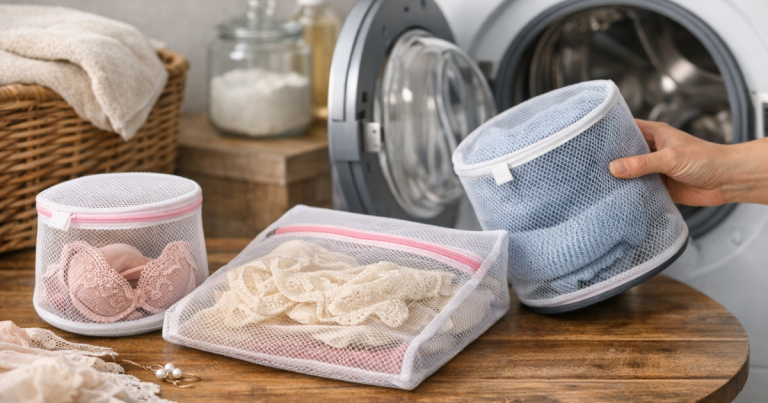
For shirts and T-shirts, rail space matters. For underwear, socks and baby clothes, multiple tiers can be efficient. For knitwear, the safest option is usually flat drying away from direct high heat, so a warm rail airer should be used carefully rather than as a shortcut. Delicates benefit from airflow and support more than aggressive warmth; for fabric-specific tips, see our guide to drying delicates indoors without heat damage.
If you regularly wash uniforms, towels or gym kit, do not assume the largest frame is automatically best. Overloading any heated drying rack traps damp air between garments, which slows drying and can leave seams, waistbands and thick hems feeling clammy.
How heated airers dry fabric
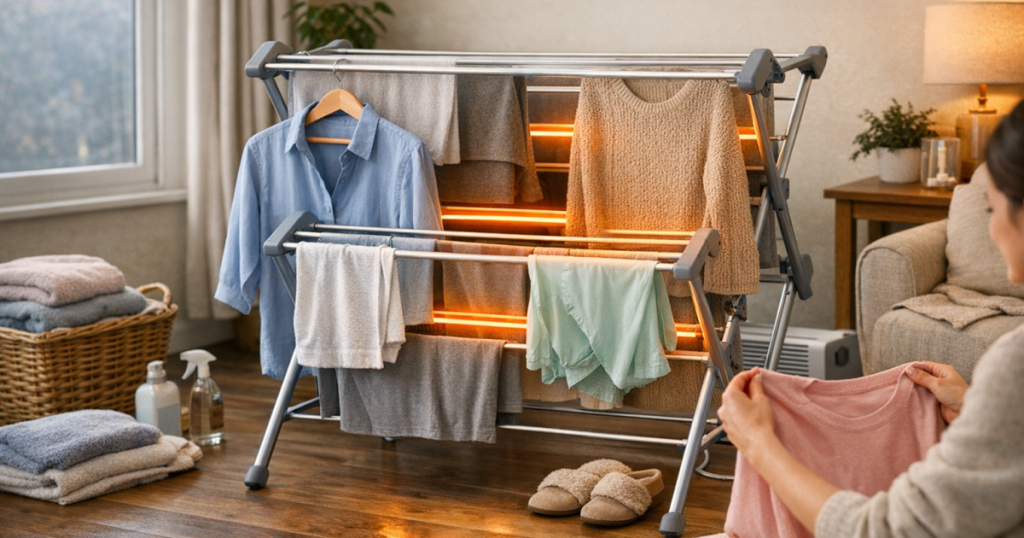
A heated clothes airer warms the rails or drying area so moisture evaporates more quickly than it would on an unheated rack. The fabric still needs air movement and space. Heat alone will not dry laundry evenly if garments are bunched, doubled over thickly or pressed against each other.
Covered models and add-on covers create a warmer drying chamber around the laundry. This can be useful for everyday cottons and lighter loads, but it is not a reason to cram the frame full. Moist air still has to escape, and the room still needs ventilation. If the windows stream with condensation after every drying session, the setup is moving dampness from clothing into the room rather than solving the whole problem.
Choose the right format for your space
Tiered airers
Tiered designs are popular in UK homes because they offer a lot of rail length in a small footprint. They suit socks, underwear, school uniform, tops and smaller towels. The trade-off is that long garments may drape onto lower levels, reducing airflow. Check whether the shelves can be folded independently, as that can make it easier to hang shirts or dresses without crowding.
Winged and flat airers
Winged airers are familiar and easy to load. They are useful if you prefer laying items over wider bars rather than threading them through narrow tiers. A flatter design can be kinder to knitwear if you can spread garments without stretching the shoulders. The compromise is floor space: these often need more clear room while in use.
Pod-style dryers
Pod-style heated dryers usually hang clothing inside a warm enclosed space. They can be handy for shirts and smaller garments on hangers, but they are not the same as a tumble dryer and may not suit heavy items. Check what type of garments the maker says the appliance is designed for, and avoid using improvised covers or overloaded hangers.
Key checks before buying
- Unfolded footprint: Measure the place you will actually use it, including clearance for walking past, opening doors and keeping it away from curtains or soft furnishings.
- Folded storage size: A drying rack that is easy to store gets used properly. If it blocks a hallway or lives permanently in the living room, it may become more nuisance than help.
- Rail spacing: Wider spacing helps air circulate and reduces creasing. Very close rails may look efficient but can slow drying when fully loaded.
- Stability: Look for a frame that feels steady when loaded unevenly, because real laundry rarely weighs the same on both sides.
- Controls: A timer, clear on/off switch and visible indicator light make everyday use simpler.
- Cover compatibility: If you want a cover, check whether one is included or designed for that exact model. Do not improvise with blankets, towels or plastic sheeting.
- Cable position: The plug lead should reach safely without crossing a walkway or sitting where damp laundry can drip onto it.
- Cleaning access: Rails and joints should be easy to wipe, as detergent residue and lint can build up over time.
Storage is often overlooked. If your laundry area also doubles as a spare room, bedroom corner or utility cupboard, it is worth planning where the airer will live when folded. Our wider notes on wardrobe storage planning can help if laundry, airing and garment storage are competing for the same space.
Fabric care details that matter
Heat can make drying easier, but it can also expose weaknesses in clothes. Elasticated waistbands, bra bands, swimwear, viscose blends, wool and embellished garments all need a gentler approach than basic cottons. If the care label says dry flat, reshape the garment and keep it away from direct rail pressure where possible.
For jumpers and cardigans, place a clean towel over a non-heated section or use a mesh drying layer if the model allows it without blocking vents or creating a hazard. Avoid hanging heavy wet knitwear from a narrow rail, as the weight can pull the garment out of shape. Shirts and blouses dry better when smoothed before loading, with collars and cuffs opened so damp layers are not trapped.
Seasonal garments need extra care. A heated airer is useful for refreshing everyday laundry, but bulky coats should not be draped heavily over warm rails unless the care label and appliance instructions support it. For off-season outerwear, it is better to dry thoroughly and store correctly; see our advice on storing winter coats without moths or mustiness.
Running costs and condensation
Brands often publish energy-use figures, but you should verify them against the current product information and your own tariff. The real cost depends on how long the airer runs, how wet the laundry is, how full the rack is and whether the room is ventilated.
To reduce drying time, spin clothes well in the washing machine if the fabric allows it. Shake items out before loading. Put thicker garments on the warmest or best-ventilated positions and leave lighter items higher or more loosely spaced. In a cold room, a covered setup may help, but you still need somewhere for moisture to go. A slightly open window, extractor fan or dehumidifier can make a noticeable difference in damp-prone homes.
Examples worth comparing
Real models can help you understand the formats, but always check the latest dimensions, included accessories, safety instructions and energy information before buying.
- Lakeland Dry:Soon Deluxe 3-Tier Heated Airer is a well-known tiered style to compare if you want vertical drying capacity and optional cover compatibility.
- Minky Sure Dri Heat Pod is useful to look at if you prefer an enclosed hanging format for shirts and lighter garments.
- Status Portable Heated Clothes Airer is an example of a more compact rail-style option to compare for smaller homes or occasional use.
Do not buy purely on claimed drying speed. Check whether the layout suits your actual garments, whether it folds neatly enough for your storage space, and whether replacement covers or accessories are easy to identify for the exact model.
Everyday safety checks
- Use the appliance on a stable, dry, level floor.
- Keep it away from curtains, bedding, loose throws and furniture that could restrict airflow.
- Do not use it with an improvised cover.
- Do not overload rails beyond the maker’s instructions.
- Keep plug connections and extension leads away from damp laundry.
- Switch it off and unplug it before cleaning or moving it.
- Let garments cool and finish airing before folding them into drawers or wardrobes.
These checks are simple, but they protect both the clothing and the room. Damp laundry packed away too soon can smell stale, while overheated or crushed fabrics can crease more deeply than they would on a normal airer.
Fast answers
Is a cover worth having?
A cover can be worthwhile if it is made for the airer and you dry regular wash loads in a cool room. It helps hold warmth around the laundry, but it should not replace spacing, ventilation or sensible loading.
Can you dry wool on a heated airer?
Use caution. Many wool garments are better dried flat at room temperature. If you use warmth, avoid hanging the garment from narrow rails and keep direct heat gentle, with the item reshaped and supported.
Will it replace a tumble dryer?
Not completely for every household. A heated airer can be excellent for routine indoor drying, but thick towels, bedding and large family loads may still need more time, better spacing or another drying method.
What matters most in a small flat?
Folded size, stability, cable position and moisture control. A compact airer that stores neatly and works with a ventilated drying spot is usually more useful than a large model that is awkward to load and store.
In brief
Look for a model that suits your clothing first and your floor plan second. Rail spacing, drying format, folded storage size and safe cover use matter more than bold drying claims. Used well, a heated airer can make indoor laundry less frustrating while still being gentle on fabrics, but it works best when clothes are spun properly, spaced out and dried in a ventilated room.