If you wash hi-vis workwear the wrong way, reflective tape can lose its brightness, crack at the edges or start peeling long before the garment itself is worn out. The aim is to remove dirt, sweat and workplace residue while protecting both the fluorescent fabric and the retroreflective strips that make the garment visible.
Inspection, withdrawal and replacement decisions for safety-critical hi-vis PPE should be carried out by the employer or competent person responsible for PPE, in line with UK workplace safety requirements and the relevant garment standard stated on the label.
The short version
- Always start with the care label, including the maximum number of wash cycles if one is stated.
- Wash hi-vis garments separately from dark, heavily soiled or oily laundry.
- Use a normal mild detergent dose and avoid bleach, fabric conditioner and harsh stain treatments unless the label specifically allows them.
- Choose a low or moderate wash temperature according to the label, rather than assuming hotter is cleaner.
- Air dry where possible and keep reflective tape away from direct radiator heat, hot tumble drying and direct ironing.
- Replace the garment when the tape is cracked, peeling, badly dulled or when the fluorescent fabric has faded enough to affect visibility.
Why reflective tape needs careful washing
Hi-vis workwear relies on two different visibility features. The bright fluorescent fabric helps the wearer stand out in daylight and poor daytime conditions, while the reflective tape bounces light back towards a source such as vehicle headlights. Washing has to protect both.
The tape is usually bonded or sewn onto the garment. Aggressive scrubbing, high heat, heavy soil build-up and repeated harsh laundering can weaken that surface or the adhesive layer beneath it. Once the tape starts cracking, lifting or turning grey, washing will not restore it to a reliable condition.
The care label matters more than guesswork. Many certified hi-vis garments state a maximum number of washes, and some have restrictions on temperature, tumble drying, dry cleaning, bleaching and ironing. If the symbols are unclear, this explanation of heat settings and fabric care labels can help you interpret what the garment is actually allowing.
Before the garment goes in the machine
Check the label and condition
Look for the wash temperature, drying instructions, bleach symbol and any printed wash-count limit. Then inspect the reflective tape before laundering. If it is already lifting, cracked or heavily abraded, a machine wash may make the damage more obvious. That does not mean the wash caused the whole problem; it may simply reveal wear that was already there.
Empty, close and turn
Empty pockets of screws, pens, ID holders, keys and grit. Close zips, press studs and hook-and-loop fasteners so they do not scrape the tape or snag mesh panels. Where the design allows, turn the garment inside out to reduce direct abrasion in the drum.
Separate the load properly
Keep hi-vis yellow and orange garments away from dark cottons, denim, heavily dyed uniforms and anything that sheds lint. Lint can cling to reflective strips and make them look dull. Oily workwear needs even more care: if the garment is contaminated with workshop grease, fuel residue or heavy oil, treat it as a separate laundry problem rather than adding it to a general hi-vis load. The same principle applies when you wash mechanic overalls without spreading oil residue.
The safest routine to wash hi-vis workwear
1. Shake off dry dirt first
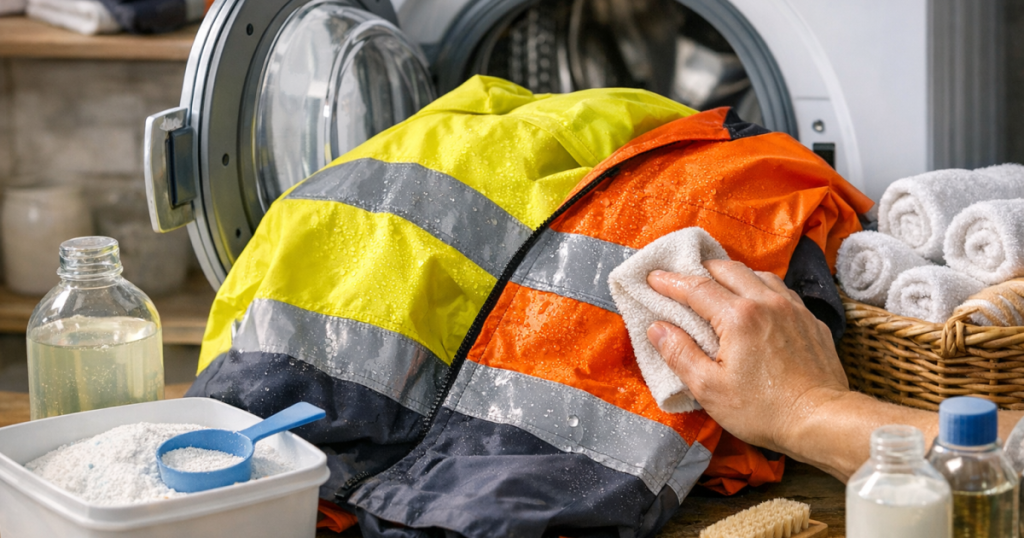
Let mud dry if possible, then brush or shake off loose dirt before washing. This reduces abrasion inside the drum and helps the detergent work on embedded grime rather than loose grit. Use a soft clothes brush rather than a stiff brush on reflective strips.
2. Pre-treat stains gently
Apply a small amount of liquid detergent to cuffs, collars and sweat marks, then work it in with your fingers or a soft cloth. Avoid chlorine bleach, strong oxidising treatments and aggressive spot removers on reflective tape unless the garment label specifically says they are allowed. For paint, tar, resin or chemical stains, check workplace guidance because ordinary domestic stain treatment can sometimes spread the mark or affect the fabric finish.
3. Use a modest detergent dose
Too much detergent can leave residue on fluorescent fabric and reflective tape, especially in a full load or a short cycle. Use the detergent dose recommended for your water hardness, soil level and load size. A mild liquid detergent is often easier to rinse from synthetic workwear than a heavy powder dose, but the label and the type of soiling should guide the choice.
4. Pick the right cycle and temperature
Use the temperature stated on the label. For many hi-vis waistcoats, jackets and trousers, a low or moderate synthetic cycle is more suitable than a hot cotton wash, but the garment instructions override any general rule. Avoid overloading the machine: the garments need room to move and rinse properly, and reflective strips should not be crushed in a tightly packed drum.
5. Skip fabric conditioner
Fabric conditioner can leave a coating on synthetic fibres and reflective surfaces. On workwear, that residue is not just a softness issue; it can reduce wicking, trap odour and make tape look cloudy. Unless the garment manufacturer says otherwise, leave it out.
6. Rinse well
If the garment still feels slippery, smells strongly of detergent or shows dull streaks after washing, run an extra rinse. This is especially useful for waterproof or coated hi-vis jackets, where trapped detergent can affect comfort and appearance.
Common problems and what to do
Reflective tape looks dull after washing
First check for detergent residue or lint. Wipe the tape gently with a clean damp cloth and allow it to dry. If it still looks grey, cracked or patchy, the tape may be worn rather than dirty. Do not try to revive it with polish, solvent or abrasive pads.
Fluorescent fabric has picked up colour
Hi-vis fabrics show colour transfer quickly because the base shade is so bright. Stop using heat, do not tumble dry the stained item, and separate it from the rest of the load. For the next steps, follow a colour-transfer process such as this guide on rescuing clothes after a colour run, while still respecting the hi-vis garment label.
The garment still smells after washing
Odour usually comes from sweat, trapped detergent, damp storage or oily contamination. Wash promptly after heavy use, avoid overfilling the machine, and dry the item fully before storing it. Repeated hot washing may seem tempting, but it can shorten the life of reflective materials if the label does not permit it.
Reflective tape is peeling at the edges
Peeling tape is not a stain problem. Do not glue it back for workplace PPE unless the garment manufacturer or employer has an approved repair process. For safety clothing, poor tape attachment can mean the garment no longer performs as intended.
Drying without heat damage
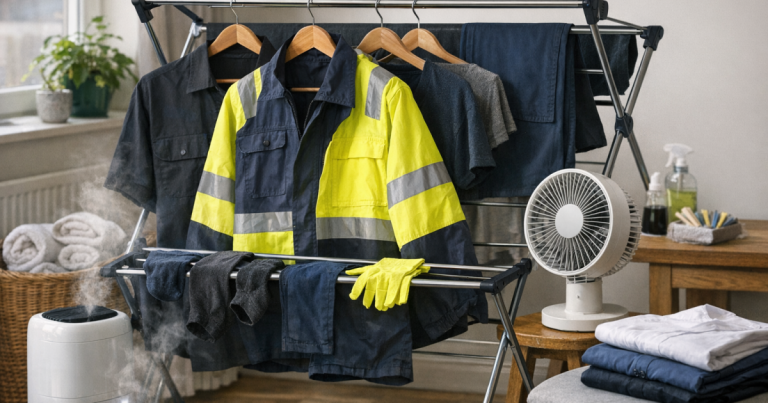
Air drying is usually the gentlest option. Hang the garment on a line or broad hanger in a ventilated space, keeping the reflective tape flat rather than folded sharply. Avoid draping hi-vis clothing directly over a radiator, as concentrated heat can harden tape, distort coatings and set in marks.
If the care label allows tumble drying, use the stated setting and remove the garment as soon as it is dry. Do not use a hot drying cycle just to speed things up. Heat damage can appear as curled tape edges, rippling, cracking, shrinkage around seams or a shiny surface on synthetic fabric.
Ironing is rarely needed for hi-vis workwear and should never be done directly over reflective tape. If a garment label allows ironing on the fabric, avoid the strips completely and use the lowest suitable setting for the material. Do not use steam as a shortcut on tape that is lifting or damaged.
How to inspect hi-vis after washing
A clean garment is not automatically a safe one. Once dry, check it in good light before it goes back into rotation. Look for:
- reflective tape that is cracked, flaking, peeling, blistered or badly scratched;
- fluorescent fabric that has faded, darkened or become heavily stained;
- seams coming apart around shoulders, sides, sleeves or trouser legs;
- fastenings that no longer close securely;
- holes, burns or chemical marks in areas that affect visibility or coverage;
- a wash-count label that shows the garment has reached its stated limit.
A quick torch check in a dim space can reveal obvious reflective failures, but it is not a certification test. If the garment is PPE issued for work, follow the employer inspection and replacement process.
Storing between shifts
Hi-vis clothing should be stored clean and fully dry. Damp storage encourages musty smells and can weaken the garment over time. Keep it away from strong sunlight when not in use, as prolonged UV exposure can fade fluorescent fabric. Fold it loosely or hang it so the reflective tape is not sharply creased in the same place every day.
For shared workwear, avoid stuffing damp garments into lockers, vans or laundry sacks for days at a time. A simple routine of separating dirty garments, washing promptly and drying thoroughly does more for garment life than any special laundry additive.
Things readers ask
Can I wash hi-vis with normal work clothes?
Only if the other items are similarly coloured, not oily, not heavily dyed and not likely to shed lint. For most households and workplaces, a separate hi-vis load is safer.
Can I use stain remover on reflective tape?
Use caution. Mild detergent on a soft cloth is the safest starting point. Strong stain removers, bleach and solvents can damage tape or leave a dull patch, so only use treatments permitted by the care label.
Is tumble drying always bad for hi-vis clothing?
No, but it must be allowed by the care label. If tumble drying is permitted, use the stated heat level and avoid over-drying. If the label says do not tumble dry, air dry instead.
How often should hi-vis workwear be washed?
Wash it when dirt, sweat, stains or odour could affect hygiene, comfort or visibility. Do not leave heavily soiled hi-vis sitting damp, as stains and smells become harder to remove.
Can damaged reflective tape be repaired?
For casual non-safety use, a repair might improve appearance, but workplace PPE should follow the employer or manufacturer-approved repair and replacement route. Improvised repairs can affect compliance and visibility.
Key takeaways
Good hi-vis laundry care is mostly about restraint: moderate temperature, sensible detergent dosing, careful separation and low heat drying. Treat reflective tape as a functional safety surface, not just decoration. If it is cracked, peeling, grey or badly abraded, washing will not bring it back to a dependable condition, and the garment should be assessed for replacement before it is worn for safety-critical work.