A good clothes steamer for linen and shirts needs more than a neat travel shape: it has to produce steady steam, cope with thicker linen fibres and still be controlled enough for collars, plackets and cuffs. Linen and cotton shirts crease in different ways, so the best choice is usually the steamer that suits your real routine, not simply the one that looks most powerful.
Think about what you want the appliance to replace. A steamer is excellent for refreshing, relaxing fibres and removing wear creases, but it will not always create the sharp finish of a steam iron on a formal shirt.
The quick answer
For linen and everyday shirts, choose a garment steamer with consistent steam, a comfortable grip, a tank large enough for several garments, a heated or smooth steaming plate, and a design that lets you work close to seams without soaking the fabric. A compact handheld model suits quick weekday touch-ups, while a standing steamer is better for several linen pieces, work shirts or batch steaming.
- For linen: prioritise strong, steady steam and enough run time to work slowly over stubborn creases.
- For shirts: prioritise control, a precise head, good handling and accessories that help with cuffs and collars.
- For mixed wardrobes: look for adjustable steam or clearly explained fabric suitability rather than a single high-output setting.
- For small homes: check storage size, cord length and whether you have space to hang garments while steaming.
Why linen and shirts need different things
Linen is made from flax fibres, which are strong, breathable and naturally crease-prone. Its wrinkles can sit deep in the cloth, especially after washing, air drying or being folded in a drawer. Steam helps because it adds moisture and heat, allowing the fibres to relax without the direct pressure of an iron.
Shirts vary much more. A fine cotton poplin shirt may respond quickly to light steam, while a heavier Oxford shirt, linen-blend shirt or uniform shirt may need more time. Details such as collars, cuffs, button bands and pockets also make control more important than raw steam alone.
Before relying on any steamer, check the care label and fibre content. Some fabrics tolerate steam well; others need lower heat, less moisture or a pressing cloth if you move to an iron. If you are unsure how the care symbols relate to heat and steam, use the guide to steam settings, heat levels and fabric labels before treating a new garment.
Step 1: Decide between handheld and standing steamers
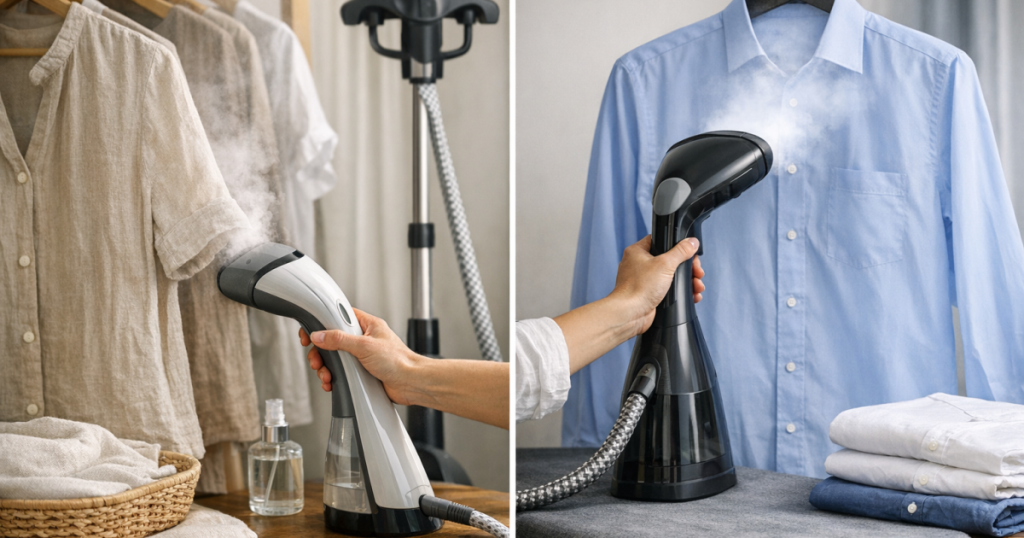
The first choice is format. Handheld steamers are easier to store and quick to use. They suit one or two shirts before work, a linen dress that has creased in the wardrobe, or travel-friendly touch-ups at home. The trade-off is that smaller tanks usually mean more refilling, and lighter models can vary in how consistently they steam.
Standing steamers are better when you regularly steam several garments at once. They usually give you a hanger setup, a hose and a larger water tank, so they are more comfortable for batch steaming. The downside is storage: in a UK flat, utility cupboard or shared laundry space, a standing unit can feel bulky unless it folds neatly.
For many households, the decision is simple: choose handheld if you mainly refresh one shirt at a time; choose standing if linen bedding-style garments, linen trousers, dresses and multiple shirts often build up together.
Step 2: Look for steady steam, not just a big claim
Steam performance matters, but buying purely by the highest advertised output can be misleading. What you want is even steam that does not spit, pulse too aggressively or leave wet patches on fine shirt fabric. Linen can handle moisture better than many delicate fibres, but over-wetting still slows you down because the garment needs extra drying time before wearing.
When reading product descriptions or reviews, check how the steamer behaves after the first minute, not only how quickly it heats. A useful model should maintain steam long enough to finish a garment section by section. It should also let you hold the head close enough to the fabric to relax creases without dragging water marks across the surface.
Ranges such as Philips Steam&Go Plus and Russell Hobbs Steam Genie are helpful reference points when comparing handheld designs, but always verify the current model’s tank size, accessories, garment suitability and user feedback rather than assuming every version performs the same way.
Step 3: Check the steaming plate and head shape
The plate or head is especially important for shirts. A broad head covers more fabric quickly, which is useful for linen shirts, shirt backs and simple dresses. A narrower or more pointed head gives better access around collars, sleeve plackets, buttons and pocket edges.
Some steamers have a heated plate, which can help reduce condensation and improve contact on cotton or linen. Others are designed for vertical steaming without much fabric contact. Neither is automatically better. For crisp shirts, a smooth plate you can place lightly against the cloth is useful. For delicate blouses and looser linen garments, gentle steam with minimal pressure may be enough.
If you often wear formal shirts, do not expect a steamer to replace every ironing job. Steam can soften creases and make a shirt look fresher, but an iron is still better for a sharp collar, crease lines or very crisp cuffs. For a fuller comparison of everyday garment care tools, read the guide to hybrid steamers versus traditional steam irons.
Step 4: Match tank size to your routine
A small tank is fine for a single shirt or a quick linen top. It becomes frustrating if you regularly steam several shirts, a pair of linen trousers and a dress in one session. Larger tanks reduce refilling, but they add weight on handheld models and require more storage space on standing models.
For handheld steamers, hold similar-sized appliances in store if possible and imagine using them with water inside. The wrist angle matters, especially when steaming shirt sleeves or holding the fabric taut with your other hand. A model that feels light empty can feel awkward once full and used above waist height.
For standing steamers, check whether the tank is removable and easy to fill at a kitchen tap. Also check whether the hose, pole and hanger feel stable enough for heavier linen garments. Linen can tug more than a light blouse, so a flimsy hanger arrangement can make the job slower.
Step 5: Consider water, limescale and maintenance
Many UK homes are in hard water areas, and limescale can affect steam performance over time. Before buying, read the manufacturer’s water guidance. Some appliances are designed for tap water, some recommend filtered or demineralised water, and some include anti-scale maintenance steps. Do not assume the same rule applies to every steamer.
Maintenance should be realistic. A steamer that needs regular emptying, rinsing or descaling is not a problem if the process is simple. It is a problem if you know it will be ignored. Look for clear instructions, accessible openings and replacement parts only where the maker actually supports them.
After use, empty the tank if the instructions recommend it and let the appliance cool before storing. This helps reduce stale water smells and keeps the head cleaner for pale shirts and white linen.
Step 6: Make sure your setup helps the steamer work
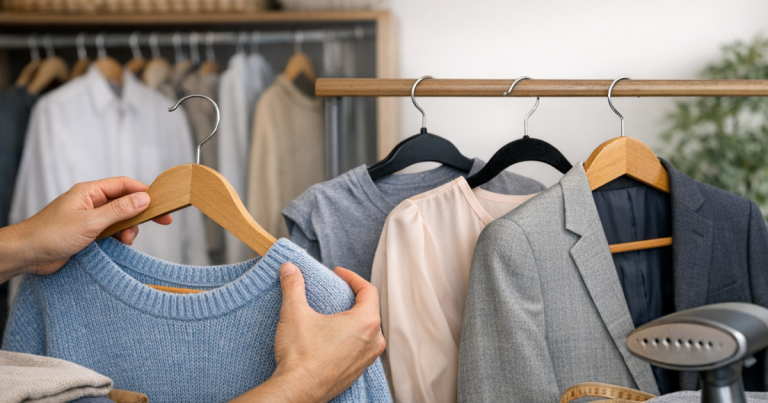
A steamer performs better when the garment is supported. Hanging a shirt from a door handle is possible, but it often twists while you work. A proper hanger on a rail, wardrobe edge or shower rail gives you more control. For shirts, fasten the top button, smooth the shoulder line and steam from top to bottom.
For linen, start while the garment is slightly damp if the care label allows it. Pull the fabric gently taut and work slowly over the deepest creases. Do not press hard into seams or hems until you know how the fabric reacts. Dark linen can show temporary damp patches, so allow a few minutes’ drying time before wearing.
Good storage also affects how often you need to steam. If linen shirts are crammed tightly or fine shirts are folded under heavier clothing, creases return quickly. The guide to which clothes should be hung, folded or boxed can help you decide what deserves hanger space.
What to avoid when buying
- Choosing purely by heat-up time: a fast start is convenient, but steady steam and control matter more for linen and shirts.
- Ignoring weight: handheld steamers are used at arm’s length, so comfort matters as much as tank capacity.
- Assuming steam equals pressing: steam relaxes fibres, while an iron uses pressure to create sharpness.
- Buying too small for batch care: frequent refilling can make a compact model feel inefficient.
- Overlooking storage: a standing steamer is only useful if you can keep it accessible enough to use.
- Skipping label checks: blends, trims and interlinings may react differently from the main fabric.
A simple buying checklist
Use this checklist before choosing a model, whether you are comparing in a shop or reading online reviews.
- Does it suit both vertical steaming and light contact with cotton or linen?
- Is the head shape precise enough for collars, cuffs and button areas?
- Will the tank last for the number of garments you usually treat?
- Is the appliance comfortable to hold or stable enough to stand safely?
- Are the water and descaling instructions realistic for your home?
- Does it include useful accessories, such as a fabric brush or crease aid, without relying on gimmicks?
- Can you store it where you will actually use it?
- Do reviews mention spitting, wet marks or awkward handling?
Main points
For linen, buy for steady steam, patience and coverage. For shirts, buy for precision, handling and the ability to work around structured details. A handheld steamer is usually enough for quick weekday refreshes, while a standing steamer makes more sense for larger wardrobes, multiple shirts or regular linen care.
The best choice is the one that fits your garments, storage space and routine. If you still need razor-sharp collars and cuffs, keep an iron in the mix; if you mainly want wearable, relaxed, fresh-looking clothes, a well-chosen steamer can save time and reduce unnecessary pressure on fabric.
Common questions
What is the best clothes steamer for linen and shirts?
The best option is usually a steady handheld or standing steamer with a comfortable grip, smooth head, sensible tank size and clear fabric guidance. Choose handheld for quick touch-ups and standing for batch steaming.
Can a steamer make linen completely smooth?
It can relax most wear creases, but linen naturally retains a softer, lived-in texture. For a very flat finish, use steam plus ironing if the care label allows it.
Is steaming better than ironing for shirts?
Steaming is faster for refreshing and softening creases. Ironing is better for formal sharpness, especially collars, cuffs, front plackets and crease lines.
Should shirts be steamed inside out?
For dark shirts, printed areas, delicate buttons or textured fabrics, inside-out steaming is a safer first approach. For plain cotton shirts, steaming from the outside is usually fine if the label permits steam.
Can I use tap water in a clothes steamer?
Only if the manufacturer allows it. In hard water areas, follow the appliance instructions carefully because limescale can reduce steam performance and shorten useful life.