When you need to dry bedding indoors, the aim is not just to get sheets off the washing line. Good airflow helps cotton, linen and polycotton bedding dry evenly, reduces stale smells, and lowers the chance of damp patches lingering around seams, hems and elasticated corners.
The biggest mistake is treating a sheet like a towel and bunching it over one rail. Bedding needs height, gaps and turning time so moisture can leave the fabric instead of collecting between folded layers.
The short version
- Spin bedding well before hanging, provided the care label allows it.
- Use more rail space than you think you need, even for one sheet set.
- Hang large items in long, loose folds rather than thick layers.
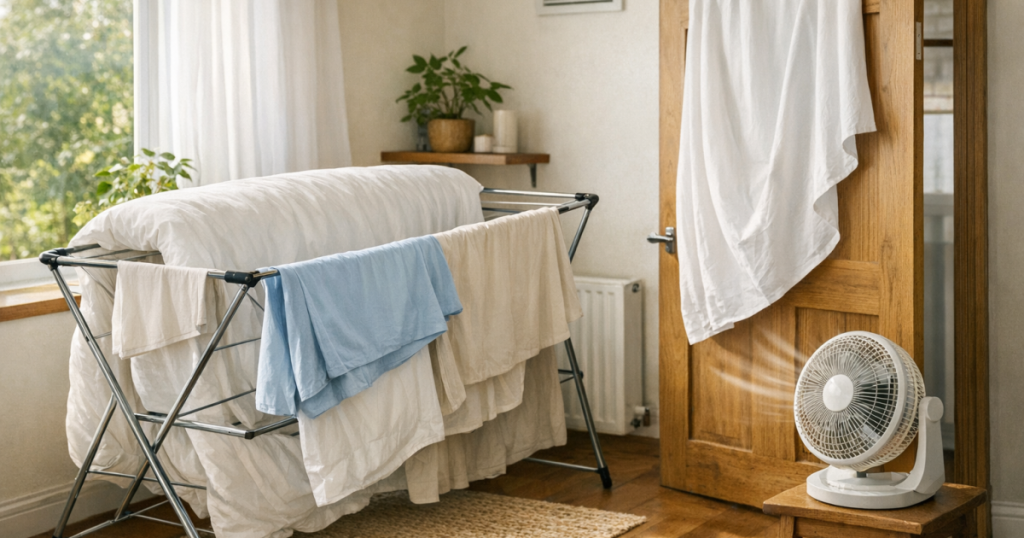
- Keep air moving through the room with a cracked window, extractor fan, open internal door or dehumidifier.
- Turn duvet covers, fitted sheets and mattress protectors part-way through drying.
- Avoid covering radiators, blocking vents or pushing an airer flat against a wall.
Start with the wash load
Indoor drying is much easier when the load is not overloaded in the machine. Sheets and duvet covers can trap water inside folds during the rinse and spin cycle, so a tightly packed drum often leaves bedding wetter than expected. Wash bedding with enough room for it to move freely, and avoid mixing a full bedding set with heavy towels unless the machine capacity genuinely allows it.
Use the highest spin speed that is suitable for the fabric care label. Cotton bedding usually tolerates a stronger spin than delicate fabrics, but linen, embroidered bedding, brushed cotton and waterproof mattress protectors may need gentler handling. The aim is to remove excess water without distorting fibres, damaging trims or stressing elasticated edges.
As soon as the cycle finishes, take the bedding out and shake each piece sharply. This separates stuck-together layers, releases creases and stops wet corners from sitting compressed in the drum. A duvet cover should be opened out fully, with the inside corners pulled free before it goes on the airer.
A simple airflow plan to dry bedding indoors
The best way to dry bedding indoors is to create channels of air around the fabric. Think of the room as a drying system: fabric gives off moisture, moving air carries it away, and ventilation or a dehumidifier removes it from the room.
Choose a room where you can leave space around the airer. A spare room, utility area or well-ventilated bathroom can work better than a busy living room where the airer gets pushed against a sofa or wall. If you have to use a bedroom, avoid placing damp bedding close to wardrobes, curtains or the bed itself, as soft furnishings can absorb moisture.
For UK homes in colder months, balance ventilation with heat retention. A window left wide open all day can chill the room and slow drying, while a completely sealed room can trap moisture. A small opening, trickle vent, extractor fan or dehumidifier often gives steadier results. If condensation is already appearing on windows, use the steps in stopping indoor laundry causing window condensation before drying large bedding loads regularly.
How to hang flat sheets
Flat sheets are the easiest bedding item to dry indoors because they can be spread into broad, thin panels. Avoid folding a sheet into a narrow, heavy strip over one rail. That creates a wet fold line and blocks air from reaching the inside layers.
For a standard concertina airer, drape the sheet lengthways over several rails so it forms wide waves with gaps between them. If the sheet is large, let it bridge over the top of the airer rather than dragging on the floor. Leave at least a few centimetres between hanging sections so air can move through the folds.
If you have two airers, place them a short distance apart and span the sheet between them like a loose canopy. This works well for king-size sheets, provided the fabric is not stretched under tension. The sheet should hang freely, not be clipped tight like a sail, because taut fabric can pull at hems while it is wet.
How to hang fitted sheets without damp corners
Fitted sheets are awkward because the elasticated corners bunch together and hold moisture. Start by shaking the sheet open and finding all four corners. Hook two corners loosely over the top of the airer, then let the middle of the sheet fall in a broad curve. Pull the other two corners out so they are not twisted inside the fabric.
Do not fold the elastic edge into a compact bundle. If one corner feels thick or heavy, turn it outward so the seam is exposed to the air. Halfway through drying, rotate the sheet so the dampest corners move to the outside or top of the setup.
Jersey fitted sheets and brushed cotton sheets can take longer because they hold more moisture in the fibres. Give them more space than crisp percale or smooth polycotton, and avoid stacking pillowcases or clothing over the same rails.
How to hang duvet covers so the inside dries
A duvet cover can look dry on the outside while the inside seams stay damp. Before hanging, open the cover fully and separate the two fabric layers. If it has buttons, poppers or a zip, leave the fastening open so air can enter.
Hang the cover over the widest part of the airer with the opening facing outward or downward, not trapped in a fold. If possible, drape one side over one set of rails and the other side over another, creating a tent shape with a gap through the centre. This allows air to pass into the cover rather than just around it.
Turn the cover inside out after the first stage of drying if the seams still feel cool or damp. Pay attention to the corners where duvet ties, buttons or reinforced stitching can hold moisture for longer than the main panels.
Mattress protectors, pillow protectors and heavier bedding
Mattress protectors need more care than ordinary sheets. Waterproof or water-resistant layers can slow evaporation, and high heat may damage some protective finishes. Always check the care label before using heat, direct radiator contact or a heated airer.
Hang protectors as a single layer where possible. If a protector has a quilted top, place the padded side outward first so moisture leaves the thicker surface. Turn it later so the underside can dry properly. Do not fold a damp protector into quarters over one rail, as the inner folds may stay wet even when the outside feels dry.
Pillowcases usually dry quickly, but pillow protectors can hold water around zips and seams. Clip or drape them open rather than laying them flat on top of a sheet. Small items should not cover the rails needed by larger bedding; give the sheet set priority, then add pillowcases to the outer edges once airflow is established.
Where not to put wet bedding
A radiator may seem like the fastest place for a wet sheet, but draping bedding directly over it blocks heat circulation, increases moisture in the room and can leave thick folds damp. It can also concentrate heat on elastic, waterproof coatings or decorative trims that are not designed for it.
Avoid placing airers hard against walls, wardrobes or windows. Moisture collects where air is still, and the back of the fabric will dry slowly. Leave space behind the airer so air can pass around both sides. If you are using a bathroom, do not block extractor vents or place bedding where it touches the toilet, sink or damp tiles.
Keep fabric away from portable heaters, open flames and any appliance that is not intended for drying laundry. Bedding is large, lightweight when partly dry, and easy to drape too close to heat sources by accident.
Timing: when to turn, move and finish
Check bedding after the first hour or two rather than leaving it untouched all day. The top edges and exposed panels will usually dry first, while folds, seams and elasticated sections remain damp. Move the wettest areas into the most open position.
For a full bedding set, a useful routine is to start with the largest item spread widest, then rearrange once it has lost most of its moisture. When a duvet cover is partly dry, you can reduce its footprint slightly and give more rail space to the fitted sheet or protectors. Pillowcases can be moved to door hangers or the ends of the airer once they are only slightly damp.
Before putting bedding away, feel the seams, corners and any thick hems with the back of your hand. Cool patches usually mean retained moisture. Bedding that is folded while slightly damp can smell stale in the cupboard, especially in tightly packed drawers or airing cupboards.
How to reduce creasing while still keeping airflow
Shaking bedding before drying is the most effective anti-crease step. Smooth hems and seams with your hands as you place items on the airer, but do not pull wet fabric tight. Wet fibres are more vulnerable to distortion, especially in linen and loosely woven cotton.
If sheets dry with strong fold marks, remove them while they are just barely damp and smooth them flat over a bed or clean table for a short time before final drying. Only do this when the fabric is almost dry; spreading very wet bedding over a bed can transfer moisture to the mattress or duvet.
For linen bedding, expect some natural rumpling. A steamer or iron can help after drying, but check the label before applying heat. The guide to steam settings and fabric labels is useful if you are unsure how much heat a particular fabric finish can take.
Room-by-room setup ideas
Small flat or rented room
Use vertical space carefully. A tall airer can be helpful, but only if the layers are not touching. Place the largest item over the top rails and keep smaller pieces to the sides. Open the internal door for part of the drying time so moisture is not trapped in one small room.
Bathroom with extractor fan
A bathroom can work well after the shower steam has cleared. Run the extractor and keep bedding away from wet tiles. Do not overload a heated towel rail with a full duvet cover, as the inside folds may stay damp and the room can become humid quickly.
Spare room or home office
This is often the best option if you can leave the airer undisturbed. Keep it away from paperwork, electronics and upholstered chairs. If using a dehumidifier, place it where air can circulate around the machine and the laundry, rather than tucked under the sheet canopy.
Main points
- Indoor bedding drying works best when fabric is opened out, not stacked.
- Large sheets need broad folds with air gaps between them.
- Fitted sheet corners, duvet cover seams and mattress protectors need extra turning time.
- Ventilation matters as much as warmth, especially in damp or cold UK weather.
- Do not put bedding away until seams and corners feel fully dry.
- Once bedding is dry, store it with enough space for the fabric to stay fresh; the guide to which clothes should be hung, folded or boxed gives useful storage principles that also apply to household textiles.
Questions people ask
Can I dry a whole bedding set on one airer?
Yes, but only if the items are spaced well. Give the duvet cover and fitted sheet most of the rail space first, then add pillowcases to outer rails or a separate hanger once the large items have partly dried.
Should I close the door while bedding dries?
Only if you are using a dehumidifier effectively in that room. Without moisture removal, a closed door can trap humidity and slow drying, especially with large cotton bedding loads.
Is it better to dry bedding near a radiator?
Near a radiator is usually better than over it. Leave space for warm air to circulate, and avoid direct contact with elasticated sheets, waterproof protectors or delicate trims.
Why does my duvet cover smell stale after indoor drying?
It was probably folded away with damp seams or inside corners. Open the cover fully, dry it inside out for part of the time, and check the corners before storing.
How do I know bedding is fully dry?
Feel the thickest areas: hems, corners, elastic, zips and button bands. If any part feels cool, heavy or clammy, keep it airing before folding it into a cupboard.
Key takeaways
Drying bedding indoors is mainly about managing space and moisture. Spread large items into loose shapes, keep air moving through the room, and turn the areas that naturally dry last. With a little planning, sheets and covers can dry evenly without blocking the room, steaming up the windows or leaving damp fabric folded in the linen cupboard.