Clothes last longer when storage supports the fabric instead of fighting it. A good wardrobe storage guide is not about buying matching boxes; it is about reducing friction, moisture, crushing and unnoticed wear so everyday clothing, uniforms and delicate fabrics stay ready to wear.
Most wardrobe problems start quietly: a wool jumper compressed under a stack of jeans, shirts crammed so tightly they crease before Monday, or seasonal coats left with body oils that attract moths. The aim is simple: store clean, dry garments with enough space, the right support and a routine that makes care easy.
In brief
- Store only clean, fully dry clothes, especially wool, silk, cotton shirts and sportswear.
- Hang structured garments; fold heavy, stretchy or knitted items to prevent shoulder bumps and distortion.
- Leave breathing space between hangers so fabrics are not crushed and air can circulate.
- Use breathable covers for suits, coats and occasion wear rather than sealing everyday garments in plastic.
- Check stored clothing every few weeks for damp smells, moth activity, dust and bobbling.
Start with a realistic edit
Effective storage begins before anything goes into a drawer or onto a rail. Pull out one section at a time rather than emptying the entire wardrobe onto the bed. Sort clothes into four useful groups: worn regularly, seasonal, occasional, and repair or refresh.
The regular group deserves the easiest access. Work shirts, school uniform, office trousers, jeans and frequently worn layers should sit where you can reach them without tugging. Seasonal garments can move to higher shelves, under-bed storage or a spare wardrobe if the fabric is properly protected. Occasion wear should be kept visible enough that you remember it exists, but not crowded between everyday pieces.
The repair or refresh pile is where fabric care matters most. A coat with a loose button, a wool cardigan with bobbling or a shirt with deodorant marks should not go back into storage as if it is ready to wear. Small maintenance jobs done before storage prevent clothes from becoming permanent rejects.
Clean and dry before you store
Body oils, perfume, food traces and perspiration can set into fibres during storage. They may also encourage moths, particularly on animal fibres such as wool, cashmere and silk. Wash or clean garments according to the care label, then let them dry completely before putting them away.
In many UK homes, especially flats, older terraces and rooms with limited ventilation, clothes can feel dry on the surface while seams, waistbands and thick cuffs still hold moisture. Give heavier items extra airing time. Avoid putting freshly ironed or steamed garments straight into a closed wardrobe while they are still warm or slightly damp.
Do not rely on fragrance to solve stale storage. Scented sachets, wardrobe sprays and laundry boosters can make a cupboard smell pleasant, but they do not remove moisture, grime or trapped odours. Freshness comes from clean fabric, airflow and sensible spacing.
Hang, fold or roll: what works for each fabric
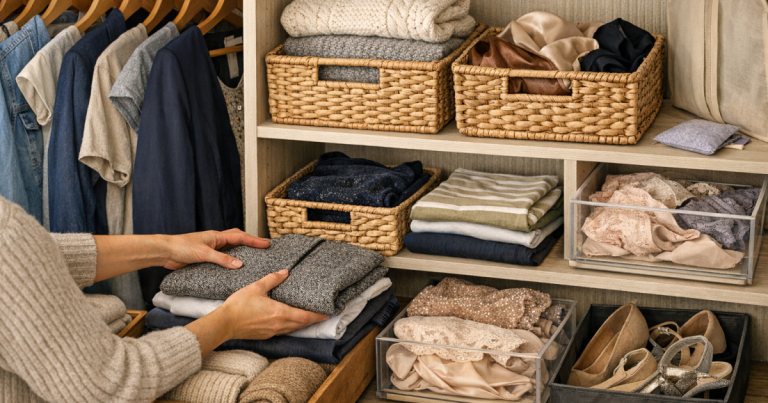
The right method depends on the garment’s weight, structure and stretch. Hanging everything looks tidy at first, but it can ruin knitwear and stretch jersey. Folding everything saves rail space, but it can crush tailoring and create stubborn creases.
Hang these garments
- Blazers, suit jackets and coats, ideally on broad or shaped hangers that support the shoulder line.
- Shirts, blouses and lightweight dresses where creasing is the main problem.
- Trousers, either folded over a bar or clipped at the waistband, depending on the fabric and crease line.
- Skirts and formalwear that need shape preserved rather than compression.
Fold these garments
- Wool jumpers, cashmere cardigans and chunky knitwear, which can stretch on hangers.
- Sweatshirts, hoodies and heavy jersey layers.
- T-shirts and casual tops, stacked vertically in drawers if you want to see each item.
- Denim, unless rail space is plentiful and creasing is a concern.
Roll selectively
Rolling works well for gym tops, soft loungewear, children’s clothes and travel drawers, but it is not ideal for crisp cotton shirts or anything that needs a sharp line. If rolled clothes become compressed, treat that as a sign the drawer is overloaded rather than as a reason to roll more tightly.
Give clothes enough room to breathe
A packed wardrobe causes three common problems: creasing, poor airflow and damage from friction. When hangers are jammed together, fabrics rub as you pull garments in and out. Dark cotton can pick up lint, silk can snag, and wool coats can flatten along the sleeve and shoulder.
As a rule of thumb, you should be able to slide a hand between sections of hanging clothes without forcing it. Drawers should close easily without pushing fabric down. If you need to press clothes flat to shut the drawer, the fibres are being stored under stress.
For shelves, keep stacks shallow. Three to five medium-weight jumpers are easier to manage than a tall pile that collapses whenever you remove one. Put the heaviest knitwear at the bottom and lighter layers above. If a shelf is deep, use the back for less frequent items rather than hiding daily essentials where they will be forgotten.
Protect against moths, dust and damp
Clothes moths prefer dark, undisturbed areas and protein-based fibres such as wool, cashmere, silk, alpaca and fur trims. They are more likely to be attracted to garments that contain perspiration, food residue or skin oils. Regular disturbance is part of prevention: open drawers, shake out stored knitwear and inspect seams, folds and underarms.
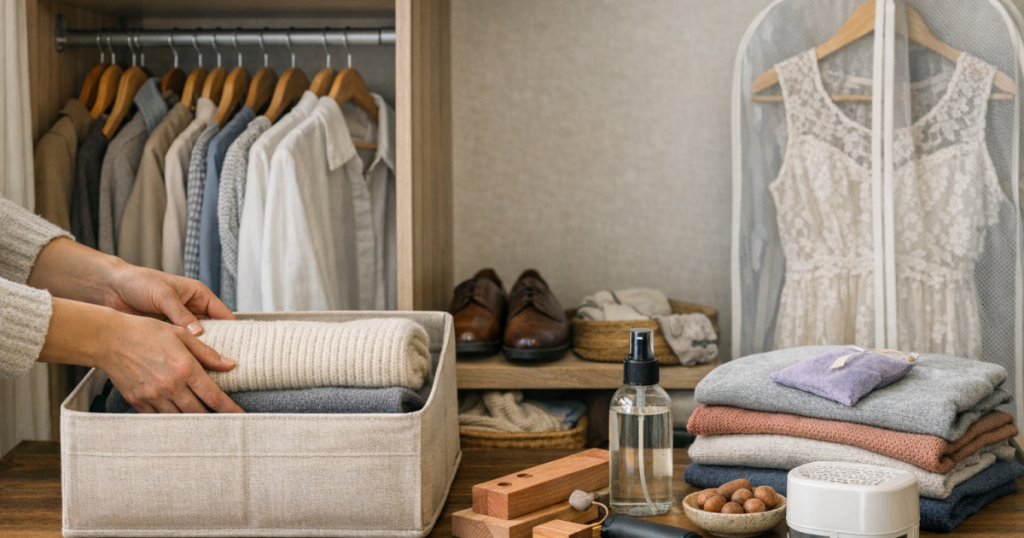
Breathable cotton garment bags are useful for suits, wool coats, silk dresses and occasionwear. Plastic dry-cleaning covers should be removed before storage because they can trap moisture and restrict airflow. For folded seasonal clothing, lidded fabric boxes or clean cotton storage bags are usually kinder to fabric than tightly sealed plastic containers in a damp room.
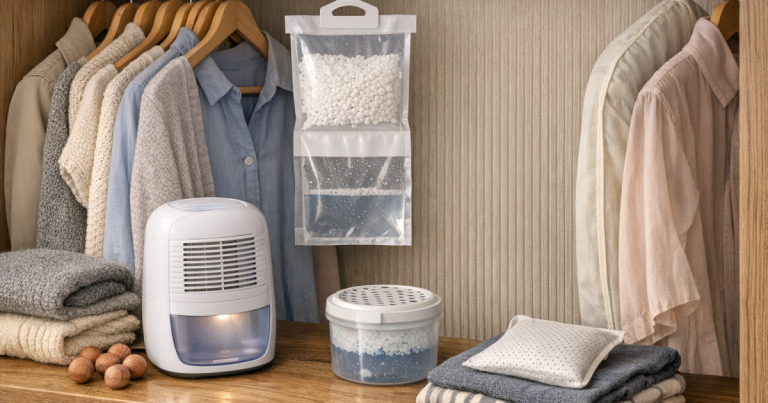
Cedar blocks and lavender sachets can be helpful as part of a wider routine, but they are not a complete moth solution. They need refreshing, and they do not replace cleaning, inspection and good storage hygiene. If you find holes, webbing or larvae, isolate affected garments, clean the storage area thoroughly and treat the clothing according to the fabric care label.
Damp is a separate issue. Avoid storing clothes directly against cold external walls, in poorly ventilated loft corners or in cupboards that smell musty. Leave a small gap between storage and the wall where possible, and check for condensation in winter. Wardrobes in bedrooms often cope better than unheated outbuildings because temperature and humidity are more stable.
Seasonal storage without damage
Rotating clothes by season frees space, but the handover needs care. Before storing winter jumpers, coats and scarves, make sure they are clean, dry and brushed free of hair or lint. Fold knitwear loosely and avoid heavy compression for long periods. Vacuum storage bags can save space for bulky synthetic bedding or some casual clothes, but they are not ideal for structured coats, leather, suede, wool tailoring or delicate knitwear.
When bringing a season back into use, do not assume everything is ready to wear. Air garments for a few hours, check for odours and inspect cuffs, hems, collars and underarms. A quick steam, brush or de-bobble can make stored clothes look far better without washing them unnecessarily. For tired knitwear, our compact fabric shaver review shows how a small de-bobbler can fit into a refresh routine for jumpers and cardigans.
Build a wardrobe that supports your week
Organisation should match how you dress, not how wardrobes look in photographs. If you wear a uniform or office clothing most days, keep a small ready-to-wear section with clean shirts, trousers, layers and outerwear. This reduces morning rummaging and makes it obvious when laundry is falling behind.
Grouping by garment type is usually the easiest starting point: coats together, shirts together, knitwear together and trousers together. Within those groups, colour order can help you spot duplicates and choose outfits quickly. For children’s clothing, school uniform and sports kit, separate compartments or labelled drawers can reduce mixing clean and worn items.
Keep a small care zone near the wardrobe if space allows: lint roller, clothes brush, spare buttons, sewing kit, moth sachets and a laundry bag for dry-clean-only or hand-wash items. The point is not to create a complicated system; it is to remove the excuse for putting half-ready clothes back among clean ones.
Common storage mistakes to avoid
- Leaving dry-cleaning plastic on garments: it can trap moisture and encourage stale smells.
- Hanging heavy knitwear: shoulders can stretch and the garment may lose its shape.
- Overfilling drawers: compression creates creases and makes clothes harder to rotate.
- Storing worn woollens: perspiration and food traces increase the risk of moth interest.
- Using the loft for delicate clothes: temperature swings and damp can be harsh on natural fibres.
- Forgetting shoes and bags: dirty soles, leather dyes and rough hardware can mark nearby fabrics.
Refresh without overwashing
Not every worn garment needs a full wash. Overwashing can fade colours, weaken fibres and make elastane lose recovery sooner. For clothes that are not visibly dirty or sweaty, airing may be enough. Hang them outside briefly on a dry day, or near an open window away from direct heat and strong sunlight.
Brushing is useful for wool coats, tailoring and heavier fabrics because it removes surface dust and lint before it settles. Steam can relax creases and refresh many garments, but always check the care label and be cautious with delicate finishes, pleats, embellishments and fabrics prone to water marking.
For more fabric-specific care advice, the wider fabric care guides cover washing, refreshing and maintenance topics that sit alongside good storage habits.
FAQ
Should clothes be stored in plastic boxes?
Plastic boxes can work for short-term storage in a dry, stable room, but they are not always best for natural fibres. Make sure clothes are completely dry, avoid overpacking and check occasionally for condensation or musty smells.
Is it better to hang or fold jeans?
Either is fine. Fold jeans if drawer or shelf space is easier; hang them if you want fewer creases or need them visible. Avoid forcing very thick denim into an overfull drawer.
How often should I check stored seasonal clothes?
Every few weeks is sensible for wool, cashmere and silk, especially in darker cupboards. Shake items out, look for moth signs and make sure there is no damp smell.
Can I store clothes in a loft?
Use caution. Lofts can be cold, hot or damp depending on the season and insulation. Avoid storing delicate fabrics, leather, suede, wool tailoring or sentimental garments there unless conditions are reliably dry and stable.
What is the easiest way to stop a wardrobe smelling stale?
Remove anything worn or damp, air the wardrobe, reduce crowding and clean the base and shelves. Scented sachets help only after the cause of the stale smell has been fixed.
Key takeaways
Treat this wardrobe storage guide as a maintenance routine rather than a one-off tidy. Clean clothes before storage, choose hanging or folding based on fabric behaviour, allow airflow and check vulnerable garments before problems become permanent.
Good storage makes daily dressing easier, but it also protects the money and care already invested in your clothes. If you want to understand how the site handles product mentions and commercial links, you can read the affiliate disclosure.