When a fitted wardrobe is full but the clothes still need to breathe, freestanding clothes rails can give coats, workwear, dresses and next-day outfits a temporary home without crushing them into an overpacked cupboard. The right rail is not simply the one that holds the most hangers. It should suit the garments you own, the floor space you have, and how often you need to move, clean or rotate what is stored on it.
The short version
For most UK homes, the best overflow rail is sturdy enough for the heaviest garments you plan to hang, narrow enough to avoid blocking walkways, and simple enough to keep tidy. A single rail works well for shirts, dresses and light jackets. A double rail can help with short garments, but it is not automatically stronger. A covered rail is better for seasonal or occasional wear, while an open rail is easier for daily access.
Before choosing one, separate clothing by fabric and use. heavy wool coats, tailored jackets and dense denim need more support than blouses, gym layers or light summer dresses. If you are not sure which items should go on hangers at all, it is worth checking the basics of which clothes should be hung, folded or boxed before adding more hanging space.
Where freestanding clothes rails make sense
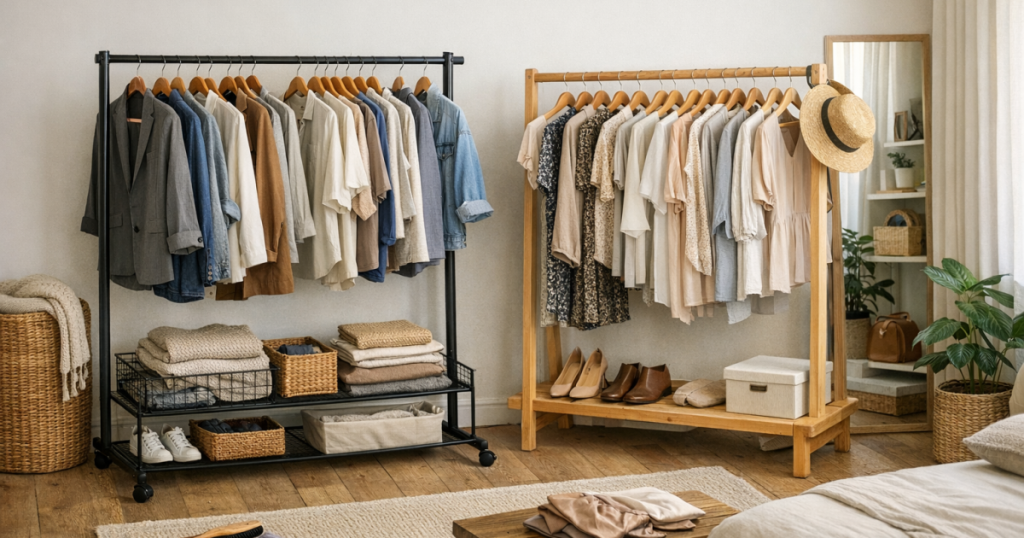
Freestanding clothes rails are most useful when the problem is access rather than long-term hidden storage. They suit spare bedrooms, alcoves, dressing areas, utility rooms and rented homes where drilling wall-mounted rails is not an option. They are also handy for seasonal sorting: airing coats before storage, keeping uniforms separate from everyday clothes, or planning outfits for the week.
They are less useful if the room is damp, badly ventilated or already crowded. Clothes stored in stale air can develop odours, while packed rails can crease fabrics almost as badly as an overloaded wardrobe. Leave a little space between hangers, keep the rail away from radiators, and avoid placing delicate fabrics in direct sunlight where colours may fade unevenly.
Reliable rail types for overflow storage
Simple single rails
A single rail is usually the neatest choice for everyday overflow. It gives one clear hanging line, so garments are easier to see and less likely to be crushed behind a second layer. This style is well suited to shirts, blouses, dresses, light jackets and clothes you reach for regularly.
The IKEA RIGGA clothes rack is a familiar example of a straightforward rail used in many bedrooms and spare rooms. Treat it as a useful reference point rather than a universal answer: check the current dimensions, height adjustment, finish and load guidance before deciding whether it suits your clothing mix.
Heavy-duty rails for coats and uniforms
If your overflow includes wool coats, work jackets, suits or heavier uniforms, prioritise frame rigidity and a clear manufacturer load rating. Look for a rail that does not flex when evenly loaded, has secure joints, and gives enough height for longer garments to hang without dragging on the lower shelf or floor.
The SONGMICS Heavy Duty Clothes Rail is one type readers often compare when they want something more substantial than a basic spare-room rail. Do not rely on the phrase heavy-duty alone; verify the stated load capacity, rail width, wheel quality if fitted, and whether the construction suits the weight of your actual clothes.
Double rails for short garments
Double rails can make sense for shirts, children’s clothes, trousers on clip hangers or folded-over skirts. They are not ideal for long dresses, coats or jumpsuits unless there is enough vertical clearance. The temptation with a double rail is to fill both levels tightly, but dense storage reduces airflow and makes it harder to remove one item without disturbing another.
Use double rails for organised categories rather than random overflow. For example, keep work shirts on the upper rail and casual tops underneath, or use one side for laundered uniforms and the other for clothes awaiting ironing or steaming.
Covered rails for seasonal clothing
A covered rail is helpful when clothes will sit untouched for weeks. It protects against dust and reduces light exposure, which matters for dark garments, occasionwear and out-of-season coats. Choose breathable protection where possible, especially for natural fibres. Avoid sealing slightly damp garments inside covers or plastic bags, as trapped moisture can cause odours and fabric stress.
For dark clothing, storage habits and laundry habits work together. If black jeans, T-shirts or uniforms are spending time on an open rail, keep them out of strong sunlight and follow good washing practice to reduce fading; our guide to preventing black clothes fading in the wash covers the laundry side in more detail.
Design-led rails for visible rooms
If the rail will be visible in a bedroom or hallway, an attractive frame can help it feel intentional rather than temporary. The Brabantia Linn Clothes Rack is an example of a more furniture-like clothes rack that some households use where appearance matters as much as storage. Check the usable hanging height and base layout carefully, because design-led rails can be better for curated daily clothing than for bulky overflow.
Fabric-aware checks before you load the rail
- Check garment weight first: wool coats, lined jackets, denim and heavy uniforms place far more stress on a rail than shirts or dresses.
- Use the right hangers: broad or shaped hangers help coats and jackets keep their shoulder line. Thin wire hangers can distort heavier garments.
- Leave breathing space: packed rails trap odours and make creasing worse. Aim for enough room to slide garments along the rail without force.
- Keep hems off the floor: long dresses, robes and coats should hang freely. Fabric touching the floor collects dust and can crease at the hem.
- Protect from light: sunlight through a bedroom window can fade exposed shoulders and sleeves over time, especially on dark or brightly dyed fabrics.
- Consider floor contact: castors can mark soft flooring, while narrow feet may press into carpet. Use furniture cups or a mat where needed.
- Avoid damp corners: overflow storage should still be dry and ventilated. Do not park a rail against a cold external wall if condensation is a recurring problem.
How to set up an overflow rail neatly
Step 1: Decide the rail’s job
A rail used for tomorrow’s outfit needs a different setup from one holding seasonal coats. Give it one main purpose: daily rotation, ironing queue, seasonal overflow, guest coats, uniform storage or occasionwear. Mixed-purpose rails become cluttered quickly because nothing has a clear home.
Step 2: Edit before adding capacity
Adding a rail should not become a way to postpone sorting. Remove clothes that need repairing, donating, washing or storing elsewhere. If a garment is stretched by hanging, fold it instead. Knitwear, heavy jumpers and some delicate jersey pieces are usually better folded on a shelf or boxed with breathable protection.
Step 3: Group by length and fabric
Hang longer garments at one end and shorter pieces at the other. Keep structured coats separate from slippery satin, silk-like fabrics or lace. Delicates can snag when squeezed between zips, buckles and rough seams, so give them smooth hangers and space.
Step 4: Use the lower area wisely
If the rail has a shelf or base, use it for lightweight storage boxes, shoe bags or folded accessories rather than overloading it with random piles. Keep shoes away from hems unless they are bagged or boxed. Dust and grit from soles can transfer to hanging clothes surprisingly easily.
Step 5: Review it weekly
An overflow rail works best when it is actively managed. Once a week, return clean clothes to the main wardrobe, move out items that need laundering, and brush or air garments that have picked up lint or hair. Wool coats in particular benefit from gentle surface care; our piece on natural bristle clothes brushes for wool coats explains when brushing is useful and when it is not enough.
Signs a rail is not right for your clothes
- The rail leans, twists or rocks when loaded evenly.
- Garments are packed so tightly that shoulders crease or sleeves tangle.
- Long hems rest on the floor or lower shelf.
- Castors move poorly on carpet or lock unreliably on hard flooring.
- The frame finish catches delicate fabrics or leaves marks on hangers.
- You have to move the rail every day just to access drawers, doors or radiators.
If any of these problems appear, reduce the load before replacing the rail. Sometimes the fix is better editing, wider hangers or a different room position rather than a stronger frame.
Common questions
Are freestanding rails suitable for heavy winter coats?
Yes, but only if the rail is designed for heavier garments and the load is spread evenly. Check the manufacturer’s current load guidance and use proper coat hangers rather than thin hangers.
Is an open clothes rail bad for dust?
Open rails collect more dust than closed wardrobes, especially in spare rooms and hallways. For occasional wear, use breathable garment covers or choose a covered rail.
Can I use a clothes rail in a rented flat?
Usually, yes. A freestanding rail avoids drilling and can be moved when needed. Check that it does not block ventilation, radiators, doors or safe walking routes.
Should delicate dresses go on an overflow rail?
They can, provided they have space, smooth hangers and protection from snags. Keep lace, beadwork and fine straps away from zips, rough seams and crowded coat sections.
How do I stop a clothes rail looking messy?
Limit it to one purpose, use matching or similar hangers, group garments by type and remove anything that belongs in laundry, repair or long-term storage.
Main lessons
The best overflow rail is the one that supports your garments without encouraging clutter. Choose a single rail for clear everyday access, a stronger frame for coats and uniforms, a double rail for short garments, or a covered version for seasonal storage. Measure the space, check the load guidance, protect fabrics from dust and light, and treat the rail as part of your garment-care routine rather than a dumping ground.