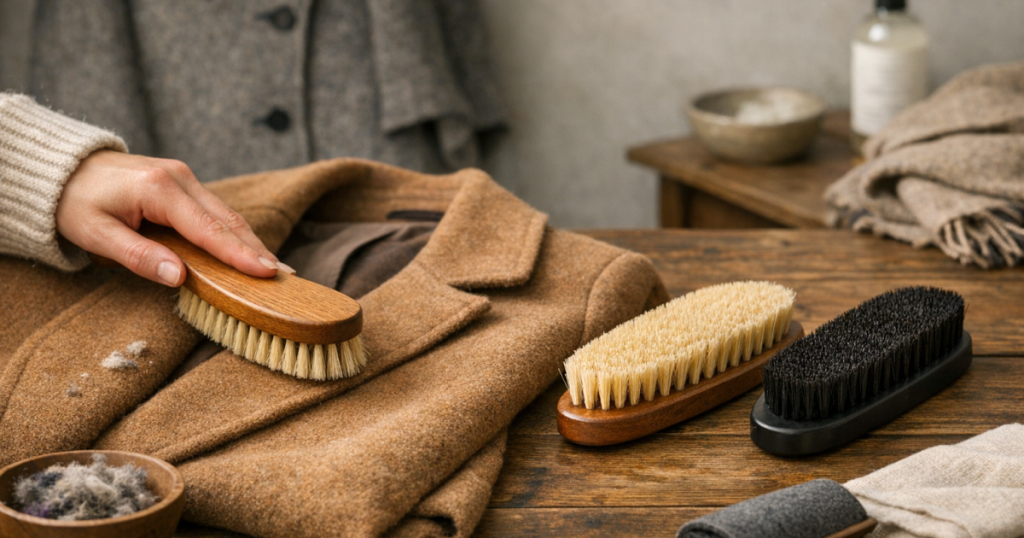
A wool coat does not need washing every time it looks tired. Often, what you are seeing is surface dust, lint, hair, dried rain marks or flattened fibres, and natural bristle clothes brushes can deal with much of that without soaking the garment or stressing the seams.
For a proper wool coat, a good brush is less about making it look brand new and more about controlled maintenance: lifting debris, encouraging the nap to sit neatly, and reducing the temptation to over-clean. The value depends on the coat fabric, how often you wear it, and whether you use the brush with a light hand.
The short answer
Yes, a natural bristle brush is usually worth having if you wear wool coats regularly through a British autumn and winter. It is most useful on structured wool, wool-blend overcoats, pea coats, duffle coats and tailored coats that pick up fluff from scarves, car seats, bags and public transport.
It is not a magic tool for stains, moth damage, shiny wear patches or deep pilling. It also will not replace professional cleaning when a coat is heavily soiled. Its strength is routine surface care: a few minutes after wear, before storage, or before you leave the house.
Why wool coats benefit from brushing
Wool fibres naturally trap small particles. That is part of what makes wool warm and resilient, but it also means lint, dust, pet hair and fine grit can sit in the surface. If those particles remain there, they can make a dark coat look greyed or a camel coat look dull.
Brushing helps in three ways. First, it removes loose debris before it works further into the cloth. Secondly, it tidies the surface direction of the fibres, which can make the coat look more even. Thirdly, it reduces unnecessary washing or wet spot-cleaning, both of which can distort wool if done too often or too aggressively.
Natural bristles tend to have a little give. Compared with a very stiff synthetic scrubbing brush, they are usually better suited to sweeping rather than scraping. That matters on wool because the aim is to lift material away from the coat, not rough up the nap.
When a brush is genuinely useful
A coat brush earns its place when it solves a regular problem. If your wool coat comes home with lint around the sleeves, shoulder area, collar or front panels, brushing is usually faster and kinder than repeated sticky lint rolling.
- Commuting coats: useful for dust, scarf fibres and grit from train seats, car upholstery or packed coat racks.
- Pet households: helpful for loosening hair before using a lint roller only where needed.
- Dark wool coats: useful because pale lint and dust show quickly against navy, charcoal and black cloth.
- Textured wool: helpful for tweed, melton-style cloth and heavier weaves where lint can sit in the surface.
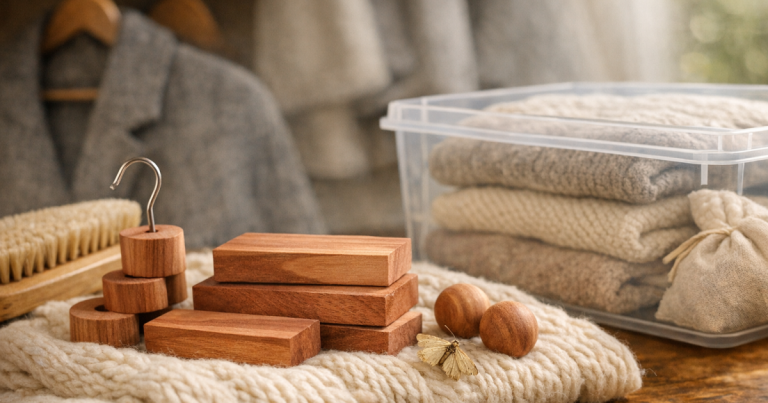
- Seasonal storage: useful before boxing or garment-bagging a coat at the end of winter.
If you are already thinking about storage, it is also worth checking which clothes should be hung, folded or boxed, because a clean coat can still lose shape if it is stored on the wrong hanger or packed too tightly.
What a brush will not fix
A brush is not a stain remover. Mud, food, make-up, grease and salt marks need a different approach, usually starting with drying, gentle lifting and care-label checks. Brushing wet dirt into wool can spread it and push particles deeper into the fibres.
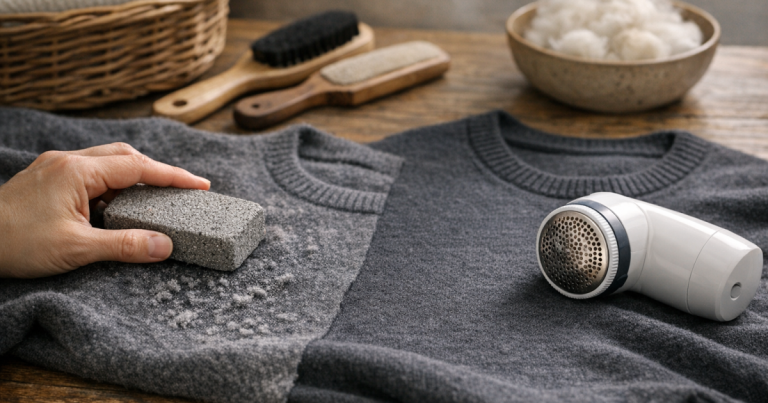
It also will not remove proper pilling. Pills are tangled fibre balls, not loose lint. A brush may lift some fuzz around them, but a fabric comb or suitable depilling tool is usually more effective. Use those cautiously, especially on soft wool blends, because removing too much fibre can thin the surface.
Shine is another limit. Smooth, glossy patches on elbows, cuffs or seat areas are often caused by compression and wear. Brushing may make the surface look slightly more even, but it cannot fully reverse fibre flattening.
Natural bristle brush versus lint roller
Both tools have a place, but they behave differently on wool. A lint roller is quick and visible: it picks up surface lint immediately. The downside is that sticky sheets can be wasteful, and repeated heavy rolling may tug at softer fabric surfaces.
A brush is slower but more fabric-aware. It can move through the surface nap and shift dust as well as visible lint. It is especially useful before airing a coat, because once debris is loosened you can shake the coat outdoors or near an open window.
- Use a brush for dust, surface dullness, pet hair, scarf fluff and routine refreshing.
- Use a lint roller for last-minute visible lint, especially on dark coats before leaving home.
- Use both when a coat is hairy or dusty: brush first, then roll lightly only where residue remains.
How to brush a wool coat without damaging it
Brushing should feel like grooming, not cleaning a floor. The best results come from light pressure, consistent direction and working on a dry coat.
1. Let the coat dry fully first
Never brush a rain-damp wool coat hard. Hang it on a broad coat hanger, allow air to circulate, and let the surface dry naturally. Brushing wet wool can distort the nap and smear dirt.
2. Find the direction of the nap
Run your hand over the coat. One direction will usually feel smoother and look neater. Brush with that direction for routine maintenance. If lint is stubborn, you can make one or two very light passes against the nap, then finish with the nap to settle the surface.
3. Start at the shoulders and work down
Use short, controlled strokes of about 10 cm to 20 cm. Begin around the collar and shoulders, then move down the sleeves and body. This prevents loosened dust from falling onto areas you have already finished.
4. Use less pressure around seams and edges
Collars, pocket flaps, cuffs and button stands can trap lint, but they also have stitching and folded layers. Brush gently around these areas to avoid catching threads or lifting fibres unevenly.
5. Shake and air the coat afterwards
After brushing, give the coat a gentle shake outdoors or by an open window. Airing helps release loosened dust and odours without washing. Avoid hanging a coat right against a radiator, as direct heat can dry wool unevenly.
What to check before choosing one
The phrase natural bristle clothes brushes covers quite a wide range, so do not buy on that wording alone. Check what the bristles are made from, how firm they feel, the handle shape, and whether the brush is intended for clothing rather than shoes, upholstery or household scrubbing.
For wool coats, the bristles should feel firm enough to move lint but not so hard that they scratch your skin when drawn lightly across your wrist. Very stiff brushes can be too harsh for soft wool, cashmere blends or brushed finishes.
Handle comfort matters more than it sounds. A brush that is awkward to hold encourages over-pressure and uneven strokes. A flat-backed brush can work well for broad coat panels, while a handled version may feel easier around collars and sleeves.
Examples such as the Kent CC20 Clothes Brush or a Redecker Clothes Brush are worth using as reference points when checking bristle feel, size and intended fabric use. Always read the maker’s description carefully, because brush ranges can include different bristle types and firmness levels.
Which wool coats need the most care?
Not all wool coats behave the same. A dense tailored overcoat can usually tolerate routine brushing better than a very soft, fuzzy or loosely woven coat. The softer and more open the surface, the lighter your pressure should be.
- Melton-style wool: usually responds well to regular gentle brushing because the surface is dense and structured.
- Tweed and textured wool: benefits from brushing, but use angled strokes so the bristles do not snag raised yarns.
- Cashmere-blend coats: use a very soft brush and minimal pressure; over-brushing can disturb the fine surface.
- Bouclé or looped wool: avoid vigorous brushing because loops can catch. Use fingers or a very gentle lint tool first.
- Vintage wool coats: test carefully on an inside-facing area, as older fibres and linings may be more fragile.
How often should you brush a wool coat?
For a coat worn most days, a light brush once or twice a week is usually enough. If the coat has picked up pet hair, scarf fluff or visible dust, brush it after wear before debris settles in. For occasional coats, brush before and after the main winter season.
Avoid turning brushing into a daily deep-cleaning ritual. Too much friction can roughen the surface, especially on soft wool. Think of it as maintenance: small, gentle efforts that prevent bigger cleaning jobs.
Brush care matters too
A dirty brush can put dust and oils back onto your coat. After use, remove hair and lint from the bristles with your fingers or a comb kept for household care. Tap the brush lightly to dislodge dust. If the handle or back becomes grubby, wipe it with a barely damp cloth and let it dry fully before storing.
Do not soak a wooden brush unless the maker says it is suitable. Water can swell wood and loosen bristles. Store the brush somewhere dry, away from bathroom steam or damp utility spaces.
Where steaming fits in
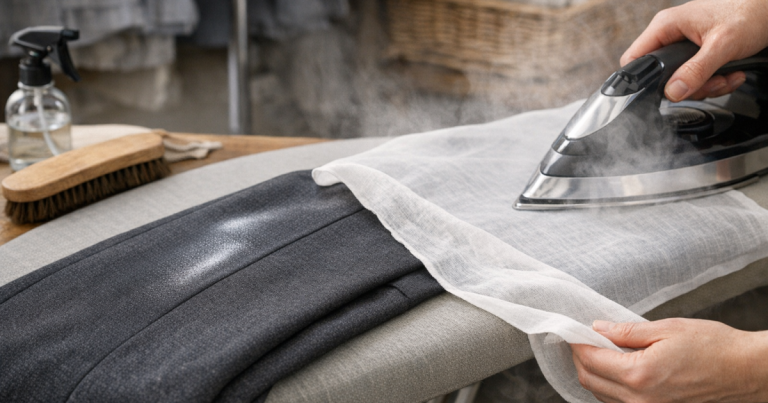
Steam can relax creases and freshen wool, but it is not a substitute for brushing. In many cases, brushing should come first so you are not steaming dust, lint or hair into the surface. If you do steam a coat, keep the steamer or iron at a safe distance, follow the care label, and avoid saturating the cloth.
For a deeper look at heat, steam and care symbols, see steam settings, heat levels and fabric labels explained. Wool can be resilient, but it still deserves careful temperature and moisture control.
Common mistakes to avoid
- Brushing mud while damp: let it dry, then lift it carefully. Wet brushing can spread marks.
- Using a shoe brush: brushes used with polish or outdoor grime should never touch clothing.
- Scrubbing shiny areas: wear shine is not surface dirt, and scrubbing can make it more obvious.
- Ignoring the lining: a clean outer fabric can still hold odours if the lining needs airing.
- Storing straight after rain: always dry and air the coat before putting it in a wardrobe.
Are they worth it for every household?
If you own one wool coat and rarely wear it, you can manage with careful airing and occasional lint rolling. A brush becomes more worthwhile when wool is part of your normal winter wardrobe, when you commute often, or when coats are expensive enough that you want to reduce unnecessary dry cleaning.
It is also worth thinking beyond the brush. A broad hanger, breathable garment bag and sensible wardrobe spacing can make as much difference as any cleaning tool. If shoulder shape is a recurring issue, the advice on whether padded hangers prevent shoulder bumps in knitwear is useful background for understanding how hanging pressure affects fibres, even though coats need sturdier support than most jumpers.
Common questions
Can I use a natural bristle brush on cashmere?
Yes, but only with a very soft brush and extremely light pressure. Cashmere surfaces can fuzz if brushed too hard. Test on a discreet area first and stop if the fibres lift or look disturbed.
Is brushing better than dry cleaning?
They do different jobs. Brushing handles surface debris between wears. Dry cleaning deals with deeper soiling, odours and stains that routine home care cannot safely remove. Brushing may help you clean less often, but it does not replace proper cleaning when needed.
Should I brush before or after wearing a coat?
After wearing is usually best, especially if the coat has picked up dust or hair. Before wearing, a quick finishing brush can remove wardrobe lint and neaten the nap.
Can a brush remove bobbles from wool?
Not reliably. Bobbles are tangled fibres, so a suitable fabric comb or depilling tool is normally more effective. Use those sparingly and avoid shaving away more fibre than necessary.
The big picture
A natural bristle coat brush is a worthwhile fabric care tool when it is used gently and for the right job. It helps wool coats look cleaner, fresher and better kept between proper cleans, particularly through damp, lint-heavy UK winters.
The key is restraint. Brush dry wool, follow the nap, use light pressure, and treat stains, pills and shine as separate problems. Used that way, a good clothes brush is not a luxury extra; it is a simple maintenance tool that can help a wool coat stay presentable for longer.