A school blazer can look misshapen after one careless wash: puckered lining, soft shoulders, wrinkled sleeves or a curled lapel. The safest way to wash school blazers is to treat them less like everyday jumpers and more like structured garments, even when the care label says machine washable.
Before you do anything, check the blazer’s care label, empty every pocket and inspect the lining. Many UK school blazers are polyester or polyester-rich, but trims, badges, shoulder padding and linings can still react badly to heat, twisting and aggressive spin cycles.
The short version
- Check the care label first. If it says dry clean only, do not machine wash it.
- Brush off surface dirt and spot-treat stains before washing the whole blazer.
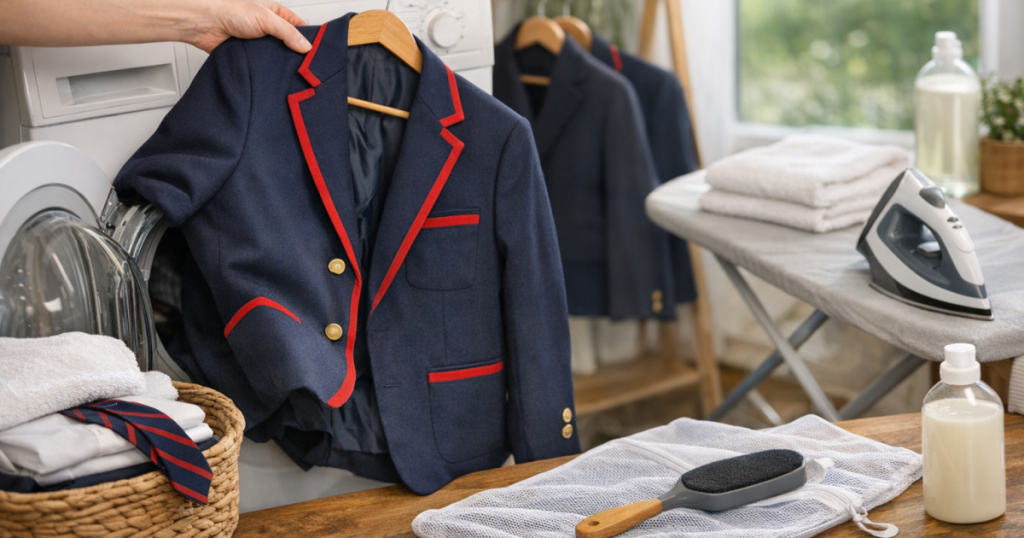
- Fasten buttons, turn the blazer inside out and use a large mesh bag if the drum has enough room.
- Use a cool, gentle cycle with a small amount of mild detergent.
- Avoid fabric conditioner, hot washes, heavy spins and tumble drying where possible.
- Reshape the shoulders, lapels and sleeves while damp, then dry on a broad hanger or flat over an airer.
Step 1: Read the label as a shape warning, not just a washing instruction
The care label tells you more than whether the blazer can go in the machine. It gives clues about heat tolerance, drying method and whether the structure has been designed to cope with full immersion in water.
If the label says machine washable, you still need a gentle approach. A blazer has layered areas that behave differently from the main outer fabric: the shoulders may contain padding, the front panels may have light internal structure, and the lining may shrink or distort at a different rate from the outer shell.
If the label says hand wash only, avoid wringing. Hand washing can be safer for shape, but only if the blazer is supported in water and pressed dry gently. If the label says dry clean only, home washing can risk bubbling, shrinking, dye bleed or loss of structure.
Step 2: Deal with marks before the whole wash
School blazers often pick up concentrated grime around cuffs, elbows, pocket edges, lapels and the back of the neck. Washing the whole garment harder is not the answer; it usually punishes the structure before it removes the mark.
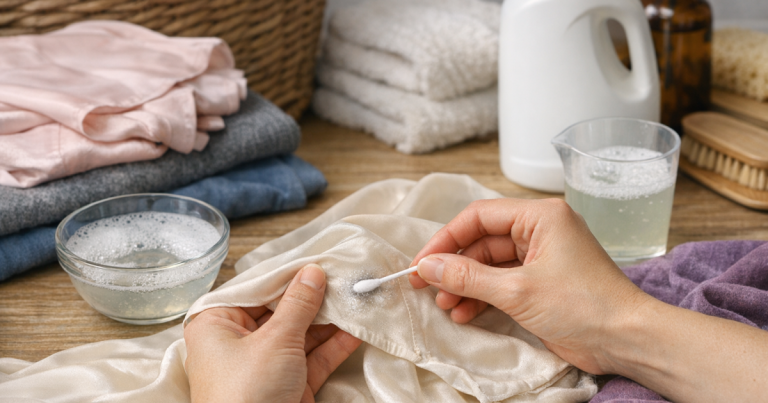
Brush off dried mud and lint first using a clean clothes brush or a dry microfibre cloth. For food marks, pen smudges or greasy cuff dirt, dab the area with cool water and a tiny amount of mild liquid detergent. Work from the outside of the mark towards the centre, and avoid scrubbing across seams or embroidered badges.
For dark navy, black or bottle-green blazers, test any stain treatment on a hidden inside hem or seam allowance. Dark uniform fabrics can show lightened patches if rubbed too hard. If fading is a regular issue across the school uniform load, the same principles used for preventing black clothes fading in the wash also apply: cooler water, less friction and shorter cycles.
Step 3: Prepare the blazer for the machine
Preparation matters because most shape loss happens from friction, twisting and overloaded drums rather than from water alone.
- Empty every pocket: Tissues, coins, hair clips and folded notes can distort pocket linings or leave residue.
- Fasten buttons: This helps the front panels stay aligned during the wash.
- Turn it inside out: The lining takes more of the friction, while the outer fabric and badge are better protected.
- Use a large mesh bag: A bag can reduce snagging and rubbing, provided the blazer is not crammed in tightly. For more detail on when bags help and when they do not, see our guide to whether mesh laundry bags protect delicates in the wash.
- Wash it alone or with similar lightweight items: Do not wash a blazer with towels, jeans, trainers or heavy hoodies.
The blazer needs room to move without being crushed. If it fills the drum by itself and cannot unfold, use hand washing or professional cleaning instead.
Step 4: Choose a cool, gentle wash
For most washable school blazers, a cool delicates or synthetics cycle is the safest starting point. Use the temperature shown on the care label, and do not exceed it. If the label allows a warmer wash but the blazer has structured shoulders or a delicate lining, cooler is usually kinder.
Use less detergent than you would for a normal school uniform load. Too much detergent can leave residue in the lining and make the fabric feel stiff. A mild liquid detergent is easier to dissolve on a cool cycle than powder, although the best choice is always the one that suits the garment label and your household’s skin sensitivities.
Avoid fabric conditioner. It can coat synthetic fibres, affect the hand-feel of linings and make some school fabrics look limp rather than crisp. It is also unnecessary if the aim is to preserve shape.
Step 5: Keep the spin gentle
A high-speed spin can crease a blazer sharply and pull at the lining, sleeves and front panels. Choose a reduced spin if your washing machine allows it. The blazer should come out damp, not dripping, but it should not be compacted into a tight twisted bundle.
If the blazer is still very wet, do not wring it. Lay it flat on a clean towel, roll the towel loosely and press along the roll to remove extra water. Unroll straight away so creases do not set.
Step 6: Reshape it while damp
This is the step that makes the biggest difference to the finished result. While the blazer is still damp, gently restore its original lines before drying begins.
- Shoulders: Smooth the shoulder line with your hands and make sure padding is sitting evenly.
- Lapel: Fold the lapel back into its natural position and flatten it gently with your palm.
- Sleeves: Pull each sleeve straight from shoulder to cuff, aligning the seams.
- Front panels: Match the button side and buttonhole side so the blazer hangs evenly.
- Lining: Check inside the sleeves and hem so the lining is not bunched or twisted.
Do not stretch the fabric aggressively. The aim is to guide the garment back into shape, not to pull it larger.
Step 7: Dry it without heat damage
Air drying is usually safest. Use a broad, shaped hanger if you have one, as a thin wire hanger can leave dents in damp shoulders. Hang the blazer somewhere airy, away from radiators, direct sunshine and damp corners.
If the blazer feels too heavy when wet, start it flat over a clean towel or across the bars of an airer, then move it to a hanger once it is only slightly damp. Keep the front panels aligned and smooth the lapels again during drying.
A tumble dryer is rarely a good idea for structured school blazers unless the care label clearly permits it. Heat and tumbling can shrink linings, soften structure and set creases. If you are drying other parts of the uniform in a machine, our advice on loading a tumble dryer without creasing clothes can help keep shirts, polos and trousers tidier, but the blazer itself is usually better air dried.
Step 8: Finish the blazer once dry
When the blazer is dry, check the lapels, cuffs and hem before putting it back in the wardrobe. If it only needs refreshing, steam can relax light creases without pressing the whole garment flat.
If you use an iron, keep the setting suitable for the fabric and use a clean pressing cloth, especially on dark polyester, as direct heat can create shiny patches. Press rather than drag the iron, and avoid flattening padded shoulders. For structured garments, it is worth understanding when to steam and when to press; our guide to choosing between steamers and irons explains the difference by garment type.
When hand washing is safer
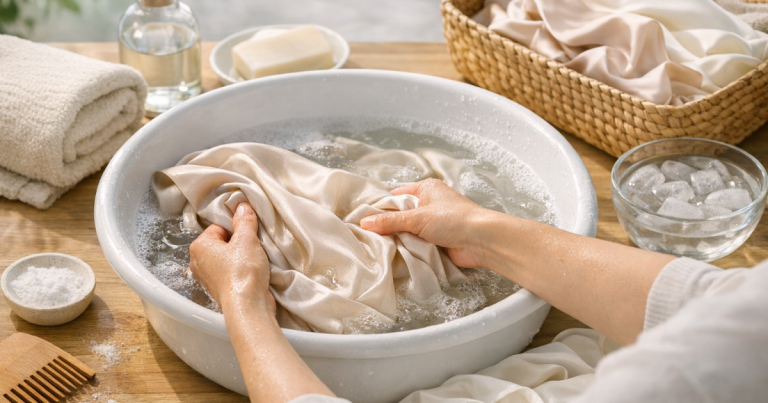
Hand washing can be useful when the care label allows washing but the blazer feels too structured for the machine. Fill a clean basin or bath with cool water and a small amount of mild detergent. Submerge the blazer gently, press water through the fabric and focus on grubby areas with light dabbing rather than rubbing.
Drain the water, refill with cool clean water and press through again until detergent residue is gone. Lift the blazer with both hands supporting the shoulders and body. Never lift it by one sleeve or wring it, as the weight of water can pull seams and distort the shape.
Common mistakes that ruin school blazers
- Washing too hot: Heat can affect linings, badges, trims and synthetic fibres.
- Overloading the drum: Compression creates hard creases and uneven washing.
- Using a heavy spin: This can twist sleeves and pull lining out of alignment.
- Drying on a radiator: Localised heat can cause puckering and stiffness.
- Hanging on a narrow hanger while soaking wet: The shoulders can develop bumps or stretch marks.
- Ironing directly on dark fabric: Shiny marks are difficult to reverse.
How often should a school blazer be washed?
Most blazers do not need washing every week. Over-washing wears the fibres and increases the chance of shape loss. For everyday maintenance, brush off lint, air the blazer overnight and spot-clean small marks promptly.
A full wash is usually only needed when the blazer smells stale, has widespread dirt, or has been through a spill that cannot be handled by spot cleaning. If the blazer is worn daily, having it air properly between wears can make a noticeable difference, especially in damp British weather when clothes dry more slowly indoors.
Things readers ask
Can I wash a blazer with the rest of the school uniform?
It is better not to. Shirts, polo tops and trousers can be washed together more easily, but a blazer needs space and less friction. Wash it alone or with very light, similar items only.
What if the school badge starts to curl?
Let the blazer dry fully, then press around the badge from the inside using a low suitable heat and a pressing cloth. Do not apply direct high heat to embroidery, plastic-backed badges or glued areas.
Can I use a fast wash cycle?
A fast cycle is not always gentler. Some quick programmes use more agitation to save time. A delicates or synthetics cycle with a reduced spin is usually safer for preserving shape.
Why does the lining hang lower after washing?
The lining may have shifted, stretched while wet or dried out of alignment. Smooth it back into place while damp and dry the blazer supported. If it remains uneven, the garment may need alteration or professional pressing.
Should I dry clean every school blazer?
No. Many modern school blazers are washable, but the label should decide. Dry cleaning is more relevant for dry-clean-only garments, wool-rich fabrics, heavily structured blazers or items with trims that cannot be safely washed at home.
Main lessons
To wash school blazers without losing their shape, keep the process cool, gentle and well supported. The key is not just the wash cycle; it is the preparation, reduced spin, careful reshaping and slow air drying afterwards.
For the best result, treat the blazer as a structured garment rather than another item in the school wash basket. Spot-clean when you can, wash only when needed, and take a few minutes to reset the shoulders, lapels and lining before it dries.