Sequins are small but unforgiving: one rough spin, hot rinse or heavy squeeze can turn a party top into a repair job. The safest way to wash sequinned clothes is to treat the embellishments as the fragile part of the garment, not the fabric underneath. Start with the care label, check how the decoration is attached, and use the least aggressive cleaning method that will remove the mark or odour.
Most sequinned garments do better with spot cleaning or careful hand washing than a normal machine cycle. The aim is to limit friction, avoid heat, support the weight of the fabric when wet, and dry it flat so the decoration is not pulled out of shape.
In brief
- Check the care label first, especially on dresses, formal tops, costumes and eveningwear.
- Spot clean small marks instead of soaking the whole garment.
- Use cool water and a small amount of gentle liquid detergent for hand washing.
- Turn the garment inside out where possible, but do not force rigid or heavily decorated areas.
- Avoid hot water, bleach, fabric conditioner, vigorous scrubbing, wringing and tumble drying.
- Dry flat on a towel and reshape the garment while damp.
Step 1: Work out what kind of embellishment you are dealing with
Not all sequins are attached in the same way. Stitched sequins are usually more resilient than glued decoration, but even stitched pieces can loosen if the thread is weak, aged or already snagged. Glued sequins are more vulnerable to warm water, soaking and friction, because the adhesive can soften or lift.
Look closely at a small section before washing. If you can see thread passing through each sequin, the garment is stitched. If the sequins appear bonded directly to the fabric, or if there is no visible thread, treat it as glued. Garments with beads, pearls, rhinestones or metallic foil alongside sequins need extra caution because mixed embellishments often react differently to water and detergent.
Also check the base fabric. A cotton T-shirt with scattered sequins is usually easier to clean than a silk, viscose, velvet or mesh dress covered in heavy embellishment. The more delicate the base fabric, the less washing it can tolerate.
Step 2: Read the care label without ignoring the decoration
The care label tells you what the manufacturer considers safe for the garment as a whole. If it says dry clean only, do not test a full wash at home just because the fabric feels washable. Embellished eveningwear, bridal pieces, vintage jackets and structured dresses can contain linings, interfacings or trims that respond badly to water.
If the label allows hand washing, use that as your default method. If it allows machine washing, still treat the item as delicate. A machine-safe label does not mean the garment can cope with a full cotton cycle, high spin or overloaded drum.
If the label is missing, assume the safest route: spot clean first, then hand wash only if the fabric and embellishments appear stable. For expensive, sentimental or heavily embellished pieces, a reputable dry cleaner with experience in decorated garments is the safer choice.
Step 3: Spot clean before you wash the whole garment
Many sequinned items are not genuinely dirty all over. Often the problem is a make-up mark near the neckline, a food splash, deodorant residue or odour in the underarm area. Spot cleaning limits stress on the embellishments and reduces the risk of colour bleed.
Lay the garment flat on a clean towel. Mix cool water with a very small amount of gentle liquid detergent. Dip a clean white cloth into the solution, wring it out well, then dab the affected area from the outside of the mark towards the centre. Avoid rubbing across sequins because the edges can catch on thread or fabric.
For underarm odour, work from the inside of the garment where possible. Dab the lining or reverse side rather than soaking the decorated front. Follow with a second cloth dampened with plain cool water to remove detergent residue. Blot with a dry towel and leave the item flat to air dry.
Step 4: Hand wash with very little movement
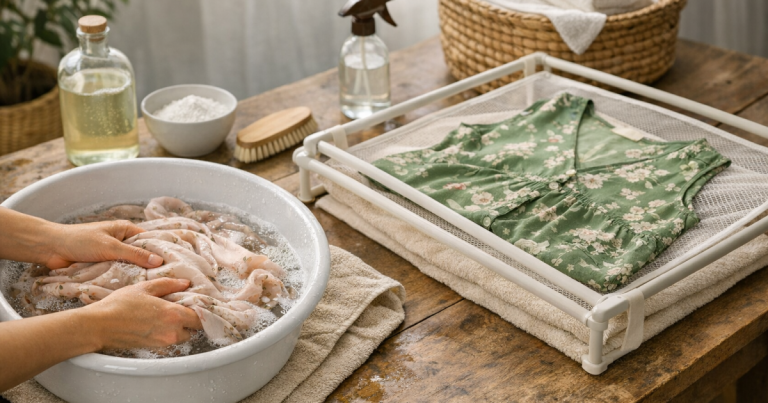
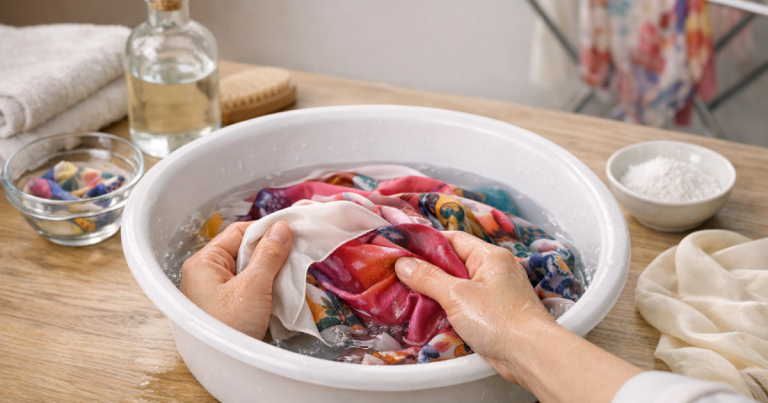
When a full wash is needed, fill a clean basin or washing-up bowl with cool water. Add a small amount of gentle liquid detergent and swirl the water before the garment goes in, so concentrated detergent does not sit directly on the fabric or decoration.
Fasten zips, hooks or buttons to stop them catching. Turn the garment inside out if it can be done without bending stiff embellishment panels. Lower it into the water and press it down gently with your hands. Do not scrub, twist or knead. Let it sit for a few minutes, then lift and lower it through the water in slow movements.
Avoid long soaking. Around 5 to 10 minutes is usually enough for light soil on partywear, tops and costume pieces. Heavy soaking is one of the easiest ways to weaken adhesives, relax threads and make colours bleed, particularly on cheaper trims or older garments.
Drain the soapy water, support the garment with both hands, and refill with cool clean water. Rinse by pressing the water through the fabric rather than swishing aggressively. Repeat with fresh water until the detergent is removed.
Step 5: Use a washing machine only when the garment allows it
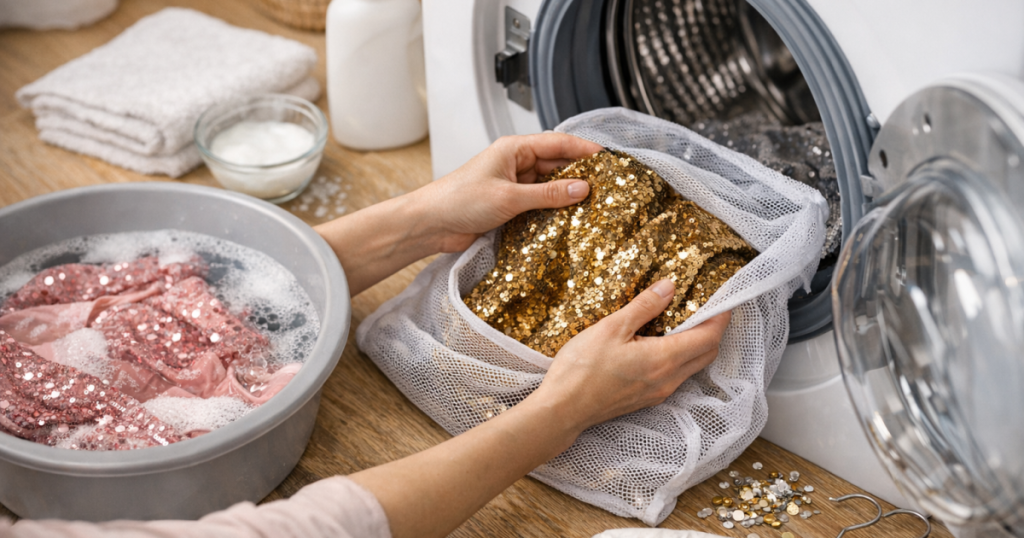
Some casual sequinned T-shirts, sweatshirts or children’s dancewear may be labelled as machine washable. Even then, the safest approach is a short delicate cycle, cool water and the lowest practical spin. Wash the item on its own or with very soft lightweight garments, never with jeans, towels, bras with exposed hooks, zips or anything textured.
Turn the garment inside out and place it in a fine mesh bag to reduce snagging and abrasion. A bag will not make an unsuitable garment machine-safe, but it can help protect washable embellished pieces from rubbing against the drum and other fabrics. For more detail on when bags do and do not help, see our guide to using mesh laundry bags for delicates.
Skip fabric conditioner. It can leave residue on embellishments and may affect stretch fabrics or adhesives. Avoid bleach and oxygen stain removers unless the care label specifically allows them and the decoration is known to be colourfast. With sequins, less chemistry and less agitation is usually safer.
Step 6: Remove water without pulling the garment out of shape
Wet embellished garments can become surprisingly heavy. If you lift a dripping dress or top from one shoulder seam, the weight can strain the fabric and loosen threads around the decoration. Always support the whole garment from underneath.
After rinsing, press the item gently against the side of the basin to remove excess water. Do not wring it. Lay a clean towel flat, place the garment on top, then roll the towel and garment together like a loose cylinder. Press down lightly to absorb water. Unroll straight away so the sequins are not left compressed for long.
If the garment has raised beads or large paillettes, use extra padding from a second towel and avoid pressing hard. The goal is to remove enough water for safe drying, not to flatten the embellishment.
Step 7: Dry flat, away from heat
Air drying is the only sensible option for most sequinned clothes. Tumble drying can create heat, friction and repeated impact, all of which are bad for stitching, glue and delicate surface finishes. Radiators and direct sunlight can also cause problems, including warped plastic sequins, faded fabric and weakened adhesive.
Lay the garment flat on a dry towel, preferably on an airer where air can circulate. Reshape seams, hems and sleeves while damp. Change the towel if it becomes very wet. If the item is a lightweight top, you may be able to finish drying it on a padded hanger once it is only slightly damp, but avoid hanging heavy dresses or skirts while wet.
Indoor drying can be slow in a UK winter, so give embellished garments space rather than bunching them between everyday laundry. Good airflow matters more than heat. A dehumidifier or well-ventilated room can help reduce drying time without the damage risk of direct heat.
Step 8: Deal with creases carefully
Ironing directly over sequins is a common cause of melted, dulled or misshapen decoration. If the base fabric is creased, work from the reverse side and keep the iron away from embellished areas. Use a pressing cloth and the lowest temperature suitable for the fabric, not the decoration.
Steam can help relax creases, but it must be used carefully. Hold the garment so the steam reaches the fabric without blasting one area of sequins at close range. Too much moisture or heat can loosen glued trims. If you are choosing between pressing and steaming for different fabrics, our guide to steamers and irons for each garment explains where each tool is most useful.
For heavily decorated eveningwear, sometimes the best crease treatment is simply hanging the dry garment in a steamy bathroom for a short time, then letting it air fully in a normal room. Do not leave it in a damp bathroom for hours, as lingering moisture is not good for linings, metal trims or storage.
Examples: how to handle common sequinned garments
Sequinned party tops
These are often polyester or viscose with stitched decoration. Spot clean make-up and food marks first. If the label allows washing, hand wash in cool water and dry flat. Avoid hanging while wet, as the shoulder seams can stretch.
Dance costumes and children’s performance outfits
These often combine stretch fabric, sequins, glitter, foil prints and glued rhinestones. Spot clean whenever possible. If washing is allowed, keep it very brief and avoid fabric conditioner, which can affect stretch recovery and surface finishes.
Evening dresses and occasionwear
Heavily embellished dresses are high-risk because the weight of wet fabric can pull on stitching and distort the shape. If the label says dry clean only, follow it. If hand washing is allowed, support the whole garment throughout and dry it flat for as long as possible.
Vintage sequinned pieces
Older sequins may be brittle, discoloured or attached with weakened thread. Test a hidden area with a damp cloth before doing anything more. If colour transfers, sequins cloud over, or thread starts to loosen, stop and keep to very light surface cleaning.
Checks before you put it away
Never store sequinned clothing while even slightly damp. Moisture trapped under embellishments can encourage musty smells, affect metal trims and mark delicate fabrics. Make sure seams, linings, underarms and thicker decorated areas are fully dry before the garment goes back into a wardrobe.
Inspect for loose sequins before storage. If one is hanging by a thread, secure it before it catches and pulls away more decoration. Store flat if the garment is heavy, or hang on a padded hanger if it is light enough to keep its shape. Keep it away from rough fabrics, open zips and Velcro-style fastenings.
For longer gaps between wears, use a breathable garment bag rather than plastic dry-cleaning film. Plastic can trap moisture and encourage creasing. If you rotate special garments seasonally, the same principles in our long-term clothes storage guide apply: clean before storage, dry thoroughly, avoid overcrowding and protect delicate surfaces from abrasion.
Mistakes that loosen sequins
- Using hot water: heat can soften glue, shrink some base fabrics and distort plastic embellishments.
- Scrubbing stains: rubbing across sequins can snap threads and scratch the surface.
- Overloading the machine: pressure and friction increase when garments cannot move freely.
- High spin speeds: strong spinning can pull heavy decoration against the fabric.
- Wringing by hand: twisting stresses seams and can bend or crack embellishments.
- Drying on a radiator: direct heat is too harsh for many trims and adhesives.
- Storing next to rough items: textured coats, zips and hook fasteners can catch sequins in the wardrobe.
Questions people ask
Can I wash sequinned clothes in the washing machine?
Only if the care label says machine washing is allowed. Use a cool delicate cycle, low spin, the garment turned inside out and a mesh bag. If the piece is heavily embellished, glued, vintage or structured, hand washing or professional cleaning is safer.
What detergent should I use on sequinned garments?
Use a small amount of gentle liquid detergent. Powders can be harder to dissolve fully in cool water, and strong stain treatments may affect colour, glue or metallic finishes. Always rinse well so residue does not dry around the decoration.
How do I remove a stain from a sequinned dress?
Blot, do not rub. Work with a damp white cloth and mild detergent solution, ideally from the reverse side of the fabric. If the stain is oily, dark, old or on dry-clean-only occasionwear, avoid home experiments that could spread the mark.
Can sequins melt when ironed?
Yes, many plastic sequins can warp, dull or melt under direct heat. Iron only from the reverse side where the fabric allows it, use a pressing cloth, and keep the iron away from embellished areas.
Why do sequins fall off after washing?
Common causes include weak stitching, softened adhesive, rough agitation, high spin, hot water, wringing and abrasion from other garments. The risk is higher on older pieces and garments with glued embellishments.
Final thoughts
Sequinned clothes need gentle handling rather than complicated products. Clean only as much as necessary, keep water cool, reduce movement, support the garment while wet and dry it flat. Those simple habits protect both the fabric and the decoration, so the piece still looks polished the next time you wear it.