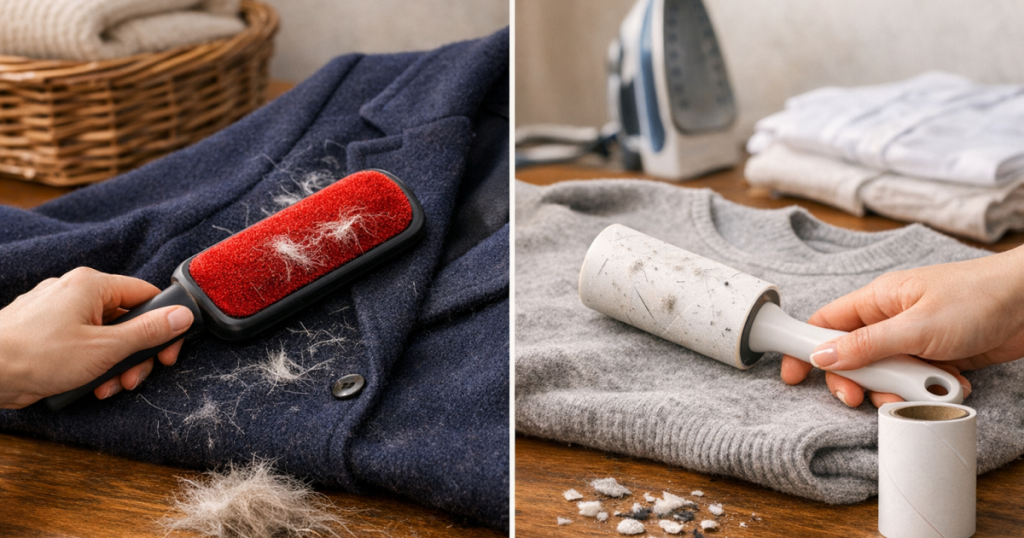
A black coat that looks clean in the wardrobe can pick up fluff within minutes, especially in a home with pets, wool knits or indoor drying. Reusable velvet lint brushes are a low-waste way to lift dry surface lint, while sticky rollers are faster for grab-and-go hair removal.
The better choice depends on the fabric, the type of debris and how patient you can be. For everyday garment care, most homes benefit from both, but they are not interchangeable.
The short version
- Use a velvet lint brush for dry lint, dust and light fluff on coats, tailoring, uniforms, school blazers and many smooth wool blends.
- Use a sticky roller for pet hair, thread scraps and visible debris when you need a very quick result.
- Avoid aggressive brushing on loose knits, sequins, heavily textured fabrics and delicate finishes.
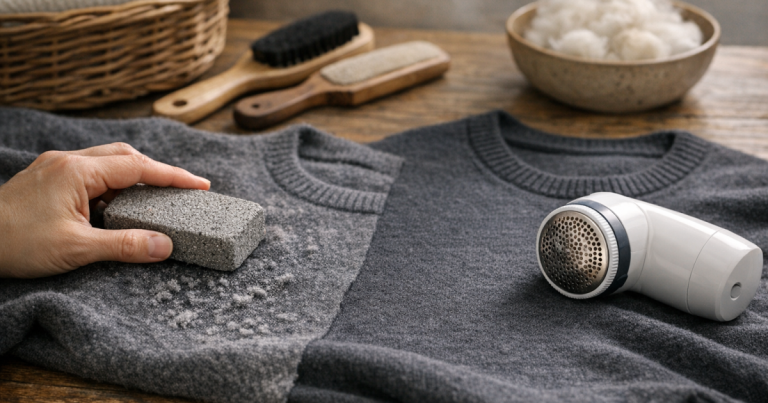
- For bobbles, use a different tool. Lint brushes remove loose fibres; they do not properly shave or comb pills from knitwear.
- For regular use, a reusable brush usually costs less over time and creates less waste than disposable adhesive sheets.
How a velvet lint brush actually works
A velvet lint brush has a directional fabric surface. When you brush the correct way, the nap catches loose lint, dust and fine fibres from the garment surface. When you reverse the stroke or clean the brush against its housing, the collected debris releases.
This makes it useful for clothes that attract fine fluff but do not need washing: wool coats, dark trousers, workwear layers, blazers and smart overcoats. A brush can freshen the look of a garment without adding adhesive residue, moisture or fragrance.
The catch is technique. If you brush against the correct direction, it will feel as though the tool is dragging or doing very little. Most have an arrow or a clear nap direction. Short, firm strokes work better than scrubbing back and forth.
How sticky rollers differ
A sticky roller uses adhesive sheets to grab loose debris. That makes it very effective on pet hair, crumbs, visible fluff and small threads. It is also easy to use on awkward spots such as trouser legs just before leaving the house.
The drawbacks are waste, refill cost and suitability. Adhesive sheets are single-use, and very sticky rollers can pull at raised fibres on delicate cloth. Some also leave a faint tacky feel if pressed hard, although this varies by product and fabric.
Common examples include the Scotch-Brite Lint Roller for disposable adhesive sheets and the Steamery Lint Brush as a reusable brush-style option. Treat named tools as examples of the category rather than a guarantee that one type will suit every fabric in your wardrobe.
Which one is better for different clothes?
Wool coats and tailored jackets
A reusable brush is usually the more fabric-aware choice for dry lint on wool coats, tailored jackets and suit trousers. It lifts surface fluff without pressing adhesive into the cloth. Use smooth strokes with the grain of the fabric, then hang the garment so any disturbed fibres settle.
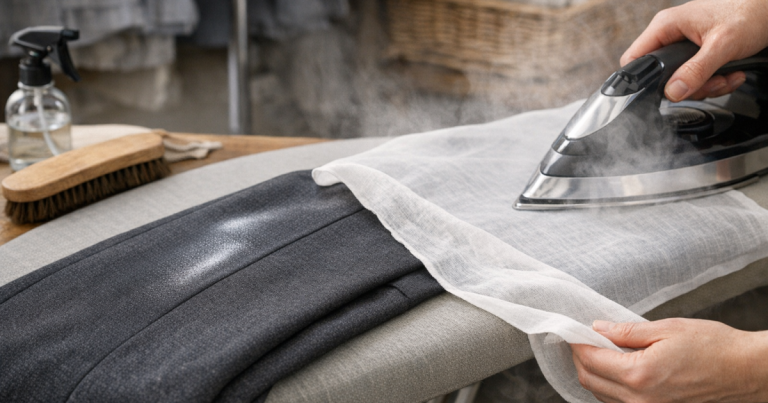
For structured coats and blazers, brushing is also useful before steaming, because it removes dust that could otherwise become more obvious once the pile relaxes. If you also use steam for outerwear, see our guide to choosing a steamer for coats and blazers.
Pet hair on dark clothing
Sticky rollers tend to win for pet hair, particularly short, stiff hairs that lodge across black trousers, leggings or work shirts. The adhesive grabs individual hairs quickly, whereas a velvet surface can simply move some hairs around.
For heavier shedding, start with a dry rubber glove or pet-hair garment brush to loosen the hair, then finish with a roller. This reduces how many adhesive sheets you use.
Knitwear and jumpers
Use caution on knitwear. A velvet lint brush can remove loose lint from a tightly knitted jumper, but it is not a de-bobbler and should not be dragged hard across soft wool, cashmere or open stitches. If the garment is shedding because it has been washed or dried poorly, solve that first rather than brushing more aggressively.
For washing care, follow the fabric label and use cool, gentle handling. Our guide to washing wool jumpers without shrinking or felting explains why agitation and heat can make fibres lift and tangle.
Satin, sequins and special finishes
Neither tool is ideal for every delicate fabric. Satin can mark if rubbed too firmly, while sequins, beads and loose embellishments can snag on brush fabric or lift under adhesive. On these garments, dab gently with low-tack tape only where needed, or remove lint by hand.
If the problem is general dullness rather than lint, cleaning technique matters more than brushing. For occasionwear, read our advice on cleaning satin dresses while keeping the sheen.
A simple way to test before you commit
Before using either tool across the whole garment, test on a discreet area such as an inside hem, underarm seam or lower back panel. The test should tell you whether the fabric sheds, snags, dulls or reacts badly to pressure.
- Check the fabric label: if it says dry clean only or warns against rubbing, be extra gentle.
- Look for loose texture: bouclé, brushed wool, mohair-style yarns and open knits can catch easily.
- Try one light pass: do not judge the tool by scrubbing; repeated pressure is what damages fibres.
- Inspect in daylight: artificial light can hide shine, pulled fibres or adhesive marks.
- Stop if fibres lift: once the surface begins to fuzz, more brushing will usually make it worse.
When reusable velvet lint brushes are the better everyday tool
Reusable velvet lint brushes are better than sticky rollers when the job is regular, light maintenance rather than emergency debris removal. They suit households that routinely freshen coats, uniforms, work trousers or dark officewear before wearing.
They are also useful when you want to reduce single-use waste. A brush does not need refill sheets, and it can live near the front door, in a wardrobe or beside an ironing board. Over time, that convenience encourages small, careful garment care habits rather than leaving everything until laundry day.
The brush is not automatically gentler in every situation, though. A poorly made brush, a rough stroke or repeated brushing on a delicate surface can still disturb fibres. The benefit comes from controlled dry lifting, not from being a magic safe tool for all fabrics.
When sticky rollers still make more sense
Sticky rollers are hard to beat for speed. If you are about to leave for work and discover cat hair down one side of your trousers, a roller gives a visible result in seconds. They are also useful in a sewing room, on school uniforms before photographs, or after trying on clothes that have picked up fibres from another garment.
A roller can be the more hygienic-feeling option for small messes too, because the used sheet is peeled away and binned. That matters if you are removing grit, crumbs or hair from a garment and do not want to clean a brush immediately afterwards.
The sensible compromise is to keep a roller for difficult hair and urgent fixes, while using a reusable brush for most routine lint. That way you use fewer adhesive sheets without giving up the tool that works best on stubborn debris.
Common mistakes that damage fabric
- Using a lint brush as a bobble remover: pills are tangled fibre balls, not loose lint. Use a suitable comb or fabric shaver with care; for fine fibres, see our piece on whether cashmere combs remove bobbles without pulling.
- Rolling adhesive over damp clothes: lint sticks differently when fabric is damp, and adhesive can transfer more readily.
- Brushing both directions: velvet brushes are directional. Back-and-forth scrubbing reduces effectiveness and increases friction.
- Pressing too hard: lint removal should happen at the surface. Heavy pressure can flatten pile or raise fuzz.
- Skipping garment storage: if coats and jumpers are stored uncovered beside shedding fabrics, lint returns quickly.
How to get better results from either tool
Work on a dry garment in good light. Hang coats and jackets on a sturdy hanger, or lay knitwear flat so you are not stretching it while brushing. Start at the top and move down, following the fabric grain where you can.
Clean a reusable brush often during the job. Once the velvet surface is loaded with lint, it stops lifting properly and may redeposit fluff elsewhere. With a roller, peel the sheet as soon as it loses tack rather than pressing harder.
For clothes that attract lint repeatedly, look at the source. Fluffy towels, shedding scarves, tissue left in pockets, overfilled wardrobes and indoor drying near dusty corners can all make garments look untidy again within hours.
Things readers ask
Can a reusable lint brush remove dog or cat hair?
It can remove some loose pet hair, but sticky rollers usually perform better on short or stubborn hairs. A rubber pet-hair tool followed by a light roll often works well for heavy shedding.
Will a sticky roller ruin wool?
Not usually from one gentle pass on a robust wool coat, but repeated use, strong adhesive or heavy pressure can disturb the surface. Test first and avoid using sticky rollers on loose, brushed or very delicate wool.
Do lint brushes work on sofas and upholstery?
Some do, but garment brushes are designed for clothing-sized areas. On upholstery, check the fabric care label and test first, as textured weaves and loose fibres can snag.
What to remember
For a low-waste, fabric-conscious routine, a reusable velvet brush is the better everyday tool for dry lint on coats, tailoring and uniforms. For pet hair, urgent clean-ups and awkward debris, a sticky roller remains useful.
The real answer is not one tool replacing the other. Use the brush for regular maintenance, keep a roller for the jobs adhesive does best, and match the pressure to the fabric rather than the amount of lint you can see.