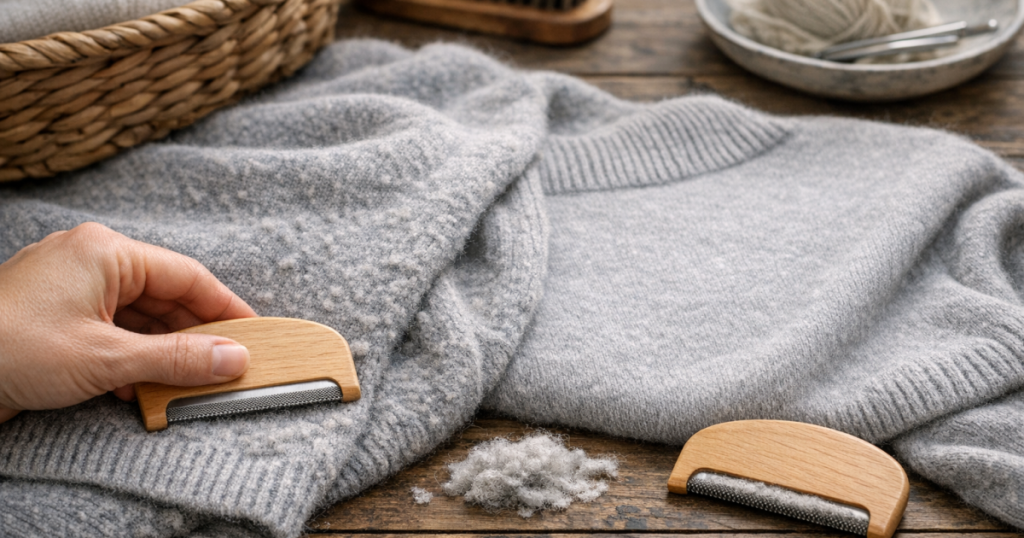
Bobbles on cashmere are annoying because they make an expensive jumper look tired long before the yarn is actually worn out. Used carefully, cashmere combs can lift many surface pills without dragging out the finer fibres, but they are not suitable for every knit or every type of fuzz.
What to know first
The short answer is yes: a proper comb can remove bobbles from cashmere without obvious fibre pulling, provided the fabric is dry, supported and treated with very light strokes. The risk comes from using too much pressure, working against the knit, or trying to scrape away the natural soft halo that gives cashmere its feel.
- Use the tool only on visible bobbles, not across the whole garment as a routine.
- Keep the fabric flat and slightly taut, but never stretched.
- Work slowly in one direction, clearing the teeth as you go.
- Stop if the comb catches, lifts loops or makes the surface look thin.
Think of de-bobbling as small maintenance, not a full resurfacing job. The aim is to remove compact pills sitting on top of the knit while leaving the underlying yarn intact.
Why cashmere bobbles in the first place
Cashmere is made from very fine animal fibres. Those fibres feel soft because they are delicate, flexible and often shorter than tougher wool fibres. When a jumper rubs under the arms, against a coat lining, over a seat belt or across a bag strap, loose fibre ends can migrate to the surface. Over time they tangle into small balls.
That does not automatically mean the garment is poor quality. Some pilling is normal on soft knitwear, particularly in high-friction areas. What matters is how you remove the pills. Pulling them off with fingers can tug at yarns and enlarge weak areas. A sharp or aggressive tool can cut into the knit. A fine comb, used with restraint, is designed to catch the bobble rather than rake through the whole surface.
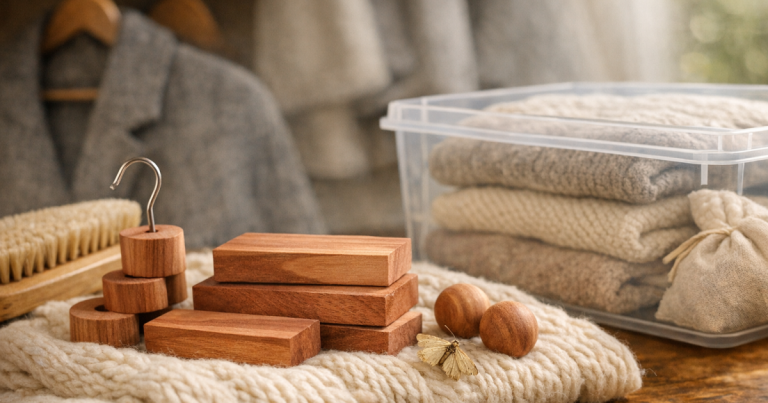
Good storage also reduces avoidable friction between wears. For seasonal knitwear, follow careful folding and breathable storage habits; the guide on how to store cashmere jumpers safely covers the parts of care that happen after washing and de-bobbling.
When the tool is suitable, and when it is not
Cashmere combs are most useful on medium-weight jumpers, cardigans, scarves and knitted accessories where the bobbles are compact and sitting on the surface. They are less suitable for very open knits, brushed finishes, gauzy shawls, lace panels, heavy texture or areas with loose loops.
Good candidates
- Small bobbles on elbows, side seams, cuffs and underarms.
- Smooth jersey-knit cashmere with a reasonably stable surface.
- Firm bobbles that can be lifted without dragging a long strand behind them.
- Garments that have been washed, dried flat and rested before de-bobbling.
Areas to treat with caution
- Ribbed cuffs, hems and necklines, where the comb can catch raised ridges.
- Decorative stitches, cables and textured panels.
- Seams, labels and edges where the knit changes thickness.
- Very fluffy cashmere where the natural halo is part of the finish.
If the surface looks fuzzy rather than bobbled, do not keep combing in the hope of making it smooth. Fuzz is fibre bloom; pills are tangled knots. Removing pills is reasonable maintenance. Trying to remove every trace of fuzz can make the garment look flattened and overworked.
How to remove bobbles without pulling fine fibres
Set aside a few minutes and work in good daylight. It is easier to protect the fabric when you can see exactly where the bobbles are.
1. Start with a clean, dry garment
Never comb damp cashmere. Wet fibres are more vulnerable to stretching and distortion. If the garment has been washed, let it dry fully on a flat surface first. Give it a gentle shake and smooth it into its natural shape before you begin.
2. Lay it flat on a firm surface
Use a table, ironing board or clean worktop with a towel underneath. The support matters because a hanging garment moves around, making it more likely that the tool will catch and pull. Smooth the area with your hand, but do not stretch it wider than its normal shape.
3. Test on a hidden section
Try one or two gentle strokes on an inside hem or low-visibility area. Check whether the comb removes only the bobble or whether it lifts loose fibres around it. If the surface starts to look thinned, fuzzy in a different way, or snagged, stop and use a gentler method such as hand picking with small embroidery scissors for isolated pills.
4. Work with short, light strokes
Hold the fabric steady with one hand. With the other, move the comb over the bobbled area using short strokes in one direction. Keep the angle shallow rather than digging the teeth down into the knit. Let the tool skim the surface; do not saw backwards and forwards.
5. Clear the comb often
Fibres caught in the teeth can drag across the next section and increase friction. After a few strokes, remove the collected pills from the comb before continuing. This also helps you see how much material is being removed. A small amount of bobbled fibre is normal; a fluffy wad after a few strokes suggests you are taking too much.
6. Stop before the garment looks perfect
The safest result is tidy, not factory-new. A cashmere jumper with a soft, natural bloom will never look like a flat synthetic knit, and it should not. Once the obvious bobbles are gone, finish by smoothing the fabric with your hands and folding it flat.
What fibre pulling looks like
Fine fibre pulling is not always dramatic. It may begin as a few lifted hairs, a slightly grazed patch or a line where the comb has caught. Learn to spot these signs early:
- Long strands lifting from the knit rather than small round pills detaching.
- A patch looking paler, thinner or shinier after combing.
- The tool snagging repeatedly in the same direction.
- Raised loops appearing around seams, ribbing or textured stitches.
- A scratchy surface where the cashmere previously felt soft.
If any of these happen, stop immediately. Continuing usually makes the damage more visible. For a single raised loop, do not cut it at the surface; gently ease it back to the inside if possible, or leave it alone rather than creating a hole.
Comb, fabric shaver or clothes brush?
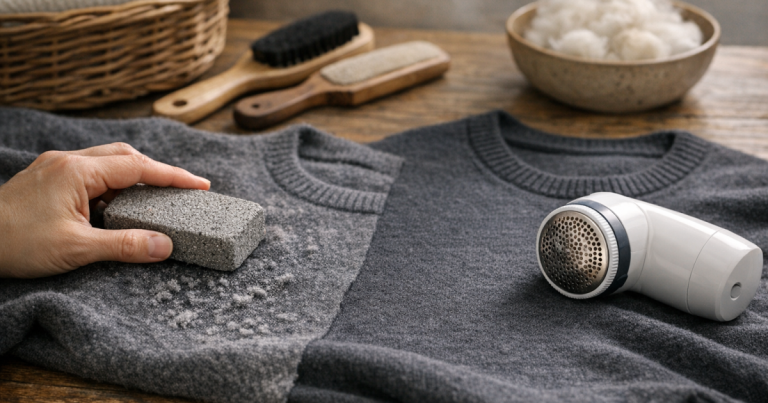
Different tools suit different types of surface care. A comb is simple and controlled, but it relies on your pressure and judgement. An electric fabric shaver can be useful on sturdier knitwear, yet it can cut fibres if used too close or over raised texture. A soft clothes brush will not remove firm bobbles, but it can lift lint and dust without the same scraping action.
- Use a comb for small, defined pills on smooth cashmere.
- Use a soft brush for dust, pet hair and light surface fluff.
- Use small scissors only for isolated pills that stand proud and can be trimmed without cutting the knit.
- Avoid sticky lint rollers on very delicate cashmere if they leave adhesive drag or flatten the nap.
The right tool is the one that removes the least material while solving the visible problem. With luxury knitwear, less intervention is usually safer than repeated correction.
How to reduce bobbles between wears
De-bobbling is only one part of cashmere care. Most pilling comes from repeated friction, so small wardrobe habits make a real difference.
- Rest cashmere for a day between wears so fibres can relax.
- Fold jumpers rather than hanging them, which can stretch shoulders.
- Keep rough bag straps, belts and heavy coat linings away from high-friction areas where possible.
- Wash only when needed, using a gentle process suited to the care label.
- Store fully dry garments in breathable bags or boxes before putting them away for the season.
For coats, jumpers and delicates that are going away for longer than a few weeks, the long-term clothes storage guide gives a fuller routine for cleaning, folding and protecting fabrics before they are packed away.
Questions people ask
Can I use a cashmere comb after every wear?
No. Use it only when visible bobbles have formed. Combing after every wear removes unnecessary fibre and can shorten the useful life of the surface. Light brushing, airing and careful folding are better routine habits.
Is it normal for expensive cashmere to bobble?
Yes, some bobbling is normal because cashmere fibres are fine and soft. Price, yarn quality, twist, knit structure and how the garment is worn all affect how much pilling appears. High-friction areas almost always show wear first.
Should I pull bobbles off with my fingers?
Avoid pulling them off. Fingers often tug connected fibres from the yarn, leaving a weak spot. If a bobble is too stubborn for light combing, trim it carefully at the surface rather than yanking it away.
Can combing prevent moth damage?
No. Combing removes surface pills; it does not protect against clothes moths. Clean storage, regular inspection and suitable deterrents matter more. If moths are a concern in a wool wardrobe, read the guide to choosing clothes moth protection before storing cashmere for the season.
Key takeaways
Cashmere combs can remove bobbles without pulling fine fibres when the garment is stable, dry and treated with a very light touch. They work best on compact surface pills, not general fuzz or delicate open textures. Lay the garment flat, test first, use short strokes and stop as soon as the obvious bobbles have gone.
The safest approach is restraint. Cashmere should retain a soft halo, and a little natural texture is better than an over-combed, thinned surface. Combine occasional de-bobbling with careful wearing, gentle cleaning and proper storage, and your knitwear will look tidier without losing the qualities that make it worth caring for.