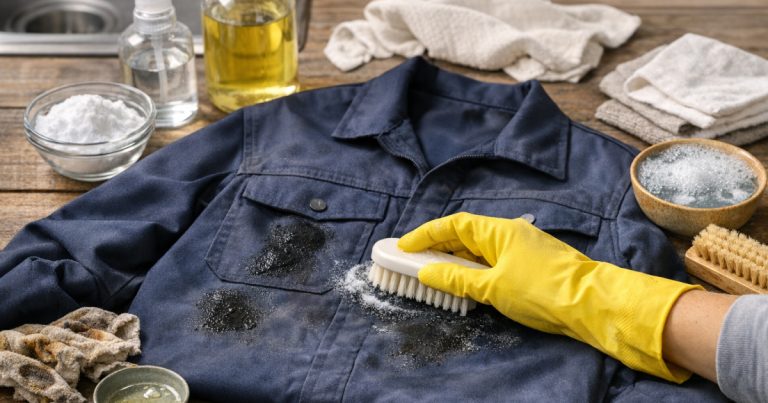
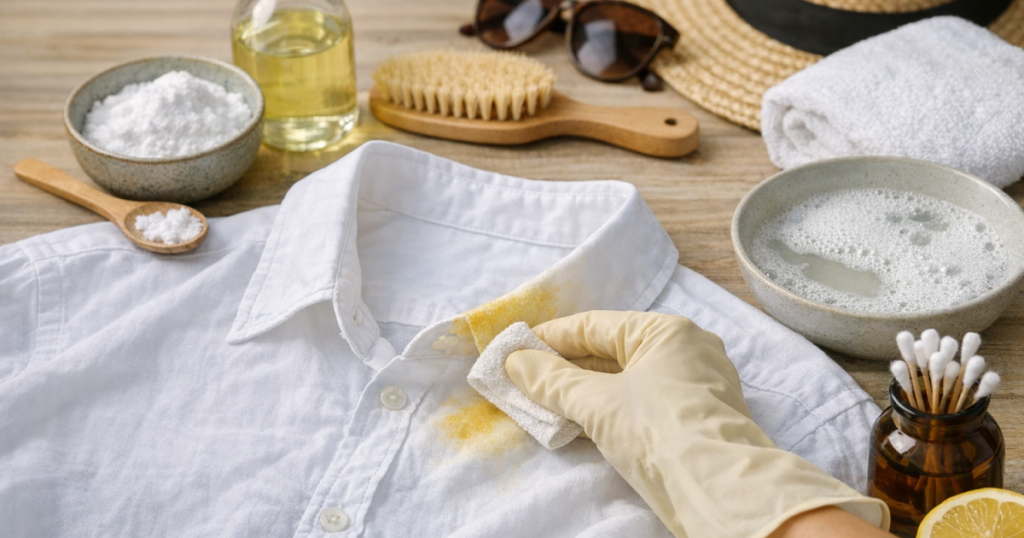
White shirts show every summer mark, and sun cream stains can be particularly stubborn because they combine oily emollients with UV filters and, sometimes, minerals from hard water. The key is to break down the oily layer first, then treat any yellow or orange residue before heat has a chance to set it.
Work gently, keep the shirt out of the tumble dryer until the mark has gone, and check the care label before using whitening products or hotter washes.
The fastest safe approach
- Do not put the shirt straight into a hot wash. Heat can make oily and yellow marks harder to shift.
- Pre-treat the greasy area first. liquid laundry detergent or a tiny amount of clear washing-up liquid helps loosen the emollient part of the stain.
- Use oxygen-based whitening only where the care label allows. This is usually safer for washable white cotton than chlorine bleach.
- Check before drying. A faint mark is easier to treat while the fabric is still damp.
- Repeat gently if needed. One careful second treatment is better than aggressive scrubbing.
Why SPF marks can turn yellow or orange
Sun protection products are designed to stay on skin, resist sweat and cling through light rubbing, so they are not always easy for a normal wash cycle to lift from cotton, linen or polyester shirts. Many formulas contain oils, waxes or silicones that sit in the fibres, particularly around collars, cuffs, plackets and shoulder seams.
Some UV filters can also react with iron in water, which is why a pale greasy patch may become a stronger yellow or orange mark after washing. This is more noticeable on white shirts and in hard-water areas. Mineral sunscreens can leave a different problem: a chalky or greyish residue from ingredients such as zinc oxide or titanium dioxide. The treatment is similar at the start, but the final whitening step may differ.
Step-by-step: removing sun cream stains from a white shirt
1. Blot and lift any excess first
If the stain is fresh, use a clean white cloth, kitchen towel or the blunt edge of a spoon to lift off any visible cream. Do not rub hard across the fabric, as this can push the product deeper into the weave and spread it beyond the original mark.
For a shirt worn on holiday, at a barbecue or on the school run, it is worth checking the most common transfer points: inside the collar, sleeve cuffs, button band, hem where it touches the waistband, and shoulder areas where skin, bags or seat belts rub against the fabric.
2. Rinse from the reverse side
Hold the stained area under cool to lukewarm running water from the back of the fabric. This helps push residue out rather than further through the front of the shirt. Avoid very hot water at this stage. Hot water can make greasy residue and yellowing harder to remove, especially if the mark has already been through one wash.
3. Pre-treat the oily layer
Lay the shirt flat on a clean towel. Apply a small amount of liquid laundry detergent directly to the stain and work it in with your fingertips or a soft laundry brush. A clear, uncoloured washing-up liquid can also help with oily marks, but use only a tiny amount and rinse well before machine washing so you do not create excess foam in the machine.
Leave the pre-treatment for 10 to 15 minutes. Do not let it dry fully on the fabric. On crisp white cotton this is usually straightforward, but on linen, viscose blends or shirts with stretch, keep handling gentle to avoid distortion.
4. Rinse, then inspect in natural light
Rinse the treated section thoroughly. Hold the shirt near a window rather than relying only on warm indoor lighting, as yellow marks can look less obvious under artificial light. If the stain still feels greasy or looks shiny, repeat the detergent step before moving on to whitening.
5. Treat yellow residue with an oxygen-based whitener
If the oily feel has gone but a yellow or orange mark remains, use an oxygen-based stain remover suitable for washable whites, following the pack instructions and the shirt care label. A product such as Vanish Oxi Action Crystal White Powder is a familiar example of the type to consider, but the important checks are fabric suitability, soaking time and whether the garment contains trims, embroidery or elastane.
Do not assume white means indestructible. White cotton can usually tolerate more robust treatment than a white viscose blouse, a polyester work shirt or a linen shirt with contrast stitching. Test on an inside seam if the fabric is delicate or the shirt is valuable.
6. Wash at the warmest safe temperature
Wash the shirt on the warmest temperature allowed by the care label. A good-quality laundry detergent is usually enough once the stain has been pre-treated. For robust white cotton, a powder detergent such as Ariel Original Washing Powder can be part of a normal whites wash, provided it suits the garment label and your household needs.
Do not overload the drum. Shirts need space for water and detergent to move through the fibres. Fastening buttons loosely and turning the shirt inside out can reduce abrasion while still letting the wash reach the stained area.
7. Check the shirt before it dries
When the cycle finishes, inspect the stain while the fabric is still damp. If there is any remaining yellowing, repeat the pre-treatment rather than ironing or tumble drying. Heat from an iron, radiator or dryer can set the residue and make the next attempt less effective.
Air-dry the shirt on a hanger or drying rack with good air movement. If you are drying indoors during humid British weather, the same airflow principles used to stop air-dried clothes smelling damp indoors also help shirts dry cleanly without mustiness.
What to do if the shirt has already been washed
A washed-in SPF mark is not hopeless, but it usually needs more patience. Start again with the detergent pre-treatment rather than jumping straight to bleach. The oily part of the stain may still be present, and whitening a greasy patch rarely works well.
- If the mark is pale yellow: pre-treat with liquid detergent, rinse, then wash again with an oxygen-based product if the care label allows.
- If the mark is orange or rust-coloured: avoid chlorine bleach. The colour may be linked to a reaction with minerals in water, and harsh bleaching can make fabric damage more likely.
- If the area feels stiff: soak in lukewarm water with detergent first, then gently flex the fabric between your fingers before rinsing.
- If the shirt has stretch: avoid prolonged hot soaking, which can be unkind to elastane and collar structure.
Older marks may take two or three gentle rounds. Stop if the fabric starts to look thin, roughened or grey, as over-treatment can leave a more obvious worn patch than the original stain.
Fabric-specific checks before treating
White cotton school or work shirts
Cotton is usually the most forgiving. Pre-treat the oily area, wash at the care label temperature and use an oxygen-based whitener if needed. Pay attention to collars and cuffs, where SPF mixes with sweat, sebum and everyday grime.
White linen shirts
Linen can tolerate washing well when the care label allows it, but it creases and can abrade if scrubbed harshly. Press the detergent into the fibres rather than brushing aggressively. Reshape seams while damp and avoid wringing.
White polyester or easy-iron shirts
Synthetic fibres can hold oily residue and may show grey shadowing if the stain is not fully removed before drying. Use detergent pre-treatment and a full rinse. Avoid high heat unless the care label clearly permits it.
Delicate white blouses and satin-finish fabrics
If the shirt is silky, satin-finish or labelled hand wash only, reduce agitation and test first. Sheen can be dulled by rubbing, strong stain removers or rough brushes. The same cautious handling principles used when cleaning satin without dulling the sheen apply to delicate white tops too.
Mistakes that make SPF staining worse
- Using chlorine bleach as the first step: it can be too harsh for many shirt fabrics and is not the best first response to oily residue.
- Ironing before checking: heat can set the mark. Finish the shirt only once the stained area is fully clean.
- Scrubbing with a stiff brush: this can roughen cotton, damage linen slubs and leave a fuzzy patch on blends.
- Mixing stain products casually: use one method at a time, rinse between treatments and follow product labels.
- Leaving sun cream to sit for days: the longer it remains in the fibres, the more likely yellowing becomes.
Prevention for white shirts in summer
Let sun cream absorb before putting on a white shirt, especially around the neck, chest and forearms. If you are using a high-protection product under a linen overshirt, give it several minutes before dressing and wipe excess from the neckline area with a damp cloth.
For commuting, holidays and outdoor work, consider wearing a washable base layer or darker overshirt when applying SPF repeatedly through the day. Wash white shirts promptly after heavy sun cream use rather than leaving them in a laundry basket, where heat and body oils can make the stain more stubborn.
Once the shirt is clean and dry, finishing matters too. If collars and plackets need pressing after stain removal, use moderate heat for the fabric and avoid lingering over any area that previously showed yellowing. For regular shirt care, the guide to choosing between a steam iron and a generator iron for shirts is a useful next step.
Common questions
Can I use vinegar on sun cream marks?
Vinegar is not the best first treatment because SPF stains are usually oily. Detergent is more effective for breaking down the greasy layer. If you use vinegar for odour or rinsing in other laundry tasks, do not mix it directly with stain removers.
Will washing at 60°C remove the stain?
Only wash at 60°C if the care label allows it. A hotter wash without pre-treatment can leave sunscreen residue behind or set yellowing. Pre-treat first, then wash at the warmest safe temperature for that shirt.
Why did the stain appear after washing?
The residue may have been invisible before washing, then reacted with water minerals, detergent or heat. This is common around collars and cuffs where product transfer is light but repeated.
Is oxygen bleach safe for every white shirt?
No. It is generally useful for many washable whites, but you still need to check the care label, trims and fibre content. Avoid it on delicate fabrics unless the garment label and product instructions allow it.
Can sunlight whiten the stained area?
Sunlight can brighten some whites, but it is not a reliable stain treatment and can weaken or yellow certain fabrics over time. Remove the oily residue first and dry the shirt out of harsh direct heat.
The big picture
The safest way to remove sun cream stains from white shirts is to treat them as a two-part problem: oil first, discolouration second. Start with detergent, rinse well, use oxygen-based whitening only when suitable, and keep the shirt away from heat until the mark has disappeared. Gentle repetition protects the fabric far better than panic bleaching or aggressive scrubbing.