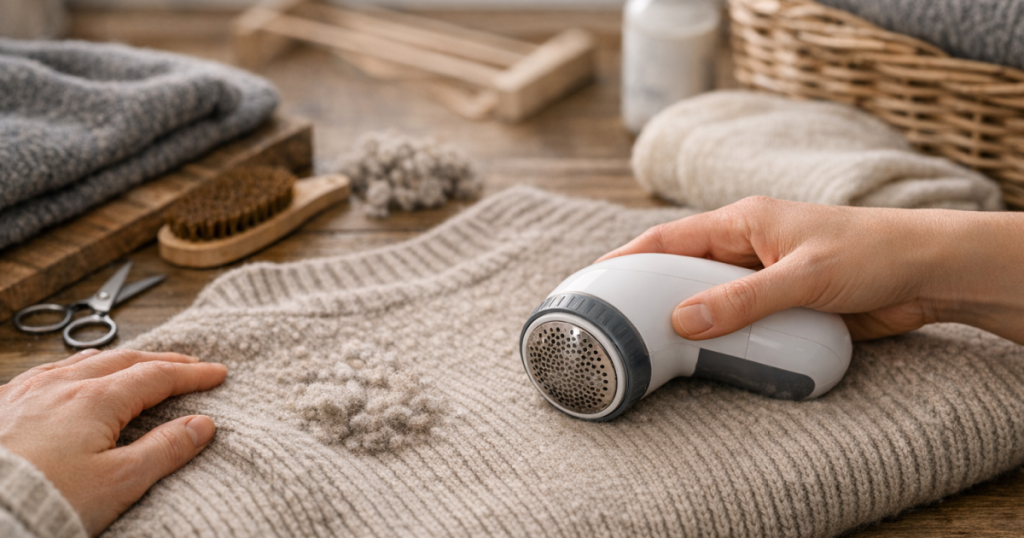
A fabric shaver can make a tired jumper look neater in minutes, but knitwear needs a lighter touch than woven cloth. Learning to use a fabric shaver properly is mostly about controlling pressure, direction and surface tension, rather than rushing over every bobble you can see. The safest results come from preparing the garment, testing a hidden patch, then working in small sections with the fabric supported flat.
At a glance
- Only shave clean, fully dry knitwear; damp fibres are more likely to drag.
- Start on a hidden area, especially with wool, cashmere, merino, alpaca and open knits.
- Keep the garment flat but not stretched tight, so the shaver skims the surface rather than bites into loops.
- Use short, light passes and stop as soon as the surface looks tidier.
- Avoid raised seams, ribbed cuffs, cable-knit texture, embroidery, pulls and loose yarn ends.
Why knitwear snags more easily than woven fabric
Knitwear is made from interlinked loops. That structure gives jumpers, cardigans and knitted dresses their stretch, warmth and softness, but it also leaves more opportunities for a rotary shaver to catch. A woven shirt usually has a flatter, tighter surface; a wool jumper may have raised loops, fluffy fibres and areas that stretch under pressure.
Bobbles form when loose fibres work their way to the surface and tangle through wear and washing. A fabric shaver cuts those raised pills away. It should not be used to grind down the whole surface of the garment. If you remove too much fibre, the knit may look flatter, thinner or fuzzier over time.
The risk is highest on softer animal fibres, loosely spun yarns, textured knits and worn areas such as elbows, underarms and side seams. Synthetic blends can also bobble heavily, but they often hold pills firmly, which tempts people to press harder. That is when snagging tends to happen.
Step 1: check whether the garment is suitable
Before switching the shaver on, read the care label and look closely at the knit structure. A smooth acrylic school cardigan, fine cotton knit or tightly knitted wool jumper is usually easier to treat than a brushed mohair-style cardigan, boucle knit or anything with long, fluffy fibres.
Be cautious with very fine merino, cashmere, alpaca, angora-style fibres, open crochet-like knits and garments with decorative yarns. These can still be refreshed, but they need slower handling and may be better treated by hand in the most delicate areas. If you are deciding between shaving and a manual method for fine wool, the same caution applies to abrasive tools; the guide to whether sweater stones are too abrasive for merino knitwear explains why fibre type matters so much.
Do not shave a garment if you can see broken yarns, holes, laddering, loose loops or pulled threads. A shaver can catch those defects and make them worse. Deal with repairs first, or avoid the damaged area entirely.
Step 2: prepare the jumper before shaving
Good preparation reduces snagging more than any clever technique. The fabric should be clean, dry and free from grit. Dirt, pet hair and crumbs can lift the shaver head away from the surface, while damp fibres can clump and drag.
- Fasten buttons or zips so the garment lies evenly.
- Turn out pockets if the knit has them, then smooth the fabric back into shape.
- Lay the item on a firm, flat surface such as a table, ironing board or clean worktop covered with a towel.
- Brush away loose lint by hand before shaving.
- Place good light over the area so you can see pulls, seams and texture clearly.
An ironing board is useful for sleeves and narrow panels because it gives support without making the garment hang or stretch. Avoid shaving knitwear while wearing it. Body movement, curved surfaces and hidden folds make it much easier for the blade guard to catch a loop.
Step 3: test a hidden area first
Always test somewhere inconspicuous, such as an inside hem, the underside of a sleeve or a small area near a side seam. Use the gentlest setting available, if your shaver has settings, and make two or three light passes only.
After the test, check three things: whether the bobbles have lifted cleanly, whether the surface has become fuzzy, and whether the knit looks thinner or disturbed. If the fabric looks roughened, stop. A manual lint comb, careful finger-picking, or simply leaving some pills in place may be safer than continuing.
The same testing habit applies whether you are using a simple supermarket model, Philips GC026/00 Fabric Shaver, or a higher-end option such as Steamery Pilo 2 Fabric Shaver. The tool matters, but the fabric’s response matters more.
Step 4: hold the fabric flat without stretching it
Surface tension is the detail many people miss. The garment should be smooth enough that the shaver can glide, but not pulled so tight that the knit loops stand proud. Over-stretching exposes the structure of the knit and can make the blade guard catch.
Use one hand to gently support the fabric ahead of the shaver. Keep your fingers well away from the shaving path, and work on a small patch at a time. On sleeves, rotate the sleeve around the board rather than dragging the shaver over a wrinkled tube of fabric.
For ribbed cuffs, hems and necklines, treat only the flatter surface if needed. Ribbing has raised columns and valleys, so a shaver can dip unevenly. If the bobbling is minor, leave ribbed areas alone; a slightly worn cuff is usually less noticeable than a snagged one.
Step 5: shave with short, light passes
Switch the fabric shaver on before it touches the garment, then place it gently onto the surface. Move in short, slow strokes rather than wide sweeping circles. Lift the shaver between sections so you do not accidentally drag it over seams or raised details.
- Use almost no downward pressure; the guard should skim the pills.
- Work with the flattest direction of the knit where possible.
- Pause often to check the surface rather than waiting until a whole panel is finished.
- Empty the lint compartment before it becomes packed, as poor airflow can reduce performance and encourage repeated passes.
- Stop once the garment looks acceptable; chasing every last bobble can overwork the fabric.
If a pill will not lift after a few gentle passes, do not press harder. It may be attached to a longer fibre or caught in the knit structure. Snip it carefully with small sharp scissors if you can isolate it without cutting the garment, or leave it rather than risking a hole.
Areas to avoid completely
Some parts of a knitted garment are poor candidates for machine shaving. These areas may contain texture, construction details or loose fibres that are more likely to catch than ordinary pilling.
- Cable-knit ridges and chunky textured patterns.
- Embroidered logos, badges, beading or appliqué.
- Button bands, buttonholes and zip edges.
- Seams with raised stitching or bulky joins.
- Loose yarn ends, pulls, ladders, holes or repairs.
- Very fluffy brushed finishes where the halo is part of the garment’s look.
Work fleeces, knitted uniform layers and everyday acrylic jumpers can usually take more maintenance than luxury wool, but they still need care around seams and cuffs. For heavier synthetic garments, see the separate advice on how to remove bobbles from work fleeces safely, as fleece behaves differently from looped knitwear.
Aftercare: keep the knit tidy for longer
Once the bobbles are removed, shake the garment gently and brush away loose lint with your hand or a soft clothes brush. Empty and clean the shaver head according to the maker’s instructions before storing it, so trapped fibres do not affect the next use.
Give the knit a rest before washing or wearing if it has been heavily treated. Repeated friction is what causes pilling, so think about where the bobbles formed. Underarms, seat belts, backpack straps, desk edges and coat linings are common culprits. Reducing rubbing will slow the return of pills more effectively than shaving more often.
Storage matters too. Fold heavier jumpers rather than hanging them, and use supportive hangers only for knits that can handle hanging without stretching. If shoulder bumps are a regular problem, the guide to choosing hangers that stop shoulder bumps is a useful next step for keeping refreshed garments in shape.
How often should you shave knitwear?
As little as possible. A fabric shaver removes fibres from the surface, so it is best treated as occasional maintenance rather than a weekly habit. For everyday jumpers, one careful refresh when bobbles become visible is usually better than frequent light shaving after every wear.
High-friction garments may need attention more often, but try to solve the cause as well. Wash similar fabrics together, avoid overloading the machine, turn knitwear inside out where the care label allows, and dry flat when needed. A gentler laundry routine will preserve the fabric better than relying on shaving to tidy up damage afterwards.
Common mistakes that cause snags
Most fabric shaver accidents come from speed, pressure or poor surface support. If you slow down and check the fabric before every pass, the risk drops sharply.
- Shaving over a fold: the blade guard can catch the raised crease.
- Pressing harder on stubborn pills: this can bite into the knit rather than remove the bobble.
- Using circular motions on textured wool: the shaver may cross raised loops from several angles.
- Ignoring seams: bulky joins lift the shaver and create snag points.
- Working in poor light: pulls and holes are easier to miss.
- Continuing after the fabric looks fuzzy: this suggests the surface is being overworked.
If you use a fabric shaver on several garments in one session, start with the hardier items first to get your rhythm, then move to more delicate pieces only when you are working slowly. Clean the head between very different fabrics so coarse lint is not carried onto fine wool.
Things readers ask
Can I shave cashmere?
Cashmere can be shaved, but only with a very light touch after testing a hidden area. Avoid seams, ribbing and thin patches, and stop as soon as the surface looks neater.
Is it better to shave knitwear inside out?
Usually no, because most bobbles are on the outside where friction occurs. Shave the visible surface carefully, but turn the garment inside out for washing if the care label permits.
Why does my jumper look fuzzier after shaving?
It may have been over-shaved, pressed too hard, or made from a soft fibre that releases more surface fluff. Stop and let the fabric settle before deciding whether to do anything else.
Can a fabric shaver fix pulled threads?
No. A pulled thread should not be shaved. Ease it back into the knit or repair it carefully, because cutting it can create a hole or ladder.
Should I wash knitwear before or after shaving?
Shave clean, dry knitwear. Washing first removes dirt and loosens surface lint, but make sure the garment is fully dry and reshaped before you start.
Why it matters
A fabric shaver is useful because it tidies the damage caused by wear, but it is not a substitute for gentle washing, careful drying and sensible storage. The safest approach is to treat bobbles as surface maintenance: remove what is loose, protect the knit structure underneath, and stop before the garment looks stripped.
For most UK wardrobes, that means using the shaver sparingly on school cardigans, work jumpers, casual knits and winter layers, while being much more cautious with fine wool and delicate fibres. Done patiently, it can extend the wearable life of knitwear without leaving obvious shave marks, snags or thin patches.