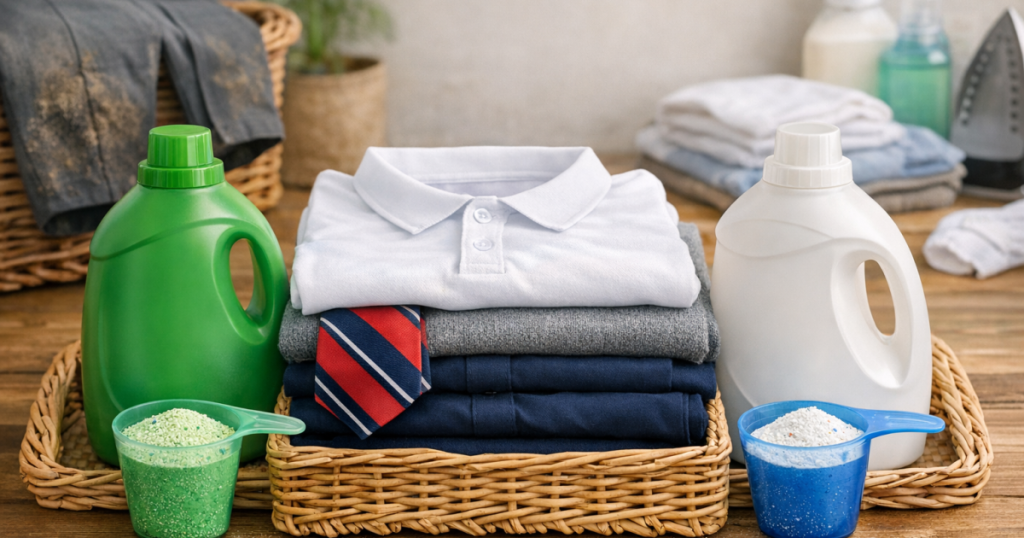
School uniforms have to survive grass, lunch spills, sweat, paint, playground dust and repeated washing, so choosing between bio or non-bio detergent can affect both cleanliness and fabric comfort. The best choice is not the same for every household. It depends on the child’s skin, the stains you deal with most often, the fabric mix of the uniform, and whether you can wash promptly rather than leaving damp clothes in a basket.
The short version for busy school weeks
For most everyday school uniform loads, biological detergent is useful when stains are the main problem. Enzymes help break down common marks such as food, sweat and mud-related grime, usually at normal household wash temperatures. Non-biological detergent is often the safer first choice for children with reactive skin, or for families who prefer to keep laundry formulas simpler.
The real answer is often a split routine: use biological detergent for heavily stained polo shirts, PE kit and socks, and use a gentle non-biological option for items worn directly against sensitive skin. Whichever route you choose, careful dosing, good rinsing and proper drying matter just as much as the detergent label.
How biological detergent works on uniform stains
Biological detergent contains enzymes designed to target certain types of stains. On school uniform, that usually means food splashes on shirts, sweat around collars and underarms, and general grime on cuffs and socks. It can be helpful when you wash at 30°C or 40°C and want stain removal without repeatedly using hotter cycles.
It is particularly useful for cotton-rich polo shirts, PE T-shirts, sports socks and washable shirts that come home marked several times a week. If a child regularly drops tomato-based lunch, yoghurt, fruit juice or chocolate on a top, a biological formula can give you a better chance before stains settle.
There are limits. Biological detergent is not a magic fix for dried-in ink, set paint, oily stains or marks that have already been tumble-dried into the fibres. It is also not the right choice for every fabric. Avoid using enzyme detergents on wool, silk or delicate trims unless the garment care label clearly allows it, because protein-based fibres and decorative details can be more vulnerable to damage.
Where non-biological detergent makes more sense
non-biological detergent does not use enzymes. Many UK households choose it for babies, younger children, sensitive skin or eczema-prone skin, although fragrance, fabric conditioner, over-dosing and poor rinsing can also contribute to irritation. If your child complains that shirts feel itchy, or you notice detergent residue on dark uniform, switching to a simpler non-biological routine may help you identify the cause.
Non-bio can still clean school uniform well, especially if clothes are not heavily stained or if you pre-treat marks quickly. It is a sensible option for daily shirts, vests, tights, socks and base layers where skin contact matters more than heavy stain removal. It can also be useful for jumpers, cardigans and sweatshirts that need regular freshening but are not covered in food or mud.
If skin irritation is persistent, worsening or clearly linked with clothing contact, laundry changes should not replace medical advice. A GP, pharmacist or qualified healthcare professional should assess suspected eczema, allergy or dermatitis in line with UK health guidance.
Step-by-step: choosing the right routine
1. Start with the garment label
Before deciding on detergent, check the care label. School shirts and polos are usually straightforward, but blazers, pleated skirts, embroidered badges, coated waterproofs and wool-blend jumpers may need cooler washing, gentle cycles or professional cleaning. If the label says dry clean only, home detergent choice is not the main issue.
2. Separate by use, not just colour
A practical school laundry sort is: white shirts and polos, dark trousers or skirts, sweatshirts and knitwear, PE kit, and delicate or badged items. This prevents a lightly worn cardigan being washed with muddy sports socks, and it helps you use stronger stain treatment only where it is needed.
3. Match the detergent to the problem
- Food, sweat and general grime: biological detergent is usually the stronger everyday stain option.
- Reactive or easily irritated skin: non-biological detergent, careful rinsing and avoiding over-dosing are sensible first steps.
- Dark uniform fading: use the right dose, avoid unnecessary hot washes, and consider detergents labelled for colours.
- White shirts going grey: wash whites separately and do not overload the drum, as poor movement and residue make whites look dull.
- Wool or delicate school knitwear: use a detergent designed for delicates if the care label allows washing.
4. Dose for the load, not the stain panic
Using extra detergent rarely makes uniform cleaner. Too much can leave residue, stiffen collars, trap odours and make dark fabrics look cloudy. Follow the dosing instructions for your local water hardness, load size and soil level. In hard-water areas, correct dosing is especially important because under-dosing can reduce cleaning performance, while over-dosing can leave residue.
5. Dry quickly and fully
Musty smells are often blamed on detergent, but the cause is commonly slow drying, overloading, or uniform sitting damp after washing. Hang shirts with space between them, turn thick waistbands and cuffs out where possible, and avoid packing damp PE kit into a bedroom radiator corner. If drying space is tight, the same principles used for drying uniforms indoors without musty smells apply well to school clothes too.
Real-life examples for school uniform loads
If your main weekly battle is stained white polo shirts and PE kit, a biological powder such as Ariel Original Washing Powder is one familiar option to compare with your current detergent. Check the pack instructions for fabric suitability, colour guidance and dosing rather than assuming it is right for every uniform item.
If you are prioritising skin comfort or want a non-biological routine for everyday shirts and base layers, Fairy Non-Bio Laundry Detergent is a recognisable example to compare. Look at whether the format suits your washing habits, whether you prefer powder, liquid or capsules, and whether the fragrance level is acceptable for your household.
For many families, the best answer is not one bottle for everything. A stained PE load can be treated differently from a barely worn cardigan. Likewise, a child with sensitive skin might wear non-bio-washed shirts while older siblings’ sports kit is washed with a biological detergent.
Checks before switching detergent
Before you decide that your current detergent is wrong, check the rest of the routine. Uniform fabric problems often come from several small issues stacking up.
- Drum too full: clothes need movement for detergent and water to work through the fabric.
- Wash delayed too long: sweat and damp PE kit left for days are harder to freshen.
- Stains untreated: collars, cuffs and food marks often need attention before the main wash.
- Fabric conditioner overused: it can reduce absorbency on sportswear and may add fragrance that bothers sensitive skin.
- Ironing used to hide poor washing: heat can set remaining stains, so check collars and cuffs before pressing.
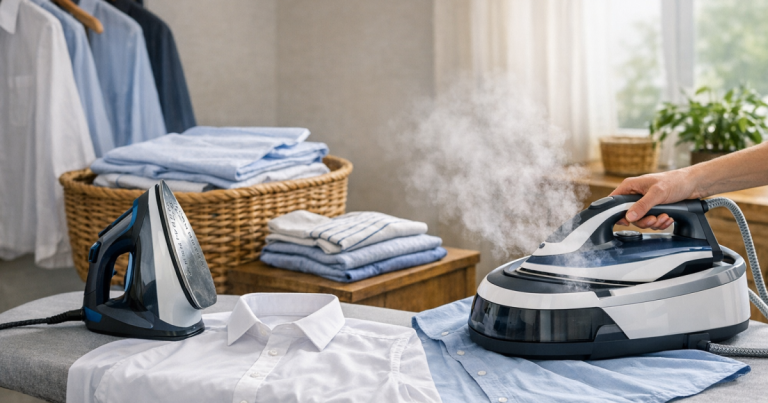
If shirts are clean but look crumpled and tired, the next improvement may be finishing rather than detergent. For households pressing several shirts at once, our guide to steam generator irons for school uniforms and shirts explains what to consider before upgrading ironing equipment.
When detergent is not the real problem
A detergent switch will not fix every uniform issue. Sour smells can come from a washing machine that needs cleaning, clothes left damp overnight, poor indoor airflow or drying too many items too close together. Grey whites can come from mixed loads, dye transfer or overfilled washes. Bobbling on sweatshirts and jumpers is usually caused by friction and fabric construction, not the detergent alone.
If your uniform laundry always feels rushed, build the routine around drying space first. A reliable place for shirts, polos and PE kit to dry fully will protect fabric better than repeatedly rewashing. For a broader setup view, see how to plan a laundry drying setup that protects clothes.
Helpful questions
Is biological detergent safe for school uniform?
For most washable cotton and polyester school uniform, biological detergent is usually suitable if the care label allows normal washing. Avoid it on wool, silk, delicate trims or garments that specify special care.
Should I always use non-bio for children’s clothes?
Not always. Non-bio is a sensible choice for sensitive skin or lightly soiled daily wear, but biological detergent may perform better on stained PE kit, socks and food-marked shirts.
Is powder, liquid or capsule best for uniform?
There is no single best format. Powders can be useful for whites, liquids are convenient for pre-treating some marks, and capsules are simple but less flexible for dosing small loads. Always check the product label.
Can I mix bio and non-bio in the same week?
Yes. Many households use different detergents for different loads. Keep the routine clear so sensitive-skin items are not accidentally washed with the stronger stain-removal load.
Why do shirts still smell after washing?
Common causes include washing too cool for the soil level, overloading the drum, using too much detergent, delayed drying, or a washing machine that needs a maintenance clean.
The big picture
Choose bio or non-bio detergent by looking at the uniform problem in front of you. Biological detergent is useful when stain removal is the priority. Non-biological detergent is a good starting point when skin comfort, simplicity and everyday freshness matter more than heavy stain-lifting power.
The best school uniform routine is fabric-aware rather than one-size-fits-all: read labels, sort by garment use, pre-treat stains promptly, dose correctly and dry thoroughly. That approach keeps shirts fresher, PE kit more manageable and delicate uniform items in better condition through the school week.