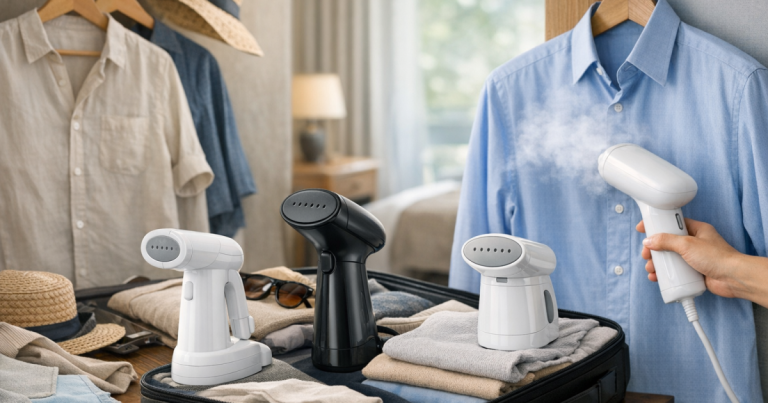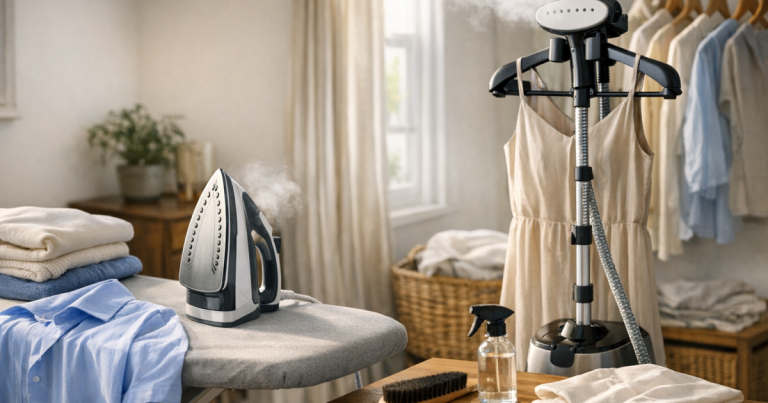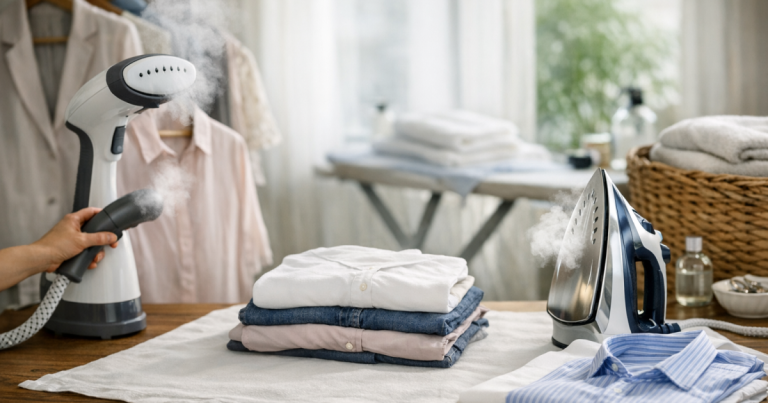
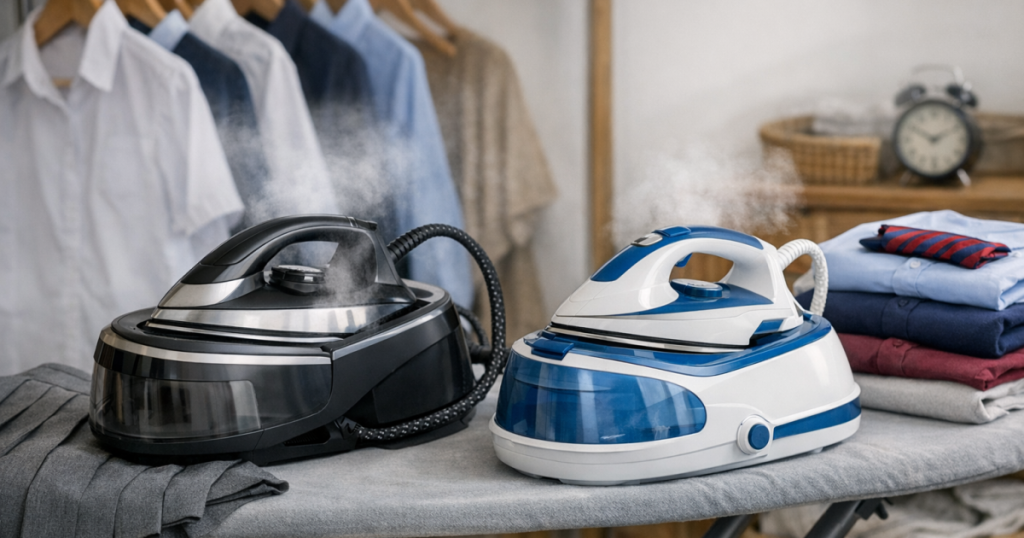
When the school week means five shirts, polo tops, trousers and pleated skirts, steam generator irons can save time and give a cleaner finish than a small handheld steamer or basic iron. The right choice is not just about power. For uniforms, you need steady steam, sensible controls, a tank that suits your laundry load and a setup that will not scorch polyester blends or leave shiny marks on dark fabric.
What to know first
For school uniforms and work shirts, the best option is usually a separate-tank iron that produces consistent steam for batch ironing. It suits families who press several garments at once, especially cotton shirts, cotton-rich polos, pleated skirts, school trousers and PE kit items that need a quick refresh.
It is less useful if you only iron one shirt occasionally, have very little storage space, or mainly deal with delicate dresses and viscose tops. In those cases, a conventional steam iron or garment steamer may be easier to handle. If you are still weighing up the difference between appliances, the broader guide to garment steamers and irons explains how features, costs and fabric results compare.
The main trade-off is simple: a generator-style setup gives more sustained steam, but it takes up more space, costs more upfront and needs more disciplined descaling. For a uniform-heavy household, that trade-off can be worthwhile if it makes Sunday-evening ironing faster and more consistent.
Why uniforms and shirts are a special ironing job
School clothing often mixes tough everyday wear with fabrics that react differently to heat. A single laundry pile might include cotton shirts, polyester-cotton polos, acrylic jumpers, pleated skirts, synthetic blazers, dark trousers and sports tops. Treating all of them the same is where problems start.
- Cotton and cotton-rich shirts: usually tolerate firmer pressing, but collars, cuffs and button plackets need targeted steam and pressure.
- Polyester-cotton polos: crease less than pure cotton, but can develop shine or heat marks if pressed too hot.
- Pleated skirts: need controlled steam and careful alignment so pleats stay sharp rather than flattened randomly.
- Dark trousers and blazers: can become shiny when direct heat and pressure are used on the face of the fabric.
- Badged sweatshirts and PE tops: should be pressed cautiously from the reverse, avoiding direct contact with prints or logos.
This is why the “best” iron for uniforms is not simply the one with the boldest steam claim on the box. It is the one that lets you control steam, temperature, tank handling and fabric contact without slowing the whole routine down.
The checks that matter before choosing one
1. Check whether the controls suit mixed fabrics
A good uniform iron should make it easy to move between cotton shirts and synthetic blends. Some models use simplified temperature systems, while others let you select fabric settings manually. Neither is automatically better for every home. What matters is whether you can confidently iron cotton collars, polyester-rich polos and dark trousers without guessing.
If you prefer full control, look for clear temperature and steam adjustment. If different people in the household share the ironing, a simpler control layout may reduce mistakes. Always check the garment care label first, especially on skirts, blazers and logoed sportswear.
2. Match the water tank to your actual batch size
A larger tank can be helpful when you iron several shirts and uniforms in one sitting, because it reduces interruptions. But a bigger base unit also needs more storage room and can feel clumsy in a small kitchen, utility corner or bedroom setup.
Think in real batches rather than vague capacity claims. If you normally iron five school shirts, two pairs of trousers and a few adult shirts at once, sustained steam matters. If your load is one shirt in the morning, a heavy base unit may feel like overkill. Check whether the tank is removable, easy to fill at the sink and comfortable to carry when full.
3. Look closely at descaling
Hard water is a practical issue in many parts of Great Britain, and limescale can affect steam output over time. Different appliances handle scale in different ways, such as removable collectors, cartridges or rinse programmes. Do not assume the maintenance system will suit you just because the iron is described as anti-scale.
Before buying, check what descaling involves, how often the manufacturer recommends it, whether replacement parts are needed and whether the process is realistic for your routine. A powerful appliance that is neglected can become frustrating quickly, especially when you rely on it for Monday-morning uniforms.
4. Check the iron weight, not just the base
Steam generator bases can be large, but the hand-held iron itself may feel lighter than a traditional iron because the main water tank is separate. That can help when pressing several shirts. Still, handle comfort varies. Look at the grip shape, cord movement and whether the steam trigger feels natural for repeated use.
If you have a lot of collars, cuffs and pleats to manage, the iron needs to feel precise rather than bulky. A soleplate that glides smoothly over cotton shirting is useful, but you should still use a pressing cloth on dark trousers and synthetic blazers to reduce shine.
5. Make sure your ironing board can cope
The base unit needs a stable surface. A small, lightweight board can wobble under a full generator base, which makes ironing slower and less safe. Use a sturdy full-size board with enough space for the base, or place the base on a nearby heat-safe, stable surface if the manufacturer permits it.
For school shirts, board height matters as much as the appliance. A board that is too low makes collar and sleeve work tiring. A good cover with firm padding also helps steam pass through fabric without leaving deep board marks.
Strong candidates to compare for uniform-heavy homes
The best steam generator irons for school uniform use are those that combine sustained steam, clear fabric controls, manageable maintenance and a comfortable hand unit. The exact model you choose should depend on your batch size, storage space and tolerance for descaling tasks. Always verify the current product listing for tank details, included accessories, warranty terms and maintenance requirements before buying.
- Philips PerfectCare Elite Plus GC9682/86: worth considering if you want a premium-style system with simplified fabric handling. Check the current specification carefully, including tank arrangement, descaling process and size.
- Tefal Pro Express Ultimate GV9581: a recognisable choice for households comparing higher-output steam systems. Look closely at the controls, base footprint and scale-management method.
- Braun CareStyle 7 IS 7156 BK: a useful model to compare if comfort, soleplate shape and mixed-fabric settings are high on your list.
- Morphy Richards Power Steam Elite 332013: often considered by shoppers who want a separate-tank setup without automatically moving to the most expensive end of the category. Verify current features and maintenance steps before deciding.
It is also worth being honest about where an appliance upgrade fits in the full care routine. If shirts are coming out of the wash heavily creased, overloaded spin cycles, poor drying space or delayed unloading may be part of the problem. The comparison of a steam iron upgrade versus a washing machine upgrade is useful if you are trying to work out where creases are really being created.
A fabric-safe routine for shirts and uniforms
Step 1: Sort by heat tolerance
Group garments before switching on the iron. Start with lower-temperature synthetic items, then move to cotton-rich shirts and tougher fabrics. This avoids waiting for the soleplate to cool down and reduces the risk of accidentally pressing a polyester skirt at a cotton setting.
- Low heat or gentle steam: blazers, synthetic skirts, logoed PE tops and delicate trims.
- Medium heat: polyester-cotton polo shirts and some trousers.
- Higher heat where labels allow: cotton shirts, cotton-rich shirts and sturdy pillowcases used as pressing cloths.
Step 2: Iron shirts in a repeatable order
A consistent order saves time. For school shirts, begin with the collar, then cuffs, sleeves, shoulders, front panels, button placket and back. Use steam to relax creases, but let the fabric cool flat before moving it. Pulling a warm shirt straight onto a hanger while it is still damp from steam can encourage new creases.
For collars, press from the points towards the centre to avoid pushing wrinkles into the tips. For cuffs, open them flat and avoid pressing over buttons. A burst of steam can help on stubborn cotton creases, but pressure and alignment do much of the work.
Step 3: Treat pleats and trousers carefully
Pleated skirts need patience rather than brute force. Align each pleat, use light steam and press through a clean cotton cloth. Avoid dragging the iron across the pleats, as this can distort the fold line. Lift and place the iron instead.
Dark school trousers should also be pressed through a cloth, particularly on the front crease and pocket areas. Direct pressure on dark synthetic blends is a common cause of shine. If trousers only need freshening, vertical steam from a short distance may be enough, provided the care label allows steaming.
Step 4: Let garments cool before storing
Freshly pressed garments need a few minutes to cool and release residual moisture. Hang shirts with the top button fastened so the collar holds its shape. Skirts should be clipped or hung in a way that supports the waistband without crushing pleats.
Storage makes a visible difference to how long the finish lasts. If school jumpers or shirts often develop shoulder bumps after ironing, review your hanger setup; the guide to choosing hangers that stop shoulder bumps covers the shapes and materials that protect everyday clothing better.
Mistakes that make uniform ironing harder
- Over-drying shirts: bone-dry cotton is harder to smooth. Slight residual moisture, or a light mist before ironing, can help if the care label allows it.
- Using maximum steam on everything: some fabrics respond better to lower heat, a pressing cloth and gentle handling.
- Ignoring the soleplate: residue from prints, starch or melted fibres can transfer onto white shirts. Wipe the soleplate only as the manufacturer instructs.
- Skipping descaling: reduced steam, spitting and marks can follow poor maintenance, particularly in hard-water areas.
- Putting shirts away warm: warm fabric creases easily in a crowded wardrobe.
When a steam generator is not the answer
A separate-tank iron is not always the neatest solution. If your main issue is a single creased shirt each morning, a standard steam iron may be quicker to set up. If you mostly refresh delicate dresses, viscose blouses or embellished garments, a garment steamer may be gentler. If clothes are badly creased before they reach the ironing board, review washing load size, spin speed and drying habits first.
For households with several children, uniforms and adult work shirts, however, the case becomes stronger. The time saved is not just in steam output. It is in fewer refills, smoother batch work and more predictable results once you have a routine.
Common questions
Are steam generator irons safe for school blazers?
Only if the care label allows ironing or steaming. Many blazers contain synthetic fibres, linings or structured areas that can mark under direct heat. Use low heat, light steam and a pressing cloth, or avoid pressing if the label says not to.
Do I need distilled water?
Follow the manufacturer’s instructions for your model. Some appliances are designed for tap water with a descaling system, while others may have stricter guidance. In hard-water areas, maintenance matters more than guesswork.
Will a steam generator remove every crease from cotton shirts?
It can make cotton shirts much easier to press, but technique still matters. Collars, cuffs and plackets need pressure, order and cooling time as well as steam.
Can I use starch on school shirts?
You can if the shirt label permits it, but use it lightly. Heavy starch can build up on fabric and soleplates, and it may make children’s shirts feel stiff or uncomfortable.
Is vertical steaming enough for uniforms?
It is useful for freshening hanging garments and soft creases, but it will not usually give the same crisp finish on collars, cuffs, pleats and trouser creases as board ironing.
Key takeaways
For school uniforms and shirts, choose a steam generator iron around your real laundry routine, not the biggest claim on the packaging. Prioritise clear fabric controls, a practical tank, manageable descaling, a comfortable hand unit and a stable ironing setup. The best results come from pairing the appliance with good sorting, careful pressing cloth use and proper cooling before clothes go back into the wardrobe.