The safest way to freshen a work blazer between dry cleans is to remove surface dust, air it properly, treat small marks with minimal moisture, and use steam only where the fabric can tolerate it. A blazer is more structured than a shirt or jumper, so the goal is to revive it without soaking the lining, distorting the shoulders or making the lapels go limp.
This routine works well for wool, wool-blend, polyester-blend and many tailored uniform jackets, provided the care label allows gentle refreshing. If the blazer is heavily stained, smells strongly of sweat, smoke or mildew, or has lost its shape, book a proper clean rather than trying to rescue it at home.
What to know first
- Check the care label before using steam, water or any spot-cleaning method.
- Focus on airing, brushing and odour release first; avoid wetting the blazer unless needed.
- Protect structured areas such as shoulders, lapels, pockets and fused front panels.
- Use less heat and less pressure than you would on shirts or trousers.
- Let the blazer dry fully before returning it to a wardrobe or garment bag.
Step 1: Empty pockets and inspect the blazer
Start by taking everything out of the pockets. Pens, tissues, receipts and keys can distort pocket bags or leave marks when the blazer is handled. Button the blazer loosely, then hang it on a broad, shaped hanger so the shoulders are supported.
Look closely at the collar, cuffs, lapels, front edges, underarms and pocket openings. These are the areas that usually collect skin oils, make-up, hand cream, desk dust and food splashes. Knowing what you are dealing with helps you avoid over-treating the whole garment when only one small area needs attention.
If the blazer has a dry-clean-only label, that does not always mean you cannot air, brush or gently steam it, but it does mean you should avoid immersion washing. Structured jackets often contain linings, shoulder pads, canvas or fusible interlinings that can shrink, ripple or detach if they become too wet.
Step 2: Air it properly, not just overnight on a chair
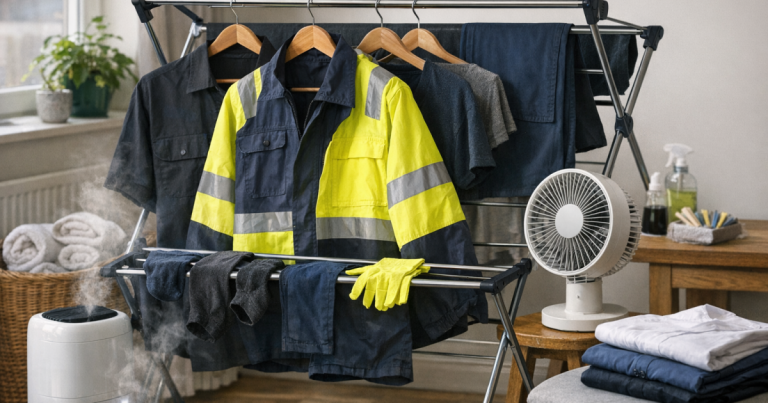
Airing is the lowest-risk refresh method and should be the first step after most workdays. Hang the blazer somewhere with good air movement for at least a few hours, ideally away from direct sunlight, radiators and damp rooms. A hallway hook, spare room rail or open wardrobe door is usually better than the back of an office chair.
For a blazer that has picked up food, train or pub odours, turn it inside out for part of the airing time so the lining can release trapped smells. Then turn it right side out to help the outer fabric settle. Do not spray perfume directly onto the fabric; it can mix with odours, mark delicate fibres and leave residue around the collar.
In wet weather, let the blazer dry naturally before brushing or steaming. Rain-damp wool can look temporarily creased or misshapen, but it often settles as it dries. Keep it on a supportive hanger and resist the urge to press it while the fabric is still damp.
Step 3: Brush away dust, lint and surface debris
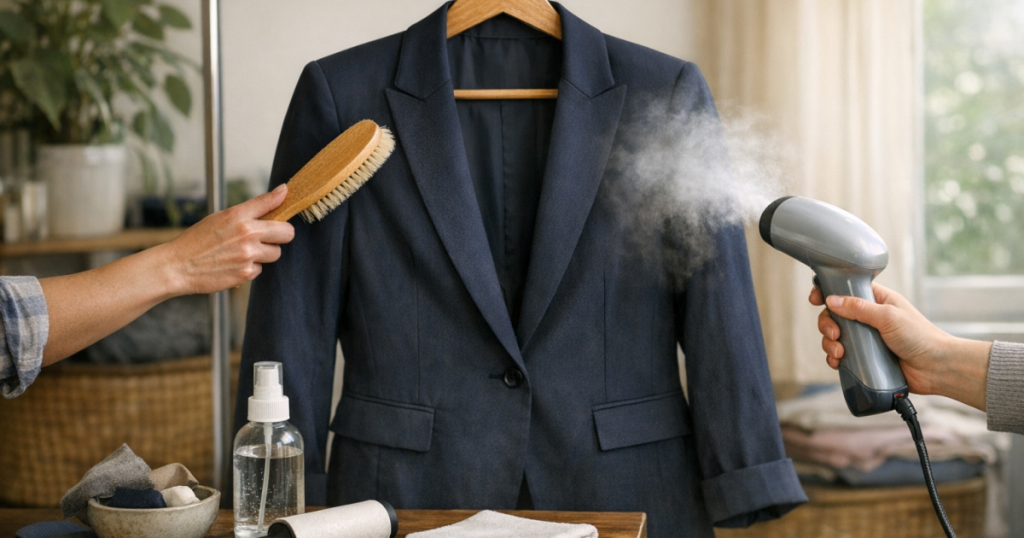
Once dry, use a soft clothes brush to lift dust, hair and lint from the surface. Brush with the nap of the fabric using short, light strokes rather than scrubbing. Work from the shoulders downwards, then brush the sleeves and back.
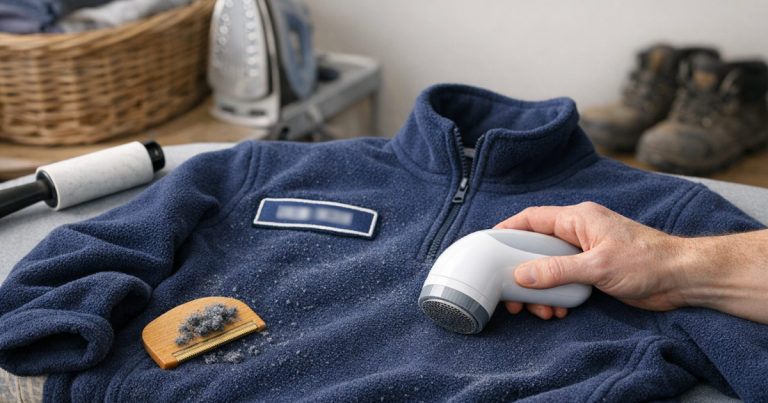
For wool and wool-blend blazers, brushing helps prevent fine particles settling into the fibres. For smoother synthetic blends, a lint roller can help, but avoid pressing sticky sheets hard into textured cloth. If the blazer is navy, black or charcoal, check it in daylight where lint and shine are easier to see.
Velvet, corduroy and brushed fabrics need extra care. Brush in the direction of the pile only, and avoid flattening the surface with heavy pressure. If the garment is part of a formal uniform or dress code, a few minutes of brushing can make a noticeable difference before the next shift or meeting.
Step 4: Deal with small marks using minimal moisture
Spot-clean only when there is a clear mark. Blot fresh spills immediately with a clean white cloth or plain kitchen towel. Do not rub, as rubbing can spread the stain and roughen the fabric surface.
For light water-based marks, dampen a clean cloth with cool water, wring it out thoroughly and dab from the outside of the mark towards the centre. Use as little moisture as possible. Then blot with a dry cloth and leave the blazer hanging in open air until fully dry.
For oily marks, make-up, ink or unknown stains, avoid experimenting with household cleaners. These can strip colour, leave rings or react badly with tailored fabrics. If you need to test any cleaning product near a hidden seam or facing, follow a careful patch-testing process first; the same principles in this guide to patch-testing detergent on sensitive fabrics apply to checking colour change, residue and texture before treating visible areas.
Be especially cautious around lapels and front panels. Too much liquid can create tide marks or soften adhesives used in some modern tailoring. If a mark remains visible after gentle blotting, leave it for the dry cleaner and point it out when you take the blazer in.
Step 5: Use steam to relax creases, not to soak the jacket
Steam can freshen a blazer very effectively, but it should be used lightly. Hang the jacket on a sturdy hanger, button it loosely and hold the steamer or steam iron at a short distance from the cloth rather than pressing directly onto it. Keep the steam moving and avoid concentrating on one area for too long.
Work on the back, sleeves and lower front panels first. Let gravity help the fabric relax. Gently smooth the cloth with your hand from the inside where possible, keeping your hand away from the steam. Avoid forcing sharp creases into sleeves unless the blazer was designed to have them.
The lapels need a gentler approach. Steam can soften their roll if you overdo it, making the jacket look flatter and less tailored. Hold the blazer by the collar, give the lapels a brief pass from a distance, then let them cool in their natural shape.
If you travel for work, a compact steamer can be useful for hotel-room refreshes, but it should still be used with restraint on tailored garments. The guide to travel clothes steamers for holidays and work trips covers the practical differences that matter when you need light crease release away from home.
Step 6: Press only the areas that truly need it
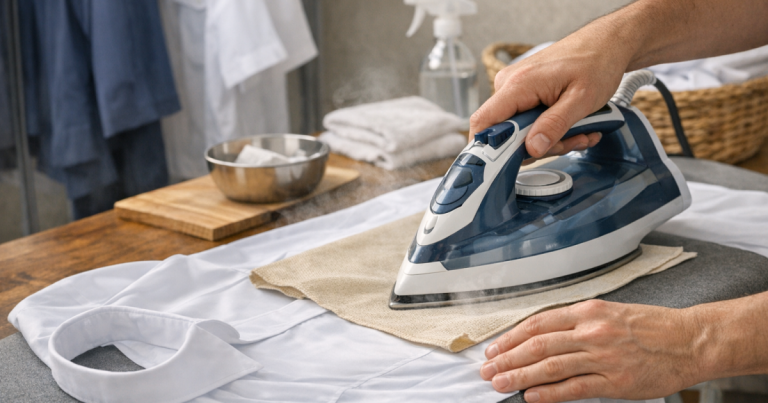
Most between-clean refreshes do not require ironing. If a cuff, hem or front edge needs a little more definition, use a pressing cloth and low-to-medium heat according to the care label. Press rather than drag the iron, and lift it cleanly between movements.
Never iron directly over shiny patches, embroidered logos, security badges, plastic name labels or synthetic trims. Heat and pressure can create gloss on dark workwear, especially on polyester blends and wool-blend uniforms. Test on an inconspicuous inner area if you are uncertain how the fabric reacts.
For a reliable home routine, it helps to have a stable board, clean soleplate, pressing cloth and enough space to hang garments as they cool. If your ironing area makes you rush, crush sleeves or lay a blazer over laundry piles, it is worth reviewing your home ironing and steaming setup so jackets can be refreshed without creating new creases.
Step 7: Let it cool and dry before storage
After steaming or spot-cleaning, leave the blazer hanging in open air until it feels completely dry and cool. Putting it straight into a packed wardrobe traps moisture and can encourage musty smells, especially in cooler UK homes where bedrooms and spare rooms may not be evenly heated.
Use a broad hanger that supports the shoulder line. Thin wire hangers can leave dents, while overly wide hangers can push out the sleeve heads. Fasten one button if it helps the front hang neatly, but do not pull the blazer tight.
Give everyday work blazers some breathing room. If jackets are crushed between coats, shirts and bags, the fabric cannot release odour properly and the shoulders may crease. A simple system to zone your wardrobe for safer clothes storage can make weekday workwear easier to rotate and less likely to need emergency steaming.
When refreshing is not enough
A home refresh is for light odour, mild creasing and surface dust. It is not a substitute for dry cleaning when the blazer is visibly dirty or contaminated with stubborn smells. Underarm odour that returns as soon as the jacket warms up usually means perspiration has reached the lining and needs professional cleaning.
Send the blazer to the cleaner if you notice greasy collar marks, persistent smoke smell, body odour in the lining, food spills, water rings, mouldy odour, shiny pressure marks or distorted panels. Mention any stains and what caused them if you know. This helps the cleaner choose the right treatment and reduces the risk of setting marks permanently.
How often you dry clean depends on wear, fabric, commute and workplace. A blazer worn once or twice a week over clean shirts may only need occasional cleaning, while a uniform jacket worn daily in a warm environment will need more frequent care. Avoid cleaning after every wear unless necessary, as repeated dry cleaning can gradually affect handle, trim and colour.
Helpful questions
Can I use fabric freshener spray on a work blazer?
Use caution. Some sprays can leave residue, fragrance build-up or water marks, particularly on dark wool, viscose blends and lined jackets. If you use one, test it on a hidden area first and spray into the air rather than saturating the fabric.
Is bathroom steam enough to refresh a blazer?
A steamy bathroom can help soften light creases, but it is less controlled than a garment steamer and may add too much general moisture. Hang the blazer away from splashes and let it dry fully afterwards.
How do I remove underarm odour between dry cleans?
Air the blazer inside out, brush the outer fabric and allow the lining to dry thoroughly. If the odour remains after airing, avoid masking it with fragrance and arrange a proper clean.
Can I put a blazer in the tumble dryer on an air-only setting?
It is usually not worth the risk. Tumbling can distort shoulders, lapels and linings, even without heat. Hanging and airing is safer for most structured work blazers.
Should I steam a blazer every time I wear it?
No. Steam only when there are creases or trapped odour that airing will not shift. Over-steaming can soften tailoring and add unnecessary moisture to the lining.
Final thoughts
A good between-cleans routine is gentle: air first, brush second, spot-treat only where needed, then use light steam to relax the fabric. The less you disturb the structure, the longer a work blazer will keep its shape and look smart through commutes, meetings and regular uniform wear.
Once you know how to freshen a work blazer without soaking, scrubbing or over-pressing it, dry cleaning becomes a planned maintenance step rather than a weekly rescue job. That means a cleaner-looking jacket, fewer rushed mornings and better fabric life from the workwear you rely on most.