Hotel wardrobes, cabin bags and tightly packed suitcases are rarely kind to shirts, dresses or linen separates. A travel garment steamer is worth considering when you want quick crease-softening without setting up a full ironing board, but it is not the right answer for every fabric or every trip.
The best choice depends less on brand hype and more on what you actually pack: cotton work shirts, viscose dresses, silk blouses, wool tailoring, occasionwear or casual holiday linen. A compact steamer can refresh and relax fibres, but sharp pleats, crisp collars and heavy creases still usually need an iron.
What to know first
For most UK travellers, a handheld steamer is most useful for soft garments: dresses, blouses, lightweight trousers, travel-creased T-shirts, overshirts and relaxed linen pieces. It is less useful when you need a formal finish on structured cotton, a razor-sharp trouser crease or a pressed shirt placket.
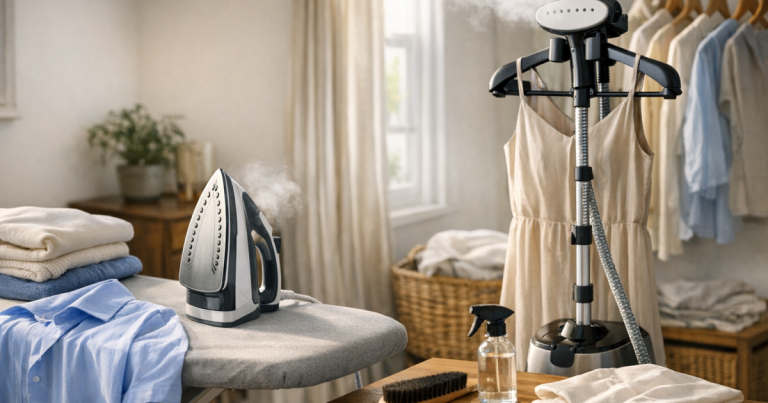
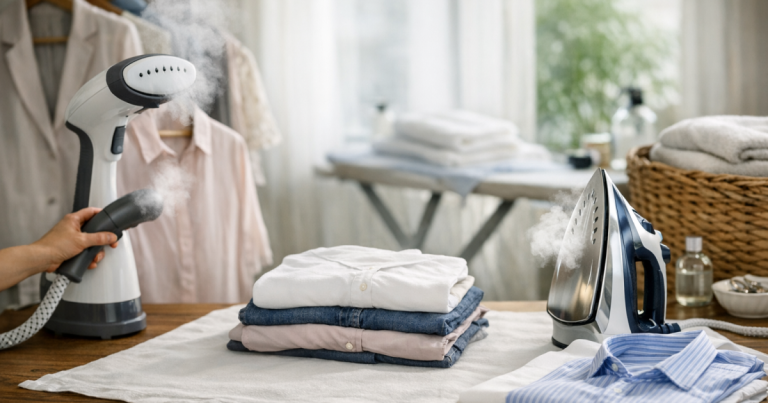
Think of steaming as a suitcase recovery tool rather than a full ironing replacement. At home, a steady board and iron still give you more control, so it is worth keeping your main setup separate from your travel kit. If you are refining your home routine as well, our guide to a home ironing and steaming setup explains what is genuinely useful and what often sits unused.
Step 1: Match the steamer to the clothes you actually travel with
Start with your wardrobe, not the product page. A steamer that is fine for a weekend city break may feel frustrating if you are preparing five work shirts in a hotel room before breakfast.
- For business shirts: choose a model that can cope with repeated garments in one session, but accept that collars, cuffs and button plackets may still need hotel ironing if you want a crisp finish.
- For dresses and blouses: steaming is often helpful because hanging garments can be worked vertically without flattening details, gathers or soft drape.
- For linen holiday clothes: steam can soften packed-in creases, but linen naturally wrinkles again with wear, so aim for presentable rather than immaculate.
- For tailoring: use steam cautiously and avoid overworking lapels, shoulders and structured areas. Hanging in a steamy bathroom may be gentler for minor travel creasing.
- For embellished or occasion garments: avoid direct contact with beads, sequins, glued trims and delicate surface finishes.
Silk needs particular care because water spotting, heat and handling can change the look of the surface. If your trip includes silk tops, read our advice on hand washing silk blouses without losing sheen before assuming steam is always safe.
Step 2: Check the travel details before you pack it
A compact shape is useful, but travel suitability is about more than whether it fits in a suitcase. Before buying or packing any steamer, check the current product label and manufacturer instructions for these points.
- Voltage: UK mains electricity is different from some destinations. A plug adaptor changes the plug shape; it does not automatically make an appliance suitable for another voltage. Check the rating label before using it abroad.
- Plug type: a UK plug may be perfect for domestic work trips but less convenient overseas unless the appliance is suitable for use with the correct travel adaptor.
- Water tank access: hotel sinks can be shallow, and tiny tank openings are awkward when you are tired or rushing.
- Weight when full: a steamer that feels light empty can feel more tiring once filled with water.
- Heat-up and cool-down routine: check the instructions so you know how soon it can be used and when it is safe to repack.
- Water guidance: follow the brand’s instructions on tap, filtered or distilled water, especially in hard-water areas.
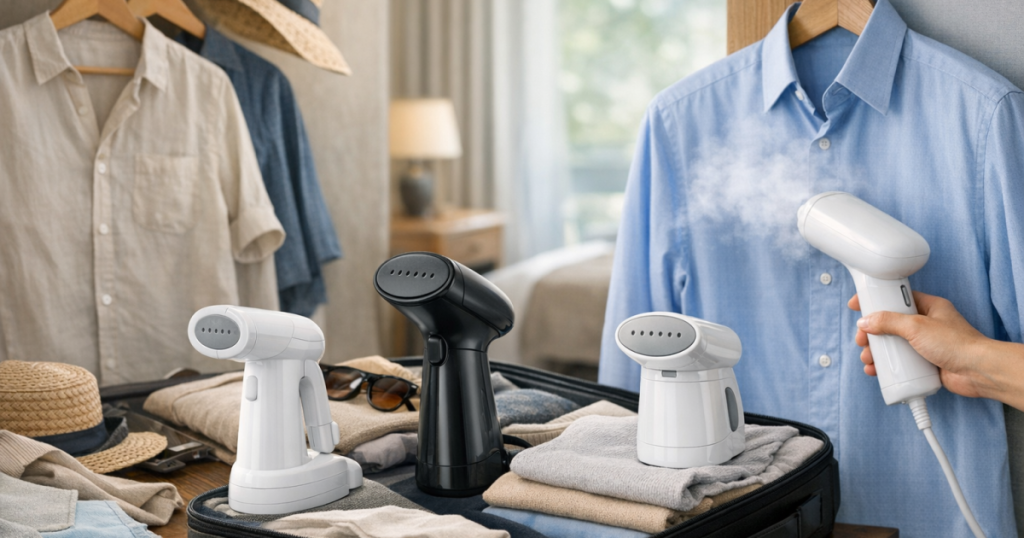
For UK weekends away, domestic business trips and train travel, the simplest setup is often a small handheld model plus a heat-resistant pouch or a dedicated packing spot once fully cool. For flights, check airline rules and pack liquids separately from the appliance.
Step 3: Shortlist sensible styles rather than chasing one perfect model
There is no single best steamer for every traveller. These real examples show the kinds of models UK shoppers often compare, but always verify current specifications, plug details, dimensions and garment guidance before deciding.
- Philips 3000 Series Handheld Steamer STH3000/26: a familiar compact handheld option to compare if you want a travel-friendly format from a mainstream garment-care brand. Check the current model details carefully, as accessories and regional versions can vary.
- Tefal Access Steam Pocket DT3030: worth looking at if storage shape and suitcase space are high priorities. Confirm the present product listing for handle design, included attachments and voltage information.
- Steamery Cirrus 3 Iron Steamer: a garment-care focused option for readers who want to compare a more design-led steamer with mainstream handheld models. Check whether its shape, weight and care instructions suit your travel routine.
When reading reviews, give more weight to comments about real travel use: leaking after packing, how easy the tank is to fill in a hotel room, whether the cord length feels restrictive, and how it handles multiple garments in one session. Be cautious with vague claims that make every fabric sound effortless.
Step 4: Use it in the right order in a hotel room
A good routine matters as much as the appliance. Steam too close, rush the drying time or put garments straight back into a packed wardrobe and creases can return quickly.
- Unpack early: hang creased clothes as soon as you arrive. Gravity helps, and some creases relax before you switch anything on.
- Use a proper hanger: a broad, stable hanger keeps shoulders in shape and stops the garment twisting while you steam.
- Test discreetly: try an inside hem or hidden area first, especially on viscose, silk, dark fabrics and prints.
- Steam from the inside where sensible: this helps protect visible surfaces on some garments and reduces the risk of flattening texture.
- Work in sections: hold the fabric gently taut without stretching it, then allow it to dry hanging freely.
- Leave drying time: do not put a freshly steamed garment under a jacket or into a suitcase while it still feels damp.
For work shirts, steaming can make the body and sleeves look fresher, but it will not always prevent shiny marks or pressing problems if you later use an iron. For a neater finish on school, office or uniform-style shirts, see our guide to ironing uniform shirts without shiny marks.
Step 5: Know when not to steam
Steam is useful, but it is still heat and moisture. Avoid treating every suitcase crease as a steaming job.
- Do not steam stained areas first: heat can make some marks harder to remove. Deal with stains according to fabric type before applying heat.
- Be careful with viscose: some viscose garments distort when wet or warm. Use distance, minimal tension and a hidden test area.
- Avoid leather, suede and waxed finishes: moisture and heat can mark or change the surface.
- Take care with pleats: steam can relax pleats you wanted to keep sharp.
- Watch linings and interlinings: jackets and tailored pieces can react badly if the outer fabric and internal structure dry at different rates.
If a garment has a dry-clean-only label, unusual trim or a high sentimental value, do not experiment the morning of an event. Pack it carefully, hang it early and ask the hotel whether they offer pressing if a formal finish is essential.
Helpful questions
Can a travel steamer replace an iron on work trips?
Not completely. A steamer can freshen shirts and soften packing creases, but an iron is still better for crisp collars, cuffs, plackets and sharp trouser creases.
Is steaming safe for silk holiday clothes?
Sometimes, but not automatically. Use a hidden test area, keep distance from the fabric and avoid water droplets. For valuable silk, professional pressing is safer.
Should I empty the tank before packing?
Yes. Empty the tank, let the appliance cool fully and dry the exterior before it goes back into luggage. This reduces leaks and protects nearby clothes.
Do I need distilled water in a travel steamer?
Follow the manufacturer’s instructions. In hard-water areas, limescale can build up more quickly, so water guidance matters for performance and maintenance.
What should I pack with a steamer?
A stable hanger, a small lint roller, a heat-safe storage pouch and a stain-removal plan are often more useful than extra attachments you will not use.
Key takeaways
The best travel clothes steamers are the ones that suit your actual garments, destination and pace of travel. For holidays, prioritise a compact steamer that can freshen dresses, linen and relaxed separates without taking over your luggage. For work trips, be realistic: steaming helps you look presentable quickly, but formal shirts may still need ironing for a properly crisp result.
Before you pack one, check voltage, plug compatibility, water guidance, filling method and cool-down instructions. Then use it gently, test delicate fabrics first and leave garments hanging until fully dry. That fabric-aware routine will do more for your clothes than choosing the most heavily promoted model.