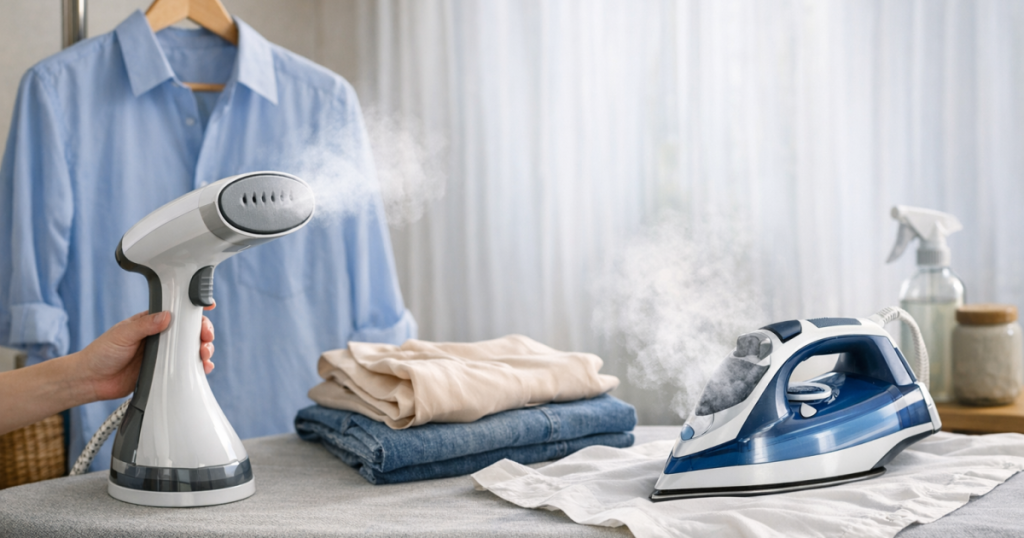
Choosing a garment steamer or steam iron is less about which tool is more modern and more about the finish your clothes need. Some garments only need a quick refresh after hanging in a wardrobe; others need firm creases, flat seams and a pressed look that steam alone will not create. The right choice depends on fabric, routine, storage space and how polished you need everyday outfits, uniforms or occasion wear to look.
What to know first
- A steamer is usually better for refreshing hanging clothes, softening light wrinkles and caring for floaty or awkward garments.
- A steam iron is better for crisp shirts, trousers, cotton bedding, uniforms and anything that needs pressure as well as heat.
- Delicate fabrics are not automatically safer with either tool; temperature, distance, moisture and technique matter.
- Many households benefit from both, but one tool can be enough if your wardrobe has a clear pattern.
The real difference: steam alone versus steam plus pressure
A garment steamer relaxes fibres by directing steam into the fabric while the garment hangs. You usually smooth the fabric gently with your free hand or allow the steam to ease out the creases. This makes steaming useful for dresses, blouses, lined jackets, pleated pieces and garments that are awkward to flatten on an ironing board.
A steam iron combines heat, steam, weight and pressure. The soleplate presses the fibres flat against a board, which is why it can create sharper results. If you want a crisp collar, smooth shirt placket, neat cuffs or pressed trouser crease, pressure is the deciding factor. Steam helps, but the flattening action is what gives the clean finish.
For a deeper explanation of heat settings, steam behaviour and safe technique across common fabrics, see Steamers and Irons Explained.
When a garment steamer makes more sense
A steamer earns its place when your main problem is light creasing rather than formal pressing. It is particularly helpful after clothes have been stored tightly, packed in a suitcase or dried with a few soft wrinkles. It can also refresh garments between washes, which may help reduce unnecessary laundering for items that are not dirty.
Choose a steamer-led routine if your wardrobe includes:
- viscose, polyester, satin-style blouses and soft dresses that mark easily under pressure;
- ruffles, gathers, pleats or decorative details that are hard to position on a board;
- lined jackets, lightweight coats and structured pieces that need a surface refresh rather than a full press;
- occasion wear that benefits from gentle vertical steaming shortly before wearing;
- clothes kept in a compact wardrobe where compression creases are common.
Steamers are also convenient for people who dislike setting up an ironing board for one or two garments. A handheld unit can be quick for a work blouse, school shirt that only needs softening, or a dress that has crumpled at the hem. However, steamers vary in water capacity, steam output, weight in hand and how well they behave when angled, so check those points rather than assuming every model will feel easy to use.
Where a steam iron still wins
A steam iron is the stronger choice for fabrics and garments that need a flatter, more controlled finish. Cotton shirts, linen tablecloths, school uniforms, work trousers and bedding often look better when pressed. Even when a steamer reduces wrinkles, it may leave seams, hems and collars looking softer than you want.
An iron also gives more control over garment shape. You can work section by section, use the board edge for sleeves, press seams open and define folds. That matters for tailored clothing and everyday pieces where neatness is part of the look.
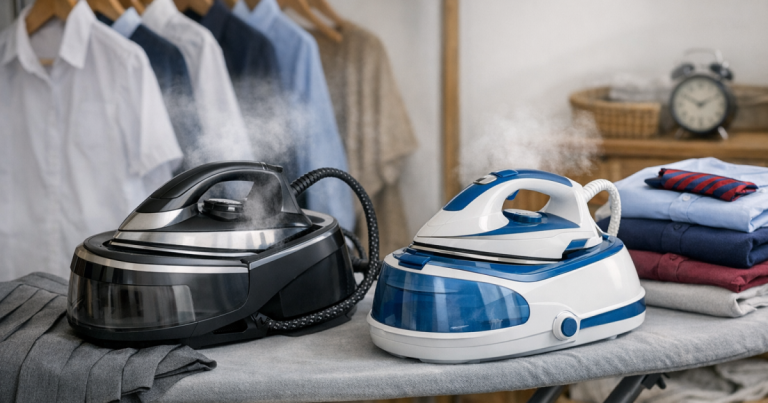
A full-size steam iron such as the Philips Azur Elite Steam Iron is an example of the type of tool people consider when they regularly press shirts, uniforms and household textiles. The key point is not one brand or model, but whether the iron offers the control, comfort and settings you need for your actual fabrics. A stable board also matters; an ironing board such as the Minky Homecare Ironing Board illustrates the kind of supporting equipment that can make pressing easier and more consistent.
Fabric-by-fabric thinking
Fabric response is the most reliable way to decide. Care labels should come first, but these general patterns help you avoid the common mistakes.
Cotton and linen
These natural fibres often respond well to an iron because they crease strongly and benefit from pressure. A steamer can soften wrinkles, but it rarely gives cotton shirts or linen trousers the same crispness. Slight dampness can help when ironing, although clothes should not be wet enough to stretch or distort.
Wool and wool blends
Wool often benefits from steam, but it dislikes rough handling and excessive pressure. A steamer can revive flattened areas and soften light creases in hanging garments. If ironing, use an appropriate setting and consider a pressing cloth to reduce shine, especially on dark trousers or tailored pieces.
Viscose, modal and other drapey fabrics
These can wrinkle easily and may become misshapen when damp. A steamer can work well if used gently, but avoid saturating the fabric. If ironing is allowed, use a cautious temperature and test a hidden area first.
Silk, satin finishes and embellished garments
These need care. Steam can spot some delicate surfaces, while direct iron contact can flatten texture or create shine. Use distance, short bursts and garment-label guidance. For valuable occasion wear, consider whether a specialist cleaner is the safer route.
Synthetics
Polyester and other synthetics may respond quickly to steam, but they can also be heat-sensitive. A steamer can be useful because it avoids firm soleplate pressure, but keep the head moving and do not hold heat in one place. With an iron, use the correct low setting if the label allows it.
How your laundry routine changes the answer
Wrinkle removal does not start at the steamer or board. Overloading the washing machine, leaving clothes in the drum, twisting garments while wet or drying them in cramped conditions all make creases worse. If you often fight heavy wrinkles, your drying setup may be the real issue.
For indoor drying in UK homes, where damp weather and limited space can complicate laundry, the way clothes are hung and spaced makes a noticeable difference. The guide to drying clothes indoors without damaging fabrics is a useful next step if garments routinely come off the airer stiff, misshapen or deeply creased.
If you already dry shirts on hangers, smooth seams while wet and store clothes with breathing room, a steamer may be enough for daily touch-ups. If clothes leave the wash with stubborn creases or you need a formal finish most mornings, an iron will save frustration.
Space, speed and everyday convenience
A steamer can feel faster because you can work on a hanging garment, but that does not always mean it is quicker overall. You still need water, heat-up time, a safe place for the garment and a few minutes for moisture to evaporate before wearing. It is best for one to three items, last-minute wardrobe refreshes and soft fabrics.
An iron takes more setup because of the board, but it can be more efficient for a batch of shirts, bedding or uniforms. Once the board is out and the iron is ready, repeated pressing is straightforward. If you do laundry in weekly loads, the iron may be the more productive tool.
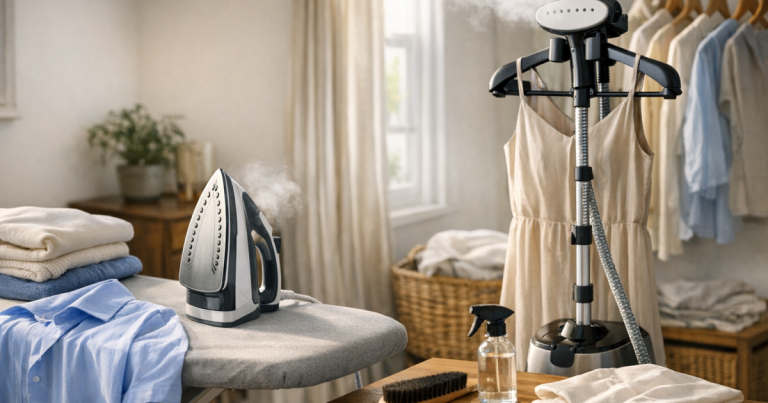
Storage matters too. Handheld steamers are generally easy to tuck away, while irons need board space and a heat-safe cooling area. Upright steamers can be useful for frequent steaming, but they take up more room. In a small flat, think about where the tool will live when not in use, not just how it performs for five minutes.
Can one tool replace the other?
Sometimes, yes. A steamer can replace an iron if your clothes are mostly casual, drapey, synthetic or lightly creased, and you do not need crisp collars or pressed seams. This is common for people who wear knitwear, dresses, soft blouses and relaxed workwear.
An iron can replace a steamer if you are comfortable using steam bursts, a pressing cloth and careful settings for delicate items. It will still be less convenient for hanging garments and awkward shapes, but it is more versatile for formal results.
The strongest reason to own both is a mixed wardrobe: shirts and trousers during the week, delicate dresses or jackets at weekends, and occasional household textiles. The steamer handles refreshes; the iron handles structure.
Mistakes that damage clothes
- Using steam on a garment without checking whether water marks are likely.
- Pressing dark wool or synthetic blends directly until they develop shine.
- Holding a steamer too close for too long and leaving fabric damp.
- Ironing over stains, which can set marks more firmly into fibres.
- Ignoring trims, prints, buttons and embellishments that may react differently from the main fabric.
- Putting freshly steamed clothes straight into a cramped wardrobe before they have dried fully.
After steaming, give garments time to air before storing. Good spacing, suitable hangers and breathable storage reduce the need for repeated heat treatment. For longer-term organisation, the wardrobe storage guide covers practical ways to protect clothes between wears.
Questions people ask
Is steaming better than ironing for delicate clothes?
Not automatically. Steaming avoids direct pressure, which can help with texture and embellishment, but moisture and heat can still mark delicate fabrics. Always check the care label and test cautiously on a hidden area.
Will a steamer make shirts look crisp?
It can reduce wrinkles, but it will not usually create the sharp collar, cuffs and placket finish that a steam iron can. For formal shirts, an iron remains the stronger tool.
Can I use tap water in a steamer or iron?
Follow the manufacturer’s instructions for your model. Hard water is common in many parts of the UK and can contribute to limescale, so cleaning and descaling guidance is worth checking before use.
Should clothes be dry before steaming?
They should generally be dry or only very slightly damp. Steaming wet garments can lead to stretching, slow drying and musty smells if they are stored too soon.
Which is better for travel?
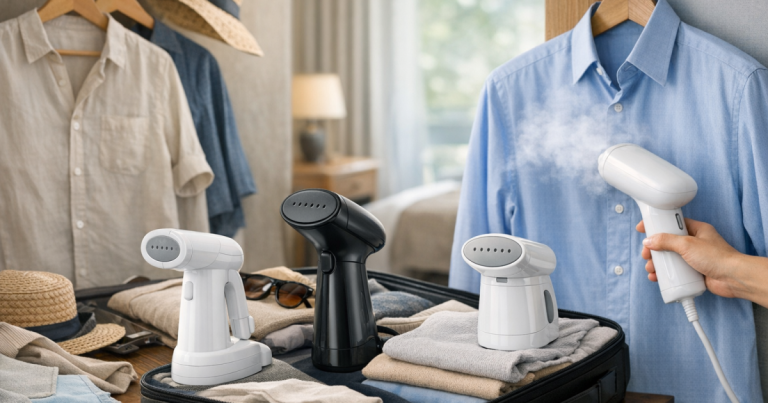
A compact steamer can be useful for soft creases after packing, but it will not replace a proper press for formal tailoring. Check luggage space, water filling, garment hanging options and hotel room practicality before relying on it.
What stands out
Choose a steamer if your priority is quick refreshing, soft wrinkle removal and gentler handling of awkward or flowing garments. Choose a steam iron if your priority is crispness, structure and reliable results on cotton, linen, uniforms and household textiles. For many UK households, the most fabric-aware answer is not about replacing one with the other, but using each tool where it does the least harm and gives the best finish.