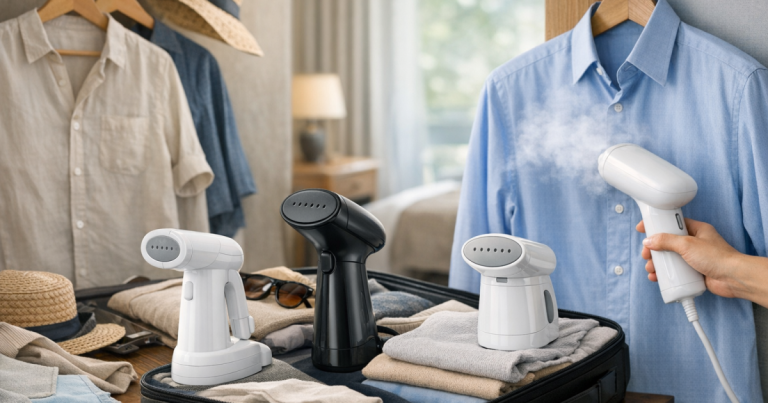
Packed shirts, linen trousers, occasion dresses and work uniforms rarely come out of a suitcase looking ready to wear. The best travel steamers are compact enough to pack, gentle enough for many everyday fabrics, and useful when hotel irons are unreliable or unavailable.
The short answer
A travel steamer is worth considering if you regularly unpack creased garments and want a faster refresh than setting up an iron and board. It works best on light to medium creasing, relaxed tailoring, viscose, polyester blends, cotton shirts, travel dresses and many linings. It is less effective on sharp trouser creases, heavily crushed cotton, pleated garments, thick denim or anything that needs a pressed finish.
The right choice is not simply the smallest model. For UK travellers, the key checks are fabric suitability, water handling, plug and voltage requirements, heat-up routine, how comfortably it hangs in a hotel room, and whether it can be packed safely after use. If you are still deciding whether steam is the right approach at all, our guide to choosing between a garment steamer and steam iron explains the broader trade-off between refreshing and pressing.
What a travel steamer can realistically fix
A handheld steamer relaxes fibres by applying warm steam while the garment hangs. This helps fabric drop back into shape without the direct flattening pressure of an iron. That makes it useful after packing, because many suitcase creases are caused by folded fabric being compressed rather than deeply set.
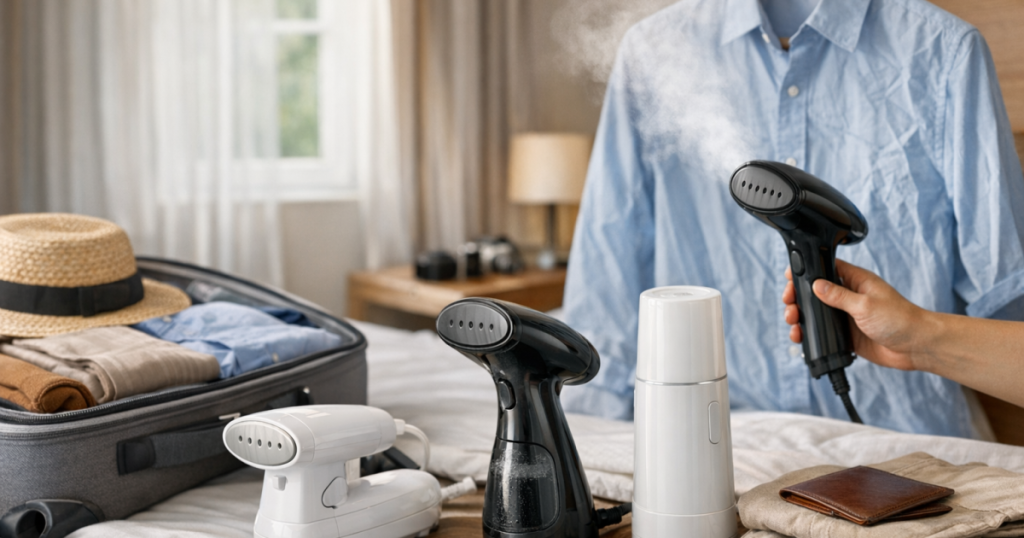
Expect the best results on garments that respond to hanging and gentle tension: shirts, blouses, soft dresses, unstructured jackets, skirts, scarves and lightweight trousers. Hang the item, smooth the fabric with your free hand from a safe distance, then steam slowly from top to bottom. Let the garment air for a few minutes before wearing it, as putting it on while still warm and slightly damp can encourage new creases.
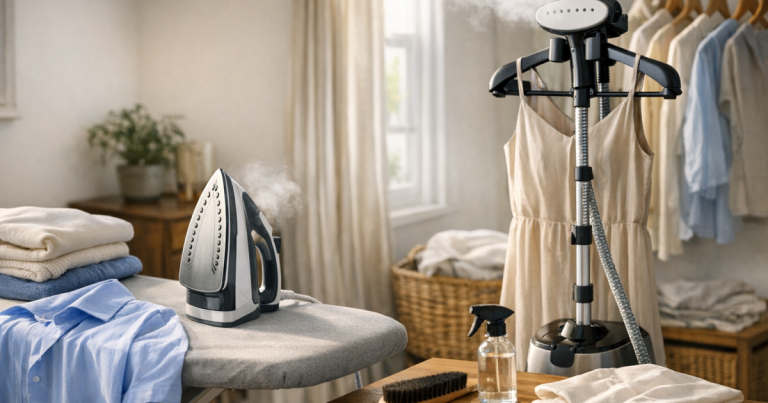
Do not expect a travel steamer to replace a full ironing setup for crisp cuffs, collars, formal cotton shirts or pressed pleats. Steam can soften a crease, but it does not create the same clean edge as an iron. For a fuller look at what different equipment is designed to do, see our ironing and steaming equipment guide.
Fabric checks before steaming after travel
Always start with the care label. Many garments tolerate steaming well, but some fabrics need more caution than others. Test inside a hem or discreet seam if the item is delicate, dark, embellished or unfamiliar.
- Cotton and cotton blends: usually respond well, but tightly crushed cotton may still need an iron for a sharp finish.
- Linen: steam can soften packing creases, but linen is naturally crease-prone, so aim for relaxed rather than perfectly smooth.
- Viscose and rayon: use gentle passes and avoid over-wetting, as some garments can distort when damp.
- Polyester blends: often release travel creases quickly, but keep the steamer moving to avoid localised moisture patches.
- Wool and wool blends: steam can freshen and relax fibres, but avoid pressing the steamer head hard into the cloth.
- Silk, velvet, sequins and heavily embellished pieces: use extra care. Steam from the reverse or use distance where the label permits; avoid direct contact that could mark pile, shine or trims.
If a garment is already damp from rain, washing or a humid bathroom, let it dry properly before steaming. Adding heat and more moisture to damp fabric can make odours linger and may pull some garments out of shape. For wider fabric drying decisions, it is worth reading how to choose the right drying method for each fabric.
Useful travel steamer examples to compare
Availability and model details can change, so treat these as recognisable examples rather than a promise that a particular version is right for every trip. Check the current product listing, plug type, voltage information, water tank arrangement and care instructions before packing one for travel.
Tefal Pure Pop
This is the sort of compact handheld steamer many travellers look at when suitcase space matters. It is designed around quick garment refreshing rather than replacing a full-size iron. Before choosing it for holidays or work trips, check how it packs, whether the water tank is easy to empty fully, and whether the steam head design suits the fabrics you usually take.
Philips 3000 Series Handheld Steamer
Philips handheld steamers are commonly considered by people who want a familiar brand and a straightforward crease-refreshing tool. Look closely at the exact model code, because features can vary across versions. For travel, the practical questions are simple: will it fit in your bag, does it suit upright steaming, and can you use it safely with the power supply where you are staying?
Steamery Cirrus No.3 Iron Steamer
This type of hybrid garment care tool appeals to travellers who want some of the convenience of steaming with a more refined finish than a basic handheld steamer. It is still not a substitute for a hotel laundry press or a full ironing board when a formal finish is essential, but it may be worth checking if your wardrobe includes shirts, dresses and smarter separates.
Russell Hobbs Steam Genie Aroma
A handheld steamer in this style is more about quick refreshes than ultra-minimal packing. It may suit car travel, UK hotel stays or longer trips where luggage space is less restricted. Before relying on it abroad, verify the exact voltage guidance and whether the size and water capacity make sense for your suitcase rather than your laundry cupboard.
How to choose one for packed clothes
Start with your clothing, not the appliance. A traveller taking linen shirts, soft dresses and knitwear needs a different routine from someone packing formal business shirts and pressed trousers.
- Match it to your fabrics: if you travel with delicates, choose a steamer that allows careful, controlled use rather than one that feels awkward or too forceful for light garments.
- Check voltage and plug requirements: UK trips are straightforward with a UK plug, but overseas travel may require a compatible power setup. Do not assume a steamer is suitable for every country.
- Think about water access: small tanks are lighter but may need refilling. Larger tanks can be more convenient in use but bulkier to pack.
- Look for easy emptying: a travel steamer should be simple to drain before it goes back into luggage. Residual water in a suitcase is a fabric-care problem, not just an inconvenience.
- Check whether it can be used vertically: most travel steaming happens on a hanger, shower rail or wardrobe door. The steamer should feel manageable in that position.
- Consider cooling time: if you steam shortly before checkout, you need time for the appliance and garment to cool and dry before packing.
- Watch total luggage weight: a larger handheld steamer may be fine for car travel but irritating in cabin luggage, particularly when liquids, shoes and toiletries are already competing for space.
A fabric-safe steaming routine in a hotel room
Unpack creased clothes as soon as you arrive. Hang the worst-affected garments first so gravity can start doing some of the work. A few hours on a broad hanger can reduce light packing creases before you even use steam.
- Step 1: Hang properly. Use a sturdy hanger that supports the shoulders. Avoid thin wire hangers for jackets, blouses or anything that marks easily.
- Step 2: Fill with suitable water. Follow the appliance instructions. Empty the tank after use, especially before repacking.
- Step 3: Test the steam flow away from clothing. This helps clear any initial sputter and shows whether water droplets are forming.
- Step 4: Steam from the inside or reverse where sensible. This is useful for dark fabrics, delicate surfaces and garments where shine or water marks would be obvious.
- Step 5: Use gentle tension. Hold the hem or side seam lightly to keep the fabric flat, keeping fingers away from steam.
- Step 6: Let the garment rest. Give it time to cool and dry on the hanger before wearing or packing again.
For shirts, start with the back panel, then sleeves, then the front. Collars and cuffs may still need an iron if you want a crisp look. For dresses, work in sections and avoid dragging the steamer across seams, lace, beading or pleats. For wool trousers, steam lightly and let the fabric hang; do not try to force a centre crease with a handheld steamer.
When a travel steamer is the wrong tool
There are times when steaming makes sense, and times when it is simply not the right answer. If a garment needs a defined crease, a flattened placket or a polished formal finish, an iron will usually do a better job. If an item is labelled dry clean only, steaming may still be possible in some cases, but the label and fabric construction matter.
Avoid steaming leather, suede, waxed fabrics, structured tailoring with sensitive interlinings, and anything where moisture could loosen trims or adhesives. Also be careful with vintage garments, unstable dyes and fabrics that have already reacted badly to water. For those pieces, airing, brushing, careful hanging or professional cleaning may be safer than suitcase steaming.
Packing habits that reduce creases before you arrive
The less severe the crease, the easier it is for a compact steamer to help. Fold along natural seams, avoid overpacking, and place heavier items away from delicate garments. Rolling can help some casual clothes but can make collars, cuffs and structured pieces worse if done carelessly.
- Use garment folders or packing cubes to reduce shifting inside the case.
- Button shirts and smooth sleeves before folding.
- Pack occasionwear in a garment bag when space allows.
- Place tissue paper or a clean cotton layer between delicate surfaces that might rub.
- Unpack immediately rather than leaving clothes compressed overnight.
These habits matter because travel steamers are finishing tools, not miracle workers. A badly crushed linen suit or tightly compressed formal shirt will still show signs of travel, even after careful steaming.
Common questions
Can I take a travel steamer in cabin luggage from the UK?
Many handheld garment steamers can be packed in luggage, but airline and airport rules can vary. Empty the water tank completely and check your airline’s current guidance before flying.
Do travel steamers work on linen?
They can soften linen creases, but they will not make linen look freshly pressed. For linen, steaming gives a more relaxed finish, which is often realistic for holidays and warm-weather travel.
Is hotel bathroom steam enough?
Bathroom steam may loosen very light creasing, but it is inconsistent and can leave clothes damp. A proper garment steamer gives more controlled steam and is usually more effective.
Can I use a travel steamer on a suit jacket?
Use caution. Light steaming from a distance may refresh some wool jackets, but avoid soaking the cloth or pressing into the structure. For important tailoring, professional pressing is safer.
Should I pack a steamer or rely on a hotel iron?
Pack a steamer if you mainly need to refresh soft garments. Rely on an iron if you need crisp shirts, trouser creases or a formal finish and you know suitable equipment will be available.
In brief
The most useful travel steamer is the one that fits your real packing habits: compact enough to carry, controlled enough for your fabrics, and practical enough to empty, cool and repack without fuss. Shortlist models by checking fabric suitability, water handling, power compatibility and how you will actually hang garments at your destination.
For creased clothes after packing, travel steaming works best as part of a wider routine: pack with less compression, unpack early, hang garments properly, steam gently, and give fabrics time to settle. That combination protects clothes better than relying on steam alone at the last minute.