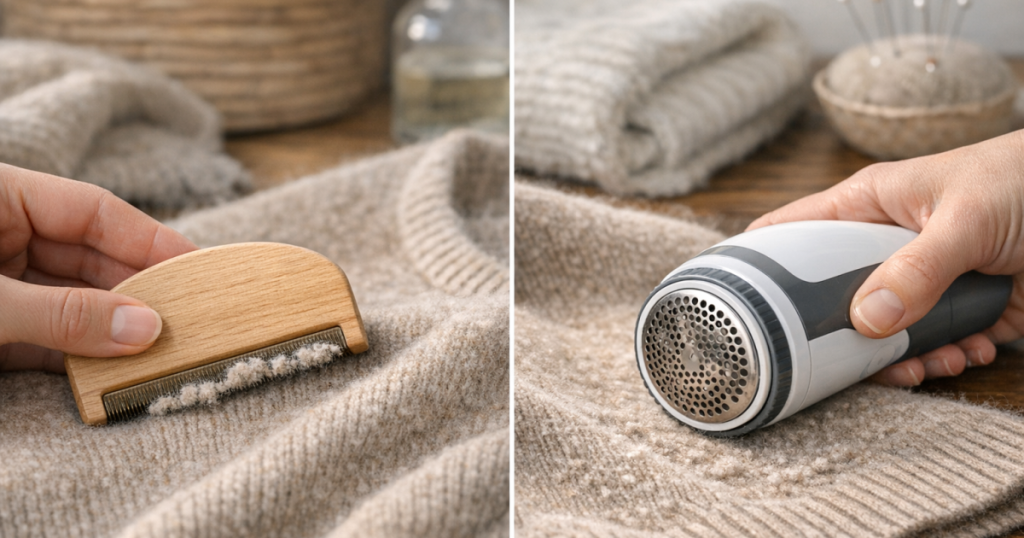
Pilling on a favourite jumper is frustrating because the garment can look tired long before the fabric is worn out. cashmere combs are often described as the gentler answer, but the truth is more useful than a simple yes or no: they can protect delicate fibres better when used slowly, while a fabric shaver can be the cleaner, quicker tool on robust knits.
The short answer
A comb is usually the safer first tool for fine cashmere, soft merino and delicate wool blends because it gives you more feel and less cutting power. You can work only on the bobbled area, reduce pressure instantly and avoid taking away too much of the fibre halo that gives luxury knitwear its softness.
A fabric shaver is not automatically harsh. Used carefully, with the garment flat and the head gliding rather than pressing, it can restore dense jumpers, synthetic blends and uniform knitwear very neatly. The problem comes when the shaver is used on a raised seam, loose loop, thin patch or ribbed edge where the cutting head can catch more than surface bobbles.
So the better question is not which tool is universally gentler. It is which tool removes the least fibre while dealing with the pilling you actually have.
Why pilling happens before you choose a tool
Pills are small balls of fibres that have worked loose, tangled and tightened through friction. They often appear under arms, across seat belts, at cuffs, on the side that rubs against a coat, or where a bag strap sits. Fine, soft fibres can pill because they are delicate; synthetic blends can pill because loose fibres can be strong enough to cling on rather than break away.
Removing pills always removes some fibre. That matters with cashmere and lambswool because the fabric can become flatter or thinner if you repeatedly scrape the same area. It also matters with cheaper acrylic-rich knitwear, where aggressive shaving can leave shiny, uneven patches. The aim is not to strip the surface perfectly smooth. The aim is to lift visible bobbles while preserving the yarn structure.
Where cashmere combs help most
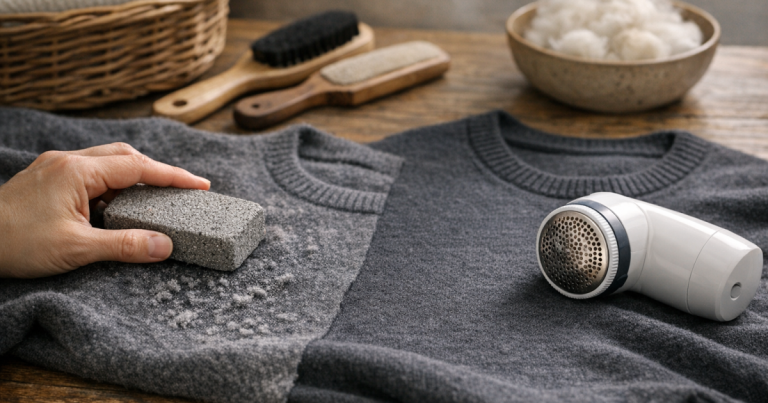
A cashmere comb is a manual tool with a textured edge designed to catch surface bobbles as you draw it across the knit. Its strength is control. You can feel resistance, pause when the fabric tugs and work in very short passes. That makes it well suited to high-value jumpers, scarves and cardigans where a softer, slower approach is worth the extra time.
It is most useful when the pills are small, shallow and sitting on the surface rather than buried into the fabric. A comb can be particularly good on smooth cashmere jerseys and fine-gauge knitwear that has light bobbling from normal wear. It also lets you avoid decoration, embroidery, buttons and seams more easily than a wider shaver head.
There are limits. A comb can drag if the knit is open, fluffy or loosely spun. It may pull at the natural halo on brushed cashmere, mohair blends and very soft lambswool. If you keep combing to chase every tiny nub, you can overwork the surface and make a worn patch more obvious. Gentle does not mean consequence-free.
What a fabric shaver does differently
A fabric shaver trims raised pills with a covered cutting head. It is designed to deal with bobbles quickly and evenly, which can be helpful on school jumpers, work cardigans, dense wool blends and synthetic knitwear that has widespread pilling. On a firm, flat knit, a shaver can look tidier than a comb because it cuts rather than drags.
The risk is that a shaver needs a stable, flat surface. If the fabric wrinkles under the head, or if you press into ribs and seams, the tool can catch loops or shave the knit unevenly. Thin elbows, stretched cuffs and snagged areas should be treated with extra caution or left alone. For an example of how a compact de-bobbler is assessed in practice, see our Philips Fabric Shaver GC026/30 review.
A shaver is often the better tool for dense, low-pile knits with lots of visible bobbles. It is usually the wrong starting point for very fluffy yarns, open stitches, heavily textured Aran-style patterns or anything already weakened by age, moth damage or repeated abrasion.
Fabric-by-fabric judgement calls
Use the fibre content label, the knit structure and the condition of the garment together. The same tool can behave very differently on a compact merino jumper and a lofty cashmere scarf.
- Pure cashmere jumper: Start with a comb and use very light, short strokes. A shaver should be reserved for dense, flat areas only, and only if the fabric is stable.
- Fine merino cardigan: A comb can work well for light bobbling, but a shaver may give a neater finish on a smooth, tightly knitted surface. Avoid button bands and seams.
- Lambswool scarf: Be cautious with both tools. A comb may pull the fuzz; a shaver may flatten the surface. Test on a discreet area and stop early.
- Acrylic or wool-blend school jumper: A fabric shaver can be efficient if the knit is dense and the pills are widespread. Keep the garment flat and empty the lint chamber often if your model has one.
- Wool coat or heavy outerwear: A clothes brush is often more appropriate than either tool, especially for surface lint, dust and hair. For outerwear, our lint roller versus clothes brush guide for coats explains why brushing can be kinder than sticky sheets.
How to de-pill knitwear without causing new damage
1. Clean and dry the garment first
Work on clean, fully dry knitwear. Dirt, deodorant residue and damp fibres can make pills harder to remove and can increase dragging. Lay the garment on a firm, flat surface such as a table covered with a clean towel. Do not stretch the knit tight; just smooth it enough so there are no folds under the tool.
2. Check the weakest areas
Look at elbows, cuffs, underarms, shoulder seams and the front where bags or coats rub. If the yarn looks thin, shiny, broken or visibly open, avoid aggressive removal. A bobble on a weak patch is often less noticeable than a hole or a shaved mark.
3. Test a hidden section
Choose an inside hem, lower side seam or another discreet spot. Use two or three passes only, then inspect the surface in good daylight. If the fabric looks fuzzy, scraped or flatter than the surrounding area, stop and use a softer method such as light hand-picking of the largest pills.
4. If using a comb, work in short strokes
Hold the fabric steady with one hand and move the comb in short strokes of around 10–15 cm. Follow the direction that feels least resistant rather than forcing a fixed direction. Lift pills away as they collect so you are not grinding loosened fibre back into the knit. Use less pressure than you think you need.
5. If using a shaver, let the head glide
Place the shaver flat on the fabric and move slowly over a small area. Do not press down to reach deeper pills. Avoid raised seams, ribs, cable textures, button bands and areas with loose threads. If the tool starts to tug, sound uneven, or leave an obvious track, stop immediately and reassess.
6. Finish by removing loose lint
After de-pilling, gently shake the garment and remove loose fibres by hand or with a soft clothes brush. Avoid sticky lint rollers on delicate cashmere if the adhesive pulls at the surface. Let the garment rest flat before folding it away.
Common mistakes that make knitwear worse
- Trying to make the surface look brand new: Some soft halo is part of the fabric. Over-removing it can make luxury knitwear look flatter and older.
- Working too often: De-pilling after every wear is unnecessary. Let knitwear rest between wears and treat only when pills are visible.
- Using one tool everywhere: A shaver may suit the body of a dense jumper but not the ribbed cuff. A comb may suit a fine front panel but not a fluffy scarf edge.
- Ignoring the cause of friction: If the same shoulder pills constantly, the problem may be a bag strap, coat lining or seat belt rather than the knitwear itself.
- Using heavy pressure: More pressure does not remove pills more safely. It increases the chance of scraping, cutting or thinning the yarn.
Preventing pills after you have removed them
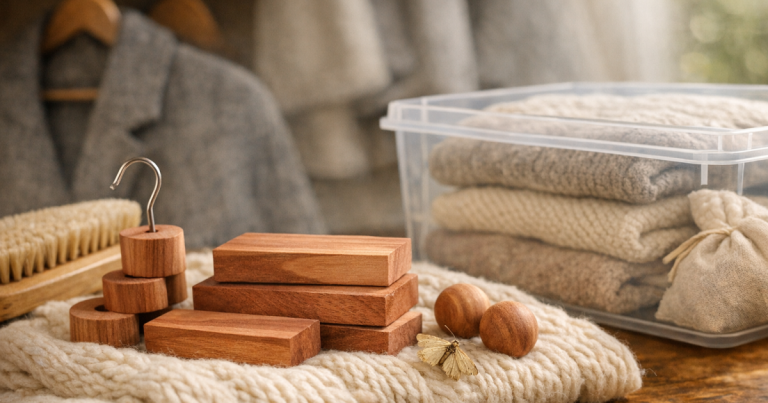
Good storage and wearing habits do more to protect knitwear than any de-pilling tool. Fold heavy jumpers rather than hanging them, as hangers can stretch shoulders. Give cashmere and wool at least a day of rest between wears where possible, so fibres can recover and moisture can disperse.
Wash according to the care label, using a suitable wool or delicate cycle only when the garment permits it. Turn knitwear inside out before washing to reduce surface abrasion, and avoid overloading the machine. Dry flat on a towel or airer so the garment keeps its shape. For seasonal organisation, moth prevention and folding habits, the wardrobe storage guide covers the fabric-care side of keeping clothes protected between wears.
Also think about what touches your knitwear. Rough coat linings, cross-body bags, backpacks and office chairs can all create repeated friction. Switching the way you wear a bag, rotating jumpers and brushing away surface fluff early can reduce the need for heavier de-pilling later.
Things readers ask
Can a cashmere comb ruin a jumper?
Yes, if it is used with too much pressure, on an unsuitable knit, or too often. A comb is controlled rather than harmless. On very fluffy or open-textured cashmere, it can pull the halo and make the surface look disturbed. Use a light touch and stop once the visible pills have lifted.
Is a fabric shaver safe on cashmere?
It can be, but only on stable, flat, tightly knitted cashmere and with very gentle handling. It is not the first choice for lofty scarves, brushed finishes, thin elbows or ribbed areas. If the garment is expensive or sentimental, start with the least aggressive method.
Should you remove every bobble?
No. Removing every small nub can take away more fibre than necessary. Focus on the pills that visibly spoil the garment, especially across the front, sleeves and underarms. Leaving tiny, harmless texture can be better for the long-term life of the knit.
How often should knitwear be de-pilled?
Only when it needs it. For regularly worn winter jumpers, a careful tidy-up a few times in the colder season may be enough. If a garment needs attention after every wear, look for the friction source and review washing, drying and storage habits.
Main points
Cashmere combs can protect delicate knitwear better than shavers when the fabric is fine, valuable or lightly bobbled, because they give more control and less cutting action. Fabric shavers can still be useful on dense, robust knits where pills are widespread and the surface is stable.
The safest approach is to start gently, test first and stop before the fabric looks overworked. Choose the tool for the garment in front of you rather than treating every jumper the same. In fabric care, restraint is often what keeps knitwear looking good for longer.